Wabi-Sabi Imperfect Beauty Principles in Bedroom Design Choices
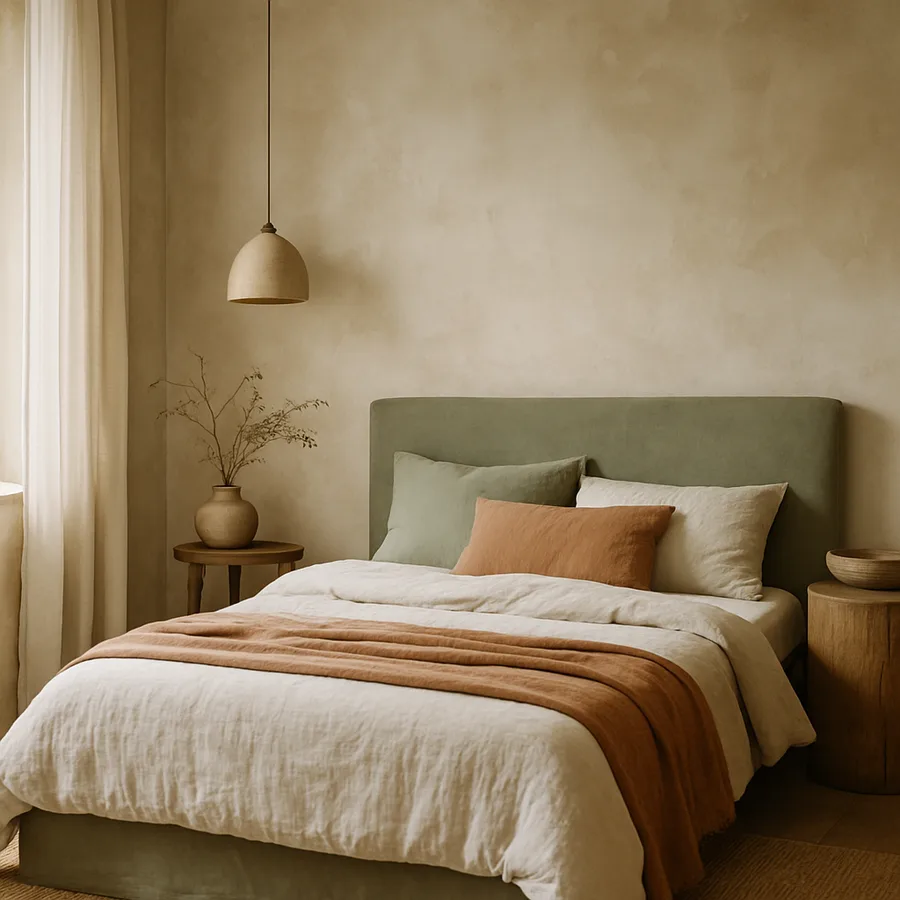
Wabi-sabi is one of the most discussed and least understood concepts in contemporary interior design. The Japanese aesthetic philosophy, rooted in Zen Buddhism and the tea ceremony tradition refined by Sen no Rikyu in the sixteenth century, celebrates the beauty of imperfection, impermanence, and incompleteness. It is not a style in the way that Scandinavian or industrial design are styles. It is a way of seeing, a willingness to find quiet beauty in a chipped ceramic bowl, a weathered wooden beam, a hand-loomed textile with a slight color variation, or a stone with a moss-stained surface. When that way of seeing is brought into the bedroom, the result is a space that supports rest, recovery, and a slower relationship with time.
The bedroom is the ideal room for wabi-sabi principles because its primary function is restorative. We sleep in this room, dress in it, recover from illness in it, and often retreat to it during difficult periods. A bedroom that radiates perfection, hard surfaces, and high-stimulation visuals works against these functions. A bedroom that embraces softness, natural materials, gentle asymmetry, and signs of life encourages the nervous system to settle. How does your bedroom feel when you walk into it after a long day, and is that the feeling you actually want? If the answer involves any version of "anxious" or "still on alert," wabi-sabi principles offer a path to a different experience.
Understanding Wabi-Sabi Beyond the Aesthetic
Wabi-sabi as commonly marketed in English-language interior magazines is often reduced to a checklist: linen bedding, exposed wood, neutral colors, handmade ceramics. These elements are part of the visual expression but not the substance. The deeper principle is acceptance of natural processes, including aging, weathering, and the marks left by use. A wabi-sabi bedroom does not just look a certain way at the moment of styling. It is designed to look better, not worse, as it ages and accumulates the patina of real life.
Leonard Koren's 1994 book on the subject remains the most cited English-language reference and articulates seven characteristics: asymmetry, simplicity, austere modesty, naturalness, subtle profundity, freedom from convention, and tranquility. Translating those characteristics into bedroom design choices means specifying materials that age gracefully, arranging furniture in slightly asymmetric ways rather than perfectly symmetric flanking, choosing one or two meaningful objects rather than abundant decoration, and resisting the urge to coordinate everything into matched sets.
The Smithsonian Asian art collection includes tea ceremony objects that demonstrate the original wabi-sabi vocabulary, and studying these objects in person or in published catalogs is a useful corrective to the Pinterest version of the aesthetic. The original tea bowls were not styled. They were used, daily, for decades, and their beauty emerged from that use. A bedroom designed in this spirit will look different in five years than it does today, and the difference will be improvement rather than decline.
Material Choices That Age With Grace
Material selection is the foundational decision in a wabi-sabi bedroom because materials determine how the room ages. The right materials develop patina, soften with use, and acquire character over time. The wrong materials look pristine on day one and disappointing by year five. Linen, raw wood, undyed wool, hand-thrown ceramic, oxidized brass, natural stone, and lime plaster are among the materials that improve with age. Polished lacquer, chrome, plastic laminate, and high-sheen finishes are the materials that decline.
For bedding, washed linen in undyed flax, oatmeal, or stone gray is the canonical choice. Linen wrinkles intentionally, softens with each wash, and develops a drape that synthetic and treated cottons cannot match. Pair linen sheets with a wool or cotton coverlet, a single sheepskin throw at the foot of the bed, and pillows in mixed linen weights. Avoid glossy sateen, polyester blends, and overly perfect bedding sets that come prepackaged.
For wood, choose pieces with visible grain, knots, and minimal stain. White oak, ash, and pine all weather beautifully with simple oil finishes. Avoid heavily lacquered or veneered furniture, which can chip and reveal substrate that does not weather gracefully. According to a 2024 industry report from the Sustainable Furnishings Council, sales of solid wood furniture with natural finishes grew 47 percent in five years, driven largely by consumer interest in materials that age rather than degrade. The American Society of Interior Designers, or ASID, includes material longevity as a core principle in its sustainable design guidelines.
Color and Light in the Wabi-Sabi Bedroom
The wabi-sabi color palette is muted, warm, and earth-derived rather than synthesized. Stone, oatmeal, putty, mushroom, sage, soft terracotta, faded indigo, and warm white are the foundational tones. These colors are the colors of natural materials in dim or filtered light, and they do not compete with the materials themselves. A wall in a clay-pigmented limewash has a depth and tonal variation that no flat paint can match, and pairs beautifully with linen bedding and wood furniture without any styling effort.
Avoid pure white walls in a wabi-sabi bedroom because the contrast against natural materials is too sharp and the room reads as sterile rather than serene. A warm off-white with a hint of pigment, applied in two coats of limewash or clay paint, provides the same brightness with infinitely more atmosphere. Plaster finishes, with their slight texture and tonal variation, are particularly well-suited and have grown in popularity. A 2025 specification report by Architectural Digest noted that lime plaster wall finishes appeared in 31 percent of high-end residential projects, up from 8 percent five years prior.
Light in the wabi-sabi bedroom should be filtered, layered, and warm. Sheer linen drapery that diffuses morning sun, multiple low lamps with paper or fabric shades, and the deliberate avoidance of overhead recessed lighting are the canonical moves. Bulbs should be 2700K or warmer, and dimmable everywhere they can be. What does your bedroom look like at six in the morning, and again at ten at night, and would the same lighting serve both moments? The answer is almost always no, which is why layered light at multiple levels is essential.
Asymmetry and the Arrangement of the Room
Wabi-sabi rejects the matched-set, perfectly symmetric arrangement that dominates conventional bedroom design. Two identical nightstands flanking the bed, two matching lamps, two coordinated wall sconces above, and an art piece exactly centered above the headboard is the symmetric default that wabi-sabi gently breaks. The break does not need to be dramatic. A different small table on each side of the bed, one lamp and one sconce, an off-center art piece, and a single chair in the corner can transform the room from staged to lived without losing functionality.
The bed itself can be slightly off-center to allow for a meaningful object, a tall plant, or a piece of art on one wall. The reading chair does not need to match the bed bench. The dresser can be a single antique piece rather than a set with the bed and nightstands. The Japanese tradition that informs wabi-sabi favors arrangements that suggest the room is in dialogue with its inhabitant rather than dictating to them. Each element earns its place by being beautiful, useful, or both.
Negative space is the other half of the asymmetry equation. A wabi-sabi bedroom should have visibly empty surfaces, blank walls, and floor area that is simply floor. Avoid the impulse to fill every shelf and every wall. The empty surfaces give the eye somewhere to rest and let the few chosen objects carry meaning. The Museum of Modern Art design collection includes Japanese interior photography that demonstrates how thoughtful emptiness functions as a design element, not an absence.
The Role of a Few Meaningful Objects
Object curation is where most wabi-sabi bedrooms succeed or fail. The principle is to choose few objects, each meaningful, rather than many objects intended to fill space. A single hand-thrown ceramic vase with a few branches of seasonal foliage. One stack of well-worn books at the bedside. A single piece of art with personal significance, hung at eye height when seated rather than standing. A bowl of stones, shells, or other natural objects collected over years. A small textile artwork, perhaps a fragment of an antique kimono or a piece of folk weaving.
Each object should be able to withstand sustained attention. The chipped tea bowl that anchors a wabi-sabi side table is not random. It is chosen because the chip itself, the kintsugi gold-mended crack, or the slight asymmetry of the form gives the eye something to discover and re-discover. Mass-produced decorative objects rarely achieve this because their forms are designed to be immediately legible rather than slowly revealed.
Source these objects with patience rather than urgency. Estate sales, antique markets, regional craft fairs, and direct relationships with potters and weavers produce far better wabi-sabi objects than online furniture retailers. According to a 2024 consumer report by The Aspen Institute, time spent in environments containing handmade objects measurably reduces stress markers compared to environments dominated by mass-produced goods. The bedroom is the highest-leverage room for this effect because we spend a third of our lives in it.
Bringing in Living Things and Seasonal Change
A wabi-sabi bedroom benefits from at least one living element. Plants that respond to the room's light, an arrangement of seasonal foliage that changes monthly, or a small water feature in the corner all introduce the impermanence that the philosophy embraces. The plants do not need to be exotic or expensive. A single olive tree in a textured ceramic pot, a hanging philodendron, or a low arrangement of moss in a shallow tray each contribute the sense that the room is alive.
Seasonal change is one of the most powerful and underused wabi-sabi principles. Swap the bedding from heavier wool to lighter cotton between seasons. Change the foliage in the vase monthly. Bring in a different throw blanket as the weather shifts. These small rotations keep the room in dialogue with the natural world outside and reinforce the relationship between the bedroom and the larger rhythms of the year. When was the last time you changed something in your bedroom in response to a season rather than a redecoration impulse? The two are different practices, and the seasonal one is more sustainable.
Air, scent, and sound are the invisible layers that complete the room. Open the window for fresh air daily, even briefly in winter. Use natural scents like beeswax candles, dried lavender, or a single essential oil in a diffuser, rather than synthetic fragrances. Consider the acoustic quality of the room and add soft surfaces to absorb hard echoes if necessary. A wabi-sabi bedroom is not just a visual experience. It is a multi-sensory space that supports rest in ways that go beyond what the eye perceives.
Conclusion
Wabi-sabi bedrooms succeed because they align material choices, color palettes, light, arrangement, and object curation around a single principle: the beauty of imperfection, impermanence, and quiet attention. The result is a room that supports the actual functions of a bedroom, which are rest, recovery, intimacy, and retreat from the demands of public life. None of this requires a large budget or a major renovation. The principles can be applied incrementally, one decision at a time, and each decision compounds with the others.
The most common obstacle is the cultural pressure to keep the bedroom looking finished, photographed, and styled. Wabi-sabi releases that pressure by celebrating the marks of use, the slight asymmetry, the empty shelf, and the chipped vase. Releasing that pressure is itself restorative. The room becomes a place to live rather than a stage on which life is performed, and the difference shows in how the body responds when entering it.
Begin with one material change, perhaps a switch to washed linen bedding or the introduction of a single hand-thrown ceramic vessel on the nightstand. Notice how the room feels after a week. Then make the next change. Over six months, a conventionally decorated bedroom can be transformed into a wabi-sabi sanctuary without a single major purchase. If you want guidance, schedule a consultation with a designer who specializes in natural materials this month and share the principles in this article. The right wabi-sabi bedroom will be your most loved room within a year, and the journey starts with the first quiet choice you make this week.
More Articles You May Like



Comments
Post a Comment