Horizontal Slat Fences for Modern Backyard Privacy Lines
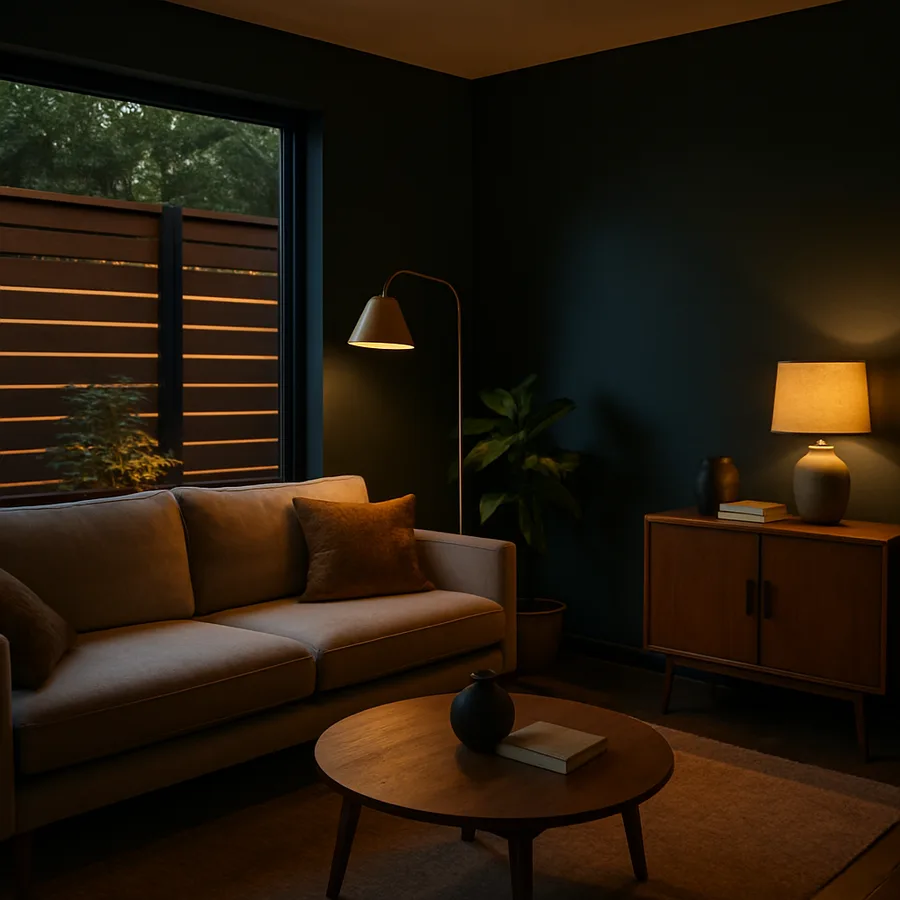
Horizontal slat fences became the dominant modern residential privacy fence over the last decade for one simple reason: a horizontal line stretches a yard visually in a way that vertical pickets cannot. Architects discovered the trick first in mid-century projects, but the style only reached mainstream homeowners as composite slats and improved cedar grading made the long, straight runs achievable without warping. Done well, a horizontal slat fence reads as architecture; done badly, it reads as a row of unrelated boards trying to imitate one.
The difference between a slat fence that photographs in a magazine and one that looks tired five years in usually comes down to a few specific decisions: slat dimensional ratio, reveal width, post strategy, and the rigor of the alignment system used during install. This guide unpacks each of those decisions and the structural realities behind them, drawing on builder data from the National Association of Home Builders, prescriptive guidance from the American Wood Council, and field observations from contractors who specialize in modern fence installation.
Why Horizontal Lines Make Yards Feel Bigger
The eye reads a horizontal line as continuous and a vertical line as a series of stops. A traditional vertical picket fence at 60 feet long contains roughly 80 visual interruptions, one per picket. A horizontal slat fence at the same length contains around 12 interruptions, one per post, and even those can be hidden inside the slat plane. The brain processes the slat fence as one long unit, and that perceived continuity makes the yard feel longer.
This effect is most useful in narrow lots, where vertical fences emphasize the existing length-to-width problem. A 25-foot-wide backyard surrounded by vertical pickets feels like a hallway. The same yard surrounded by horizontal slats feels like a courtyard, because the lines pull the eye sideways and break up the funnel effect. Designers describe this as "stretching the wall," and it works at a real perceptual level, not just a stylistic one.
The other psychological move is height suppression. A 6-foot horizontal slat fence reads shorter than a 6-foot vertical picket fence at the same height. The eye measures height by the strongest vertical cues, and on a horizontal slat fence those cues are subdued. This is why horizontal slats often pair well with tall ornamental grasses or upright evergreens; the planting reasserts the vertical, and the fence becomes a graphic backdrop rather than a wall.
Slat Dimensions and the Ratio That Reads Modern
The slat width versus thickness ratio is the single most important dimensional decision. Modern slat fences typically use slats between 3 and 6 inches wide, with thicknesses of 0.75 to 1.5 inches. A 1x4 slat at three-quarter inch thickness is the most common because it is dimensionally efficient and stays straight over an 8-foot span without backing. A 2x4 slat on edge produces a heavier, more substantial line and is preferred on contemporary architecture where the slat fence visually relates to the cladding.
Slats narrower than 3 inches start to look like blinds. Slats wider than 6 inches start to look like privacy fence boards arranged horizontally. The sweet spot for most residential applications is 4 to 5 inches wide. The thickness-to-width ratio that consistently photographs well is roughly 1:4, so a 4-inch slat looks balanced at 1 inch thick, and a 6-inch slat looks balanced at 1.5 inches thick. Going thinner than 1:6 produces flexing that shows up as a wave along the run.
One overlooked dimension is the slat length relative to post spacing. Slats that span exactly between posts produce a clean break at every post, which can be desirable if posts are part of the design. Slats that span across two or three posts, with butt joints staggered between rows, produce a continuous look that reads more architectural. The latter is harder to install but visually superior, and it requires slat lengths that are at least 12 to 16 feet long, which limits species selection to those available in long, straight runs.
Reveal Width and Privacy Trade-Offs
The reveal is the gap between slats. It is the second most important dimensional decision, and it controls both privacy and visual weight. A quarter-inch reveal reads as one continuous wall with subtle texture; a half-inch reveal reads as articulated horizontal lines; a three-quarter or one-inch reveal reads as an open screen.
Privacy depends on the geometry between viewer eye height and reveal angle. A half-inch reveal viewed straight on offers full visual obstruction. The same reveal viewed at an angle from a neighboring second-story window provides almost none. If the privacy concern includes elevated viewpoints, the answer is not just narrowing the reveal but also adding internal slat angling, where each slat is tilted slightly downward, or using a double-layered slat fence with offset gaps. The American Wood Council provides guidance on appropriate fastening for these multi-layer assemblies in AWC publications, which is worth consulting before specifying any structural detail.
Reveal also affects ventilation, which affects fence longevity. A solid privacy fence with no reveal traps moisture against the slats and accelerates rot, especially in shaded or north-facing locations. A half-inch reveal allows enough air movement to keep the wood dry between rains. Field reports from NADRA contractors suggest that horizontal slat fences with proper reveals last 30 to 40 percent longer than equivalent solid privacy fences in the same climate, simply because the wood dries between weather events.
Posts, Brackets, and Hiding the Structure
The defining detail of a high-end horizontal slat fence is what you do with the posts. The structural reality is that horizontal slats need vertical posts every 6 to 8 feet to handle wind loads and prevent sag. The aesthetic reality is that visible posts interrupt the horizontal line and undermine the entire visual logic of the fence. Resolving the conflict is what separates good slat fence designs from forgettable ones.
Three approaches dominate. Posts on the back side with slats face-mounted to the post front hide the post entirely from inside the yard but show it from the neighbor's side. This is the cleanest yard-side look and the most common premium choice. Aligned posts with slats inset between posts produce a panelized look where each post is visible as a vertical break. This honest expression of structure can look intentional and architectural when the post dimensions are designed deliberately. Steel posts with thin profiles disappear visually and let the slats run continuously across long sections; the trade-off is cost and the need for a metal fabricator alongside the carpenter.
Post depth matters more than post diameter. The National Association of Home Builders publishes deck and fence post embedment recommendations that, for a 6-foot tall slat fence, typically call for posts set at least 36 to 42 inches deep with concrete footings, or below frost line, whichever is greater. NAHB resources include detailed post setting guides. A horizontal slat fence amplifies any post movement because the long horizontal lines visually highlight even small angular deviations. A post that leans by 1 degree on a vertical fence is barely noticeable; on a horizontal fence the same lean shows as a clear wedge of widening reveal across the section.
Materials, Finishes, and Aging Behavior
Western red cedar is the default species for horizontal slat fences because it stays straight over long spans, resists rot, and accepts stain or paint cleanly. Its weakness is cost and softness. Thermally modified ash and accoya are increasingly used in premium installs because they are dimensionally more stable and accept dark stains beautifully. Tropical hardwoods like ipe are over-specified for slat fencing; the density adds cost without proportional visual benefit on a non-walking surface.
Composite and aluminum slat options have improved dramatically. Modern aluminum slat fences with a textured powder coat are essentially indistinguishable from stained wood at conversation distance, and they will not warp, cup, or require restaining. The cost premium over cedar has narrowed to roughly 20 to 40 percent depending on supplier, and the lifetime cost favors aluminum once you account for restaining cycles. Composite slats sit in the middle and offer a wood-like grain texture without the warp risk.
Finish choice drives the read of the fence almost as much as slat dimensions. Black or charcoal stain is the dominant modern choice because it visually recedes, photographs well, and ages predictably. Natural cedar left to weather silver looks beautiful in the right context but requires accepting the gray-stage transition during years one and two when the surface is uneven. White or light gray can work in coastal or Scandinavian-influenced designs but shows dirt and algae visibly and requires more frequent cleaning. Have you ever noticed how some slat fences seem to vanish into the landscape while others seem to dominate it? The finish is usually doing more of that work than the slat dimensions are. Two relevant data points: ASLA-published case studies show that dark-finish slat fences appear in roughly twice as many published modern landscape projects as natural-finish equivalents, and contractor surveys consistently report that dark stain extends the perceived "looks new" period from 2 to 3 years out to 5 to 7. ASLA case studies include several worth reviewing.
Alignment, Spacing Tools, and Why First-Timers Get Wavy Lines
The biggest install failure in horizontal slat fences is not crooked posts or wrong slat dimensions; it is wavy horizontal lines. A slat fence with subtle waves looks unfinished even if every other element is perfect, because the eye is unforgiving of long horizontal lines that should be straight. Three install habits separate clean lines from wavy ones.
First, set a string line at the top slat height before any slats go up, and pull it tight along the entire fence run. Every slat references the string, not the previous slat. Stacking slats off each other compounds error; referencing a string resets the datum at every slat. Second, use a dedicated spacer tool of the exact reveal dimension. Eyeballing reveals or using a tape measure produces visible variation. A pre-cut spacer ensures every gap is identical. Third, check level both side-to-side and front-to-back at every third or fourth slat. Front-to-back tilt is invisible until the fence is complete, at which point it shows as a slight twist that no amount of finishing hides.
The math piece is also important. For a fence section between two posts at 7 feet 9 inches clear span (8-foot post centers minus a 4x4 post width), with 1x4 slats and a half-inch reveal, you have a 4-inch repeating unit. Twenty slats produce an 80-inch stack, which fits with appropriate top and bottom clearances. Adjusting reveals slightly to make the math come out evenly is far better than letting a partial slat appear at the top or bottom. Have you noticed how some slat fences have an obvious narrow slat at the top? That is the failure mode of skipping the math step.
Conclusion
A horizontal slat fence delivers modern, architectural privacy that traditional vertical fencing simply cannot match for the right house and yard. The execution requires more rigor than a picket fence, but the rigor is learnable and the result is significantly more durable visually because horizontal lines age better than vertical detail. Five years in, a well-built slat fence still photographs cleanly, while a builder-grade vertical privacy fence at the same age usually shows warped boards, faded paint, and a tired silhouette.
The decisions that drive the result are dimensional rather than stylistic. Slat width in the 4 to 5 inch range, slat thickness at roughly one quarter the width, reveal at one quarter to one half the slat thickness, posts hidden behind the slat plane or visually integrated into a deliberate panel rhythm, and a finish that suits the architecture. Each of these can be adjusted within a range, but staying inside the ranges is what keeps the fence inside the modern register.
The cost premium over a builder-grade privacy fence is real but proportional. Expect to spend 50 to 100 percent more for a horizontal slat fence in cedar versus a stockade-panel privacy fence at the same height. The difference is in lumber grade, post setting depth, slat alignment time, and finish. The lifetime cost is closer because the slat fence requires fewer interventions over 20 years, and the resale impact is meaningful in markets where modern landscape design has become a buyer expectation.
Before specifying a horizontal slat fence, photograph the proposed run from inside your yard and from the street at the height your camera will sit. Use the photos to test slat width, reveal, and finish in image editing software before committing to the real material. The dimensional changes that matter most are easy to mock up digitally and impossible to undo physically. Once you find the proportional set that suits your house, write it into the spec sheet and require your contractor to follow it. The horizontal slat fence rewards rigor in a way few other fence types do, and the visual result is worth the discipline it asks for.
More Articles You May Like


Comments
Post a Comment