Heat Pump Hot Water Heater Selection for Energy Bill Reduction
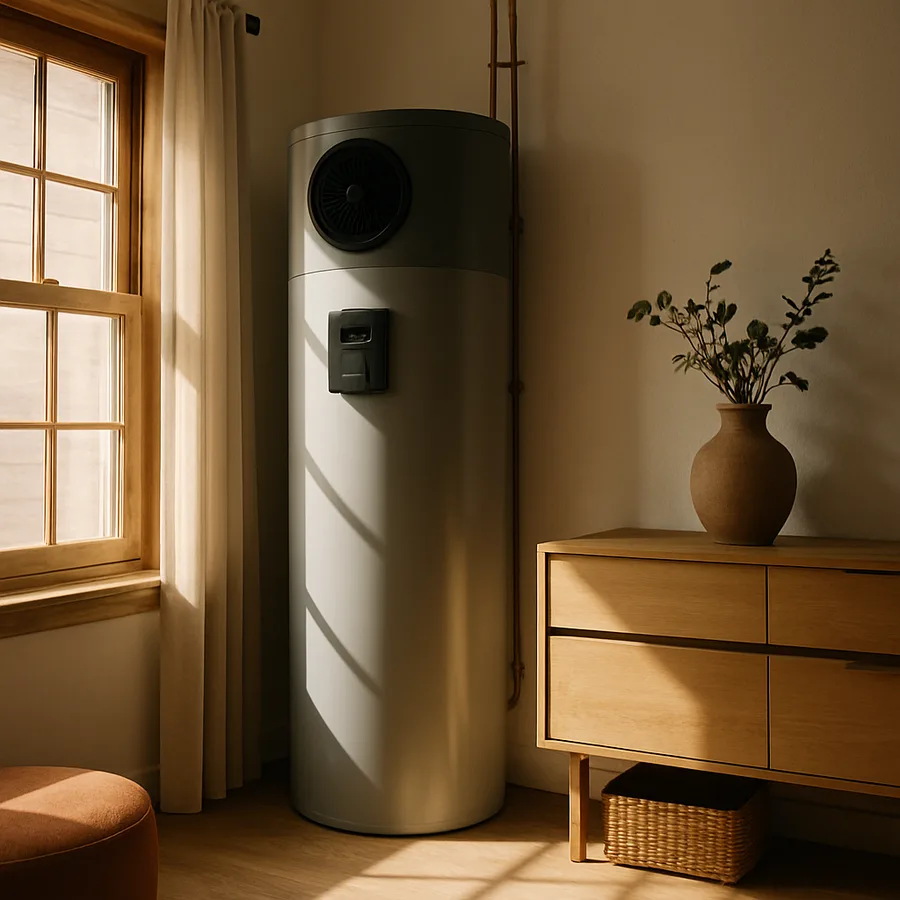
Water heating quietly drains more from a typical American household budget than most homeowners realize. According to the U.S. Department of Energy, water heating accounts for roughly 18 percent of residential energy use, second only to space heating and cooling combined. For families still relying on a traditional electric resistance tank or an aging natural gas unit, that translates to between $400 and $1,200 a year in fuel costs, depending on regional rates and household size. A heat pump hot water heater, often called a hybrid water heater, can cut that bill by 60 to 70 percent. The catch is that not every home is ready to drop one in, and not every model fits every utility room.
This guide walks through how heat pump water heaters actually work, how to size one correctly, where they belong in the house, and what real-world performance looks like once installed. Whether you are replacing a failed tank or planning ahead for an electrification upgrade, the decisions you make in selection and placement will determine whether the unit pays itself off in three years or stretches to ten. Are you replacing an existing electric tank, switching from gas, or planning a full mechanical room redesign? The answer changes the math considerably, so read carefully and apply the framework that fits your situation.
How Heat Pump Water Heaters Actually Reduce Energy Use
A standard electric resistance water heater is roughly 95 percent efficient, but it has a hard physical ceiling: every unit of electricity in produces one unit of heat out. A heat pump water heater breaks that ceiling by moving heat instead of generating it. The unit pulls warm air out of the surrounding space, extracts thermal energy through a refrigerant cycle, and dumps that energy into the water tank. Because moving heat takes far less energy than creating it, a typical heat pump water heater achieves a Uniform Energy Factor (UEF) between 3.0 and 4.0. In plain English, every dollar of electricity buys three to four dollars worth of hot water compared to a resistance unit.
The ENERGY STAR program reports that a typical family of four can save approximately $550 per year in energy costs by switching from a standard electric water heater to a heat pump model, with lifetime savings exceeding $5,600 over a 13-year service life. Verified performance data and product listings are available through the ENERGY STAR water heater portal. These savings vary by region, electricity rates, and water usage, but even in low-cost utility markets the unit typically pays itself off within four to six years through energy savings alone.
There is one important nuance: heat pump water heaters cool and dehumidify the room they sit in. In a basement or garage in a hot climate, that is a free benefit, providing supplementary cooling and reducing humidity. In a heated mechanical closet inside the home envelope, the same effect can drag conditioned air down by 5 to 10 degrees, forcing the home heating system to work harder in winter. Placement is everything, and we will return to it in detail below.
Sizing the Tank for Your Household
Sizing a heat pump water heater is not the same exercise as sizing a traditional tank. Standard sizing rules call for 30 gallons per person for resistance and gas tanks, but heat pump units have a slower recovery rate, so undersized tanks run out of hot water during peak demand. Most manufacturers offer 50, 65, and 80 gallon models, and the right choice depends on simultaneous demand: how many showers, dishwasher runs, and laundry cycles overlap during peak morning and evening hours.
A practical sizing framework looks like this: a one or two person household with modest water habits is well served by a 50 gallon unit; a three or four person household typically needs 65 gallons; a five or more person household, or any household with overlapping morning showers, should size up to 80 gallons. The First Hour Rating (FHR) printed on the unit's EnergyGuide label is more useful than tank gallons alone, as it accounts for both stored hot water and recovery rate during the first hour of heavy demand. Match FHR to your peak hour demand, calculated as gallons per shower (around 17) times the number of overlapping showers, plus 6 gallons for the dishwasher and 7 for a laundry load.
Have you ever noticed your existing tank running cold by the time the third person hits the shower? That is undersized FHR, and a heat pump replacement of the same gallon size will likely do the same thing. Sizing up by 15 gallons usually solves the issue, with a small efficiency penalty for the larger standby surface area. The U.S. Department of Energy publishes a free sizing calculator and worksheet at the Energy Saver water heater sizing guide, which is the most reliable tool for matching tank capacity to actual household patterns.
Placement Requirements and Air Volume Needs
Heat pump water heaters need access to a meaningful volume of warm air to operate efficiently. Most manufacturers specify a minimum room volume of 700 to 1,000 cubic feet of unconditioned or semi-conditioned air. A small mechanical closet that worked fine for a slim resistance tank will starve the heat pump and trigger backup resistance mode, erasing efficiency gains. The unit will run, but it will run as a regular electric tank with the heat pump idle.
The best locations are unfinished basements, garages in mild climates, and large mechanical rooms with no envelope penalty. Basements are nearly ideal: they tend to stay between 55 and 70 degrees year-round, which is in the sweet spot of heat pump performance. Garages work well in southern and coastal climates but suffer in northern winters where temperatures drop near freezing, since the heat pump output drops sharply below 40 degrees ambient. Above 95 degrees ambient, performance also declines because compressor stress increases.
If your only available location is a small closet, you have three options: install a louvered door that connects to a larger adjacent space, run dedicated ductwork to draw and return air from a basement or attic, or accept the smaller energy savings of a hybrid model running mostly in resistance mode. The American Society of Heating, Refrigerating and Air-Conditioning Engineers publishes detailed application guidance through ASHRAE Standard 90.2 and supporting documentation at ASHRAE's residential resources. Reviewing those guidelines before purchase can save you from a costly placement mistake.
Operating Modes and Control Settings
Modern heat pump water heaters offer multiple operating modes that let homeowners trade efficiency against recovery speed. The most common modes are heat pump only, hybrid (heat pump plus resistance backup as needed), high demand (resistance prioritized for fast recovery), and vacation mode for low-temperature standby. Heat pump only mode delivers maximum savings but the slowest recovery, often 4 to 6 hours to fully reheat after a major draw. Most households default to hybrid mode, which kicks in resistance heating only when demand spikes beyond what the heat pump alone can handle.
Smart features have improved dramatically in the last few generations. Many units now include Wi-Fi connectivity, app-based scheduling, learning algorithms that predict household demand patterns, and grid-interactive features that respond to time-of-use electricity rates. Some utilities offer demand response rebates for connecting your unit to grid programs, allowing the utility to briefly delay heating during peak demand windows in exchange for monthly bill credits. Check with your utility provider for specific programs available in your area.
One simple optimization that requires no special hardware: set the tank temperature to 120 degrees Fahrenheit, not 140. Most homes do not need water hotter than 120, scalding risk drops dramatically, and standby losses fall by roughly 10 percent. Households with immunocompromised members or specific dishwashing requirements may need higher temperatures, but for the typical household, 120 is the sweet spot for safety and savings.
Installation Costs, Rebates, and Total Investment
A heat pump water heater costs more upfront than a comparable electric resistance tank. Equipment alone runs $1,500 to $3,000 for most quality models in the 50 to 80 gallon range, compared to $400 to $900 for a standard resistance tank. Installation adds another $800 to $2,500 depending on whether the existing electrical circuit, plumbing, and condensate drain line need modifications. Total installed cost typically lands between $2,500 and $5,500 for a straightforward swap.
Federal and state incentives transform that math significantly. The federal Inflation Reduction Act provides a tax credit of up to $2,000 for qualifying heat pump water heaters through 2032, and many state and utility programs stack on top with rebates ranging from $300 to $1,500. The Database of State Incentives for Renewables and Efficiency (DSIRE) maintains a searchable national database of available programs. Some homeowners end up paying less out of pocket for a heat pump water heater than for a traditional resistance unit once incentives apply.
Have you checked exactly what your utility, state, and federal programs offer in combination? Many homeowners discover unexpected stacking when they actually run the numbers, and the difference between a five-year and a two-year payback is almost entirely incentive-driven. Speak with a licensed plumber or electrification contractor who specializes in heat pump installations and ask them to itemize the rebates and credits in the project quote.
Common Pitfalls and How to Avoid Them
The single most common installation problem is undersized electrical service. Heat pump water heaters typically require a dedicated 30-amp 240-volt circuit, the same as a standard resistance tank, but homes with 100-amp main service may already be running near capacity once HVAC, range, and EV charging loads are summed. An electrician should perform a load calculation before installation; some homes will need a service upgrade or a load management device to stay within National Electrical Code limits.
The second pitfall is the condensate drain. Heat pump water heaters produce condensate the same way an air conditioner does, typically 1 to 4 gallons per day depending on humidity. The unit must drain to a floor drain, condensate pump, or properly trapped plumbing connection. Forgetting this detail leads to overflow, water damage, and warranty issues. A small condensate pump costs $80 to $200 and solves the problem cleanly when no floor drain is available.
Other frequent issues include inadequate clearance for filter access, which forces homeowners to skip recommended quarterly air filter cleaning and slowly degrades performance over time; noise complaints in finished spaces, since the compressor produces about 45 to 55 decibels, comparable to a quiet refrigerator; and backup mode lockout due to incorrect mode settings, which leaves homeowners surprised when their first energy bill barely changes. Each of these is preventable with a careful installation and a 15-minute walkthrough of the control panel with the installer. Schedule your installation review now to lock in incentive pricing and avoid common pitfalls.
Conclusion
A heat pump hot water heater is one of the highest-return energy upgrades available to American homeowners today. The combination of three to four times the efficiency of a resistance tank, generous federal and state incentives, and rising electricity rates makes the payback period shorter than at almost any point in the technology's history. For households currently running an electric resistance unit, the savings are immediate and substantial. For those switching from natural gas or propane, the math depends on local fuel prices but generally favors the heat pump within five to seven years, particularly when paired with rooftop solar.
The keys to a successful installation are correct sizing, proper placement, and a clear understanding of operating modes. Oversizing slightly to account for slower recovery, locating the unit in a basement or garage with adequate air volume, and configuring hybrid mode for everyday use are the three decisions that separate a unit performing at its rated efficiency from one that quietly underdelivers. Pair those decisions with annual filter maintenance and quarterly anode rod inspection, and the equipment will deliver reliable hot water for 13 to 15 years with minimal intervention.
Selection alone will not capture every dollar of potential savings. Combine the heat pump with low-flow fixtures, well-insulated hot water lines, and conscious household water habits to amplify the effect. A 1.5 gallon-per-minute showerhead, for example, cuts shower water demand by roughly 35 percent compared to older 2.5 gallon-per-minute fixtures, and that savings compounds with every kilowatt-hour the heat pump avoids using. The systems-level approach is what turns a 60 percent water heating bill cut into a household-level energy profile that is genuinely efficient.
If you are weighing a replacement decision today, do not wait for the existing tank to fail catastrophically. Plan the swap during a comfortable shoulder season, take time to verify rebates, schedule a load calculation, and choose a contractor with documented heat pump installation experience. The right decisions made calmly today translate directly into 15 years of lower energy bills, lower household emissions, and a quieter, cooler, drier mechanical room. Reach out to a licensed heat pump water heater specialist this week to begin scoping your installation, claim every incentive available, and start moving toward an efficient, electrified hot water system that pays you back month after month.
More Articles You May Like



Comments
Post a Comment