Hanging Macrame Plant Holders for Boho Bedroom and Bathroom
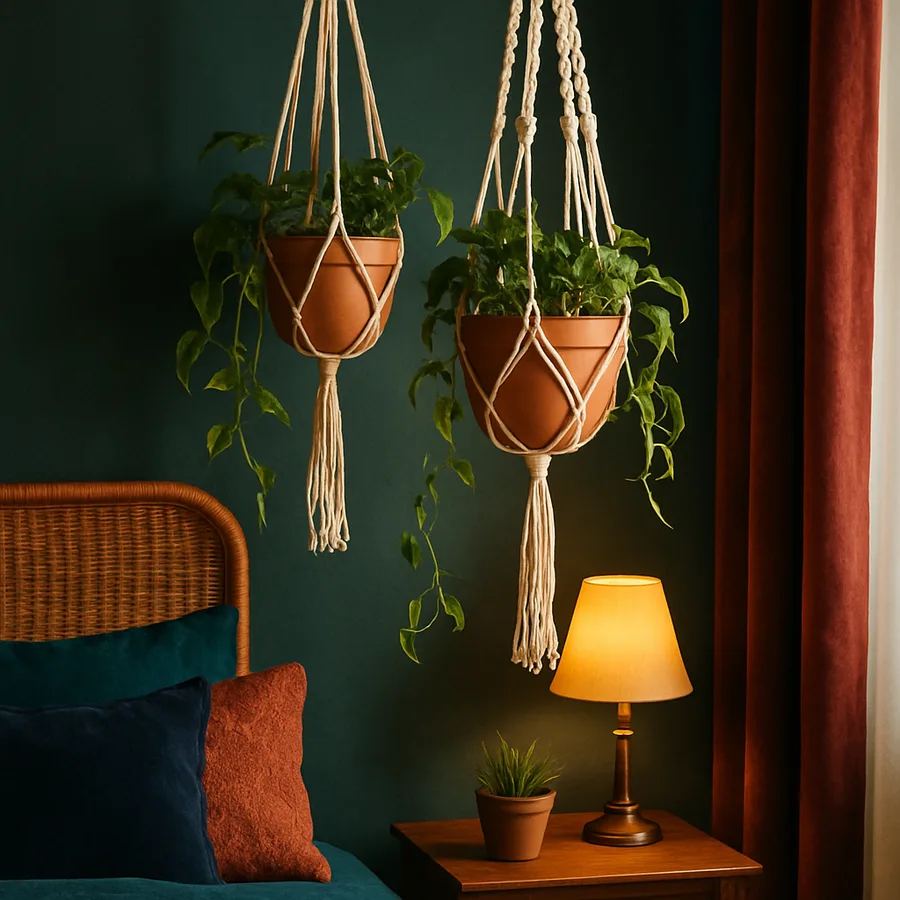
Macrame plant holders have outlived every prediction of their demise. They survived the late 1970s, vanished briefly in the cooler 1990s, returned with the bohemian revival of the 2010s, and now thrive again as one of the most enduring symbols of soft, hand-touched interior design. The reason macrame keeps coming back is that it solves problems no other accessory can. A hanging plant holder turns ceiling space into living display space, adds vertical movement to a room, and introduces a texture, knotted natural fiber, that cannot be replicated by any other material in the home.
The bedroom and bathroom are the two rooms where macrame has the largest impact. Both tend to be smaller than living areas, both benefit from softness, and both have ceilings or fixtures that can support hanging weight without elaborate structural intervention. According to a 2024 trend report from Etsy Trend Forecast, searches for handmade macrame plant hangers have grown by approximately 41 percent in the past two years, with bedroom and bathroom installations leading the category. The bohemian aesthetic has matured, and macrame has matured along with it.
Why Macrame Belongs in Bedrooms
Bedrooms benefit from softness in a way that other rooms do not. The space is intimate, often slept in for a third of the day, and dominated by horizontal surfaces such as the bed, dresser, and nightstand. Vertical interest is usually missing, which is why bedrooms often feel visually flat even when they are filled with beautiful furniture. A trio of macrame plant hangers descending from the ceiling instantly fixes this by introducing the vertical movement the room is missing.
The texture of knotted cotton or jute also adds tactile warmth, which matters in a room dedicated to rest. Hard surfaces, glass, and metal feel cold, while macrame absorbs sound, casts subtle shadows, and softens the visual edges of a room. Sleep researchers note that the perception of warmth in a bedroom contributes meaningfully to relaxation, and natural fiber accents quietly support that effect without anyone consciously registering it.
The plant choice in a bedroom matters because air quality during sleep affects rest. The original NASA Clean Air Study identified several species, including spider plant, snake plant, and pothos, that effectively remove indoor air pollutants. Spider plants and pothos in particular suit hanging holders because they trail beautifully and tolerate the low light typical of bedrooms. The combination of macrame texture and air-purifying plant turns a decorative feature into a functional one.
Have you noticed that the most photographed boho bedrooms always feature at least one hanging plant? It is rarely an accident. The vertical line of the plant hanger draws the eye upward, expanding the room's perceived height, and the trailing foliage softens the corners. The bedroom is the room where macrame earns its keep most efficiently, and even renters can install a single ceiling hook with a removable adhesive anchor in seconds.
Bathroom Macrame: Humidity as a Feature
The bathroom is the second great venue for macrame plant holders, and the reason is counterintuitive. The humidity that ruins so many other furnishings is exactly what tropical plants love. A bathroom with daily showers maintains humidity levels between fifty and ninety percent, which is closer to a Costa Rican rainforest than any other room in a typical home. Plants that struggle elsewhere, including ferns, calatheas, and pothos, often thrive in bathrooms once they get used to the conditions.
Macrame holders themselves benefit from bathroom installation in unexpected ways. Cotton and jute fiber tighten slightly in humid air, holding their knotwork structure for years longer than the same hanger installed in a dry desert living room. Bathroom macrame ages gracefully, gaining a slight patina over time that adds character rather than wear. The traditional craftsmanship developed in tropical climates was always designed for humid environments, which is why bathroom installations feel so natural.
The plant choice for bathrooms can be more adventurous than in any other room. Boston ferns, maidenhair ferns, prayer plants, calatheas, and orchids all flourish in steam-rich environments. According to research summarized by the Royal Horticultural Society, ferns in particular benefit from at least sixty percent ambient humidity, levels rare in heated indoor spaces but routine in active bathrooms. The bathroom essentially functions as a free greenhouse.
Light is the constraint to plan around. Bathrooms often have small windows, and some have no windows at all, which limits plant choices. Position the macrame hanger as close to the available light as possible, even if it means hanging it in front of a window rather than centered in the room. Light proximity beats placement aesthetics when choosing where to hang a bathroom plant, because a plant in the wrong light will fail no matter how perfect the visual composition.
Choosing the Right Macrame Style for Your Aesthetic
Not all macrame is created equal, and the style you choose will dictate whether the piece reads as bohemian, scandinavian, modern, or coastal. The four primary macrame styles are classic 1970s revival, minimalist Scandinavian, intricate fiber art, and chunky sculptural. Each suits a different aesthetic register and pairs with different plants and rooms.
The classic 1970s revival style features visible knotwork, beads, fringe, and natural-colored cotton cord. It pairs well with rattan furniture, terracotta pots, and warm color palettes. This style is the most forgiving, fitting nearly any boho or eclectic interior without overwhelming the room. Editors at Better Homes and Gardens have featured this style consistently in bohemian home tours because it photographs well in a wide range of light conditions.
Minimalist Scandinavian macrame uses simple knot patterns, neutral white or oatmeal cord, and avoids beads or fringe. The result is sculptural and quiet, suiting interiors with neutral palettes, white walls, and modern furniture. This style brings the texture of macrame without committing the room to a fully bohemian aesthetic, which makes it the most versatile choice for mixed-style homes. Less ornamentation, more architecture, is the aesthetic principle here.
Intricate fiber art macrame, often custom-made by individual artisans, treats the hanger as a wall sculpture in itself. These pieces feature complex patterns, multiple cord weights, and sometimes incorporate driftwood or copper rings. They are statement pieces that work best as the focal point of a room rather than as one of several hangers. Editors at House Beautiful have profiled several artisans whose work commands prices into the high hundreds for a single piece, reflecting the genuine craft involved.
Chunky sculptural macrame uses thick rope, sometimes one inch or more in diameter, with bold simple knots and oversized scale. This style suits modern rustic interiors, lofts, and homes with high ceilings. The thick rope reads as architecture rather than craft, which makes it suitable for masculine-leaning spaces that might otherwise feel uncomfortable with traditional macrame. Pair these with sculptural pots in concrete, ceramic, or blackened metal.
Selecting Plants That Trail Beautifully
The right plant in a macrame hanger looks effortless. The wrong plant looks like a cry for help. Trailing and cascading species are nearly always the right choice because they soften the geometric structure of the macrame and create the waterfall silhouette that gives the installation its movement. Upright plants in macrame hangers tend to feel stranded, as if they want to be on the ground instead.
The trailing all-stars include pothos, philodendron, string of pearls, string of hearts, hoya, tradescantia, and English ivy. Pothos is the most forgiving and the easiest to find, with golden, marble, and neon varieties offering different visual moods. String of pearls is dramatic but demanding, requiring bright light and careful watering. According to growth surveys by Costa Farms, pothos remains the single most popular hanging-plant choice in U.S. households, accounting for an estimated eighteen percent of all houseplant sales across the past five years.
Ferns deserve a special mention for bathroom hangers. Boston ferns, maidenhair ferns, and rabbit's foot ferns all trail beautifully when given enough humidity. They are demanding but rewarding, and a healthy fern in a macrame hanger reads as the ultimate boho statement. Ferns in bathrooms are essentially impossible to make look bad, which is why so many editorial bathroom shoots feature them.
For full sun locations such as a bedroom with a south-facing window, succulents and string of pearls become viable options. Burro's tail is a particularly striking choice, with its trailing chains of plump leaves creating a visually rich cascade. The trade-off is that succulents in hangers are heavier than they look, and the macrame must be built to support their weight, sometimes ten pounds or more for a mature plant in a substantial pot.
Mounting Hardware and Weight Considerations
The least glamorous part of macrame installation is the ceiling hook, but it is the part that determines whether the entire installation succeeds. Saturated potted plants weigh significantly more than they look, often two to four times their dry weight. A ten-inch terra cotta pot with damp soil and a mature pothos can easily exceed twelve pounds, and a Boston fern can push past fifteen pounds. The ceiling hook must be rated accordingly.
For permanent installations, a swag hook driven into a ceiling joist is the gold standard, rated for twenty-five to fifty pounds depending on the model. If the planned location does not align with a joist, a heavy-duty toggle bolt rated for at least twenty-five pounds in drywall provides a reliable alternative. Anchor specifications matter, and using an undersized anchor is the most common cause of ceiling damage from hanging plants.
Renters have several damage-free options. Removable adhesive ceiling hooks rated for five to ten pounds work for lightweight plants, while tension-mounted bars across doorways or window frames support heavier plants without any wall penetration. According to the American Society of Interior Designers (ASID), removable mounting solutions are increasingly common in the rental market, and their performance has improved substantially as the category has grown.
Have you tested the weight tolerance of your hook before loading the plant? A simple test is to hang a gallon water jug, weighing about eight pounds, from the hook for a full day. If the hook holds without movement or visible stress, it will likely hold most hanging plants reliably. The five-minute test prevents the five-hour cleanup that happens when a hook fails.
Styling Macrame Within a Layered Boho Room
Macrame plant holders reach their peak when they participate in a fully layered bohemian interior rather than standing alone. Layering is the soul of boho design, and a single macrame hanger in an otherwise minimalist room can feel out of place, while three hangers in a room rich with woven textiles, plants, and natural materials feel inevitable. Plan macrame as part of a system rather than as a one-off accent.
The layering principle works in three vertical zones: ceiling, eye level, and floor. Macrame hangers occupy the ceiling zone, while wall-mounted woven art, baskets, and fiber tapestries fill the eye-level zone. Floor cushions, jute or wool rugs, and rattan furniture anchor the floor zone. When all three zones are populated with woven natural fiber, the room reads as a unified boho composition rather than a collection of disconnected accessories.
Color palette is the second layer of cohesion. Boho interiors typically work best in warm earth tones, including terracotta, oatmeal, ochre, sage, and rust. Macrame in natural cotton or oatmeal cord blends seamlessly with these palettes, while colored or dyed cord can work as an accent if used sparingly. Resist the urge to mix every macrame color you find, because cohesion comes from restraint within the natural fiber family.
Grouping macrame in odd numbers, as designers featured by Architectural Digest recommend across nearly every styling category, applies just as strongly here. A trio of macrame hangers at varying lengths, draped from three ceiling points, creates the cascading effect that defines great boho rooms. Match the lengths roughly but not exactly, and let the plants vary in fullness and trail to add organic asymmetry.
Conclusion: The Knot That Keeps Coming Back
Macrame plant holders endure because they answer questions that interior design keeps asking: how do we soften a room, how do we add vertical interest without expensive architecture, how do we layer texture without buying more furniture? A single hanging plant can reshape the feel of a bedroom or bathroom in minutes, and a thoughtful trio can transform the room entirely. The craft is genuine, the materials are natural, and the variety of styles available means macrame fits almost any home that wants warmth.
The bedroom and bathroom are particularly suited to macrame because they are the rooms most in need of softness. Both tend to be smaller, more intimate, and more reliant on warm materials than the public rooms of a home. A hanging plant in either room signals care, the kind of intentional layering that distinguishes a home that has been lived in from one that has been merely decorated. Visitors notice, even when they cannot articulate why.
The category also rewards practice. The first macrame plant you hang will teach you about ceiling hooks, plant weight, and the proportion of pot to room. The second will teach you about plant choice and species suitability. By the third, you will have developed an instinct for the small details that distinguish polished installations from craft-fair attempts. The craft becomes intuitive faster than expected, and many homeowners eventually try their hand at making their own hangers from a simple kit.
Ready to hang your first macrame plant? Pick a single ceiling spot in your bedroom or bathroom, choose a hanger style that matches your aesthetic, select a trailing plant species you love, and install with hardware rated for double the weight you expect. Once the first hanger is up, the room will tell you whether it wants company. Most rooms do. The knotted cord and trailing leaves will quietly transform the air of the space, and the small daily ritual of watering and tending will become one of those small pleasures that makes a home feel like home.
More Articles You May Like



Comments
Post a Comment