Sump Pump Selection For Basement Flooding Prevention
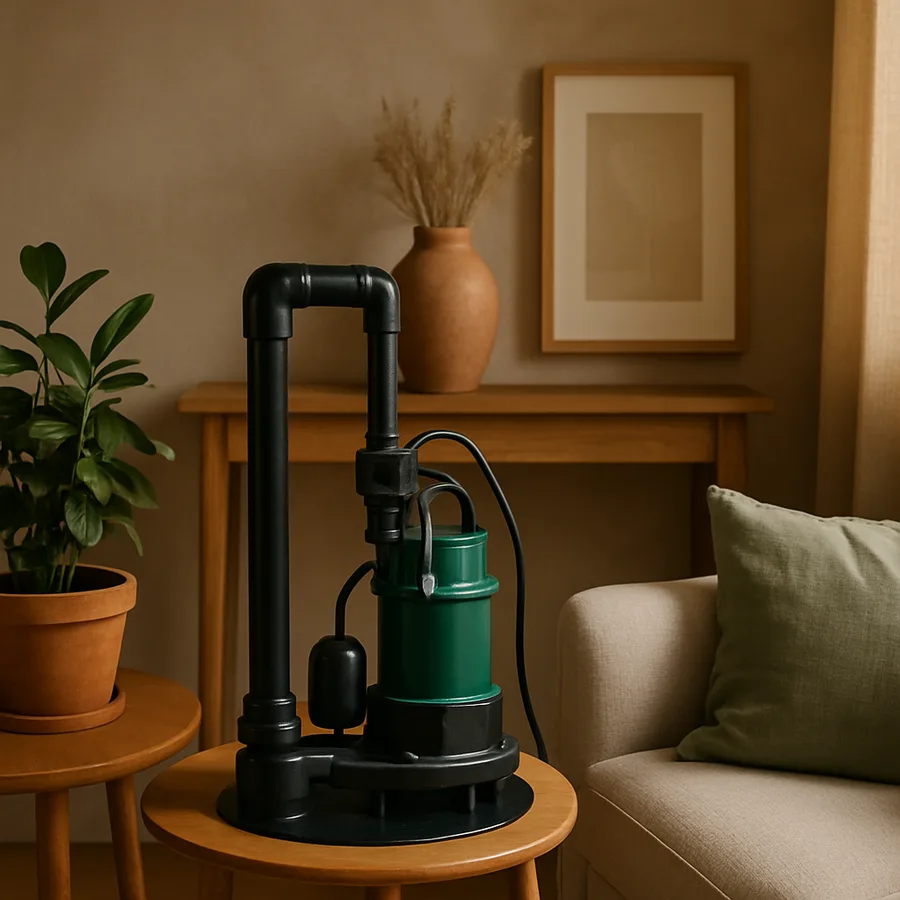
A flooded basement is rarely a one-time accident. By the time water shows up on the slab, a series of small failures has usually already taken place upstream, and the last line of defense, the sump pump sitting in a pit at the lowest point of the foundation, is often the only thing standing between a homeowner and a five-figure restoration bill. Selecting the right pump is not glamorous work, but it is one of the most consequential equipment decisions in the entire home.
Why do so many basements flood despite having a pump already installed? In a striking number of cases, the pump is undersized, the switch has failed silently, the discharge line is undersized or frozen, or the pit is too small to handle the inflow during a real storm. This guide walks through the engineering decisions that separate a sump system that actually works from one that quietly fails on the night you needed it most.
Pedestal Versus Submersible: Which Style Fits Your Home
The first decision is style. A pedestal sump pump places the motor above the pit on a long shaft, with the impeller assembly below. The motor never touches water, which historically meant longer service life and easier maintenance, since the motor was right at eye level. A submersible sump pump sits entirely inside the pit, with the motor sealed in a watertight housing. Submersibles are quieter, take less visible space in finished basements, and modern sealed motors routinely last a decade or more.
For finished basements and modern construction, submersibles are now the default. They are quieter, fit under a tight lid that controls humidity and radon entry, and pump at higher capacities for a given motor size because the impeller is closer to the water. Pedestal pumps remain useful in unfinished crawlspaces, in very narrow pits where a submersible will not fit, or in cabin and seasonal-home applications where the homeowner wants every component visible and accessible.
Cast iron housings outperform plastic housings in heat dissipation, which matters because pumps run hot during prolonged storms. The Federal Emergency Management Agency notes in flood mitigation guidance that pumps may need to run continuously for hours or even days during extended rain events, and a cheap plastic housing that cooks itself in the first six hours is a false economy. Spend a little more for cast iron when the budget allows. Stainless steel impellers are similarly worth the upgrade over thermoplastic, since the impeller is the component most exposed to abrasive sediment in pit water and its wear directly determines long-term flow performance.
Horsepower, Head Height, and Real-World Flow
Manufacturer specs typically advertise flow at zero feet of vertical lift, which is meaningless in a real basement installation. The number that matters is total dynamic head, the combined vertical lift from pit to discharge plus the friction losses through the discharge piping and check valves. A 1/3 horsepower pump that delivers 50 gallons per minute at zero head may deliver only 20 gallons per minute at 10 feet of head, which is a typical residential lift.
For most single-family homes, a 1/3 horsepower pump is the entry point, suitable for shallow water tables and modest groundwater inflow. A 1/2 horsepower pump handles the majority of real-world conditions, including basements with active perimeter drain tile systems feeding the pit. A 3/4 or 1 horsepower pump is appropriate for homes near high water tables, hillside lots that collect surface runoff, or where the discharge has to lift 15 feet or more. Oversizing slightly is generally wiser than running a smaller pump at the edge of its capacity for hours at a time.
Check the manufacturer's pump curve, not just the headline horsepower. Two pumps with identical horsepower ratings can deliver dramatically different flow rates at the head heights that matter in your installation. The National Association of Home Builders Research Center has published guidance recommending that homeowners verify pump performance at the actual head height required, rather than relying on marketing language. A reputable pump will come with a published curve chart in the documentation or on the manufacturer's website.
The Switch Is What Actually Fails First
Pumps rarely die from motor burnout. They die from switch failure, and the switch is the single highest-failure component in the entire assembly. The tethered float switch, hanging on a flexible cord, is the traditional design, simple and reliable when the pit is wide enough to give the float free travel. The vertical float switch, with a guided stem, works in narrower pits and avoids the wedging failure mode where a tethered float gets caught against the pit wall. Electronic switches with capacitive or pressure sensors eliminate mechanical movement entirely and offer self-diagnostic features in higher-end models.
Test the switch monthly. Pour a five-gallon bucket of water into the pit, watch the float rise, listen for the pump to start, and watch the water draw down to confirm the pump shuts off cleanly. If the pump short-cycles, runs continuously, or fails to start, the switch is the most likely culprit. Carrying a spare switch and a spare pump on the shelf is one of the cheapest forms of insurance available to a homeowner in a flood-prone area.
For maximum reliability, several manufacturers now sell dual-switch primary pumps, where a secondary switch automatically takes over if the primary fails to activate at the expected level. This redundancy adds roughly 30 to 60 dollars to the pump cost and dramatically reduces single-point-of-failure risk. For finished basements with expensive flooring, drywall, or stored possessions, the math is overwhelmingly in favor of the redundant switch.
Discharge Piping, Check Valves, and the Frozen Line Problem
Whatever the pump capacity, the discharge piping has to keep up. A 1.5-inch discharge is the minimum for most residential pumps, and a 2-inch discharge is preferable for 1/2 horsepower and larger pumps. Reducing the discharge to a smaller pipe than the pump outlet specification cuts capacity sharply and forces the motor to work harder against backpressure. Always match or exceed the pump's discharge port size.
A check valve installed on the discharge line just above the pump prevents water in the vertical column from draining back into the pit when the pump shuts off, which would otherwise cause short-cycling. Spring-loaded silent check valves cost slightly more than swing-style check valves but eliminate the loud water-hammer thump that drives homeowners crazy in finished basements. Replace check valves at the first sign of failure, since a stuck-open check valve forces the pump to re-lift the same column of water repeatedly.
The discharge line must terminate well away from the foundation, ideally at least 10 feet from the wall, sloped to drain freely, and protected from freezing in cold climates. The Insurance Institute for Business and Home Safety reports that frozen discharge lines are a leading cause of sump pump failures during winter storms, when ice plugs the pipe and the pump runs against a closed system. A freeze-relief fitting near the discharge exit allows water to escape if the outdoor line freezes, preventing motor burnout.
Pit Size, Inflow Rate, and Cycle Time
An undersized pit is one of the most common installation errors. A pit that is too small fills quickly, the pump cycles on and off rapidly, and the motor wears out from start-stop fatigue rather than continuous running. The traditional 18-inch diameter pit is acceptable for modest inflows, but for active perimeter drain systems, a 24-inch or 30-inch pit dramatically reduces cycle frequency and extends pump life.
Measure your actual inflow before selecting pump capacity. Unplug the pump after a heavy rain, let the pit fill to the switch activation level, then time how long it takes for the water to rise one inch. Multiply by the pit cross-sectional area and convert to gallons per minute. The pump capacity at your real head height should exceed this inflow rate by a comfortable margin, typically 1.5 to 2 times, to handle storms heavier than the one you measured.
Have you considered what happens during a hundred-year storm? Climate trends documented by FEMA show that extreme precipitation events have been increasing in frequency and intensity across most of the continental United States, and the storm that overwhelmed your old pump capacity is now likely to happen multiple times per decade. Designing for yesterday's storms invites tomorrow's flooded basement, and an extra 1/4 horsepower of pump capacity is a small premium against that risk.
Battery Backup, Alarms, and Smart Monitoring
A primary pump with no backup is one power outage away from a flood. A dedicated battery backup sump pump installed alongside the primary handles two failure modes at once: power outage during storms when the grid often fails simultaneously with peak inflow, and primary pump failure regardless of power status. Battery systems use either lead-acid deep-cycle batteries or AGM batteries, with AGM offering longer service life and lower maintenance.
Water-level alarms cost twenty dollars and provide invaluable early warning. A simple battery-powered alarm that sits in the pit will scream at 95 decibels the moment water rises above the primary pump's normal shutoff level, alerting you while there is still time to investigate. Smart alarms with Wi-Fi connectivity push notifications to your phone, which matters most when you are traveling or asleep. Industry installation surveys consistently report that homeowners with alarm systems catch pump failures hours earlier than those without.
For the most comprehensive protection, consider a tiered system: primary submersible pump with cast iron housing and dual switches, battery backup pump with high-capacity AGM battery, water-level alarm with Wi-Fi notification, and a generator-ready transfer switch on the household electrical panel so a portable generator can run the primary pump during extended outages. Each layer addresses a failure mode the layer below cannot, and the combined cost remains far less than the deductible on most flood damage claims. Document each component in a small folder kept near the panel, including model numbers, installation dates, battery age, and the test schedule, so that anyone responding to an emergency, including the homeowner under stress at 3 a.m., can verify the system status in seconds rather than minutes.
Conclusion
The right sump pump for your basement is not the most expensive pump on the shelf, nor the cheapest, but the one matched to your actual head height, inflow rate, pit size, and discharge configuration. Pedestal versus submersible, horsepower rating, switch type, discharge sizing, and pit dimensions all interact, and a weak link anywhere in the chain undermines the strongest component everywhere else. Approach the selection as a system rather than a single product purchase, and the long-term reliability improves dramatically.
Build in redundancy at the points most likely to fail. Switches fail more than motors, so choose dual-switch designs or carry spares. Power fails during the worst storms, so a battery backup is not optional in finished basements. Discharge lines freeze, so freeze-relief fittings matter in cold climates. Each of these is a modest cost individually, but together they transform a marginal installation into a robust one that handles the storms statistical analysis says will arrive more often than they did in previous decades.
Document your installation. Keep the pump model number, switch type, battery age, and last test date in a visible spot near the panel. Test the system monthly with a bucket of water, replace batteries on the manufacturer's recommended schedule, and treat the pump as a piece of safety equipment rather than a forgotten appliance. The pump that gets tested every month is the pump that does its job during the storm that matters.
If your current pump is more than five years old, untested, or sized by guesswork, schedule an evaluation now, before the next major rain event. A licensed plumber can measure your actual head height, evaluate pit dimensions, and recommend a properly sized replacement and backup system. The night of a flood is the worst possible time to discover the equipment you trusted has been failing quietly for months. Keep written records of the pump model, switch type, installation date, and every test, so the next person responsible for maintaining the system, whether a future owner or a service technician, can pick up where you left off without guessing.
More Articles You May Like



Comments
Post a Comment