Hand-Scraped vs Wire-Brushed Hardwood Texture Differences Compared
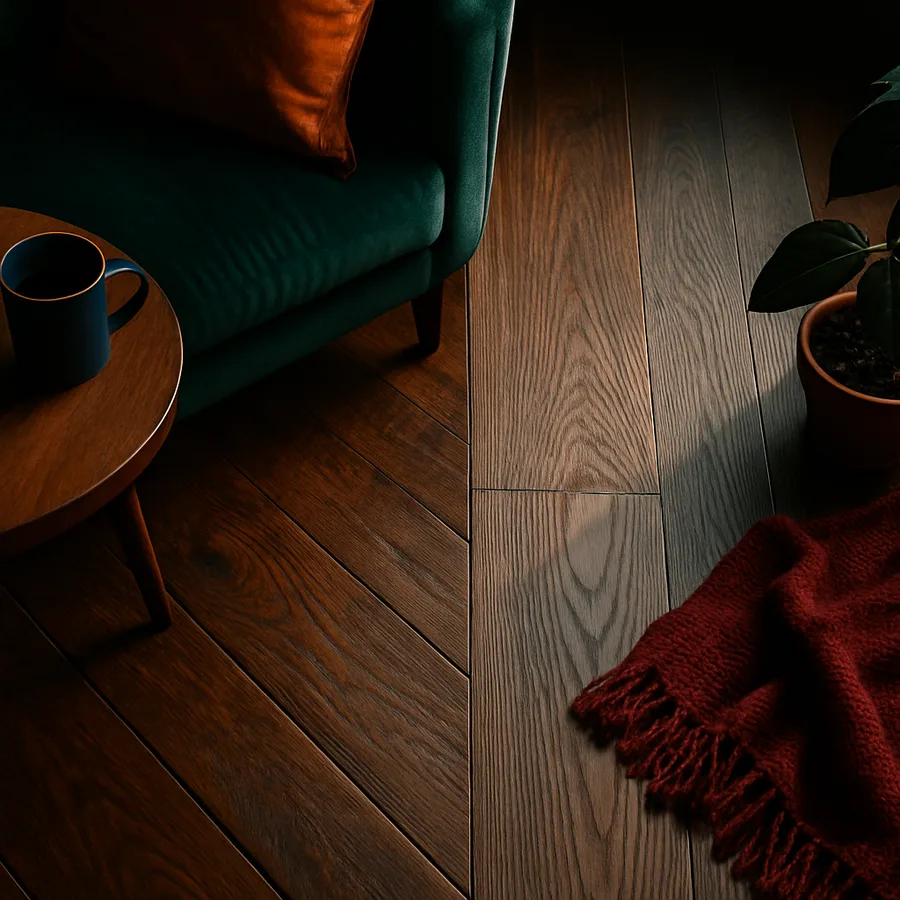
Smooth-faced hardwood was the residential default for most of the twentieth century. Over the last fifteen years, two textured surface treatments have moved from custom-shop curiosity to mainstream specification: hand-scraped and wire-brushed. Both add tactile depth, both hide everyday wear, and both look spectacular in showroom photography. They are not, however, interchangeable. Each texture reads differently in a room, behaves differently underfoot, and ages along a different curve.
This guide explains how each texture is produced, which design vocabularies they support, how they perform in real use, and how to decide which is right for your project. We will also cover the lower-tier imitations of both finishes that have flooded the market and what to look for when evaluating a sample. The goal is to give you the language to talk to a flooring specialist with confidence rather than relying on showroom marketing.
How Hand-Scraped Hardwood Is Produced
True hand-scraped hardwood is finished with a draw blade or hand plane, board by board, by a craftsperson who shaves long, irregular passes across the face of the plank. The result is a surface with visible undulation, occasional gouge marks, and a rhythm that varies from board to board. No two planks are identical, and the eye reads the surface as authentically reclaimed or hand-finished rather than machine-cut.
The texture depth is significant: a real hand-scraped plank can show 1 to 3 mm of variation between high and low points across its face. The finish that goes over the top (typically a penetrating oil or a hardwax oil) is absorbed unevenly, which produces the slight tonal variation that distinguishes premium hand-scraped from the flatter look of mass-market product. The work is slow, the labor cost is real, and the price reflects it.
Most "hand-scraped" product on the modern market is not actually hand-scraped. It is machine-scraped, which uses CNC-controlled blades to mimic hand-scraping at a fraction of the cost. The texture is shallower, the rhythm is more regular, and the eye learns to spot the repetition after a few rooms of viewing. According to research summarized by the National Wood Flooring Association, the price gap between machine-scraped and true hand-scraped product can exceed 100 percent for comparable species and grade.
How Wire-Brushed Hardwood Is Produced
Wire-brushed hardwood is produced by passing a metal-bristle brush across the face of the plank, removing the softer early-wood fibers and leaving the harder late-wood ridges proud. The result is a subtle, low-relief texture (typically 0.3 to 0.8 mm of variation) that emphasizes the natural grain rather than imposing a separate pattern.
The visual effect is contemporary rather than rustic. Wire-brushed white oak in particular has become the dominant specification in modern residential design over the last decade. The texture catches light along the grain lines, reads as quietly luxurious rather than overtly handcrafted, and pairs effortlessly with both minimalist and traditional interiors. Wire-brushed European white oak is the floor that most contemporary design publications photograph by default.
Wire-brushing is also a more consistent and machine-friendly process than scraping, which means the price premium over a smooth-finish plank is smaller (typically 10 to 25 percent rather than the 40 to 80 percent premium for hand-scraping). The labor savings translate directly to better unit economics, which is why most premium hardwood lines now offer a wire-brushed option as a standard SKU.
Aesthetic Personality and Design Pairing
The two textures sit at different ends of the residential design spectrum. Hand-scraped hardwood reads as rustic, traditional, or transitional. It pairs naturally with farmhouse, ranch, lodge, and warm traditional interiors. The texture suggests history, craftsmanship, and a building that has been lived in. Designers featured by the American Society of Interior Designers still specify hand-scraped product for projects targeting those vocabularies, particularly in larger homes where the texture has room to breathe.
Wire-brushed hardwood reads as contemporary, modern, or transitional. It pairs naturally with Scandinavian, Japandi, modern minimalist, and clean traditional interiors. The texture suggests refinement, naturalism, and a building that has been carefully designed. The same design publications that once filled their pages with hand-scraped product now overwhelmingly feature wire-brushed white oak as the contemporary default.
Will the texture you choose look dated in a decade? Possibly. Heavy hand-scraping has already begun to read as 2010s rustic in some markets, and the trend cycle suggests that a future swing back toward smoother surfaces is plausible. Wire-brushing's lower-relief profile ages more gracefully because the texture is subtle enough to read as natural rather than stylistic. If you are designing a house you will live in for decades, that timelessness has real value.
Durability and Real-World Wear
Both textures hide minor scratches and dents better than smooth-finished hardwood. The undulating surface of hand-scraped product disguises gouges so thoroughly that a casual observer rarely notices them. Wire-brushed surfaces hide finer scratches in the late-wood ridges but show deeper damage more clearly than hand-scraped.
For pet households, both textures are excellent choices. Claw scratches, the most common complaint in any wood-floor environment, blend into either texture far better than into a smooth finish. The American Hardwood Information Center estimates that homeowners with large dogs report roughly 60 percent fewer visible scratch complaints on textured floors versus smooth finishes, though specific numbers vary by species and finish.
Cleanability is where the two textures diverge slightly. Wire-brushed surfaces clean almost as easily as smooth finishes because the texture is shallow. Hand-scraped surfaces, particularly deeply scraped product, can hold dust and debris in the deeper grooves, requiring a more deliberate cleaning routine. A microfiber dust mop weekly handles routine cleaning on both, but the mop has to work harder on aggressive hand-scraping.
Refinishing Behavior and Long-Term Cost
Refinishing textured hardwood is genuinely different from refinishing smooth hardwood. A standard sand-and-refinish on smooth hardwood removes the existing finish along with the top millimeter or two of fiber and produces a fresh, smooth surface. The same process on textured hardwood removes the texture along with the finish, which often defeats the entire point of the original specification.
Most flooring professionals recommend a screen-and-recoat rather than a full sanding for textured floors. The process abrades the existing finish without removing the texture, then applies a fresh top coat. The result preserves the original character at the cost of needing more frequent recoats (typically every 5 to 8 years on textured product versus 8 to 12 years on smooth).
If a deeper repair is needed (water damage, deep gouges, or a major refresh), some textured floors can be partially re-textured during refinishing. The process requires a specialist, costs more than standard refinishing, and is not always available in all markets. Hand-scraped re-texturing is particularly demanding and may not be possible at all on machine-scraped product. Wire-brushing can be applied or refreshed with appropriate equipment, though the result rarely matches the original factory texture exactly.
Cost, Availability, and Specification Tips
Wire-brushed hardwood carries a 10 to 25 percent premium over smooth-finished product of the same species and grade. Machine-scraped hardwood typically carries a 15 to 30 percent premium. True hand-scraped hardwood carries a 60 to 120 percent premium and is available primarily through specialty mills and custom-order programs. Wide planks, premium grades, and engineered products with thick wear layers all add further to the cost.
When evaluating samples, view them under raking light from a low angle, not just under showroom overhead lighting. The raking light reveals the real depth and rhythm of the texture, which is the single best predictor of how the floor will read in your home. Have you tested how the sample feels barefoot? Texture matters at floor level, and the way each finish feels underfoot is part of the long-term ownership experience.
Brands featured by the Architectural Digest network for premium residential work tend to specify true hand-scraped product for projects with explicit rustic or traditional intent and wire-brushed product for projects with contemporary intent. Both textures appear consistently in award-winning residential work, but the design vocabulary determines which one is right for the project.
Conclusion
Hand-scraped and wire-brushed hardwood are both excellent choices, and neither is universally better. Hand-scraped product delivers a deeper, more handcrafted character that suits rustic, traditional, and transitional interiors. The premium for true hand-scraping is significant, the maintenance is slightly more demanding, and the design vocabulary is narrower than the alternative. For homeowners who want a floor with visible craftsmanship and a sense of history, hand-scraping earns its premium.
Wire-brushed product delivers a quieter, more contemporary character that suits modern, minimalist, and transitional interiors. The premium over smooth finish is modest, the maintenance is essentially the same as smooth, and the design vocabulary is broad enough to support nearly any modern aesthetic. For homeowners who want a floor that ages gracefully and slots into a wide range of design directions, wire-brushing is the safer call.
Whichever direction you lean, request large samples (at least 18 by 24 inches) in your home's actual lighting and live with them for at least a week before committing. View them under raking light, walk on them barefoot, and ask your installer how they would handle a future refresh. Schedule a consultation with a certified hardwood specialist who can show you both textures in finished installations of at least three years of service before you finalize the specification. The texture you can live with is the one that will look right in your home for decades.
Texture Depth, Plank Width, and Visual Scale
Texture choice interacts with plank width in ways that surprise many homeowners. A 4-inch hand-scraped plank reads as busy and overwhelming in most rooms because the texture pattern repeats too often within the visual field. A 7 to 10 inch hand-scraped plank gives the texture room to breathe and reads as character rather than chaos. Wire-brushing scales more flexibly because the texture is subtle enough to read appropriately at almost any plank width.
Texture depth is the other variable to evaluate. Light hand-scraping (under 1 mm of variation) reads as gently weathered and works in transitional or refined-traditional rooms. Medium scraping (1 to 2 mm) reads as clearly handcrafted and suits farmhouse or warm traditional vocabularies. Aggressive scraping (over 2 mm) reads as overtly rustic and works only in rooms that commit fully to that aesthetic. Most homeowners who specify aggressive scraping eventually wish they had chosen a lighter touch, while homeowners who specify wire-brushing or light hand-scraping rarely regret the decision.
Species Selection and Its Interaction With Texture
Some species take texture better than others. White oak, with its strong late-wood ridges, wire-brushes beautifully and accepts hand-scraping well. Red oak wire-brushes acceptably but produces more dramatic late-wood relief, which can read as overstated in contemporary rooms. Hickory's pronounced grain works well with both textures but requires careful finish selection to avoid an overly busy appearance.
Walnut wire-brushes subtly because the species has less pronounced late-wood ridges than oak. Hand-scraped walnut, particularly in wide planks, produces some of the most luxurious-looking floors on the residential market, though the cost climbs substantially. Maple resists both textures because the species is too uniformly dense, which is why textured maple is rare in the residential market. Quartersawn or rift-sawn cuts produce subtler textures than plain-sawn cuts of the same species, and the difference is worth examining in samples before specifying.
Sample Evaluation and Specification Tips
Evaluating texture samples requires more deliberate inspection than evaluating smooth-finish samples. Showroom lighting flatters every textured floor, and the only reliable way to judge a texture is to view it in your home's actual lighting at multiple times of day. Morning raking light reveals texture depth; midday overhead light shows how the floor reads when fully illuminated; evening lamp light shows how the texture catches warm artificial light.
Request samples large enough to walk on, ideally 18 by 24 inches or larger, and live with them in the actual installation room for at least a week. Pay attention to how the texture reads from across the room, not just from directly above. A texture that looks beautiful from a few feet away can read as overwhelming when viewed from the seating position in a living room. The opposite is also true: a texture that looks subtle in close-up sometimes disappears entirely from across the room.
More Articles You May Like



Comments
Post a Comment