Smart Thermostat Selection From Nest To Ecobee Compared
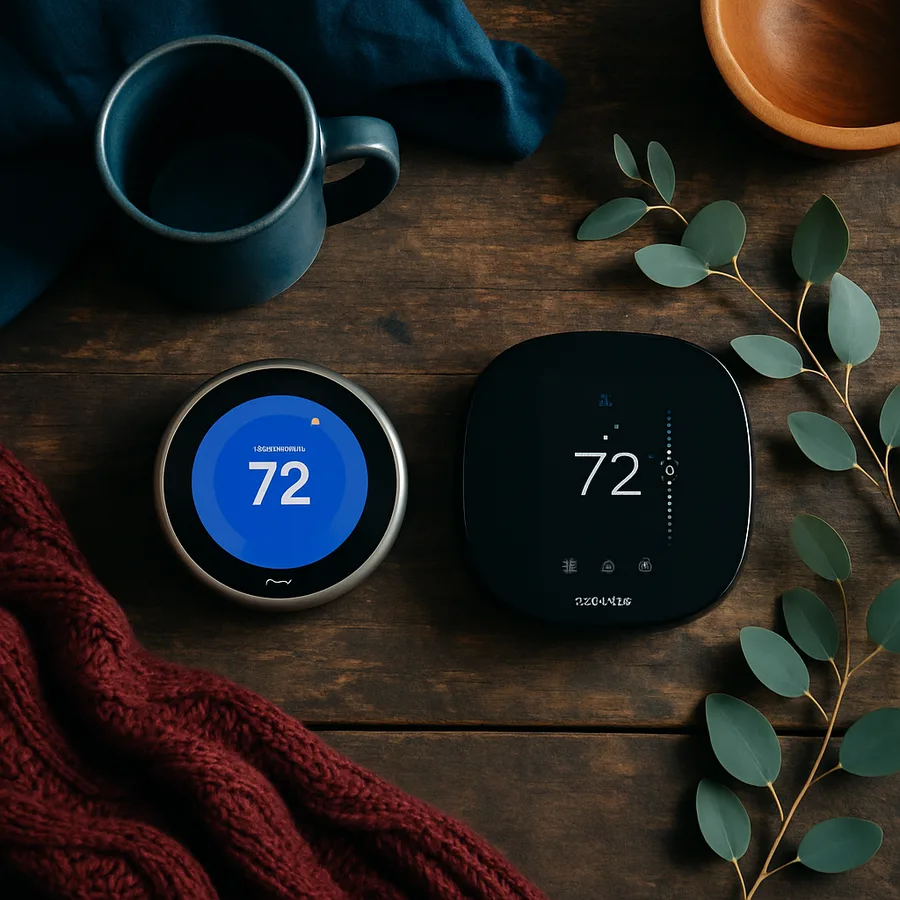
Smart thermostats started as a niche product in the early 2010s and have become a default upgrade in renovations, new construction, and energy-conscious retrofits. Google Nest and Ecobee dominate the residential market, with smaller but meaningful shares held by Honeywell Home, Emerson Sensi, and Amazon's own thermostats. Choosing between them is not a question of which is objectively best, but which fits your home's HVAC system, your daily routines, and the ecosystem of devices already living on your network.
This guide compares the major options across the dimensions that actually drive real-world satisfaction: HVAC compatibility, sensor architecture, scheduling intelligence, ecosystem integration, energy savings claims, and installation complexity. Industry data from ENERGY STAR, the joint program of the U.S. Environmental Protection Agency and the U.S. Department of Energy, indicates that a properly configured smart thermostat can reduce heating and cooling energy use by roughly eight percent annually for the average home. The catch in that statistic is the phrase "properly configured," which is where the differences between products start to matter.
HVAC Compatibility And The C-Wire Question
Before comparing features, confirm that the thermostat will physically work with your heating and cooling system. Most central forced-air systems in the U.S. use a low-voltage twenty-four-volt control architecture with conductors labeled R, W, Y, G, and C. The C-wire, or common wire, provides the continuous twenty-four-volt power that smart thermostats need to stay online, drive their displays, and connect to Wi-Fi.
Older homes, particularly those with simple heating-only systems or with thermostats originally installed before 2000, often lack a C-wire. Without one, you have three options: pull a new C-wire through the wall from the HVAC air handler, install a C-wire adapter that draws power from the existing wires by pulsing the system, or choose a thermostat that includes its own power kit. Ecobee ships its main thermostat with a Power Extender Kit (PEK) in the box for exactly this scenario. Nest generally relies on its ability to draw small amounts of power from the heating and cooling wires themselves, an approach that works in most homes but can cause intermittent reliability issues in some.
For heat pumps, dual-fuel systems, multi-stage furnaces, and high-velocity HVAC systems, compatibility narrows further. Verify each candidate thermostat against your specific HVAC equipment. Manufacturer compatibility checkers are reasonably accurate but not perfect; if you are unsure, consult a licensed HVAC technician before purchase. The Air Conditioning Contractors of America (ACCA) publishes installation standards that govern how thermostats should integrate with various system architectures, and a contractor familiar with those standards can confirm compatibility.
Sensor Architecture And Multi-Room Sensing
Single-thermostat homes have a fundamental problem: the thermostat reads the temperature of exactly one location, and that location may not be where you actually spend time. A thermostat in a hallway near the kitchen reads a different temperature than the bedroom upstairs or the home office at the end of the hall. The system heats or cools to satisfy the thermostat's reading, which can leave other rooms uncomfortable.
Ecobee built its market position around multi-room sensors. Its main thermostat ships with one remote SmartSensor in most packages, with additional sensors available individually. Each sensor reports temperature and occupancy, and the thermostat can be configured to average sensors, prioritize occupied rooms, or follow a specific room's temperature during scheduled periods. The result is a system that responds to the temperature where people actually are, not just at the thermostat location.
Nest introduced its own Temperature Sensors several years after Ecobee, and they offer similar functionality but with fewer configuration options. A Nest sensor can be assigned to a room and selected as the primary sensor on a schedule, but Nest does not blend multiple sensors or use occupancy detection from the sensors themselves in the same way. The Nest thermostat does have a built-in motion sensor on the unit itself, which contributes to occupancy detection at the thermostat location.
If your home has consistent temperature problems in rooms far from the thermostat, multi-room sensing is the single most impactful smart thermostat feature. Industry surveys from the ACCA suggest that uneven temperature distribution is the most common HVAC complaint in homes, and remote sensors directly address it without requiring zoning changes.
Scheduling, Learning, And Geofencing
Smart thermostats differentiate themselves primarily through how they decide when to heat and cool. The simplest approach is a programmed schedule: the homeowner sets target temperatures for time blocks, and the thermostat follows them. The more sophisticated approach is some combination of learning, occupancy detection, and geofencing.
Nest's defining feature at launch was its learning algorithm. The thermostat watches the homeowner's manual adjustments over the first week or two and builds a schedule from them, refining it over time. The Nest Learning Thermostat continues to lean on this approach, with occupancy detection and Home/Away modes layered on top. The selling point is that the thermostat figures itself out without explicit programming.
Ecobee takes a more configurable approach. Schedules are explicitly programmed, with sensor-based occupancy detection overriding the schedule when no one is home or when occupancy shifts to a different room. The configuration is more involved but produces more predictable behavior. Many users prefer this predictability once they have invested time in setting up the initial schedule.
Geofencing, where the thermostat detects when family members leave or return based on their phones' locations, is available on both platforms but works through their respective apps. The reliability of geofencing depends heavily on the user's phone settings, and many homeowners disable it after finding it triggers false aways during long meetings or long stays at home. Have you tried geofencing on any smart device, and did the experience match what the marketing promised?
Ecosystem Integration And Voice Control
The ecosystem question matters because the thermostat will outlive at least one or two cycles of other smart-home equipment, and it will be touched by family members through whatever interfaces they already use. Nest integrates natively with Google Home and Google Assistant, with deep support for Google's broader smart-home platform. Nest also works with Amazon Alexa and Apple HomeKit, but the deepest integration is on the Google side.
Ecobee integrates natively with Apple HomeKit, Google Home, Amazon Alexa, and Samsung SmartThings, with no clear preferred ecosystem. Some Ecobee models include a built-in Alexa voice assistant, allowing the thermostat itself to act as a smart speaker. This is a polarizing feature: some users love having voice control in any room with a thermostat, while others find the always-listening microphone unwelcome and disable it.
If your household is heavily invested in one ecosystem, choosing the thermostat that integrates most deeply with it improves daily usability. Routines that combine thermostat changes with lighting, locks, and other devices work most reliably within a single ecosystem. If you mix ecosystems across the household, Ecobee's broader integration tends to win, with Nest as a strong second.
Energy Savings Claims And What They Actually Mean
Both Nest and Ecobee advertise specific energy savings percentages, typically in the range of ten to twenty-three percent for heating and fifteen to twenty percent for cooling. These figures come from manufacturer-funded studies and represent best-case scenarios. The independent ENERGY STAR program publishes its own analysis and certifies thermostats based on documented field performance, with certified models demonstrating measurable savings versus standard programmable thermostats.
The honest answer is that savings depend almost entirely on what you were doing before. A homeowner who already maintained a tight schedule with a programmable thermostat will see modest gains from a smart thermostat, primarily from occupancy detection and remote sensors. A homeowner who left a manual thermostat at a single temperature year-round will see much larger gains, primarily from the smart thermostat introducing any schedule at all.
The U.S. Department of Energy estimates that the average home spends roughly forty-five percent of its annual energy bill on heating and cooling. An eight percent reduction on that portion translates to a meaningful but not transformative savings, typically between fifty and two hundred dollars per year for the average U.S. household. The smart thermostat pays back its installed cost within two to four years for most homes, and faster in homes with higher utility rates or more extreme climates.
Installation, Aesthetics, And The Wall They Live On
Installation difficulty for both Nest and Ecobee is moderate. The physical replacement of an existing thermostat takes thirty to sixty minutes for someone comfortable with basic wiring. The C-wire question is the most common complication, and both manufacturers provide step-by-step guides. For homes without a C-wire and without an easy path to add one, the Ecobee Power Extender Kit is the simpler solution; for homes with a clear path to add a C-wire, doing so is the more robust long-term choice.
Aesthetics matter because the thermostat lives on a wall in the most visible part of the home, typically the hallway or living room. The Nest Learning Thermostat is the more design-forward product, with a round form factor and color options including stainless steel, brass, copper, and matte black. The newer Nest Thermostat uses a similar round profile in mirrored finishes. Ecobee's main thermostat uses a more squared-off rectangular design with a touchscreen display, which reads as more conventional but less distinctive.
Some homeowners choose Nest specifically for its appearance and accept slightly less flexibility in configuration. Others choose Ecobee for its features and accept a less iconic profile. Both can be installed with their wall plate optionally hiding any wall damage from the prior thermostat, which is useful in renovations where the new thermostat sits in the same spot as a smaller predecessor. Have you considered where exactly the new thermostat will live and whether the wall behind it needs paint touch-up before installation?
Smaller competitors deserve a brief mention before committing to either flagship. Honeywell Home remains a strong choice for homes with complex HVAC systems and homeowners who prefer a more conventional touchscreen experience over learning algorithms or voice assistants. Emerson Sensi targets the lower end of the smart thermostat market with reliable basic functionality and easy installation, often pre-wired with a C-wire path that avoids adapter complications. Amazon Smart Thermostat, manufactured in partnership with Honeywell, is the budget option for households deeply embedded in the Alexa ecosystem.
Sensor placement is another quietly important detail. The thermostat itself should be installed on an interior wall, away from direct sunlight, supply registers, exterior doors, and major heat sources like cooktops or fireplaces. A thermostat in direct afternoon sun reads ambient temperature several degrees high and triggers unnecessary cooling. A thermostat near a kitchen reads heat from cooking and over-cools the rest of the home. Remote sensors should follow the same logic: place them at roughly seated height in occupied rooms, not on exterior walls or near windows where solar gain skews readings. These are not glamorous details, but they decide whether the smart thermostat actually performs as advertised once the household has lived with it for a few months.
Conclusion
Choosing between Nest and Ecobee comes down to three questions that the homeowner should answer before reading any product reviews. First, does the home have a C-wire, and if not, which adapter approach do you prefer? Second, how serious is the temperature variation between rooms, and how much value do you place on multi-room sensing? Third, which smart-home ecosystem are you already invested in, and how much does deep integration with that ecosystem matter to your daily use?
For homes with significant room-to-room temperature variation, Ecobee's sensor-driven architecture is the stronger fit, particularly in two-story homes where the thermostat lives on one floor and bedrooms are on another. For homes with consistent temperatures and a preference for set-and-forget operation, Nest's learning algorithm and clean physical design make it the more pleasant daily companion. For homes already deep in the Apple ecosystem, Ecobee's HomeKit support is the more thorough integration. For homes built around Google, Nest's native ties to Google Home are unmatched.
Whichever you choose, the energy savings are real but not magical. The thermostat needs to be configured to your actual schedule and your actual occupancy patterns to deliver the savings the manufacturer advertises. Plan to spend a few weeks adjusting schedules and sensor priorities after installation. The thermostats that get configured and then ignored for a few months tend to deliver disappointing results; the ones that get tuned to actual household behavior deliver the savings ENERGY STAR documents.
Ready to upgrade? Before you click buy on any smart thermostat, verify HVAC compatibility against your specific equipment, locate or plan for a C-wire, and decide how many remote sensors you actually need based on which rooms feel uneven today. Run the model through the official compatibility checker and read the installation guide end-to-end before committing. For energy savings research, the ENERGY STAR program publishes field-validated savings data. For HVAC system standards, the Air Conditioning Contractors of America publishes installation and configuration standards. The U.S. Department of Energy publishes broader home energy efficiency guidance to put thermostat savings in context with insulation, air sealing, and other upgrades.
More Articles You May Like



Comments
Post a Comment