Bay vs Bow Window Differences in Construction and Light Quality
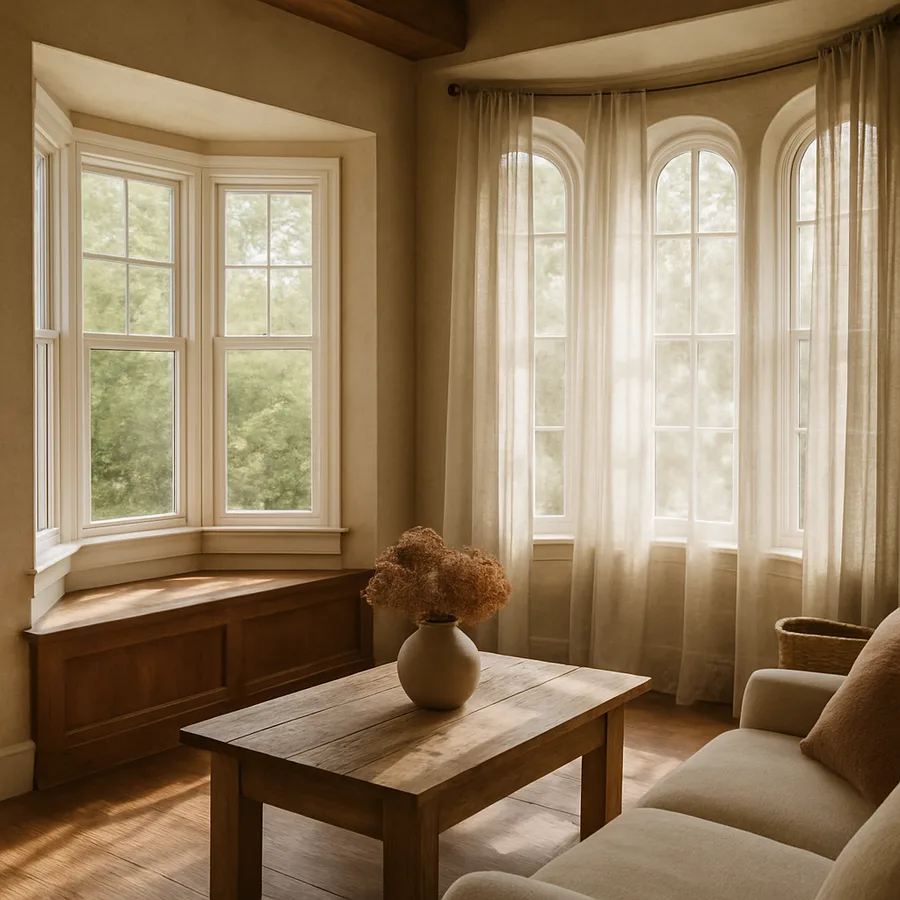
Bay and bow windows look similar from the curb, especially to anyone not paying close attention. They both project from the wall, they both create an interior bump-out usable as a seat or shelf, and they both let dramatically more light into a room than a flat window. The differences only come into focus when you sit inside the bay and notice the angled side panels, or stand inside a bow and feel the gentle curve hug the room. Those geometric differences cascade into different framing, different glass options, different costs, and different light quality across the day.
Choosing between them is rarely a coin toss. The room you have, the wall you want to bump out, the structural conditions above and below, and the architectural style of the house all push toward one or the other. This article walks through the practical engineering and the visual experience side by side so you can decide before you talk to a window dealer who has a quota on whichever model they have in stock. Have you measured the wall opening accurately and confirmed the room can accept a projection without violating setbacks? That single question shapes most of what follows.
The Geometry: Three Panels Versus Four to Six
A bay window is built from three flat sashes joined at angles, typically 30, 45, or 60 degrees. The center panel is parallel to the wall and is usually the largest, while the two flanking panels angle outward to meet the wall on either side. A bow window, by contrast, uses four to six (sometimes more) flat sashes joined at small angles to approximate a curve. The visual effect is dramatically different. A bay reads as crisp and faceted; a bow reads as gentle and rounded.
The number of sashes in a bow matters because each junction is a potential air-leakage and reflection point. Five-panel bows are the most common compromise between the visual smoothness of a curve and the practical limits of fabrication. Three-panel bays maximize the size of the center sash, which is often the panel you actually look out of, while keeping costs reasonable.
The projection depth (how far the window sticks out from the wall) is similar between the two types in residential applications, typically 12 to 24 inches at the deepest point. Bays project to a single deep point at the center; bows distribute the projection across a wider arc. That difference has structural and seating implications discussed below.
For window terminology and standard sizes, the American Architectural Manufacturers Association publishes performance and specification documents that reputable window manufacturers reference in their literature.
Structural Framing and How They Hang on the House
Both window types project beyond the wall and therefore must be supported in some way that does not rely on the wall studs alone. There are three common support strategies: cable suspension from above, knee braces from below, and cantilevered floor framing that extends the floor system outward to support the window from beneath.
Cable suspension is the cleanest visually. Steel cables run from the upper window frame back into the wall above, transferring weight to the header and ultimately the studs. This works well for bows and bays of moderate size on second-story or upper-level installations where there is no floor below to extend. Knee braces are decorative diagonal supports under the window, common on Victorian and Craftsman homes; they handle weight beautifully but are visible from the exterior. Cantilevered floor framing is the most robust and the most invasive, requiring extending the floor joists outward 12 to 24 inches before sheathing the seat.
Bays, with their concentrated center projection, place more load at one point and benefit from cantilevered framing or robust cable systems. Bows distribute load across a wider arc and can sometimes get away with lighter support. Either way, never accept a window installation that does not include a clear conversation about how the unit will be supported. The National Association of Home Builders notes that unsupported or undersupported bay and bow installations are a common source of seal failures within five years because the unit sags slightly and stresses the glazing seals.
Insulation under the seat is a second framing concern. Because the floor of the bay or bow projects into the exterior environment, the underside is essentially an exposed soffit that loses heat aggressively. Spray foam, rigid foam, or properly detailed batt insulation with a continuous air barrier are non-negotiable. Skipping this step makes the seat unusable in winter and produces visible condensation on the glass.
Light Quality and How the Two Read Across the Day
Both window types let in more light than a flat window of equivalent wall opening because the side panels capture light from oblique angles the flat wall would have missed. The character of that light is different between the two shapes, and the difference matters more than most people expect.
A bay window produces three distinct light "scenes" depending on sun angle. When the sun is perpendicular to the center panel, light enters cleanly and the side panels are dimmer. When the sun shifts to one side, that side panel becomes the dominant source while the center reads cooler and the opposite side darker. The transitions are visible and produce a moving pattern of light across the room as the day progresses. Many designers consider this dynamism a feature; it makes the room feel alive.
A bow window produces softer, more uniform light because the multiple panels at small angles smear the directional source. There are no sharp transitions; instead, the room receives a gentle wash of light that shifts in intensity but not character through the day. Bows tend to feel calmer and more constant, while bays feel more dramatic and architectural.
The Illuminating Engineering Society describes daylight quality in terms of glare control, uniformity, and color rendering. By those measures, bows generally outperform bays on uniformity, while bays often deliver a higher peak interior illuminance for short periods. Choose based on what the room is for: a reading nook benefits from the bow's calm, while a formal living room often gains from the bay's drama.
Energy Performance and Glazing Choices
Both window types have higher heat loss than a flat window of equivalent opening size because they have more glass area and more frame perimeter exposed to outside temperatures. Glazing choice and frame quality matter more here than in a flat window because there is more of it to lose heat through.
For most climates, double-pane or triple-pane low-emissivity glass with argon fill is the baseline. ENERGY STAR requirements for residential windows specify U-factor and Solar Heat Gain Coefficient values that vary by climate zone; a bay or bow installation should meet or exceed the local zone requirement, not just for energy bills but for condensation control. According to ENERGY STAR data, replacing single-pane windows with ENERGY STAR-certified models can save households roughly $100 to $580 annually depending on climate zone, and bay/bow units multiply that effect because they have more glass.
Frame material affects both performance and longevity. Vinyl is the cheapest and least thermally impressive, fiberglass and composite frames perform well thermally and resist movement, and wood frames look beautiful but require maintenance and tend to be the most expensive. Aluminum-clad wood is a common premium choice that gives you wood interior trim and weather-resistant aluminum exterior cladding.
For more on glazing and certified performance values, see the ENERGY STAR windows resource pages, which list certified products and explain how to read the label.
Functional Use of the Interior Space
The interior of a bay or bow becomes part of the room. How that space functions in daily life is genuinely different between the two geometries, and the difference is worth thinking through before you commit.
A bay window seat is angular. The center bench is rectangular and the side benches angle inward. This produces three distinct sitting zones (center facing out, left facing toward the right wall of the bay, and right facing toward the left wall of the bay) which work beautifully for two or three people in conversation but feel awkward for a single reader. Bays favor multiple occupants and conversation.
A bow window seat is curved. The bench follows the gentle arc of the panels and produces a continuous seating surface that hugs the room. A single reader can settle anywhere along the curve, multiple people can sit informally, and the surface accepts a long cushion that reads as a custom upholstery moment. Bows favor lounging and reading.
Both can also function as planter shelves, display surfaces for collections, or simply as deeper sills that accept a row of houseplants. If you are building either with the intent of using the interior, plan the seat depth (16 to 22 inches typically) and the seat height (15 to 18 inches typically) at the design stage rather than discovering after install that the proportions are off. Have you walked through the room imagining yourself using the seat? That visualization is worth more than 20 minutes of catalog browsing.
Cost, Lead Time, and the Practical Decision
Bay and bow windows are both significantly more expensive than equivalent flat windows because of the additional sashes, the structural support, and the framing work. In typical 2026 pricing, a quality replacement bay window installed in an existing wall opening runs $3,500 to $8,500, while a comparable bow window runs $4,500 to $11,000 because of the additional sash count. New construction installations during a build are less expensive because the framing is simpler when the wall and floor are still open.
Lead times have stretched in recent years, particularly for premium wood and aluminum-clad units. Plan 8 to 16 weeks from order to delivery, longer for custom sizes or specialty finishes. If you are coordinating with a renovation timeline, order the window first and schedule the wall demolition only after a confirmed delivery date.
Three practical decision factors usually settle the choice. First, architectural style: Victorian, Edwardian, and certain Colonial Revival homes traditionally use bow windows, while bungalows, prairie style, and many post-war styles favor bays. Forcing the wrong shape onto the wrong style produces a window that always reads as a retrofit. Second, room use: conversation rooms favor bays, reading rooms favor bows, kitchens with breakfast nooks can go either way. Third, budget: bows are typically 20 to 35 percent more than bays for equivalent quality, so a constrained budget often points to a bay.
Conclusion
The bay-versus-bow decision is genuinely about light quality, room use, and architectural fit, not just shape preference. Bays bring drama, faceted geometry, and a more dynamic light pattern across the day; bows bring calm, gentle curvature, and uniform daylight that flatters reading and quiet conversation. Both project, both create interior bump-outs, and both demand careful structural support and insulation that flat windows do not. The work happens above the floor, behind the wall, and beneath the seat, and skipping any of those areas creates problems that show up within a few seasons.
Energy performance has caught up with style. Modern triple-pane low-E glass and high-performance frames mean a properly specified bay or bow no longer has to be a thermal liability. ENERGY STAR-certified units in the right climate zone with detailed insulation under the seat will perform within 10 to 15 percent of an equivalent area of flat windows, which is a small price to pay for the spatial and visual benefits these projecting windows offer.
The cost difference between the two types is real but rarely decisive. If your budget genuinely cannot accommodate a bow, a well-detailed three-panel bay will deliver almost everything a bow does for substantially less money. If your budget can accommodate a bow and the room calls for it, the additional sashes and gentler curve produce a quieter, more enveloping light experience that justifies the upgrade in the right space. The wrong shape in the right room costs the same as the right shape in the right room, and the difference shows every day.
Before ordering, walk the room at three different times of day, mark the wall opening with painter's tape on the floor showing the projected footprint, and live with that footprint for at least a weekend. Notice how it interacts with traffic flow, with furniture placement, and with the views you actually want to see from inside. Then take that lived experience to a window showroom that stocks both options and ask to see them framed up at full scale. Decisions made standing inside a real bay or bow last decades; decisions made from brochures often do not survive the first season.
More Articles You May Like



Comments
Post a Comment