Bauhaus Furniture in Modern Living Rooms Without Looking Stark
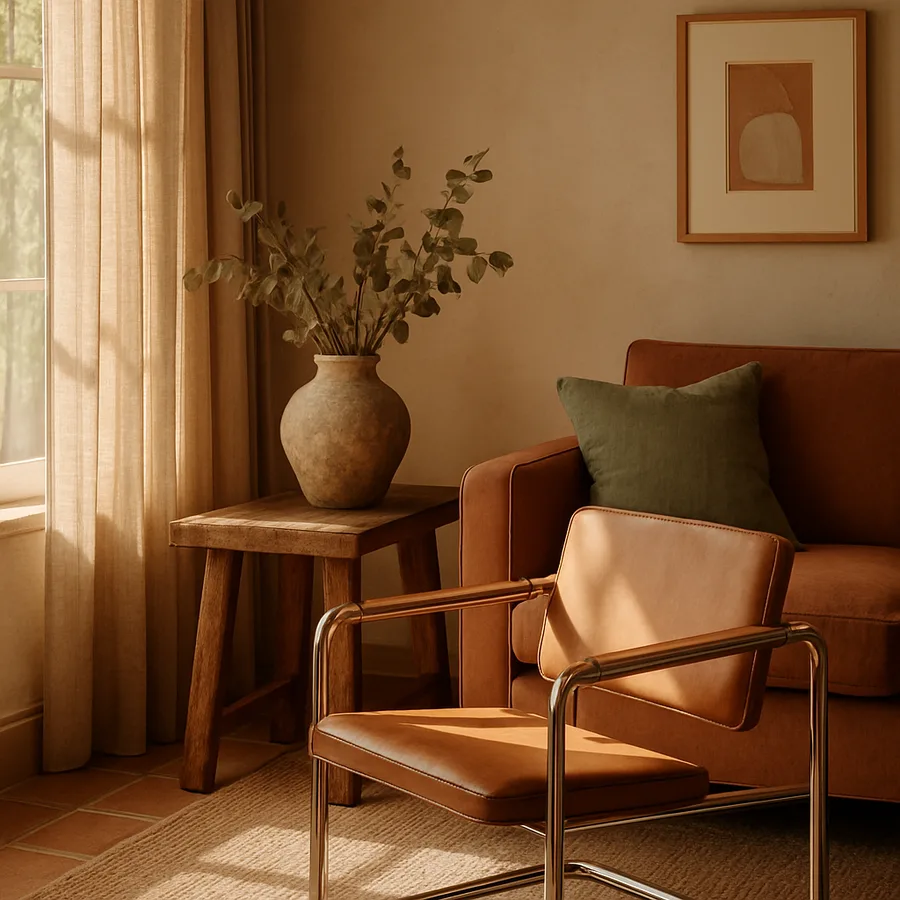
Bauhaus furniture has a reputation that does not quite match its history. The Wassily chair, the Barcelona stool, the Cesca cantilever, and the LC2 lounge are often photographed in white-walled galleries and sleek minimalist apartments, which has trained a generation of homeowners to associate them with cold, hard, vaguely museum-like rooms. The furniture itself was actually designed for warmer, more textured interiors than most contemporary stagings reveal. Marcel Breuer, Mies van der Rohe, Marianne Brandt, and the wider Bauhaus circle were responding to industrial production while still believing in craft, color, and the lived experience of a room.
The challenge for a homeowner today is integrating one or two of these iconic pieces into a real living room without tipping into the showroom aesthetic. The good news is that Bauhaus furniture is genuinely versatile because the geometry is so disciplined. A Wassily chair reads as architectural sculpture in the right room and as cold steel-and-leather in the wrong one. The difference is almost entirely about what surrounds it: the textiles, the lighting, the flooring, the wall finish, and the proportion of soft to hard surfaces. Have you ever sat in a room where the furniture looked beautiful in photographs but felt unwelcoming in person? That is almost always a layering problem rather than a furniture problem.
Understanding What Bauhaus Furniture Actually Needs
Bauhaus furniture was designed in dialogue with handwoven textiles, painted wall murals, exposed brick, and natural light. The original Bauhaus building in Dessau, designed by Walter Gropius and now a UNESCO World Heritage Site, was full of color and texture in a way that contemporary photography rarely captures. The students at the weaving workshop, led by Gunta Stolzl and later Anni Albers, produced rugs and wall hangings specifically to live alongside tubular steel furniture. That pairing of warm fiber against cool metal is the operating principle that almost every successful Bauhaus living room follows.
The single biggest mistake is using Bauhaus pieces in a room that has no textile presence. A Barcelona chair on a polished concrete floor with a leather sofa and chrome side table will always read as a hotel lobby. Add a hand-knotted wool rug, linen drapery to the floor, a chunky boucle throw, and a textured bouclé or velvet sofa, and the same chair reads as a beloved heirloom. The metal and leather are precisely the surfaces that need contrast to feel domestic, and that contrast comes from fiber.
According to a 2024 industry report from the American Institute of Architects, residential interiors are increasingly mixing modernist furniture with what their researchers call "tactile maximalism," meaning layered textiles and natural materials in rooms that would once have been kept spartan. This shift is essentially a correction to two decades of Instagram minimalism that drained warmth from living spaces. Bauhaus furniture sits at the center of that correction because it is structurally minimal but pairs beautifully with abundant texture.
Choosing Which Bauhaus Pieces to Include
Restraint is essential. A living room with a Wassily chair, a Barcelona daybed, an LC2 sofa, and a Cesca dining chair reads as a furniture catalog rather than a home. Pick one hero piece and one supporting piece, then let everything else be quieter and more anonymous. The hero piece is usually a chair because chairs have personality and do not dominate the floor plan. A single Wassily or Cesca placed at an angle to the main seating creates a focal point and a conversational geometry without committing the entire room to the style.
For most living rooms, a tubular steel and leather chair like the Wassily or LC1 is the most flexible hero because the leather softens over time and the steel reads as architectural rather than industrial. The Cesca cantilever chair, with its caned seat and back, is even warmer because the cane introduces handcraft and pattern into the silhouette. The LC4 chaise is the most assertive option and works best in a corner with a strong floor lamp and a sheepskin throw, where it functions as both furniture and sculpture.
Avoid pairing Bauhaus chairs with sofas of equal visual weight. The chair should be the punctuation, not the sentence. A linen-upholstered Italian sofa with low arms, a vintage chesterfield in cognac leather, or a deep boucle sectional all provide the soft mass that lets a Bauhaus chair stand out. Look at the Museum of Modern Art design collection photographs for examples of how curators stage these pieces in residential context rather than gallery context. The difference is instructive.
The Critical Role of Wall Finish and Color
White walls are the default that often kills the warmth of a Bauhaus interior. Original Bauhaus buildings used color extensively, with primary red, yellow, and blue accents alongside warm grays, ochres, and earthy greens. A living room with Bauhaus furniture benefits enormously from one painted accent wall in a saturated color, a textured plaster finish on all walls, or warm wood paneling on at least one surface. The furniture geometry stays disciplined, and the wall provides the painterly background it was designed to live against.
Limewash and clay plaster finishes are particularly effective because they introduce subtle tonal variation that catches light differently throughout the day. A pale terracotta limewash on the wall behind a Wassily chair makes the chrome glow rather than glare. Similarly, deep teal or aubergine on a single feature wall behind a sofa frames the seating area and makes adjacent Bauhaus pieces read as warm rather than clinical. Avoid pure white, brilliant white, and gray-white on all four walls of a room with Bauhaus furniture because the absence of pigment removes the dialogue partner the furniture needs.
Wood is the other secret weapon. A herringbone oak floor, a walnut media cabinet, or even a single floating wood shelf along one wall introduces grain and warmth that softens chrome and steel instantly. What was the last room you walked into where the floor itself made the furniture look better? Almost certainly the floor was a warm wood, and the furniture probably included some metal. That is not coincidence. The American Society of Interior Designers, or ASID, regularly cites wood flooring as the single most impactful surface specification in residential design.
Layering Textiles to Create Depth
Textile layering is where a Bauhaus living room either succeeds or fails. The room needs at least four distinct textile presences to read as warm: a substantial rug, full-length drapery, throw pillows in varied weaves, and a soft throw blanket. Each contributes a different tactile note. A jute or wool berber rug provides the foundational texture underfoot. Linen drapery, ideally pooling slightly on the floor, softens the perimeter of the room and absorbs hard edges. Pillows in boucle, mohair, velvet, and handwoven cotton introduce variety at seating height. A chunky throw on the arm of a chair provides the casual moment that says someone actually lives here.
Scale matters as much as material. A small rug under a coffee table looks like a coaster and visually shrinks the room. The rug should extend at least under the front legs of all major seating, and ideally cover the full conversation area. According to a 2025 design survey by Architectural Digest, oversized rugs are now specified in 64 percent of high-end living room projects, up from 41 percent five years ago. The rug provides the soft acoustic and visual base that lets hard-edged Bauhaus chairs feel grounded rather than floating.
Color in textiles should reference the wall colors and the natural materials in the room rather than introducing competing palettes. If the wall is a warm terracotta, the rug might be a creamy oatmeal with subtle rust flecks, the pillows might be cognac and ochre, and the throw might be a dusty olive. The result is a room with depth and warmth, where the Bauhaus furniture sits as a confident graphic note within a larger painterly composition.
Lighting That Honors the Architecture
Lighting is the third leg of the warmth equation, after textiles and wall finish. Bauhaus interiors used dedicated task and ambient lighting at multiple levels, not a single overhead fixture trying to do everything. A living room with Bauhaus furniture should have at least three lighting sources: a floor lamp near the main chair, a table lamp on a side surface, and either a sconce or accent light on the walls. The Wagenfeld table lamp, designed by Wilhelm Wagenfeld at the Bauhaus, is the period-correct choice and still in production. An arc floor lamp with a marble base and brass arm is a defensible substitute that reads as 1960s Italian rather than 1920s German but lives comfortably with Bauhaus furniture.
Avoid overhead recessed lighting as the primary source because it flattens texture and washes out the warm tones that make the room feel inhabited. If recessed lights are already installed, put them on dimmers and use them at thirty percent or less in the evening. Layered lower-level lighting is what creates the painterly evening atmosphere that photographs of original Bauhaus interiors actually show, and what most contemporary stagings miss.
Bulb temperature matters more than fixture choice. Use 2700K or warmer LED bulbs throughout, and avoid the 4000K and higher temperatures that read as office or hospital lighting. The Architectural Digest design archives include extensive coverage of how lighting temperature shifts the perceived warmth of a room, and the difference between 2700K and 3500K in a Bauhaus living room is the difference between an art-collector's home and a startup office.
The Finishing Layer of Art and Objects
Art and objects are the personal layer that finally distinguishes a living room from a furniture showroom. Bauhaus interiors lived alongside paintings by Klee, Kandinsky, and Albers, and ceramics by Marguerite Friedlaender. You do not need original Bauhaus art, but the spirit matters. Abstract paintings with bold color and geometry, handmade ceramics with visible throwing marks, and books that look read rather than staged all contribute. A single large painting above the sofa is more effective than a gallery wall of small framed prints when the furniture below is already graphically strong.
Sculptural objects on coffee tables and side tables should have weight and presence rather than fragility. A turned wood bowl, a hand-thrown ceramic vessel, a stack of substantial books, and a small bronze or stone sculpture are the canonical objects. Avoid an excess of small decorative items because the room reads as cluttered and the disciplined geometry of the Bauhaus furniture loses its impact. Three substantial objects on a coffee table beat fifteen small ones every time.
Plants are the final softening element. A large fiddle-leaf fig, a mature olive tree, or a bird of paradise in a textured ceramic planter introduces organic line and seasonal change into a room dominated by hard-edged furniture. Could you imagine your current living room with one large plant in the corner near the chair? The improvement is usually significant, and the cost is a small fraction of any furniture investment. According to a 2024 wellness study by The American Horticultural Society, the presence of indoor plants measurably reduces perceived stress in domestic interiors, which is precisely the quality a successful Bauhaus living room should offer.
Conclusion
Bauhaus furniture in a contemporary living room is a high-reward, high-discipline design move. Get the surrounding choices right, and a single Wassily chair or Cesca will give the room a quality of considered modernism that few other styles can match. Get the surrounding choices wrong, and the same furniture reads as cold, clinical, or showroom-staged. The difference is almost entirely about texture, color, lighting, and restraint, not about the furniture itself.
The principles are surprisingly consistent across successful projects. One hero piece, not five. Wall finishes with pigment and texture, not flat white. Rugs and drapery substantial enough to ground the geometry. Layered lighting at warm color temperatures. Personal objects with weight and meaning. Plants and natural materials to soften hard edges. None of these moves are expensive in absolute terms, and several can be implemented with paint and textiles alone before any furniture investment.
If you are considering a Bauhaus piece for your living room, start by photographing your current space and marking which of the six warmth principles are present and which are missing. Address the missing layers first, then introduce the furniture. The piece will arrive into a room that is ready to receive it, rather than a room that needs to be reorganized around it. Schedule a free consultation with a local interior designer this month if you want a second opinion before you commit. The right Bauhaus living room balances rigor and warmth in a way that few other styles can, and the path to it is more about layering than purchasing.
More Articles You May Like



Comments
Post a Comment