Live Edge Wood Shelving for Rustic Modern Living Rooms
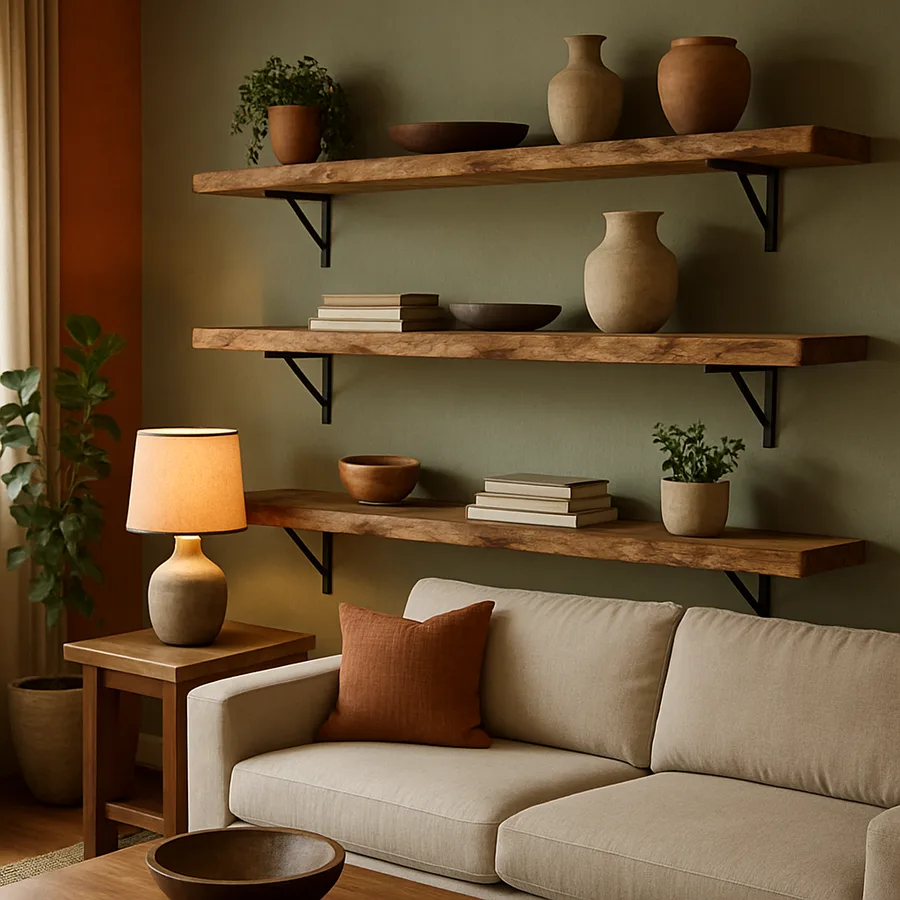
The Appeal of Natural Edges in Contemporary Spaces
There is something deeply satisfying about a piece of wood that still carries the outline of the tree it came from. Live edge wood shelving preserves the natural bark line and organic contour of the original timber, creating a visual bridge between the outdoors and the carefully curated interior of a modern living room. Each slab is genuinely unique, shaped by decades of growth patterns, weather exposure, and the particular species of tree from which it was harvested. This inherent individuality is precisely what draws homeowners who want their spaces to feel personal rather than mass-produced.
The American Society of Interior Designers (ASID) has noted a sustained increase in demand for biophilic design elements in residential projects, with natural wood features ranking among the most requested material choices in living room renovations. According to ASID's residential design survey, over 70 percent of designers reported clients specifically asking for natural or reclaimed wood elements in at least one room of their home. This data reflects a broader cultural shift toward spaces that feel grounded, textured, and connected to the natural world. Live edge shelves tap directly into that desire without requiring a full renovation or significant structural changes.
What makes live edge shelving particularly effective in a rustic modern context is its ability to hold tension between two opposing design languages. The raw, irregular edge speaks to rustic sensibility and craft tradition, while the clean mounting hardware and deliberate placement align with modern design principles of restraint and intentionality. This pairing works because neither element dominates; instead, they create a productive dialogue that keeps the eye engaged. Have you noticed how the most memorable rooms often contain at least one element that feels slightly unexpected against its surroundings?
The practical advantages are worth mentioning alongside the aesthetic ones. A well-mounted live edge shelf provides genuine storage and display space while occupying minimal floor area, making it ideal for living rooms where square footage is at a premium. Unlike bulky bookcases or freestanding shelving units, a floating live edge slab maintains the open, airy feel that modern design prioritizes. It can hold books, ceramics, framed photographs, or small plants without cluttering the room, functioning as both a decorative feature and a useful surface.
Choosing the Right Wood Species for Your Shelf
The species of wood you select will fundamentally shape the character of your live edge shelf, influencing everything from color and grain pattern to durability and weight. Black walnut remains the most popular choice for interior live edge applications, prized for its rich chocolate-brown tones, flowing grain patterns, and natural resistance to warping. Walnut slabs tend to have a moderate weight that makes them manageable for wall mounting, and the wood darkens gracefully over time, developing a deeper patina that many homeowners find appealing. The National Hardwood Lumber Association classifies walnut as a premium domestic hardwood, and its consistent availability from sustainable North American sources makes it a responsible choice.
White oak offers a lighter, more versatile palette that works well in living rooms with cooler color schemes or Scandinavian-influenced design. The grain is tighter and more uniform than walnut, with characteristic ray fleck patterns that catch light in subtle ways. Oak is significantly harder than walnut on the Janka scale, rating approximately 1360 pounds-force compared to walnut's 1010, which means it resists dents and scratches more effectively in high-traffic areas. For families with children or homeowners who plan to use their shelves for heavier objects like stacked books or pottery, oak's structural resilience is a meaningful practical advantage.
Softer species like western red cedar and redwood bring warm reddish tones and dramatic grain variation, but they require more careful consideration for shelving applications. These woods are lighter and easier to mount, but they dent more readily and may not support heavy loads without additional reinforcement. Cedar's natural aromatic properties and insect resistance make it an excellent choice for decorative shelves that hold lighter objects like framed art or small succulent arrangements. If you are drawn to the warm coloring of softwoods but need more structural integrity, consider Douglas fir, which offers a similar color palette with considerably greater strength.
Exotic species like monkey pod, acacia, and mango wood have gained popularity for live edge applications, bringing bold grain patterns and unusual color ranges that domestic species cannot match. These tropical hardwoods often feature striking two-tone heartwood and sapwood contrasts that make each slab visually dramatic. However, sourcing matters enormously with exotic species. The Architectural Digest sustainability guide recommends verifying that any imported wood carries Forest Stewardship Council (FSC) certification to ensure responsible harvesting practices. The environmental cost of shipping heavy timber across oceans is also worth factoring into your decision.
Mounting Methods and Structural Requirements
The mounting system you choose will determine both the visual impact and the long-term safety of your live edge shelf. Floating shelf brackets, which consist of heavy-duty steel rods that slide into holes drilled in the back of the slab, create the cleanest look by hiding all hardware from view. This method makes the shelf appear to emerge directly from the wall, which amplifies the organic quality of the live edge. Floating hardware typically supports between 50 and 100 pounds per bracket depending on the manufacturer, and most live edge shelves require at least two brackets spaced 16 to 24 inches apart to distribute weight evenly across the slab.
The critical factor that many homeowners overlook is wall construction. Floating brackets must be anchored into wall studs, not just drywall, to safely support the combined weight of a solid wood slab and whatever objects will sit on it. A typical live edge walnut shelf measuring 36 inches long, 10 inches deep, and 2 inches thick weighs approximately 15 to 20 pounds before anything is placed on it. Adding books, pottery, or decorative objects can easily push the total load above 60 pounds. The International Residential Code (IRC) does not specify shelf-mounting requirements directly, but structural engineers generally recommend a safety factor of at least three times the expected load for wall-mounted installations.
Visible bracket systems offer an alternative that some designers actually prefer for their honest, utilitarian aesthetic. Hand-forged iron brackets in matte black or raw steel pair beautifully with live edge wood, reinforcing the rustic element of the design while providing robust support that can handle heavier loads than most floating systems. L-shaped brackets in industrial finishes create a workshop-inspired look that suits loft-style living rooms, while slender hairpin brackets add a mid-century modern accent. The bracket itself becomes part of the design composition rather than something to be hidden, which simplifies installation and provides greater flexibility in shelf placement.
Do you know the location of the studs in your living room walls before planning shelf placement? This question is not trivial, because stud spacing varies between older and newer construction, and plaster-over-lath walls in pre-war homes present different challenges than modern drywall. Using a reliable stud finder before committing to bracket locations prevents the frustrating scenario of discovering that your ideal shelf position falls between studs, which would require either toggle bolts rated for shear loads or a French cleat system that spans multiple stud bays. Taking measurements first saves time, money, and wall repair later.
Finishing and Sealing for Long-Term Beauty
Raw live edge wood needs protection to maintain its appearance and structural integrity over years of indoor use. The finish you choose will affect the wood's color, sheen, and tactile quality, so this decision is as much about aesthetics as it is about preservation. Penetrating oil finishes like tung oil and Danish oil soak into the wood fibers rather than sitting on top, preserving the natural texture and matte appearance that many people associate with live edge character. These finishes are easy to apply with a cloth, require no specialized equipment, and can be refreshed periodically without stripping the previous coat. The trade-off is that oil finishes provide less moisture resistance than film-forming alternatives.
Polyurethane and lacquer finishes create a durable surface film that protects against moisture, stains, and scratches more aggressively than penetrating oils. A satin polyurethane strikes a middle ground between the plasticky sheen of gloss finishes and the unprotected feel of raw wood, giving the shelf a subtle warmth without making it look coated. Water-based polyurethanes dry faster and emit fewer volatile organic compounds than oil-based versions, making them more practical for indoor application. The Better Homes and Gardens finishing guide notes that three thin coats of water-based polyurethane with light sanding between applications typically produces the best results for shelving applications.
The bark edge itself requires special attention during the finishing process. On some species, the bark adheres firmly to the cambium layer and can be stabilized with a penetrating epoxy or thin cyanoacrylate adhesive that locks it in place permanently. On other species, the bark loosens as the wood dries and will eventually fall off regardless of what finish is applied over it. In these cases, most woodworkers recommend removing the bark entirely and finishing the exposed cambium layer, which often reveals beautiful color gradients and textural details that the bark was hiding. Either approach can look excellent, but attempting to preserve bark that wants to detach leads to a shelf that sheds debris onto whatever sits below it.
Environmental conditions in your living room also influence finishing decisions. Homes with forced-air heating systems experience significant seasonal humidity swings that cause wood to expand and contract, which can crack rigid film finishes over time. If your living room humidity fluctuates widely between winter and summer, a flexible oil finish may prove more durable in the long run than a hard polyurethane coating. Conversely, homes with consistent climate control can support any finish type without concern. A simple hygrometer reading over a few weeks will tell you where your space falls on this spectrum and guide your finish selection accordingly.
Styling Live Edge Shelves Without Overcrowding
The temptation with any new shelf is to fill every inch of surface area, but live edge shelving works best when the wood itself remains a visible and active part of the composition. The natural edge is the visual centerpiece, and covering it completely with objects defeats the purpose of choosing a live edge slab in the first place. A useful guideline is the rule of thirds: dedicate roughly one-third of the shelf surface to objects, one-third to negative space, and allow the remaining third to showcase the wood's grain and edge detail. This ratio keeps the display feeling curated rather than cluttered while letting the material breathe.
Height variation among displayed objects creates visual rhythm and prevents the shelf from reading as a flat, monotonous line. Pairing a tall ceramic vase with a short stack of books and a small trailing plant, for example, establishes a dynamic silhouette that draws the eye along the shelf's length. The National Association of Home Builders (NAHB) reports that built-in and open shelving consistently ranks among the most desired features in living room design, but the styling of those shelves matters as much as their presence. Poorly arranged objects on beautiful shelving can make a room feel disorganized rather than designed.
Color coordination between shelf objects and the broader living room palette prevents the display from feeling disconnected from its surroundings. If your living room features cool grays and whites, selecting pottery and book covers in complementary tones creates visual coherence. Warm-toned living rooms with leather furniture and brass accents pair naturally with earthy ceramics, amber glass, and wooden objects that echo the shelf material. The key is restraint: three to five carefully chosen objects on a single shelf create a stronger impression than a dozen items competing for attention. What story do you want your shelf display to tell about the way you live?
Greenery deserves particular mention because small plants and live edge wood share an obvious affinity. Trailing pothos, small ferns, or compact succulents in simple pots soften the hard lines of wall-mounted shelving and reinforce the biophilic connection that drew you to live edge wood in the first place. Just be mindful of watering logistics: place a discreet saucer or waterproof liner beneath any pot to protect the wood finish from moisture rings. ASID research on biophilic design confirms that incorporating living plants alongside natural materials amplifies the psychological benefits of nature-connected interiors, including reduced stress and improved concentration.
Avoiding Common Mistakes and Integrating Shelves Into Existing Rooms
The most frequent error homeowners make with live edge shelving is selecting a slab that is disproportionate to the wall and room where it will be installed. A massive, thick slab with dramatic bark on a narrow wall in a small living room can feel overwhelming rather than striking. Conversely, a thin, understated piece on a large feature wall may look insignificant and lost. Before purchasing or commissioning a slab, measure the wall area carefully and consider making a cardboard template of the approximate dimensions to hold in place and evaluate from across the room. This ten-minute exercise prevents expensive regrets and helps you calibrate the visual weight of the piece relative to the space.
Improper drying and moisture content is another issue that surfaces after installation, sometimes literally. Wood that has not been adequately kiln-dried or air-dried to indoor equilibrium moisture content, generally between 6 and 8 percent for most climates, will continue to shrink, warp, or crack as it acclimates to your living room environment. The Wood Products Council recommends verifying moisture content with a pin or pinless moisture meter before purchasing any slab intended for interior use. Reputable suppliers will provide moisture readings on request, and any reluctance to do so should be treated as a warning sign. A beautiful slab that develops a structural crack six months after installation is not a bargain at any price.
Skipping the stabilization step on slabs with checks, cracks, or voids is a mistake that compromises both aesthetics and structural integrity. Epoxy resin fills, often tinted with colored pigments or metallic powders, serve a dual purpose: they structurally bond separated wood fibers and create visually interesting design details within the slab. Clear epoxy in natural voids highlights the wood's organic character, while black-tinted fills create a dramatic contrast that works well in modern settings. Neglecting ongoing maintenance is equally problematic: oil finishes should be refreshed every 12 to 18 months, and film finishes inspected annually for wear along the front edge where handling occurs most frequently.
When adding a live edge shelf to an already furnished living room, placement and context require thoughtful consideration. Start by identifying the wall that gets the most visual attention when you enter the room or sit in the primary seating area, and center the shelf between 48 and 54 inches from the floor for both aesthetics and usability. Consider how the wood tone interacts with existing materials: a dark walnut slab in a room dominated by light birch may fragment the space visually, so ensure at least one other element echoes the shelf's tone. The Interior Design Society (IDS) encourages designers to create material connections that guide the eye through a room, and a live edge shelf that shares a tonal relationship with other elements fulfills this principle effortlessly. Lighting can also transform the shelf from a pleasant addition into a genuine focal point, so consider a picture light or adjustable spotlights aimed along its surface to accentuate the grain pattern and edge detail after dark.
Conclusion: Bringing the Forest Indoors With Purpose
Live edge wood shelving offers a rare combination of natural beauty, functional utility, and design versatility that few other elements can match. Each slab carries a history written in grain patterns, growth rings, and the singular contour of its original bark line, bringing a piece of the forest into your living room in a form that is both honest and refined. The key to success lies in thoughtful selection of species and finish, proper structural mounting, and restrained styling that allows the wood to remain the protagonist of the display.
The rustic modern living room is perhaps the ideal setting for this material, because it thrives on the productive tension between raw organic form and clean contemporary design. Whether you choose a single floating shelf as a subtle accent or a pair of staggered slabs as a feature wall installation, the result is a space that feels warmer, more grounded, and more connected to the natural world. The statistics on biophilic design demand and the growing preference for natural materials confirm that this is not a passing trend but a fundamental shift in how people want to live.
If you are considering adding live edge shelving to your living room, start by visiting a local hardwood supplier or salvage yard to see slabs in person. Photographs cannot capture the tactile quality and dimensional presence of a real piece of wood, and handling different species side by side will quickly clarify your preferences. Measure your wall space, locate your studs, and envision how a single natural element might transform the character of the room you spend the most time in. The right slab is waiting, and it will bring something to your home that no factory can replicate.
More Articles You May Like



Comments
Post a Comment