Bouclé Furniture Selection for Cozy Modern Living Rooms
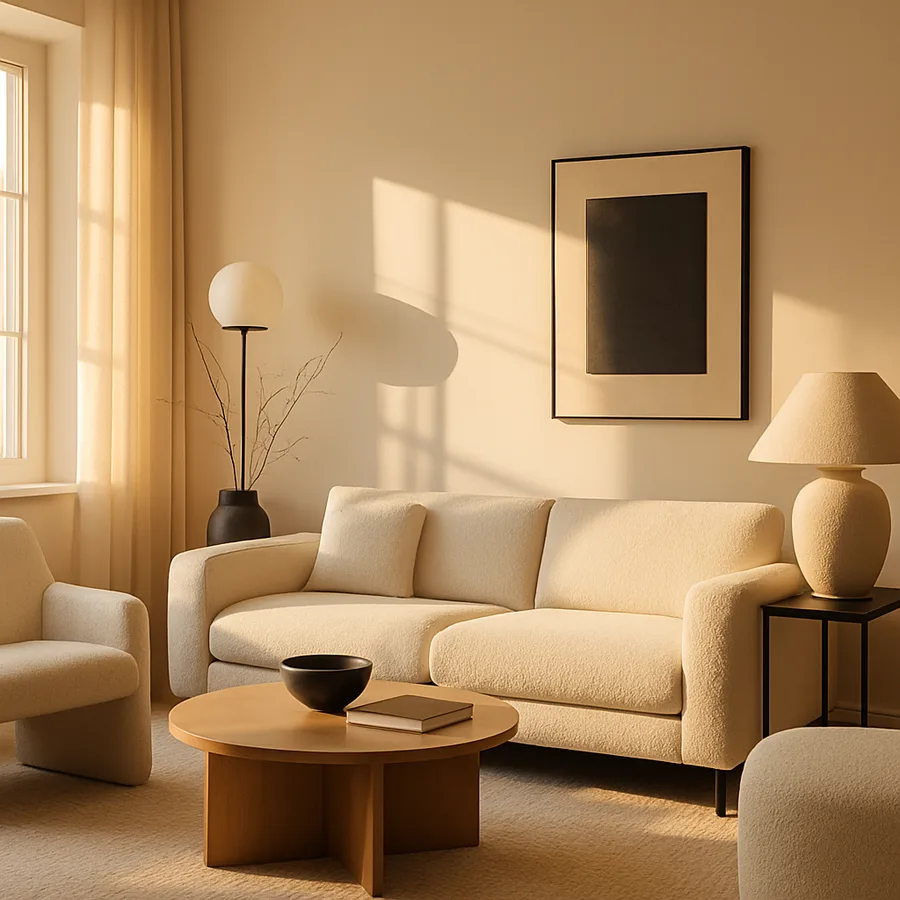
Few upholstery choices have rewritten the visual grammar of contemporary living rooms quite like bouclé. The looped, knotted, sheep-soft fabric that once lived almost exclusively in the orbit of Pierre Jeanneret prototypes and Eero Saarinen Womb Chairs has migrated downstream into mainstream catalogs, big-box accent chairs, and even modular sectionals. That migration is a mixed blessing. On one hand, you can finally afford the look. On the other, the variance in quality, longevity, and cleanability between a boutique European mill bouclé and a poly-blend dupe is enormous, and the wrong call can leave you with a pilling, matted lump within two years. This guide walks through the decisions that actually matter when you bring bouclé into a living room you intend to use every single day.
Before you pick a silhouette, get honest about traffic. Is this a formal sitting room your dog never enters? A family den where popcorn is a weekly event? A short-term rental where guests will sit in damp swimsuits? The same fabric category covers all three scenarios poorly if you simply chase aesthetics. The American Home Furnishings Alliance notes that upholstered seating now accounts for the majority of residential furniture warranty claims, and texture-forward fabrics like bouclé sit near the top of complaint lists when consumers buy on look alone. Ask yourself: what is the worst thing likely to land on this piece this year, and can the fabric I am choosing survive it? Holding that question in mind reframes everything that follows.
Understanding What Bouclé Actually Is
The word bouclé comes from the French boucler, meaning to curl or to loop. It refers to a yarn construction, not a fiber, which is the single most important thing to understand before you shop. A bouclé yarn is built from two or more strands twisted at different tensions so the looser strand bunches into the signature little knots and curls along the surface. Those knots can be made from wool, mohair, alpaca, cotton, viscose, polyester, acrylic, or any blend a mill chooses. That means a five-figure Italian wool bouclé and a fifteen-dollar-per-yard polyester roll from a craft supplier share a name and almost nothing else.
Fiber content drives everything downstream. Wool bouclé resists soil naturally, recovers shape after compression, holds dye beautifully, and ages with a patina rather than a degradation. It is also the most expensive and the most demanding to clean. Cotton-blend bouclé sits in the middle: friendly to dye, breathable, prone to wrinkling and water staining. Polyester and acrylic bouclé are the workhorses of the affordable end. They resist water, fade slowly, and cost a fraction of natural fibers, but they pill aggressively when blended badly and can develop a flat, matted look on seat decks within a year of heavy use. Read the spec sheet, not the marketing copy, and confirm the fiber percentages before you commit.
One more piece of construction to scrutinize: yarn density and loop tightness. Run your hand against the grain of a sample. Does it spring back, or do the loops flatten and stay flat? Pinch a loop between your fingers and pull gently. Does the yarn hold, or does it begin to extract? A reputable showroom will let you abuse a swatch precisely because they want you to be confident. Architectural Digest has covered the post-pandemic bouclé boom extensively, and the through-line in editor recommendations is always the same: density beats softness when you intend to live with the piece.
Choosing Silhouettes That Flatter the Texture
Bouclé is loud, visually. The looped surface catches light differently than a flat weave, creating constant micro-shadow that reads as movement and softness from across the room. That visual energy fights with intricate silhouettes. When you put bouclé on a deeply tufted Chesterfield or a heavily pleated skirt, the eye does not know where to rest. The fabric works hardest, and looks most expensive, on simple curves and uninterrupted planes. Think Womb Chair, Mario Bellini Camaleonda, the soft cylinders of a Togo, or any bun-foot chair with a single uninterrupted seat-to-back curve.
Scale matters too. A petite accent chair in heavy bouclé can read like a sheep wearing furniture. Conversely, a massive sectional in pale bouclé can look like a snowdrift, swallowing the rest of the room and dictating the entire palette by force. The most balanced approach for a modern living room is one statement piece, sized appropriately to the room, surrounded by smoother textiles for contrast. Consider pairing a bouclé sofa with leather club chairs, or a bouclé swivel with a flat-weave linen sofa. Texture contrast is what makes the bouclé read as deliberate rather than accidental.
Have you stood in your actual living room with painter's tape on the floor at the dimensions of the piece you are considering? If not, do that before you buy. The combination of high visual weight and looped texture means bouclé pieces almost always feel larger in the room than they did in the showroom. A common mistake is buying a 96-inch bouclé sofa for a room where an 84-inch flat-weave would have felt generous. The American Society of Interior Designers recommends taping floor footprint and cardboard-mocking back height before any sofa purchase over a thousand dollars; with bouclé, that recommendation becomes a rule.
Color Choices That Survive a Decade
Cream, oatmeal, and ivory dominate the bouclé category for a reason. They photograph beautifully, they recede into most palettes, and they signal the soft-Scandi-meets-Italian-modern aesthetic that drove the entire trend. They also stain, yellow, and shadow more visibly than any other color family. If you are putting cream bouclé into a household with kids, pets, or red-wine drinkers, you are signing up for either constant maintenance or accelerated obsolescence. That is not a moral judgment, just a forecast.
The colors that age best on bouclé fall into two camps. The first is mid-depth neutrals: camel, mushroom, taupe, and warm gray. They hide everyday soiling, photograph well in real homes (not just studios), and sit comfortably alongside both warm wood tones and cooler stone surfaces. The second is committed darks: chocolate, deep olive, espresso, and proper black. Dark bouclé reads cinematic and absorbs the visual chaos of family life. Its main risk is lint and pet hair, both of which show dramatically and require routine attention with a fabric shaver and lint roller.
Avoid trend-driven colors unless you have the budget to replace the piece in three years. Sage green bouclé peaked in 2024. Terracotta peaked in 2025. By the time a strong chromatic trend reaches the bouclé category, it is usually within eighteen months of feeling tired. House Beautiful editors have repeatedly warned against marrying a high-cost upholstery purchase to a fast-moving color cycle, and the warning applies double here because the texture amplifies the color in any room. If you love a trend color, satisfy the craving with a flat-weave throw pillow you can replace for under fifty dollars.
Cleanability and Real-World Maintenance
The single biggest source of bouclé buyer's remorse is the realization, post-spill, that the fabric is harder to spot-clean than the salesperson implied. Looped construction traps liquid in the loops and wicks it down to the cushion core, which means a small surface spill can become a large internal stain ring. The first defense is the Wyzenbeek and Martindale ratings on the spec sheet, which measure abrasion resistance, but those numbers tell you nothing about cleanability. For that, check the cleaning code: W means water-based cleaning is approved, S means solvent only, WS means either, and X means vacuum only. A bouclé rated X for a family room is a planning failure waiting to happen.
For households with regular spill risk, ask whether the bouclé is offered with a performance treatment. Brands like Crypton and Sunbrella now produce bouclé-style fabrics engineered with stain-resistant fibers and moisture barriers, which sacrifice a small amount of softness in exchange for actual livability. The hand is slightly less pillowy than a wool bouclé, but the difference between a five-year piece and a fifteen-year piece often comes down exactly to that trade-off. Industry data from the AHFA suggests performance fabrics now account for over thirty percent of new residential upholstery sales, a share that has roughly doubled in five years and continues to grow.
Routine maintenance matters more than rescue cleaning. Vacuum the piece weekly with an upholstery brush attachment, going both with and against the loop direction to lift trapped dust before it grinds into the fibers. Rotate seat cushions every two weeks for the first six months, then monthly thereafter. Spot-clean immediately when accidents happen rather than letting them set. For cream bouclé, keep a microfiber cloth and a pH-neutral fabric cleaner within arm's reach of the seating, because the difference between a fresh red-wine spot and a six-hour-old red-wine spot is often the difference between a successful clean and a permanent shadow. How long are you actually willing to spend on weekly upkeep, and does that match the fabric you are about to commit to?
Frame Quality and Cushion Construction
Beautiful upholstery on a bad frame is a slow-motion disappointment. Bouclé is heavy fabric, often heavier than a conventional weave, and it amplifies any flaw in the bones underneath. A wobble that you would not notice on a leather sofa becomes a visible sway on a bouclé one, because the loops shift visibly as the frame moves. Insist on a kiln-dried hardwood frame, ideally maple or ash, with corner blocks glued and screwed rather than just stapled. Eight-way hand-tied springs remain the gold standard for sofas, though sinuous spring construction is acceptable in lighter accent chairs and small loveseats.
Cushion fill is where catalog brands hide the most cost cutting. A high-density foam core wrapped in down or down-alternative will hold its shape for a decade or more. A pure-foam cushion at low density will compress and dent within a year, and the dent will be magnified by the looped texture above it because every flatness becomes a shadow. Ask for the foam density spec in pounds per cubic foot. 1.8 lb/ft³ is acceptable for an occasional chair, 2.0 to 2.5 lb/ft³ is appropriate for a daily-use sofa seat, and anything below 1.5 lb/ft³ should be a deal-breaker on a piece you intend to keep.
Pay attention to cushion attachment too. Loose, reversible cushions extend the life of any upholstered piece by allowing rotation, flipping, and even individual replacement if one cushion fails. Tight-back and tight-seat constructions photograph cleaner, but they limit your ability to refresh the piece without a full reupholstery. With bouclé in particular, where the highest-wear surface is the seat deck, having the option to flip and rotate cushions is the difference between a piece that ages gracefully and one that needs replacing in five years.
Where to Buy and What to Pay
The bouclé market has stratified into roughly four price tiers, and understanding the tiers protects you from both overpaying and under-buying. At the bottom, fast-furniture retailers offer bouclé-look pieces between four hundred and twelve hundred dollars. These are almost universally polyester or acrylic blends on softwood frames with foam cushions, designed for a two-to-four-year lifespan in light use. Fine for a starter apartment, miserable for a family room you will live in for a decade.
The middle tier, roughly twelve hundred to four thousand dollars, is where most thoughtful homeowners should shop. Brands here typically offer hardwood frames, sinuous or eight-way springs, named-mill fabrics with disclosed fiber content, and cleaning codes you can verify. Look for transparent specifications and a clear warranty: at minimum five years on the frame and one year on the fabric. Direct-to-consumer brands and well-known mid-market retailers occupy most of this segment, and the value-per-dollar peaks here.
Above four thousand dollars, you enter the territory of designer-favorite brands and small-batch American workrooms. The fabrics come from European mills, the foam densities climb, the warranties extend, and the silhouettes carry design pedigree. A piece in this tier is often genuinely a multi-decade investment, and the resale market reflects that. Above ten thousand dollars, you are buying art, with all the volatility and emotional reward that implies. Wherever you shop, request a memo sample of the actual fabric on your actual finalist before committing, and live with that swatch in your room for a week. Light, paint color, and adjacent textiles will change how the bouclé reads, and a swatch in your space tells you something a showroom never can.
Conclusion
Bouclé furniture rewards careful selection and punishes impulse. The category has matured to the point where excellent options exist at every price tier, but the gap between a thoughtful purchase and a regrettable one has never been wider. The best protection is to slow down, request samples, abuse those samples, read fiber content rather than marketing copy, and match the fabric's real-world performance to the real-world life you intend to live around it. A wool bouclé Womb Chair in a quiet reading nook is a different decision than a polyester-blend sectional in a basement playroom, and both can be right when made with eyes open.
Pay particular attention to the fundamentals that survive any trend cycle: frame quality, cushion density, fiber content, color longevity, and cleanability. Get those right and you can experiment more freely with silhouette and proportion. Get those wrong and even the most stunning silhouette becomes a chore within a year. The bouclé pieces you will still love in a decade are almost always the ones where someone, somewhere, refused to compromise on the parts you cannot see from across the room.
Before you click the order button on your next bouclé piece, walk back through this checklist one more time and answer honestly: does the fabric match the household, does the frame match the use case, does the color match a decade of taste rather than a season of trend, and does the cleaning code match your actual willingness to maintain it? If you can say yes to all four, you are ready to buy with confidence. If any answer is shaky, take another week, request another sample, and revisit the question with fresh eyes. The piece will still be there, and the patience will save you both money and regret.
More Articles You May Like



Comments
Post a Comment