Sustainable Style: Designing Interiors for Electric Vehicle Owners
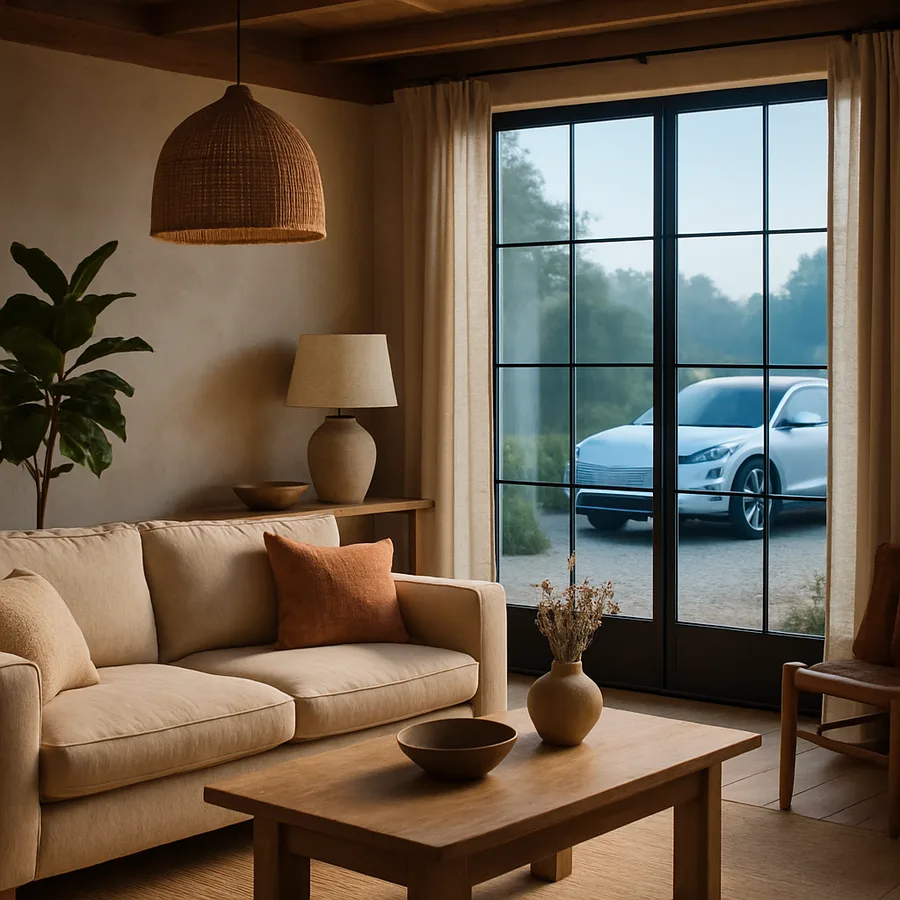
Choosing to drive an electric vehicle reflects a set of values that extend far beyond the driveway. For many EV owners, the decision to go electric is part of a broader commitment to sustainable living, one that naturally extends into the home and the choices made about materials, energy consumption, and environmental impact within its walls. The American Society of Interior Designers (ASID) has documented a strong correlation between electric vehicle adoption and demand for sustainable interior design services, noting that EV owners are significantly more likely to request eco-friendly materials, energy-efficient systems, and low-toxicity finishes in their homes. This alignment between automotive and interior design choices creates a powerful opportunity to build a lifestyle that is coherent in its environmental values from garage to living room.
Sustainable interior design has matured enormously over the past decade, moving well beyond the crunchy, compromise-heavy aesthetic that once defined "green" interiors. Contemporary sustainable design is indistinguishable from the best conventional design in its beauty, sophistication, and livability, while delivering measurable environmental benefits through reduced resource consumption, lower embodied carbon, and healthier indoor air quality. The International Interior Design Association (IIDA) has established comprehensive sustainability guidelines that help designers and homeowners navigate the expanding landscape of eco-friendly products, certifications, and practices. For EV owners looking to align their homes with the values their vehicle choice represents, these guidelines provide a roadmap to interiors that are as responsible as they are beautiful.
This article explores the principles and practical strategies of sustainable interior design through the specific lens of the electric vehicle owner's lifestyle. From the materials that line your walls to the energy systems that power your home and charge your vehicle, every design decision carries environmental implications. By approaching these decisions with the same research-driven intentionality that led you to choose an electric vehicle, you can create a home that reinforces your commitment to sustainability at every turn while delivering the comfort, beauty, and functionality that make a house worth coming home to. What would it mean for your daily experience if every element of your home reflected the same environmental consciousness as your choice of vehicle?
Material Selection: The Foundation of Sustainable Interiors
Every interior design project begins with material selection, and for sustainability-minded homeowners, this stage carries particular weight. The materials that compose your floors, walls, countertops, and furnishings represent the largest environmental footprint of any interior design project, accounting for the majority of embodied energy, resource extraction, manufacturing emissions, and end-of-life waste. Choosing materials wisely requires looking beyond surface appearance to consider the full lifecycle of each product, from raw material sourcing through manufacturing, transportation, installation, use, and eventual disposal or recycling. The NCIDQ certification process includes substantial content on sustainable material selection, reflecting the profession's recognition that material choices are among the most consequential decisions a designer makes.
Reclaimed and recycled materials offer some of the most compelling options for sustainable interiors. Reclaimed wood from deconstructed barns, factories, and warehouses provides flooring, wall cladding, and furniture material with rich character, proven durability, and a fraction of the environmental impact of newly harvested timber. Recycled glass countertops, made from post-consumer glass bound in cement or resin, deliver striking visual effects in colors ranging from sea glass greens to deep ambers while diverting waste from landfills. Recycled metal fixtures and hardware, recycled content ceramic tiles, and recycled textile upholstery fabrics round out a palette of options that prove sustainability need not come at the expense of design ambition. According to the U.S. Environmental Protection Agency, the construction and demolition sector generates over 600 million tons of debris annually, making the reuse of building materials one of the most impactful environmental choices a homeowner can make.
For materials that must be purchased new, certifications provide reliable guidance for identifying the most sustainable options. Forest Stewardship Council (FSC) certification ensures that wood products come from responsibly managed forests. GREENGUARD certification confirms that products meet strict chemical emission limits for indoor air quality. Cradle to Cradle certification evaluates products across five categories including material health, material reutilization, renewable energy use, water stewardship, and social fairness. Houzz designers report that client awareness of these certifications has grown substantially, with educated consumers increasingly requesting specific certifications by name rather than simply asking for "green" options. For the EV owner accustomed to researching battery chemistry, range specifications, and charging standards, the world of material certifications offers a similarly data-rich landscape for making informed decisions about interior materials.
Energy-Integrated Home Design
Electric vehicle ownership fundamentally changes a home's relationship with energy, making energy-integrated design not just environmentally virtuous but practically essential. A typical EV adds 3,000 to 4,000 kilowatt-hours of annual electricity consumption to a household, an increase of roughly 30% for the average American home. This substantial additional demand makes energy efficiency throughout the home more important than ever, as every kilowatt-hour saved through better insulation, more efficient appliances, or smarter lighting is a kilowatt-hour available for vehicle charging. ASID has identified energy-integrated design as a defining priority for forward-thinking residential projects, recognizing that the electrification of transportation is driving a fundamental rethinking of how homes produce, consume, store, and manage energy.
Solar panel integration represents the most impactful energy design decision an EV owner can make, effectively allowing you to power your vehicle with sunlight and dramatically reducing both your carbon footprint and your electricity costs. While solar panels themselves are exterior installations, their integration with home design extends indoors through inverter placement, energy monitoring displays, battery storage systems, and the electrical infrastructure that connects these components. Interior designers working on solar-equipped homes must plan for equipment closets or utility spaces that house inverters, batteries, and smart panels while maintaining the home's aesthetic standards. The IIDA recommends dedicating a purpose-designed utility room for energy management equipment, finished to the same standard as the rest of the home rather than left as an afterthought space with exposed wiring and raw drywall.
Passive design strategies reduce energy consumption through architectural and interior design choices rather than mechanical systems. Strategic window placement and treatment maximizes winter solar gain while minimizing summer heat load, reducing HVAC energy consumption year-round. Thermal mass materials such as concrete, stone, and brick absorb heat during the day and release it slowly at night, moderating temperature swings and reducing heating and cooling demands. Interior color choices affect energy use as well: lighter colors on walls and ceilings reflect more light, reducing the need for artificial illumination during daytime hours, while darker colors absorb heat, which can be either beneficial or counterproductive depending on climate and orientation. These passive strategies work quietly in the background, requiring no ongoing energy input while continuously reducing the home's total energy demand and freeing more of your solar production for vehicle charging. Have you calculated how much of your home's energy consumption could be offset by the passive design features already present in your space?
Low-Toxicity Finishes and Healthy Indoor Air
Indoor air quality represents one of the most significant and least visible dimensions of sustainable interior design. The Environmental Protection Agency estimates that indoor air can be two to five times more polluted than outdoor air, primarily due to volatile organic compounds (VOCs) emitted by paints, stains, adhesives, composite wood products, and synthetic furnishings. For EV owners who chose their vehicles partly to reduce air pollution, the irony of living in a home that degrades the air they breathe is both troubling and motivating. Addressing indoor air quality through careful material and finish selection is among the most meaningful steps you can take toward a truly sustainable home, protecting your family's health while aligning your indoor environment with the clean-air values that inform your transportation choices.
Low-VOC and zero-VOC paints have become widely available from major manufacturers, performing comparably to conventional paints in coverage, durability, and color range while emitting dramatically fewer harmful chemicals. Beyond paint, adhesives used in flooring installation, cabinet construction, and countertop fabrication represent significant VOC sources that deserve equal attention. The NCIDQ standards include detailed guidance on specifying low-emission adhesives and sealants, recognizing their outsized impact on indoor air quality. Formaldehyde, a known carcinogen commonly found in composite wood products such as plywood, particleboard, and medium-density fiberboard, deserves particular scrutiny. Specifying NAF (no added formaldehyde) or ULEF (ultra-low emitting formaldehyde) composite products for cabinetry, shelving, and furniture significantly reduces this exposure risk without compromising structural performance or design flexibility.
Natural and plant-based finishes offer another pathway to healthy indoor air. Hardwax oil finishes for wood floors, derived from plant oils and natural waxes, provide beautiful, repairable protection without the VOC emissions associated with conventional polyurethane. Natural clay and lime plasters for walls create breathable surfaces that regulate humidity while contributing zero synthetic chemicals to indoor air. Milk paint, made from milk protein, lime, and natural pigments, delivers rich, historically authentic colors in a finish that is literally edible in its raw form. Houzz design professionals note that these natural finishes are experiencing a significant resurgence in popularity, driven by both health concerns and a growing appreciation for the unique visual and tactile qualities that distinguish natural finishes from their synthetic counterparts. The slight variations and living character of natural finishes add depth and authenticity that mass-produced synthetic products simply cannot replicate.
Furniture and Furnishing Choices for the Conscious Home
Furniture represents the most personal and visible expression of sustainable design values within the home. Unlike building materials that recede into the background, furnishings are the objects you interact with directly every day, sitting in them, placing objects on them, touching their surfaces, and encountering them at eye level as you move through your spaces. For this reason, furniture choices carry both significant environmental impact and powerful symbolic weight, communicating your values to visitors and reinforcing them to yourself with every use. The ASID sustainability committee has identified furniture and furnishing choices as the design category with the greatest potential for consumer-driven environmental improvement, as individual purchasing decisions can directly reward responsible manufacturers and shift industry practices.
Quality and longevity form the cornerstone of sustainable furniture selection. A well-made solid wood table that serves a family for fifty years has a fraction of the per-year environmental impact of a particleboard table that requires replacement every five years, even if the initial production impact of the solid wood piece is higher. This lifecycle perspective, which EV owners will recognize as analogous to the total cost of ownership calculations that often favor electric vehicles over their conventional counterparts, should guide every furniture purchase. Look for construction methods that indicate longevity: mortise-and-tenon joinery rather than staples and glue, kiln-dried hardwood rather than composite materials, eight-way hand-tied springs rather than sinuous wire in upholstered pieces. The IIDA recommends asking furniture manufacturers about their warranty terms, repair programs, and end-of-life recycling options as indicators of their confidence in product durability and their commitment to lifecycle responsibility.
The secondhand furniture market offers perhaps the most sustainable furnishing option of all, giving existing pieces continued useful life while adding unique character to your home. Vintage and antique furniture carries embodied craftsmanship that is increasingly difficult to find in contemporary production, with solid wood construction, hand-applied finishes, and design details that reflect specific historical periods and regional traditions. Reupholstering vintage frames with contemporary sustainable fabrics, such as organic cotton, recycled polyester, or hemp blends, creates pieces that combine the structural quality of past manufacturing with the environmental consciousness of present-day textile production. Do you have inherited or secondhand furniture pieces that could be revitalized rather than replaced? The environmental case for restoration is compelling, and the design results often surpass what new purchases can achieve in terms of character and distinctiveness.
Water Conservation and Sustainable Kitchen and Bath Design
Kitchens and bathrooms consume the vast majority of a home's water, making these spaces critical targets for sustainable design intervention. For EV owners committed to comprehensive environmental responsibility, extending conservation efforts from energy to water represents a natural progression that addresses another finite resource under increasing pressure from climate change and population growth. The EPA's WaterSense program estimates that the average American household uses over 300 gallons of water per day, with significant opportunities for reduction through fixture selection, appliance choices, and behavioral design. NCIDQ-certified designers receive training in water-efficient design strategies that maintain comfort and functionality while dramatically reducing consumption, proving that conservation and luxury need not be mutually exclusive.
Fixture selection provides the most immediate and impactful water savings in kitchens and bathrooms. WaterSense-labeled faucets, showerheads, and toilets meet EPA water efficiency criteria while delivering performance that is virtually indistinguishable from their conventional counterparts. Low-flow showerheads now achieve spa-quality experiences at 1.5 gallons per minute, less than half the flow rate of older fixtures, through advanced aeration and spray pattern technology. Touchless faucets in kitchens and bathrooms reduce water waste from taps left running during hand washing, food preparation, and tooth brushing. Dual-flush toilets allow users to select appropriate flush volumes for different waste types, cutting toilet water consumption by up to 67% compared to older single-flush models. These fixtures are available in every design style from traditional to ultra-modern, ensuring that water conservation integrates seamlessly into any aesthetic vision.
Beyond fixtures, material and layout choices in kitchens and bathrooms can support water conservation goals. Countertop materials that resist staining, such as quartz and porcelain, require less frequent cleaning and therefore less water than porous materials like marble or limestone that demand regular maintenance. Layouts that minimize the distance between water heaters and points of use reduce the water wasted while waiting for hot water to arrive at the tap. Houzz kitchen designers increasingly recommend pot fillers mounted near ranges, which allow precise water measurement for cooking and reduce the trips to the sink that often result in excess water use. Recirculating hot water systems, which keep hot water constantly available at fixtures without requiring the lengthy wasteful runs typical of conventional plumbing, represent a more significant investment but deliver both water savings and the daily convenience of instant hot water throughout the home.
Creating Cohesion: Aligning Your Home with Your Values
The most powerful sustainable homes are those where environmental consciousness permeates every element in a way that feels natural, cohesive, and unstrained. This cohesion does not happen accidentally; it requires a unifying design vision that connects material choices, energy systems, water conservation measures, and lifestyle patterns into a coherent whole. For EV owners, the vehicle in the garage can serve as a touchstone for this vision, a daily reminder of the values that should inform every design decision within the home. The ASID emphasizes that the most successful sustainable design projects begin with a clear articulation of the client's environmental priorities, which then guide every subsequent decision from floor plan layout to throw pillow selection.
Color palettes drawn from natural landscapes create a visual foundation that reinforces the home's connection to the environment it seeks to protect. Earth tones, ocean blues, forest greens, and sky grays evoke the natural world without literal representation, creating backgrounds that feel simultaneously contemporary and timeless. Natural material textures layered within these palettes add sensory richness that synthetic materials rarely achieve: the grain of reclaimed oak, the nubby weave of organic linen, the cool smoothness of recycled glass, the warm patina of hand-forged iron. When every surface in a room tells a story of responsible sourcing and mindful selection, the cumulative effect is an environment that feels deeply considered and authentically aligned with the values of its inhabitants. The IIDA describes this quality as "material integrity," a state in which every element in a space earns its place through both aesthetic contribution and ethical sourcing.
Lifestyle design extends the sustainable vision beyond physical materials into daily patterns and routines. A home designed for sustainability should make the eco-friendly choice the easy choice in every situation. Recycling and composting stations integrated into kitchen cabinetry make waste diversion effortless. Bike storage, walking shoe stations, and transit schedule displays near entryways encourage alternatives to driving for short trips. Herb gardens on kitchen windowsills reduce packaging waste from store-bought herbs while adding living beauty to the cooking space. Prominent energy monitoring displays create awareness that naturally leads to conservation behavior. Each of these elements serves a practical function while contributing to a home environment that continuously reinforces and supports the sustainable lifestyle that your electric vehicle represents on the road. What aspects of your daily routine at home could be redesigned to better align with the environmental values your EV embodies?
Conclusion
Designing a sustainable interior that aligns with your electric vehicle lifestyle is an act of coherence, ensuring that the values expressed by your transportation choices resonate throughout every room of your home. The strategies explored in this article, from reclaimed materials and low-toxicity finishes to energy-integrated design and water conservation, represent a comprehensive approach to sustainable living that delivers measurable environmental benefits alongside beautiful, comfortable, and highly functional spaces. The evidence is clear: sustainable design does not require aesthetic sacrifice, and the most thoughtfully designed green interiors often surpass conventional alternatives in beauty, durability, and livability.
The electric vehicle in your garage represents a significant environmental commitment. Extending that commitment into your home's interior amplifies its impact and creates a living environment that reinforces your values every day. Organizations like ASID, IIDA, NCIDQ, and Houzz provide extensive resources to help homeowners navigate the growing landscape of sustainable design options, and the availability of certified professionals specializing in green residential design has never been greater. You do not need to tackle every room at once; even incremental changes made over time accumulate into transformative results.
Begin your sustainable interior journey by auditing one room in your home. Identify the materials, finishes, and fixtures that could be replaced with more sustainable alternatives, prioritizing changes that deliver both environmental benefits and aesthetic improvements. Consult with a design professional who specializes in sustainable residential interiors, and leverage the certifications and resources mentioned throughout this article to make informed, confident decisions. Your home and your vehicle can tell the same story of thoughtful, responsible, beautiful living, and that story begins with the next design choice you make.
More Articles You May Like



Comments
Post a Comment