Standing Desk Setup Ideas That Still Look Like Real Furniture
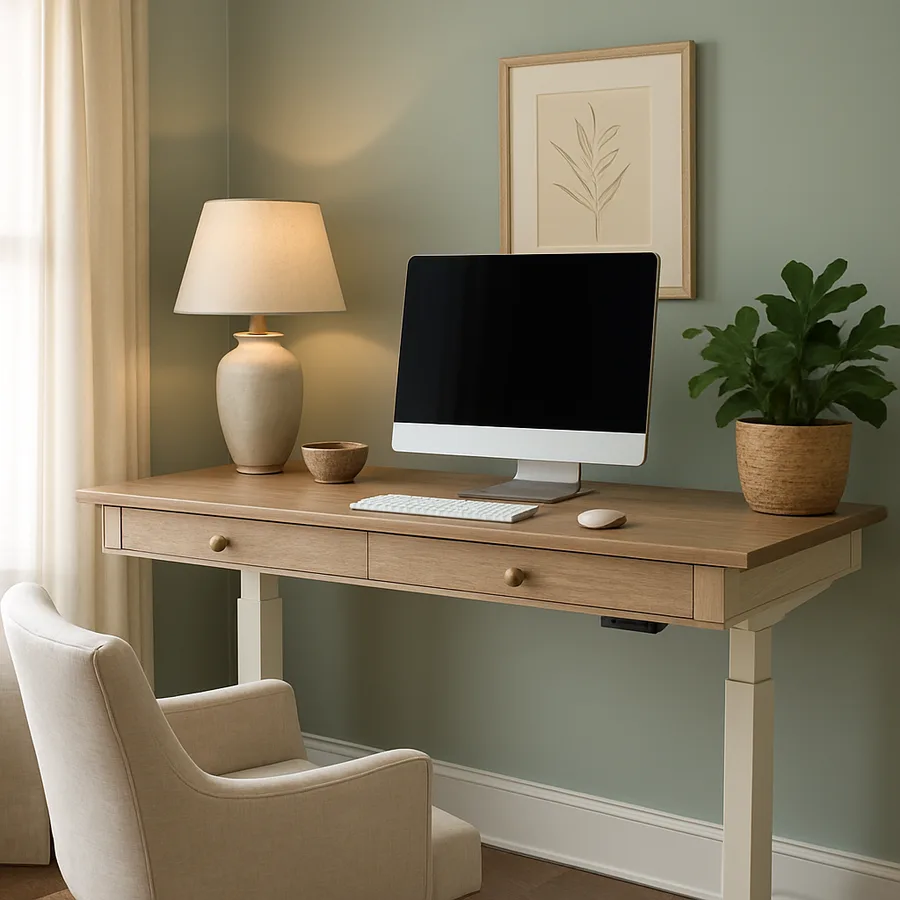
The standing desk revolution solved a genuine health problem but created an aesthetic one. Most height-adjustable desks look exactly like what they are: industrial mechanisms bolted to a rectangular slab, designed for function with zero regard for the room around them. If your home office shares space with a living room, bedroom, or dining area, that utilitarian look clashes with every other piece of furniture you have carefully chosen. The good news is that a growing number of designers and manufacturers have recognized this tension and responded with standing desk solutions that genuinely pass as fine furniture. A study by the Society for Human Resource Management found that over sixty percent of remote workers now use some form of height-adjustable workspace, which means the demand for attractive options has never been higher. This guide presents six distinct approaches to building a standing desk setup that prioritizes your health without sacrificing the visual integrity of your home.
Why Most Standing Desks Fail the Furniture Test
Walk through any office furniture showroom and you will notice a consistent design language among standing desks: steel legs in black or gray, a flat rectangular top in laminate or bamboo, and visible cables running from the motor to a control panel mounted under the front edge. These desks are engineered for open-plan offices where they sit in rows and nobody expects them to look like anything other than equipment. Transplant that same desk into a room with a linen sofa, hardwood floors, and framed artwork, and it sticks out like a filing cabinet at a dinner party. The proportions are wrong, the materials are wrong, and the overall silhouette announces "office" rather than "home."
The specific elements that betray a standing desk as industrial equipment include exposed lift columns, visible crossbars, and control panels with LED displays. Lift columns are the telescoping metal tubes that raise and lower the desk surface, and on most affordable models they are fully exposed with no attempt at concealment. Crossbars connecting the two column assemblies add structural rigidity but create a visual cage beneath the desk that reads as mechanical rather than decorative. The control panel, often a plastic rectangle with up and down arrows, sits at the desk's leading edge where it is the first thing anyone sees. Each of these elements is a solvable design problem, and the setups described in this guide address all of them.
Material mismatch is the subtler issue. Most standing desk tops use laminate finishes that photograph well but feel and look artificial in person, particularly when placed beside solid wood furniture. The edges are typically squared off with visible seam lines where the laminate wraps around the substrate, a detail that no quality dining table or console would display. Even the bamboo tops popular on mid-range standing desks have a distinctly utilitarian character due to their uniform grain and lack of natural edge variation. Upgrading the desktop material is often the single highest-impact change you can make, transforming a piece of office equipment into something that belongs in a curated room.
Sound is the invisible aesthetic problem that few people consider until the desk is already in their living space. Electric lift mechanisms produce a hum and mechanical whir during adjustment that varies dramatically between manufacturers. In a dedicated office with a closed door, this noise is irrelevant. In a shared living area where someone might be watching television or a child might be napping, the sound of a desk adjusting can be genuinely disruptive. The Business and Institutional Furniture Manufacturers Association rates motor noise in decibels, and the quietest models operate below forty decibels, roughly the volume of a library. Checking this specification before purchase prevents a daily annoyance that no amount of styling can disguise.
Furniture-Grade Desktop Replacements
The fastest path to a standing desk that looks like real furniture is replacing the factory desktop with a material that belongs in your home. Solid hardwood tops in walnut, white oak, cherry, or maple immediately elevate the entire piece because they carry the grain variation, edge character, and depth of finish that signal quality furniture. Several woodworkers on platforms like Etsy and Maker's Row produce standing desk tops specifically sized for popular frame dimensions, with pre-drilled holes for mounting and integrated cable routing channels on the underside. A live-edge walnut slab on a standing desk frame creates a piece that looks like a designer console table at standing height and a sculptural dining surface when lowered.
If solid wood exceeds your budget, high-pressure laminate with a waterfall edge profile offers a convincing alternative at a fraction of the cost. The waterfall edge wraps the laminate continuously over the front edge and down to a rounded return, eliminating the visible seam that betrays cheaper laminate tops. When paired with a matte finish in a tone that matches your other furniture, this treatment produces a desktop that feels intentional and designed rather than assembled from components. Look for laminate in colors drawn from your existing palette, whether that is a warm greige to match upholstered furniture or a cool white to complement a Scandinavian-inspired room.
Desktop depth and shape also influence how furniture-like the piece appears. Standard standing desk tops are twenty-four to thirty inches deep, which is appropriate for a monitor and keyboard but creates a bulky slab profile in a living space. Consider a tapered depth desktop that is thirty inches at the center where your monitor sits and narrows to twenty inches at the ends, creating a subtle boat shape that looks more like a console or writing table. This profile requires a custom top but the visual payoff is significant because it breaks the rigid rectangular silhouette that screams office desk. Pair the tapered top with rounded or chamfered corners to complete the furniture aesthetic.
Do not overlook the power of edge treatment in transforming a desktop's character. A simple eased edge, rounded to about an eighth-inch radius, is the default on most standing desks and reads as utilitarian. Upgrading to a bullnose, ogee, or beveled edge profile adds the kind of detail that fine furniture displays. These profiles cost very little when specified during manufacturing but add enormous visual sophistication. An ogee edge on a white oak desktop, for example, creates a traditional profile that pairs beautifully with Shaker-style or farmhouse interiors. A sharp bevel on a walnut top leans modern and architectural. The edge treatment is a small detail that your eye registers subconsciously, and it makes the difference between a surface that looks built and one that looks bought.
Concealing the Mechanical Components
Once you have a beautiful desktop, the next challenge is hiding the machinery beneath it. Modesty panels, the vertical panels that hang below the front and sometimes the sides of a desk, are the most effective single solution for concealing lift columns, crossbars, cables, and control hardware. A modesty panel in the same wood or finish as the desktop creates a continuous visual surface that transforms the desk into a credenza-like piece. When the desk is at standing height, the modesty panel lengthens proportionally, maintaining coverage. Several aftermarket manufacturers produce universal modesty panels that attach via clamp brackets to any standing desk frame, requiring no drilling into the desktop itself.
For a lighter approach, consider a fabric skirt that hangs from the desktop's underside on a tension rod or magnetic strip. Linen, cotton canvas, or even a simple muslin panel softens the desk's appearance and hides everything below the surface while allowing easy access for cable management adjustments. This approach works particularly well in bedrooms and living rooms where textile softness is part of the design language. Choose a fabric that either matches your curtains for a coordinated look or contrasts intentionally, treating the desk skirt as a design element rather than a cover-up. The fabric moves naturally when the desk height adjusts, so select a material with enough body to hang cleanly rather than bunching or catching in the mechanism.
Replacing the factory control panel with a wireless or app-controlled system eliminates the most visible piece of electronic hardware on the desk. Several standing desk brands now offer Bluetooth-enabled frames that pair with a smartphone app for height adjustment, memory presets, and sit-stand reminders. With no physical control panel mounted to the desk, the front edge remains clean and uninterrupted. If your frame uses a wired control panel that cannot be replaced, relocate it to the desk's underside where it remains accessible by feel but invisible to anyone looking at the desk from across the room. A strip of adhesive-backed felt on the underside provides a subtle tactile guide for finding the buttons without looking.
Cable management deserves obsessive attention on a standing desk in a living space because cables in motion are cables on display. When the desk rises, any cable that runs from the desktop to the floor must accommodate the height change, which typically means a loop of slack that dangles visibly during the transition. A cable management spine, a flexible segmented channel that collapses and extends like an accordion, contains all cables in a single vertical run from the desk's underside to the floor. Pair this with a cable tray mounted under the desktop to gather horizontal runs, and the result is a desk that shows zero visible cables at any height. The Architectural Digest design team consistently identifies visible cables as the number-one styling mistake in home office setups, and solving it transforms the space more than any other single change.
Standing Desk Configurations for Shared Living Spaces
When your standing desk lives in a room that serves another primary purpose, the configuration needs to respect that room's identity while carving out a functional work zone. In a living room, positioning the desk against a wall or behind a sofa creates a natural boundary between work and relaxation areas. At standing height, the desk reads as a console table or bar-height surface that could plausibly hold a lamp, a vase, and a stack of books. At sitting height, it drops below the sofa back and largely disappears from the room's sightlines. This dual identity works because visitors see a living room with an attractive console, not an office that happens to have a couch.
Bedroom offices present a different challenge because the room's primary function is rest, and anything that signals work can interfere with sleep quality. Research published by the National Sleep Foundation indicates that visible work equipment in the bedroom is associated with poorer sleep outcomes, making concealment especially important. Position your standing desk inside a closet with the doors removed and replaced by curtains, or within an armoire whose doors close to hide the entire workstation at the end of the day. When the doors are open and the desk is at standing height, you have a fully functional office. When they close, the bedroom returns to its singular purpose without any visual reminder of deadlines or emails.
Have you considered placing your standing desk as a room divider? In studio apartments and open-plan lofts, a standing desk positioned perpendicular to the wall can create architectural separation between zones without permanent construction. Add a bookshelf or credenza on the back side of the desk, facing the living area, and the desk becomes the functional spine of a double-sided furniture wall. From the work side, you face the wall with your monitor. From the living side, the bookshelf presents an attractive display surface. This configuration requires a desktop with finished edges on all four sides since the desk is visible from every angle, but it solves the zoning problem elegantly in spaces that lack walls.
Dining rooms offer a surprisingly natural home for standing desks because the table height and surface proportions are already present in the room's design vocabulary. A standing desk at its lowest position can serve as a secondary dining surface or a buffet during meals, then rise to working height during office hours. Choose a desktop material and color that matches or complements your dining table, and select chairs that work at both desk sitting height and dining height. The Houzz community has documented numerous examples of dining-room-office hybrids that function beautifully because the furniture language is already compatible. The key is maintaining enough clear space between the standing desk and the dining table that both can be used simultaneously without crowding.
Accessory Styling That Completes the Illusion
The accessories on and around your standing desk determine whether it reads as furniture or as a workstation with a nice top. Start by eliminating or hiding every item that signals "office" when work is not actively in progress. Monitors mount to arms that clamp to the desk's rear edge, positioning the screen at eye level during work and allowing it to fold flat against the wall when finished. A monitor in its normal position announces "desk" from across the room. A monitor folded flat against the wall could be a digital photo frame or a wall-mounted display, neither of which contradicts a living room identity.
Replace the standard desk lamp with a table lamp you would choose for any other surface in your home. Ceramic, glass, brass, or turned wood lamp bases in styles that match your room's aesthetic transform the desk surface from a workspace into a vignette. The lamp serves double duty, providing task lighting during work hours and ambient lighting during evening relaxation. Choose a shade that directs light both downward for task use and outward for ambient glow, and you have a lighting solution that supports both roles without needing to be swapped.
Desk accessories in natural materials replace the plastic organizer trays and mesh pencil cups that populate most offices. A leather desk pad, a marble or concrete pencil holder, a brass letter opener, and a linen-covered notebook stack create a surface arrangement that would be equally at home on a library table or a hotel writing desk. When you finish work, simply close the laptop and these objects remain as decorative elements that enhance the room rather than cluttering it. The discipline of selecting accessories that look good both during and after work hours forces a level of curation that benefits the entire space.
Plants are the ultimate desk-to-furniture bridge because they belong in every context. A single sculptural plant, such as a fiddle-leaf fig in a ceramic pot or a trailing pothos in a brass planter, placed at one end of the standing desk anchors it as a piece of living-room furniture. The organic form of the plant softens the desk's straight lines and introduces a biophilic element that research from the American Psychological Association associates with reduced stress and improved focus. Position the plant at the end of the desk opposite your monitor so it does not interfere with work but remains the first thing visitors notice. When the desk is at standing height and the monitor is folded away, the plant and lamp combination creates a console table display that no one would identify as an office.
Choosing the Right Frame for a Furniture-First Approach
Not all standing desk frames are created equal when aesthetics are a priority, and selecting the right frame from the start saves considerable effort in concealment and styling later. C-frame designs, where each leg consists of a single column rather than the typical T-shaped foot, offer the cleanest profile because they eliminate the visible crossbar entirely. The cantilevered design means the desk appears to float on two simple posts, an effect that pairs naturally with mid-century modern and minimalist interiors. C-frame desks cost more than T-frame equivalents because the single-column design requires more robust motors, but the aesthetic dividend is substantial for furniture-first priorities.
Frame finish matters as much as frame shape. The default matte black or industrial gray that dominates the market reads as office equipment regardless of what you place on top. Several manufacturers now offer frames in brass, brushed nickel, matte white, and even wood-clad finishes that blend with residential furniture hardware. A brass-finished frame beneath a marble-topped desk creates a piece that could live in an upscale boutique. A matte white frame under a light oak top disappears into a Scandinavian-style room. Matching your frame finish to the metal tones already present in your space, whether that is your curtain rod hardware, light fixtures, or cabinet pulls, integrates the desk into the room's existing material palette.
Noise and speed specifications become more important when the desk operates in a shared living space. The quietest frames on the market use dual-motor systems with anti-collision sensors that produce less than thirty-eight decibels during adjustment. Compare that to budget frames that can exceed fifty decibels, roughly the volume of a normal conversation, and the difference is immediately apparent in a quiet living room. Adjustment speed ranges from about one inch per second on slow models to nearly two inches per second on premium models. Faster adjustment means less total noise exposure per transition, which compounds over hundreds of daily adjustments throughout the year. If you raise and lower your desk four times per day, a frame that adjusts in twelve seconds versus twenty seconds saves measurable noise exposure.
Weight capacity is the final specification to scrutinize, especially if you plan to use a solid hardwood top. Factory laminate tops typically weigh fifteen to twenty-five pounds, but a one-and-a-half-inch solid walnut top at sixty inches wide can weigh fifty pounds or more. Add a monitor, a lamp, books, and accessories, and you can easily reach seventy to eighty pounds of total load. Budget frames rated for only one hundred fifty pounds of capacity will strain under this load, producing more noise and shorter motor life. Choose a frame rated for at least two hundred pounds, which provides a comfortable margin for a furniture-grade top and the accessories that make it look like something worth keeping in your living room.
Conclusion
Building a standing desk setup that passes as real furniture requires attention to three categories: the desktop surface, the frame and its mechanical concealment, and the accessories that dress the final composition. Each layer contributes to an overall impression that either reads as curated home furnishing or exposed office equipment, and the difference between the two often comes down to material choices and styling discipline rather than budget. A solid wood top, a modesty panel, a proper cable spine, and a ceramic lamp can transform even an inexpensive frame into something that belongs in a designed room.
The configuration of the desk within your space matters just as much as the desk itself. Positioning it as a console, embedding it within a closet, or using it as a room divider allows the desk to serve an architectural role in the room rather than existing as an isolated piece of equipment. When the desk's placement makes spatial sense independent of its function, it has crossed the threshold from office tool to genuine furniture.
Ultimately, the goal is a workspace that supports your body through height adjustment and supports your home through thoughtful design. These two objectives are not in conflict. The standing desk market has matured enough that you no longer need to choose between ergonomic health and visual harmony. With the right combination of frame, surface, concealment, and styling, your standing desk can be the piece of furniture that guests compliment first and identify as a desk last.
Take one step this week: measure your space, identify the metal finish tone in your room's hardware, and order three desktop material samples to compare against your existing furniture. That small investment in planning will point you directly toward a standing desk that earns its place in your home.
More Articles You May Like



Comments
Post a Comment