Pet Gate Alternatives That Look Like Real Decor Pieces
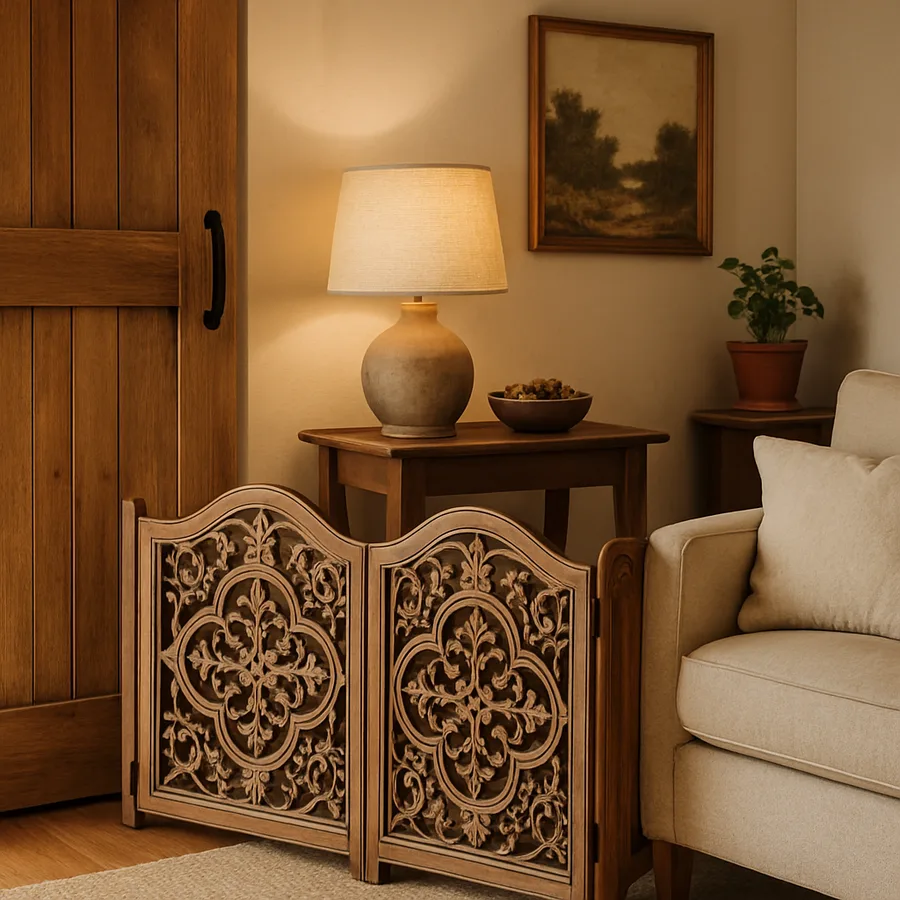
Standard pet gates have earned their reputation as one of the most visually disruptive items a homeowner can place in a doorway. The typical pressure-mounted metal gate with its plastic hardware and accordion mesh screams "temporary fix" in a room that otherwise reflects careful design choices. Yet the need to restrict a dog's movement through certain parts of the home is real and ongoing, whether you are protecting a nursery, keeping muddy paws off white carpet, or preventing a counter-surfing Labrador from accessing the kitchen during meal prep. The good news is that a growing category of decorative pet barriers now exists at the intersection of interior design and pet management, offering containment solutions that guests mistake for intentional architectural details. The American Kennel Club estimates that over sixty-three million American households include at least one dog, and as open-concept floor plans continue to dominate residential design, the demand for barriers that restrict access without disrupting sightlines has never been higher. This guide presents every compelling alternative to the conventional pet gate, from sliding barn doors and decorative screens to custom half-walls and repurposed antique panels, each evaluated for effectiveness, aesthetics, and ease of daily use.
Sliding Barn Doors as Stylish Barriers
The sliding barn door trend that swept through interior design over the past decade turns out to be one of the most effective and attractive pet containment solutions available. A barn door mounted on a ceiling or wall track can slide closed to block a doorway completely, and when open it rests flat against the adjacent wall where it functions as a decorative accent. Unlike a pet gate that must be stepped over or unlatched with one hand while carrying groceries, a barn door glides open with a single push and requires no bending, no fumbling with releases, and no awkward climbing.
The design versatility of barn doors is virtually unlimited. Reclaimed wood planks deliver farmhouse warmth. Painted MDF panels with clean, flat profiles suit contemporary and transitional homes. Glass-paneled barn doors maintain visual openness while creating a physical barrier, which is ideal for homeowners who want to see into the restricted room without giving the dog access. For wide openings that a single door cannot cover, a pair of bypassing barn doors on a double track handles spans up to eight feet while creating a dramatic focal point. Houzz features thousands of barn door installations that demonstrate how this single element can define a room's character.
Installation requires a sturdy header or structural backing above the opening to support the track and the weight of the door, which can range from forty to over one hundred pounds depending on material and size. A licensed contractor can assess whether your wall framing is adequate or whether a reinforcing header is needed. The track hardware itself comes in styles ranging from industrial black steel to polished brass to minimalist stainless, and selecting hardware that matches the room's existing metal finishes, whether that is the light fixtures, cabinet pulls, or curtain rods, ties the barn door into the overall design scheme.
One practical consideration specific to pet use: leave a gap of no more than two inches at the bottom of the door to allow airflow and prevent the dog from pushing the door off its track by shoving its nose underneath. For small dogs that might squeeze through a larger gap, a simple threshold strip attached to the floor closes the opening while remaining invisible when the door is in the open position. This small detail preserves both the door's function as a pet barrier and its appearance as a seamless architectural element.
Decorative Room Screens and Panel Dividers
Freestanding decorative screens have been used for centuries to define space, provide privacy, and add visual interest to a room. Repurposing them as pet barriers requires nothing more than positioning the screen across an opening and ensuring it is stable enough to withstand a curious nudge from a large dog. Three-panel hinged screens in wood, wrought iron, or rattan fold to fit openings of varying widths and can be moved from room to room as needs change, offering a flexibility that no fixed installation can match.
The aesthetic range is extraordinary. A carved teak screen from Southeast Asia introduces warmth and artisanal character to a global-eclectic interior. A geometric laser-cut metal screen in matte black or brushed gold becomes a statement piece in a modern living room. A fabric-paneled screen upholstered in a bold print adds color and pattern while softening the acoustics of an open-plan space. The American Society of Interior Designers has long championed the room screen as one of the most versatile and underappreciated tools in a decorator's repertoire, and its dual function as a pet barrier only increases its value.
Stability is the primary engineering concern. A lightweight screen that a seventy-pound dog can knock over with a casual lean is neither safe nor effective. Look for screens with wide base panels, heavy materials such as solid hardwood or wrought iron, or integrated feet that can be weighted with sandbags hidden behind the bottom rail. Some homeowners attach a small L-bracket to the wall at the screen's end panel, creating a secure anchor point that is invisible from the room side and prevents the screen from being pushed aside. This single bracket transforms a decorative accessory into a reliable containment barrier.
Have you considered what a beautiful folding screen could do for the visual flow of your open-concept ground floor? Beyond blocking the dog's path, a well-chosen screen can define the transition between living and dining zones, create a sense of entry in a home that lacks a foyer, or screen an untidy utility area from view. When one object solves multiple design problems simultaneously, it earns its place in the room on pure merit, and the pet containment function becomes an invisible bonus.
Half-Walls, Pony Walls, and Built-In Solutions
For homeowners willing to invest in a permanent solution, a half-wall or pony wall built to a height of thirty-six to forty-two inches creates an impassable barrier for most dogs while preserving the open sightlines and shared light that make open-concept living desirable. A half-wall capped with a wood or stone ledge doubles as a display shelf for plants, books, or decorative objects, and the wall itself can be finished to match the adjacent surfaces, making it look like an original architectural feature rather than an afterthought.
Built-in cabinetry offers another route to the same goal. A custom bookcase or display unit constructed to span a wide opening between rooms provides both storage and containment. The lower shelves hold books or baskets, the upper shelves display art or ceramics, and the dog sees only a solid piece of furniture where a doorway used to be. A gate-style door built into the center of the unit, finished with the same molding and hardware as the surrounding cabinetry, allows human passage while keeping the dog on its designated side. This approach is especially effective in traditional and transitional homes where built-in millwork is already a defining feature of the architecture.
The cost of a half-wall or built-in unit is higher than any freestanding option, typically ranging from eight hundred to several thousand dollars depending on scope, materials, and labor market conditions. However, these permanent solutions add genuine value to the home. A well-executed built-in bookcase or half-wall with quality trim work is an asset that appeals to future buyers whether or not they own a dog. The National Association of Home Builders consistently ranks built-in storage and architectural detail among the features that buyers value most during home tours, and a pet barrier disguised as either one contributes to resale appeal rather than detracting from it.
If your home already features half-walls or built-in cabinetry in other rooms, extending that same treatment to a pet-containment location creates architectural consistency that elevates the entire floor plan. Consult with a finish carpenter or interior designer to ensure the new structure matches existing trim profiles, wood species, and paint colors precisely. When the work is complete, even you may forget that the original motivation was keeping the dog out of the dining room.
Repurposed Antique Doors, Shutters, and Salvage Finds
Architectural salvage yards are goldmines for homeowners seeking one-of-a-kind pet barriers with character that no retail product can replicate. An antique wrought-iron garden gate, stripped of rust and sealed with a clear coat, can be mounted on hinges inside a doorway to create a pet barrier that looks like it has been part of the house for a century. Vintage wooden shutters, joined together with piano hinges, form a folding screen that delivers both Provencal charm and practical containment. Old church pew panels, leaded glass transoms repurposed as half-door inserts, and reclaimed barn wood assembled into a Dutch door all fall into this category of salvage-based solutions.
The beauty of salvage finds is their imperfection. The patina of old paint, the wear on a wrought-iron scroll, the slight warp of a century-old plank, these are qualities that designers spend considerable effort trying to replicate in new products. When you use an authentic antique piece as a pet barrier, those qualities come built in, and they lend the installation a sense of history and permanence that makes it feel essential to the room rather than added to it. Architectural Digest regularly showcases salvage-forward interiors that demonstrate how reclaimed elements can anchor an entire design scheme.
Practical modification is usually necessary. A salvage gate may need new hinges, a latch mechanism, or height adjustment to fit your specific opening. A set of shutters may need to be trimmed, reinforced at the hinge points, or treated with a pet-safe sealant to prevent flaking paint from becoming a hazard. Budget an additional one to three hours of workshop time for these modifications, or hire a handyman familiar with antique materials. The modest investment in customization transforms a raw salvage find into a finished, functional installation that operates smoothly and safely.
Where do you start looking? Architectural salvage dealers, both brick-and-mortar and online, curate inventories that include gates, doors, panels, and hardware from demolished homes, churches, and commercial buildings. Estate sales and demolition sites occasionally yield remarkable finds at bargain prices. Even a standard home improvement store's garden department carries wrought-iron gates and fence panels that, with a coat of spray paint in a coordinating color, can serve as instant pet barriers with far more visual appeal than any pressure-mounted mesh gate ever produced.
Dutch Doors and Café-Style Half Doors
The Dutch door, split horizontally into independent upper and lower halves, is perhaps the most elegant pet containment solution ever devised, and it has been performing this function in European farmhouses for centuries. Close the lower half to block the dog while leaving the upper half open for light, air circulation, and conversation. The result is a barrier that feels welcoming rather than restrictive, maintaining the visual and social connection between rooms while physically preventing the dog from crossing the threshold.
Modern Dutch doors are available in every architectural style, from six-panel traditional to flat-panel contemporary to glass-lite transitional. They can replace any standard interior door using the existing frame and hinges, or they can be custom-built by a millwork shop to match your home's specific trim profile and wood species. The cost of a pre-made Dutch door ranges from three hundred to eight hundred dollars, while custom options can exceed one thousand dollars depending on complexity and finish. Given that a Dutch door serves as a permanent, code-compliant interior door in addition to its pet barrier function, the per-year cost over a twenty-year lifespan is remarkably low.
Café-style half doors, sometimes called saloon doors, offer a similar concept with a more casual aesthetic. These short, swinging doors cover roughly the lower forty inches of a doorway and swing freely in both directions on spring-loaded hinges. While they lack the security of a latched Dutch door, they are effective for dogs that respect a visual boundary and do not actively push through barriers. In a kitchen, a pair of louvered café doors in painted wood evokes a charming bistro atmosphere while discouraging the dog from entering the cooking zone during meal preparation.
Which doorways in your home would benefit from a split or half-door solution? The kitchen-to-dining-room transition is the most common candidate, followed by the hallway leading to bedrooms and the mudroom-to-main-house boundary. Measure the opening, determine whether you need the full security of a latched Dutch door or the casual deterrent of café-style swinging doors, and explore the options at your local door supplier or custom millwork shop. The National Kitchen and Bath Association includes door selection guidance in its residential design standards, and a CKBD-certified designer can help you integrate the door into a broader kitchen or bath remodel if one is already planned.
Choosing the Right Solution for Your Home and Dog
The best pet gate alternative is the one that matches your home's design language, fits your budget, and effectively contains your specific dog. A calm, well-trained dog that respects boundaries may be perfectly managed by a decorative screen or café doors. A determined, athletic dog that views barriers as challenges requires a more substantial solution such as a sliding barn door, Dutch door, or built-in half-wall. Assess your dog's behavior honestly before committing to a particular approach, because a beautiful barrier that the dog defeats in thirty seconds is a beautiful waste of money.
Consider the daily workflow as well. Solutions that require two hands to operate, such as a latched gate inside a built-in bookcase, are impractical for a parent carrying a toddler or a cook transporting a hot dish from kitchen to dining table. Sliding barn doors and Dutch doors both operate with one hand and one motion, making them the strongest choices for busy households. Freestanding screens are easiest to reposition but least effective against a persistent pusher. Matching the barrier type to your household's daily rhythm prevents the frustration that leads many homeowners to abandon a solution within the first month.
Budget should reflect longevity. A one-hundred-dollar decorative screen may last five years before the dog's daily contact wears it out. A six-hundred-dollar Dutch door will last the life of the house and add value at resale. A two-thousand-dollar built-in bookcase with an integrated gate solves storage, display, and containment simultaneously and becomes a defining feature of the room. Think in terms of cost per year and total value delivered, not just the initial price tag, and the higher-quality permanent solutions consistently emerge as the smarter investment.
Start by photographing the doorways and openings where you currently use, or wish you had, a pet barrier. Bring those photos to a local finish carpenter, salvage dealer, or door showroom and describe both your design preferences and your dog's temperament. The professionals in these trades have seen every combination of dog behavior and interior style, and their recommendations will be grounded in real-world experience. Within a few weeks, you can replace every eyesore pressure-mounted gate in your home with a solution that earns compliments instead of apologies, and your dog will be none the wiser.
More Articles You May Like



Comments
Post a Comment