Hidden Litter Box Furniture Ideas That Fool House Guests
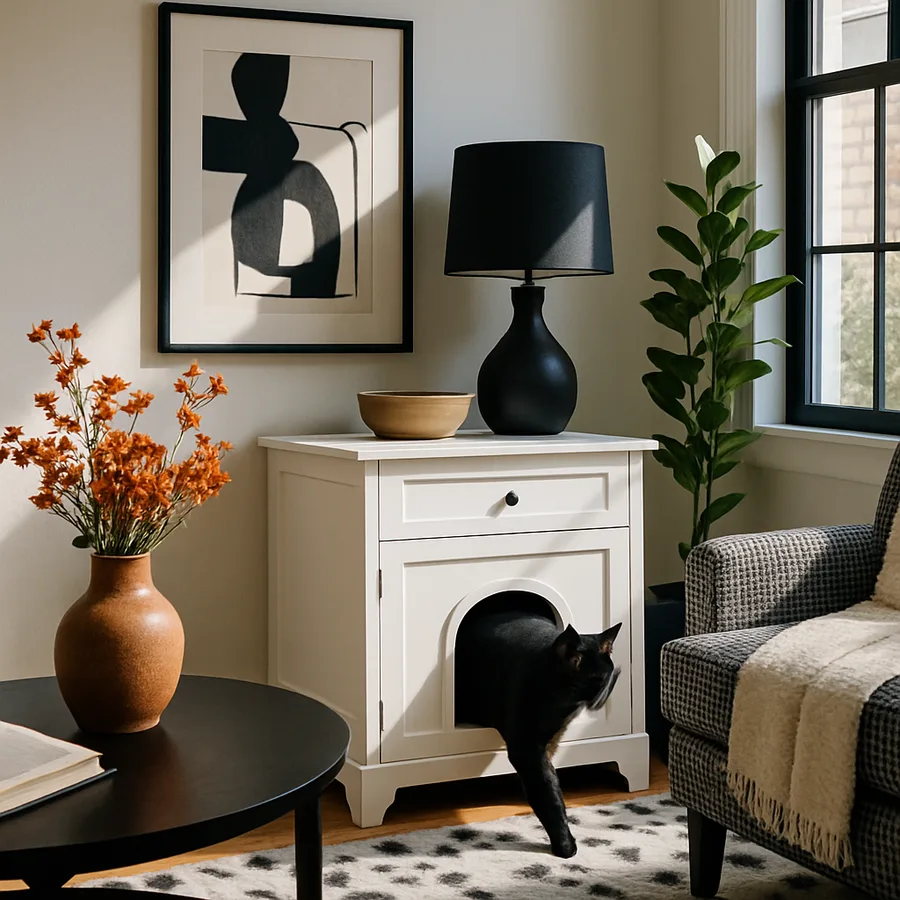
Few things undermine a beautifully decorated room faster than an exposed plastic litter box sitting in the corner. The sight alone can undo hours of careful styling, and the odor can linger despite your best cleaning efforts. Yet cats need accessible, comfortable places to do their business, and banishing the box to a distant basement or garage often creates behavioral problems that are far worse than any aesthetic offense. The solution is hidden litter box furniture that conceals the tray inside a functional piece of home decor, keeping your cat happy and your guests completely oblivious. According to the American Pet Products Association, spending on cat furniture and accessories exceeded four billion dollars in recent years, and a significant portion of that growth comes from disguised litter enclosures designed for style-conscious households. This guide explores every approach worth considering, from repurposed cabinets and custom-built enclosures to commercial options that rival high-end furniture in both appearance and craftsmanship.
Understanding Why Concealment Matters for Both Cat and Owner
The desire to hide a litter box is not purely vanity. Open litter trays placed in high-traffic areas can make a cat feel vulnerable during a moment when it is instinctively at its most defenseless. Feline behaviorists at the International Association of Animal Behavior Consultants explain that cats prefer semi-enclosed elimination spots that offer a sense of security while still allowing an escape route. A litter box tucked inside a piece of furniture with a single entry point satisfies that preference, often resulting in more consistent box usage and fewer accidents around the home. When the cat feels safe, it uses the box reliably, and when the box is hidden, the homeowner maintains the polished environment they worked hard to create.
Odor control improves dramatically when the litter box sits inside an enclosure with proper ventilation. Charcoal filters mounted behind a discreet vent panel absorb ammonia and particulate odors before they reach the room. Some enclosures incorporate a small USB-powered exhaust fan that pulls air through a replaceable carbon filter, creating negative pressure inside the cabinet so that odors never escape through the entry hole. These ventilation strategies, combined with regular scooping, reduce litter box smell to nearly undetectable levels. Guests who visit your home will simply see a handsome piece of furniture and never suspect what lies behind its closed door.
There is also a practical cleaning advantage. Litter scatter, the tiny granules that cling to a cat's paws and end up tracked across the floor, is largely contained within the enclosure. A small mat placed just inside the entry catches most of the debris before the cat steps back onto your flooring. Instead of sweeping the entire bathroom or hallway, you open the cabinet, shake the mat into the box, scoop, and close the door. The entire process takes under two minutes, and the mess stays invisible to everyone except you. For homeowners who entertain frequently, this kind of streamlined maintenance is not a luxury but a genuine quality-of-life improvement.
Have you ever apologized to a guest for the state of your cat's litter area? That uncomfortable moment disappears entirely when the box lives inside furniture that looks like it belongs in a design catalog. The following sections detail exactly how to achieve that result across a range of styles, budgets, and room types.
Repurposing Existing Furniture Into Litter Enclosures
One of the most satisfying approaches to concealed litter box furniture is converting a piece you already own. Vintage buffets, sideboards, and storage benches are ideal candidates because their interior dimensions easily accommodate a standard-size litter pan. The conversion requires cutting a cat-sized entry hole in one side panel, sanding the edges smooth, and optionally lining the interior with a waterproof sealant to protect the wood from moisture. A six-inch-diameter circular opening or a seven-by-seven-inch arch is large enough for most adult cats while remaining inconspicuous on the side panel, especially if positioned near the back where it faces a wall.
Thrift stores and estate sales are treasure troves for this kind of project. A solid-wood cabinet purchased for forty dollars can become a designer litter enclosure that would cost three hundred or more from a specialty retailer. Look for pieces with at least twenty inches of interior depth and fifteen inches of interior height to ensure the cat can turn around comfortably. Avoid particleboard or laminate pieces that may warp when exposed to moisture over time. Real wood or marine-grade plywood withstands the damp environment inside a litter enclosure far better and can be refinished if it ever shows wear.
The transformation works across every decor style. A painted Shaker-style bench with a lift-top lid becomes a farmhouse litter station in a mudroom. A glossy lacquered credenza with tapered legs hides the box in a mid-century living room. An antique steamer trunk with a cut side panel and added ventilation holes serves the same purpose in an eclectic bedroom. The key is selecting a piece whose proportions, finish, and hardware already align with the room's design language so that the enclosure reads as an intentional furnishing choice rather than a compromise. Houzz galleries are packed with before-and-after examples that demonstrate how dramatic these conversions can be.
When you repurpose furniture, you also contribute to sustainable design practices. Keeping a functional piece out of a landfill and giving it a second life aligns with the growing emphasis on circular economy principles within the interior design community. The American Society of Interior Designers has championed reuse and upcycling as core pillars of responsible design, and a litter box conversion is a small but meaningful way to participate in that movement while solving a practical household problem.
Commercial Enclosures Worth the Investment
If woodworking is not your strength, the commercial market for hidden litter box furniture has matured significantly. Several manufacturers now produce enclosures that are genuinely indistinguishable from conventional furniture. Cabinet-style enclosures with shaker doors, soft-close hinges, and interior shelving for litter supplies look exactly like a bathroom vanity or entryway console. Bench-style enclosures with upholstered tops double as seating in a hallway or at the foot of a bed. End-table enclosures with a single side entry and a magazine-rack facade blend into a living room reading nook without attracting a second glance.
When evaluating commercial options, prioritize ventilation, ease of cleaning, and material quality. The best enclosures feature removable interior trays or liners that slide out for hosing down, along with at least one ventilation panel, usually on the back, fitted with a replaceable carbon filter. Avoid enclosures made entirely of MDF or particleboard unless the interior surfaces are sealed with a waterproof coating, because moisture from litter will cause swelling and delamination within months. Solid wood, plywood with laminate interiors, and powder-coated steel frames all hold up well in the long run.
Price ranges vary widely. Budget-friendly options start around eighty dollars and typically offer basic concealment in a simple box shape. Mid-range enclosures between one hundred fifty and three hundred dollars introduce better hardware, genuine wood construction, and integrated odor management. At the premium end, custom-built pieces from small furniture workshops can exceed five hundred dollars but deliver heirloom-quality craftsmanship tailored to your exact specifications and finish preferences. Consider the enclosure a long-term investment in both your home's appearance and your cat's well-being, and allocate your budget accordingly.
Does your current litter setup require you to explain or apologize when company arrives? A well-chosen commercial enclosure eliminates that dynamic permanently. The next time a guest sits on your hallway bench or sets a drink on your living room end table, the secret stays safely hidden behind a closed door and a charcoal filter.
Ventilation and Odor Control Strategies
No matter how attractive the exterior, a litter box enclosure fails its purpose if odors escape into the room. Effective ventilation is the single most important technical detail in any hidden litter box project, and it deserves more attention than most homeowners give it. Passive ventilation relies on strategically placed openings, typically at the back and top of the enclosure, that allow air to circulate naturally. Positioning the rear vent near an exterior wall or next to an existing HVAC return grille can leverage the home's airflow to pull odors away from the living space.
Active ventilation takes the concept further by using a small, quiet fan to create directional airflow. A forty-millimeter USB-powered computer fan mounted behind a rear vent panel draws air through the enclosure and pushes it through a carbon filter before releasing it into the room. These fans consume minimal electricity, operate at whisper-quiet decibel levels, and can run continuously from a USB wall adapter. The carbon filter should be replaced every thirty days for optimal odor absorption, and replacement packs are inexpensive and widely available. This active approach is recommended by the National Kitchen and Bath Association for any enclosed space where moisture and odor accumulate, a principle that applies to litter enclosures just as well as it applies to bathroom cabinetry.
Litter choice also plays a significant role. Clumping clay litters are the most popular, but plant-based alternatives made from walnut shell, corn, or pine produce less dust and often control odor more effectively inside an enclosed space. Silica gel crystals absorb moisture on contact and can go longer between full changes, reducing the frequency with which you need to open the enclosure and disturb the room's air. Whichever litter you choose, maintaining a depth of three to four inches and scooping at least once daily are the baseline habits that keep any concealment system working as intended.
Seal the interior seams of your enclosure with a bead of silicone caulk to prevent urine from seeping into joints and creating a persistent odor source that no amount of ventilation can overcome. A removable plastic liner or a cut-to-fit piece of pond liner placed on the floor of the enclosure adds another layer of protection and makes deep cleaning as simple as lifting the liner out, wiping it down, and replacing it. These waterproofing steps take less than an hour during initial setup and save countless hours of scrubbing over the life of the furniture piece.
Placement Tips for Multi-Room Homes
Where you place hidden litter box furniture matters as much as how it looks. Cats prefer quiet, low-traffic locations with clear sightlines to an escape route. A guest bathroom, a laundry room, or a wide hallway alcove all meet these criteria while keeping the enclosure away from food preparation and dining areas. Avoid placing the enclosure directly next to the cat's food and water station, as cats instinctively dislike eliminating near where they eat. A minimum separation of five feet between feeding and elimination zones is the standard recommendation from ASID-affiliated pet-design consultants.
In multi-story homes, the general guideline is one litter box per cat plus one extra, distributed across floors. This means you may need two or three concealed enclosures in different rooms. Coordinating the furniture style across locations creates visual consistency even though the pieces serve an identical hidden function. A matching pair of end tables, one in the living room and one in the upstairs landing, looks like a deliberate design choice and ensures the cat always has convenient access regardless of which floor it occupies.
For studio apartments and open-plan living spaces where separate rooms are not available, strategic placement becomes even more critical. Positioning the enclosure beneath a console table along an entry wall or integrating it into a room divider panel allows the piece to serve a spatial-design function while concealing the box. The entry hole should face away from the primary seating area so that even if a guest glances in that direction, they see only the finished facade. Adding a tall plant or a stack of books next to the entry side provides additional visual screening without blocking the cat's access.
Measure your chosen location carefully before purchasing or building an enclosure. Allow at least four inches of clearance behind the unit for ventilation and easy access to the rear filter panel. Confirm that the entry hole will not be blocked by an adjacent wall, door swing, or piece of furniture when everything is in its final position. A test fit using a cardboard mockup of the enclosure's footprint saves the frustration of discovering a clearance issue after the real furniture is already in place.
Designing a Litter Station That Matches Any Aesthetic
The greatest strength of the hidden litter box concept is its adaptability. In a Scandinavian-inspired interior, a birch plywood enclosure with rounded edges, a circular entry hole, and a matte-white finish sits comfortably alongside a Muuto side table or a HAY bench. In a traditional home, a paneled cabinet with raised-panel doors, antique brass knobs, and a crown molding top cap matches the built-in cabinetry in the adjacent kitchen. In a bohemian space, a rattan-wrapped chest with a hinged lid and woven-cane side panels serves as both litter enclosure and textile storage, blending effortlessly with macrame wall hangings and layered rugs.
Color is a powerful tool for integration. Painting the enclosure the same color as the room's trim or baseboard makes it recede visually, while painting it an accent color draws the eye but registers as a design statement rather than a pet accommodation. High-gloss finishes in navy, forest green, or charcoal can turn a litter cabinet into a striking focal point that anchors one end of a hallway. Matte finishes in soft neutrals let the piece disappear entirely. Either approach works; the important thing is intentionality. A piece that looks like it was chosen for the room rather than forced into it will always fool the most observant guest.
Hardware upgrades deliver outsized impact for minimal cost. Swapping the generic knobs on a commercial enclosure for leather-strap pulls, oversized brass cup handles, or sleek integrated edge pulls instantly elevates the perceived quality of the furniture. This is the same technique interior designers use when customizing IKEA cabinets for high-end projects, and it works just as well on litter box furniture. A ten-dollar set of hardware can make a one-hundred-dollar enclosure look like a five-hundred-dollar custom build, and the swap takes less than fifteen minutes with a screwdriver.
Ready to banish the visible litter box from your home for good? Start by identifying the room where the current box creates the most visual friction, measure the available space, and decide whether a repurposed vintage piece, a commercial enclosure, or a custom build best fits your budget and design goals. Whichever path you choose, the result will be a cleaner, more polished home where the only evidence of a cat in residence is the contented purring coming from the top of the bookshelf. Better Homes and Gardens regularly features reader-submitted transformations that prove just how seamless these solutions can be, and yours could be next.
More Articles You May Like



Comments
Post a Comment