Smart Speaker Shelf Integration for Kitchen and Living Room
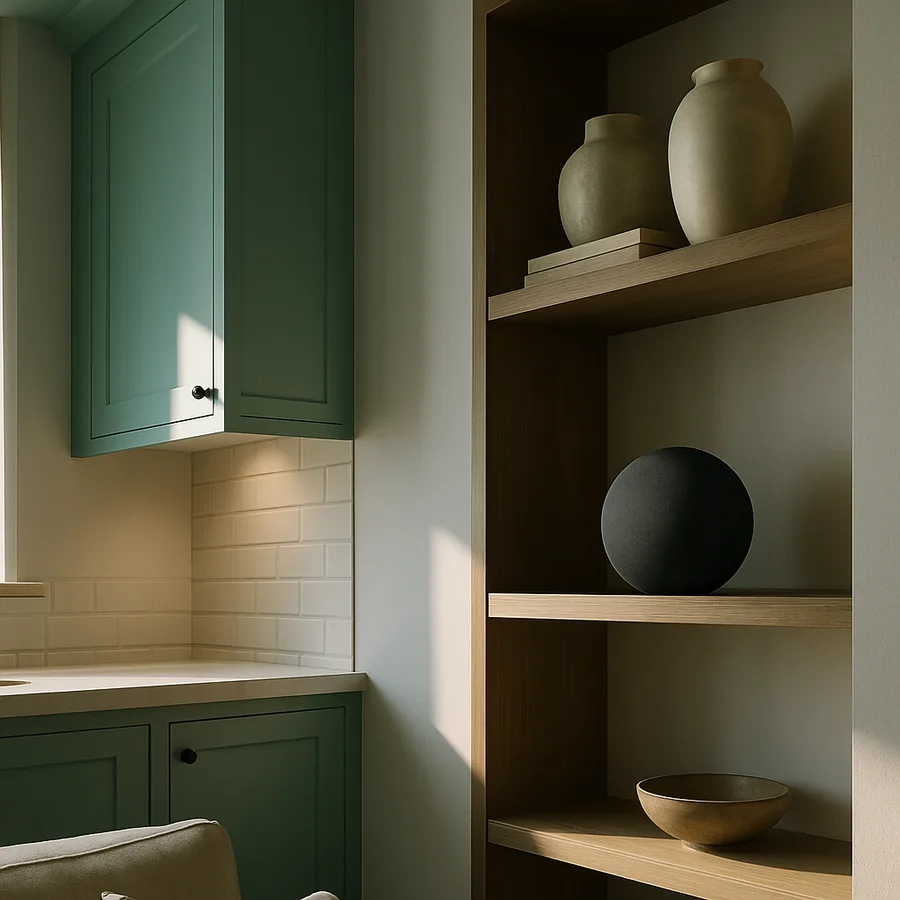
The Challenge of Blending Technology With Interior Design
Smart speakers have become fixtures in millions of homes, handling everything from music playback and recipe timers to lighting control and grocery lists. Yet for all their functional utility, these devices rarely receive the same design consideration as the furniture, artwork, and accessories that surround them. A smart speaker perched on a kitchen counter or dropped onto a living room bookshelf as an afterthought can look out of place, disrupting carefully composed spaces with its unmistakable tech-product aesthetic. The challenge is not whether to use smart speakers but how to integrate them so they contribute to a room's visual story rather than interrupting it.
This tension between technology and design is not new, but it has intensified as homes accumulate more connected devices. A report from the Consumer Technology Association (CTA) found that the average American household now contains more than twenty connected devices, up from thirteen just five years ago. Many of these devices, including smart speakers, were designed primarily for function, with form receiving secondary attention. The result is a growing inventory of black and gray cylinders, pucks, and rectangles competing for space on surfaces that were meant to hold objects chosen for beauty.
The good news is that smart speaker design has improved significantly, and the latest generations from major manufacturers offer more visually appealing forms, fabric covers in muted colors, and compact profiles that lend themselves to shelf integration. Combined with thoughtful placement strategies, these improved designs make it entirely possible to incorporate smart speakers into your kitchen and living room shelving in ways that feel intentional and harmonious. The following sections lay out a comprehensive approach, from acoustic principles to styling techniques, for making your smart speakers look and sound their best.
Have you ever looked at a beautifully styled shelf and realized you could not identify the smart speaker until someone pointed it out? That seamless integration is achievable in any home, and it requires no special tools or technical expertise, just a willingness to think about your smart speaker as a design object rather than purely a gadget.
Acoustic Principles That Govern Placement
Before considering aesthetics, it is important to understand the basic acoustic principles that determine how well your smart speaker will sound in a given location. Smart speakers contain small drivers that project sound outward, and the surfaces surrounding the speaker interact with that sound in ways that can either enhance or degrade the listening experience. Getting the acoustics right ensures that your well-styled speaker also performs at its best.
Surface reflection is the most significant factor. Sound waves bounce off hard surfaces such as walls, shelves, and countertops, and these reflections can either reinforce the original sound or create muddy interference. Placing a speaker directly against a wall amplifies bass frequencies because the wall acts as a reflective boundary, but it can also make the sound boomy and indistinct. A gap of four to six inches between the speaker and the back wall generally provides a good balance between bass reinforcement and clarity. The Audio Engineering Society recommends maintaining this spacing for near-field listening devices, which is precisely what a smart speaker on a shelf represents.
Shelf material matters too. A solid hardwood shelf, a stone countertop, or a thick butcher-block surface provides a stable, non-resonant platform that allows the speaker to perform as designed. A thin, hollow shelf or a glass surface can vibrate sympathetically with the speaker's bass output, creating a buzzing or rattling sound at higher volumes. If your shelving unit has thin shelves, placing a small rubber mat or felt pad under the speaker decouples it from the shelf surface and eliminates resonance. This is the same principle that audiophiles use when placing turntables on isolation platforms, applied at a much more accessible scale.
Height affects both sound quality and voice-assistant responsiveness. Speakers placed at ear level when you are seated deliver the most natural-sounding music, while speakers placed at counter height, typically 36 inches, work well for kitchen use where you are standing. For voice commands, most smart speakers have far-field microphone arrays designed to pick up speech from across a room, so extreme heights or deep shelf recesses can reduce their responsiveness. Avoid placing the speaker inside a closed cabinet or behind glass doors, which muffle both the sound output and the microphone pickup.
Kitchen Shelf Integration Strategies
The kitchen presents unique integration opportunities because it is already a room full of objects, vessels, and tools displayed on open surfaces. A smart speaker on a kitchen shelf can blend with cookbooks, canisters, cutting boards, and small appliances in ways that feel natural if the placement is thoughtful. The key principle is to treat the speaker as one object among many in a curated shelf vignette rather than isolating it as a standalone device.
On open kitchen shelving, group the smart speaker with objects of similar scale and color. A white cylindrical speaker placed next to a white ceramic canister and a small white vase creates a tonal grouping where the speaker nearly disappears. A charcoal-fabric speaker positioned between a stack of dark-spined cookbooks and a matte black pepper mill achieves the same effect. The Better Homes and Gardens styling team recommends grouping objects in clusters of three to five items with varied heights and shapes, and the smart speaker functions perfectly as one element within such a cluster.
For kitchens with floating shelves rather than full shelving units, position the speaker on the shelf that sits closest to the area where you spend the most time cooking and prepping. This is typically the shelf nearest the primary countertop workspace. Placing it toward one end of the shelf rather than dead center looks more natural and leaves room for other objects. A small potted herb beside the speaker, a cookbook leaned against the wall behind it, and a decorative salt cellar in front of it create a miniature scene that contextualizes the technology within the domestic landscape of the kitchen.
What about countertop placement for kitchens without open shelving? A dedicated station near the stove or prep area works well. Place the speaker on a small wooden tray or cutting board alongside your cooking oils, salt box, and a utensil crock. The tray creates a visual boundary that groups these items into a coherent zone, and the speaker reads as a natural member of the cooking station rather than a random tech device. According to the National Kitchen and Bath Association (NKBA), maintaining clear zones on kitchen countertops, designated areas for specific functions, improves both the visual order and the practical workflow of the kitchen. Your smart speaker zone serves both purposes.
Living Room Bookshelf and Media Unit Placement
The living room offers more varied integration possibilities because shelving in this space tends to be larger, deeper, and more deliberately styled than kitchen shelving. Bookcases, built-ins, media consoles with open compartments, and display units all provide potential homes for a smart speaker. The challenge is selecting the spot that balances acoustic performance, voice-assistant accessibility, and visual harmony with the surrounding objects.
On a full bookcase or built-in shelving unit, the speaker performs best on a shelf at seated ear height, which is typically the second or third shelf from the bottom in a standard five-shelf unit. Place it toward the front of the shelf rather than pushed to the back, which improves both sound projection and microphone pickup. Surrounding the speaker with a mix of books and decorative objects, rather than leaving it on an otherwise empty shelf, normalizes its presence. A speaker flanked by a bookend and a small framed photograph looks like a natural part of the shelf composition.
For media consoles and entertainment centers with open compartments, the speaker can sit on the console surface itself or within an open cubby. If using a cubby, ensure it is at least twice the speaker's width and depth to avoid the boxy, enclosed sound that results from placing a speaker in a tight space. The American Society of Interior Designers notes that open shelving on media units has become increasingly popular precisely because it allows homeowners to display a mix of technology and decorative items in a way that closed cabinets cannot.
Consider the speaker's relationship to other technology in the room. If you have a wall-mounted TV, placing the smart speaker on a shelf directly below the TV creates a logical technology cluster that keeps all screens and audio devices in one zone. This leaves other shelves and surfaces free for purely decorative arrangements. Alternatively, placing the speaker across the room from the TV on a bookcase or side table provides better whole-room audio coverage for music listening, since the sound source is in a different location than the TV speakers and creates a more distributed sound field.
Do you find yourself constantly adjusting your speaker's position because it never looks quite right? The problem may not be the speaker itself but the surrounding context. A smart speaker on an otherwise empty shelf will always look like a device placed on a shelf. The same speaker surrounded by five or six complementary objects, arranged at varying heights with overlapping visual planes, looks like one element in a designed composition. The fix is almost always adding more context around the speaker rather than moving the speaker itself.
Color, Material, and Form Matching Techniques
The most effective visual integration happens when the smart speaker's color, material, and form echo elements already present in the room. This does not require an exact match; rather, it asks for a family resemblance between the speaker and its surroundings that allows the eye to read the device as belonging rather than intruding.
Most major smart speakers are now available in fabric-covered versions with soft, textile-like surfaces in white, charcoal, sand, and occasionally blue or green. In a room with linen upholstery and natural fiber rugs, a sand or oatmeal-toned fabric speaker almost disappears into the material palette. In a room with darker furnishings, a charcoal speaker blends with bookshelves full of dark-spined volumes and dark-framed photographs. The Houzz design community frequently showcases this color-matching strategy in before-and-after shelf styling projects, demonstrating how a simple color alignment between speaker and surroundings transforms the device from an eyesore into an accent.
Form matters as much as color. Cylindrical speakers pair naturally with other cylindrical objects: ceramic vases, candles in glass holders, turned wooden vessels, and potted plants in round planters. The repetition of the cylindrical form across multiple objects creates a visual rhythm that absorbs the speaker into the arrangement. Spherical speakers, though less common, work similarly when placed near globes, round bowls, or spherical decorative objects. Rectangular speakers with flat tops integrate well into linear arrangements with books and boxes, where the shared geometry of right angles and straight edges creates cohesion.
For speakers that resist easy visual integration, often because of prominent LED rings, visible control buttons, or brand logos, strategic partial concealment can help. Placing a trailing plant on the shelf above so that a few tendrils cascade near the speaker's upper edge softens the device's outline without blocking the sound output or microphone array. Positioning the speaker at the back of a shelf grouping, partially behind a taller object in front, reduces its visual prominence while keeping the sound path clear above and to the sides. These techniques work best when they look casual and uncontrived; overly elaborate concealment efforts draw more attention to the device than they deflect.
Multi-Room Considerations and Paired Speaker Placement
Many households now operate multiple smart speakers across different rooms, and the placement decisions in one room affect the experience in adjacent spaces. When the kitchen and living room share an open floor plan, which is increasingly common in contemporary homes, coordinating the two speakers' positions creates a better acoustic experience and a more visually consistent design approach.
In an open-plan kitchen and living room, place the two speakers at opposite ends of the combined space. This provides balanced audio coverage for whole-home music playback and ensures that voice commands are picked up reliably regardless of where you are standing or sitting. From a design perspective, the two speakers become visual bookends for the larger space, with each integrated into its respective zone's shelving. Matching the speaker models and colors across the two locations reinforces the connection between the zones while the different shelf contexts, kitchen objects versus living room objects, give each placement its own character.
For stereo-paired speakers in a single room, placement follows more specific acoustic guidelines. The two speakers should be spaced six to ten feet apart, at the same height, and equidistant from the primary listening position. This creates a proper stereo image with distinct left and right channels. On a bookcase that spans a full wall, placing one speaker at each end of the unit, on the same shelf, achieves this spacing naturally. Style each speaker's immediate surroundings similarly but not identically: matching objects in the same tonal family, at comparable heights, but with slight variations that prevent the arrangement from looking mechanical. According to research from the Acoustical Society of America, symmetrical speaker placement with asymmetrical decorative elements is optimal for both sound reproduction and visual appeal in residential settings.
When adding speakers to rooms that already have a defined style, let the existing decor guide the integration rather than imposing a new tech-centric arrangement. A Scandinavian-styled living room with pale woods and minimal accessories calls for a white or light-toned speaker placed with restraint and space around it. A maximalist living room filled with collected objects, bold patterns, and layered textures can absorb a smart speaker almost anywhere because the density of surrounding objects normalizes any addition. Match the integration strategy to the room's personality, and the technology will find its place.
Achieving Seamless Integration in Your Home
Integrating smart speakers into your kitchen and living room shelving is ultimately about extending the same design intentionality you apply to every other object in the room. The speaker is not a foreign element to be hidden or apologized for; it is a functional object that earns its place on the shelf alongside the books, ceramics, plants, and photographs that define your space. When treated with the same care you would give to selecting a vase or positioning a framed print, the smart speaker becomes part of the room's character.
Start with the acoustic fundamentals: appropriate spacing from walls, stable shelf surfaces, and unobstructed sound paths. Then address the visual integration: color matching, form echoing, and contextual grouping with complementary objects. Finally, step back and evaluate the arrangement from the positions where you actually spend time in the room, the sofa, the dining chair, the kitchen prep area, and adjust until the speaker reads as a natural, uncontrived part of the composition.
The best test of successful integration is the visitor test. When someone enters your kitchen or living room for the first time, do they notice the smart speaker immediately, or do they take in the room as a whole and discover the speaker only when you ask it to play music? If the speaker passes this test, you have achieved the balance of function and form that makes a house feel like a thoughtfully designed home rather than a tech showroom. The Architectural Digest technology editors have described this invisibility-through-integration as the defining goal of residential tech styling, and it is within reach for every homeowner willing to invest a few minutes of thoughtful arrangement.
Browse our curated gallery of shelf styling arrangements for every major smart speaker model, and download our free room-by-room placement guide with acoustic spacing templates from the Interior Bliss resource library. Your smart home should sound as good as it looks, and with the right shelf placement, it will.
More Articles You May Like



Comments
Post a Comment