Maximize Small Spaces: Smart Interior Design Tips for Cozy Living Areas
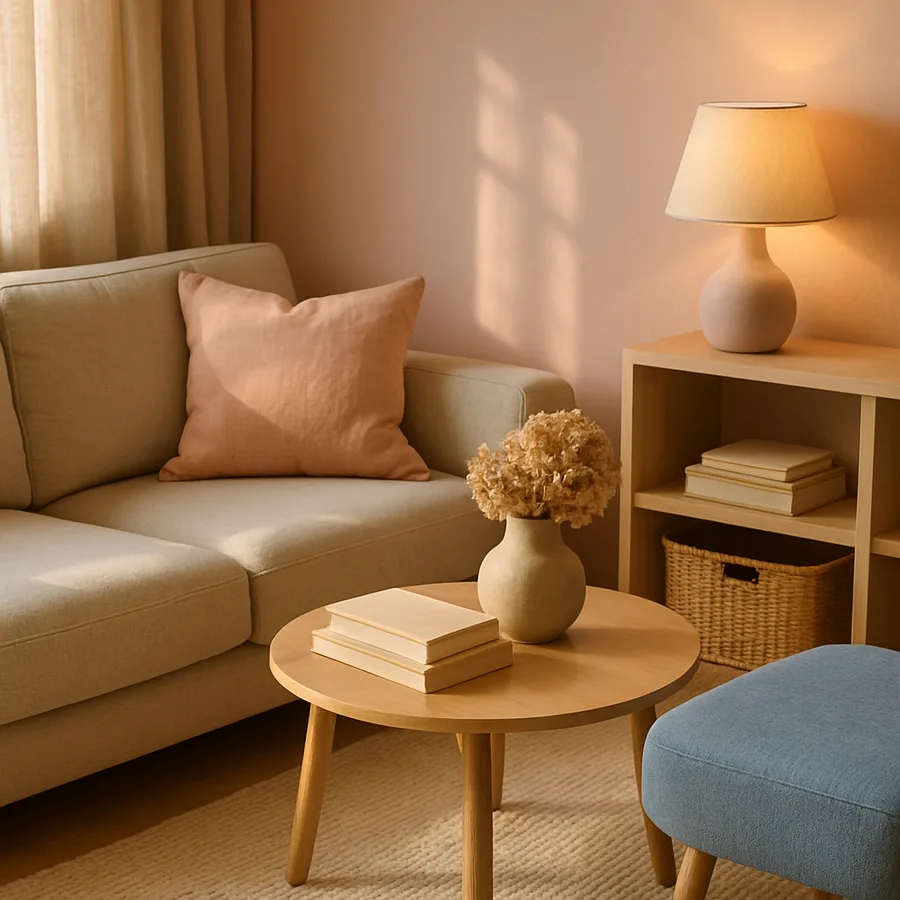
Small spaces present one of the most rewarding design challenges because every decision matters. In a generous room, a misplaced side table or an oversized lamp simply wastes a few square feet. In a compact living area, that same error can disrupt traffic flow, eliminate storage capacity, or make the entire room feel cramped and dysfunctional. But the reverse is equally true: a well-considered decision in a small space delivers outsized impact, transforming a potentially claustrophobic room into one that feels surprisingly comfortable, functional, and visually spacious. Some of the most impressive interiors ever photographed occupy remarkably modest footprints.
The challenge is real and growing. According to the National Association of Home Builders (NAHB), the median size of new single-family homes has fluctuated in recent years, while urban apartment sizes have been steadily decreasing in major metropolitan areas. Meanwhile, rising housing costs mean that many people are choosing smaller homes not as a lifestyle preference but as an economic necessity. The good news is that decades of design innovation, particularly from space-constrained cultures in Japan, Scandinavia, and dense European cities, have produced a rich toolkit of strategies for making small spaces not merely livable but genuinely desirable.
This guide provides a problem-solution approach to small-space living. Each section identifies a specific challenge that compact spaces present and offers targeted solutions drawn from professional design practice. These are not theoretical concepts but practical techniques that have been tested and refined in real homes by designers who specialize in small-space work. Whether your challenge is a tiny studio apartment, a compact bedroom, or a living room that needs to serve multiple functions, the principles here will help you think differently about what your space can become.
Problem: The Room Feels Cramped and Closed In
The most common complaint about small living areas is a persistent feeling of confinement, a sense that the walls are too close and the room lacks air. This feeling is often more perceptual than literal, caused not by the actual square footage but by design choices that emphasize the room's boundaries rather than its openness. Dark colors on walls and ceilings draw boundaries inward. Heavy window treatments block natural light and views. Large, visually heavy furniture dominates the floor area. Clutter fills surfaces and narrows sight lines. Each of these factors contributes to a psychological sense of compression that makes the room feel smaller than its measurements would suggest.
The solution begins with light. Natural light is the single most effective tool for making a room feel spacious, and maximizing it should be the first priority in any small-space design project. Keep window treatments minimal, choosing sheer fabrics or simple roller blinds that can retract completely when not needed. Position the largest mirror in the room on the wall opposite or adjacent to the primary window so that it bounces light deep into the space and creates the optical illusion of a second window. The American Society of Interior Designers identifies light management as the foundational skill for small-space design, noting that rooms with optimized natural light consistently rate as feeling larger than comparable rooms with poor light distribution.
Color selection amplifies or diminishes the spaciousness that light creates. Light, cool-toned colors on walls and ceilings recede visually, making boundaries feel farther away. Painting the ceiling the same color as the walls, or a slightly lighter shade, eliminates the visual boundary between them and creates a sense of continuous space overhead. If you prefer more warmth than cool whites and pale blues provide, soft warm neutrals like cream, warm putty, and pale sand deliver spaciousness while maintaining a cozy atmosphere. Reserve strong, saturated colors for accents, a single piece of artwork, a colorful throw, or a few decorative objects that provide visual interest without shrinking the perceptual volume of the room.
Furniture with visual lightness, pieces with exposed legs, open frames, and glass or acrylic surfaces, allows the eye to see through and beneath them, preserving the sense of continuous floor space. A sofa with visible legs feels dramatically lighter than the same sofa with a skirted base, even though they occupy the identical footprint. Glass-topped coffee tables and acrylic side tables provide surface area without visual mass. Floating shelves and wall-mounted consoles free floor space entirely while providing essential storage and display surfaces. Have you noticed how much floor your current furniture conceals, and how much more open the room would feel if you could see the floor beneath it?
Problem: Not Enough Storage for Daily Life
Storage in small spaces requires creative thinking because the conventional approach, adding more furniture to hold more stuff, is self-defeating when floor space is limited. Every storage piece you add reduces the living area of the room, and a small room filled with storage furniture is essentially a closet with a sofa in it. The key principle is to store vertically and invisibly, using the walls and the hidden interiors of existing furniture rather than adding new pieces that consume floor area.
Vertical storage maximizes the most underutilized dimension in most rooms: height. Floor-to-ceiling shelving, whether built-in or freestanding, provides enormous storage capacity while occupying the same footprint as a single bookshelf. Tall, narrow shelving units are particularly effective in small spaces because they exploit height without consuming significant floor area. The upper shelves, which are less accessible, can store infrequently used items, while eye-level and lower shelves hold everyday objects. Installing shelving above doorways and windows captures dead space that would otherwise contribute nothing to the room's functionality.
Furniture with integrated storage solves two problems simultaneously. Ottoman coffee tables that open to reveal interior storage, beds with built-in drawers or hydraulic lift platforms that expose the entire under-bed area, dining benches with hinged seats, and entryway benches with shoe storage beneath are all examples of furniture that works double duty. The National Kitchen and Bath Association has documented the growing demand for multi-functional storage solutions, noting that consumers increasingly expect furniture to address storage needs rather than creating them. Investing in one well-designed piece with integrated storage is almost always preferable to buying separate furniture and storage units.
Decluttering deserves mention not as a design technique but as a prerequisite for every other strategy working effectively. No amount of clever storage design can compensate for owning more objects than your space can reasonably accommodate. Before investing in storage solutions, conduct an honest inventory of your possessions and release anything that does not serve a current functional or emotional purpose. The discipline of living with less is particularly important in small spaces, where every unnecessary object imposes a disproportionate cost in visual clutter and reduced usability. Professional organizers working with the National Association of Productivity and Organizing Professionals (NAPO) consistently report that clients who declutter before redesigning their storage achieve dramatically better results than those who try to find homes for everything they already own.
Problem: The Space Needs to Serve Multiple Functions
In small homes, rooms rarely have the luxury of serving a single purpose. The living room doubles as a home office. The bedroom serves as a reading room and exercise space. The dining area becomes a homework station. Making a single room succeed at multiple functions without feeling chaotic or compromised is one of the central challenges of small-space design, and solving it requires both smart furniture choices and deliberate spatial organization.
Zoning is the foundation of multi-functional room design. Even without walls or partitions, a room can be divided into distinct functional areas using visual and spatial cues. An area rug defines a seating zone. A change in lighting signals the transition from living area to workspace. A low bookshelf positioned perpendicular to a wall creates a partial room divider that separates a sleeping area from a living area without blocking light or sight lines. The goal is to give each function its own identifiable territory within the room, so that engaging in one activity does not require confronting the visual evidence of all others.
Convertible furniture is essential in multi-functional small spaces. A wall-mounted drop-leaf table that serves as both a dining surface and a desk can fold flat against the wall when neither function is needed, returning its footprint to the room. A daybed with a trundle provides seating by day and sleeping for two by night. A storage credenza with a fold-out desktop conceals a full workspace behind closed doors when the work day ends. The Houzz community showcases thousands of convertible furniture solutions, many from manufacturers specializing in small-space living, that demonstrate how a single room can serve three or four functions without any of them feeling compromised.
Discipline in tidying between activities is the invisible ingredient that makes multi-functional rooms work in practice. A space designed to serve as both a living room and a home office only succeeds if you actually clear the desk and close the laptop when work ends, and tidy the sofa cushions when work begins. Designing for easy transitions, with designated storage for the tools of each activity and a clear protocol for switching between modes, makes this discipline manageable rather than burdensome. The physical act of transitioning a room between functions can itself become a satisfying ritual that marks the boundary between different parts of your day.
Problem: Furniture Does Not Fit Properly
Standard retail furniture is designed for standard-sized rooms, and small living areas often fall outside those parameters. A conventional sofa that looks perfectly proportioned in a showroom can overwhelm a compact living room, leaving insufficient space for circulation, companion pieces, or basic comfort. Solving this problem requires abandoning the assumption that your room must contain the same types and sizes of furniture as a larger space and instead selecting pieces that are proportioned specifically for your room's dimensions.
Apartment-scale and small-space furniture lines have expanded dramatically in response to growing demand. Manufacturers now offer sofas, dining tables, beds, and storage pieces specifically designed for compact rooms, with proportions that maintain comfort and functionality while reducing the footprint that standard-sized pieces demand. A 72-inch apartment sofa provides genuine lounging comfort in a room where an 84-inch standard sofa would be oppressive. A 36-inch round dining table accommodates four for meals while leaving clearance that a standard rectangular table would consume entirely.
Measuring is critical and frequently neglected. Before purchasing any piece of furniture for a small space, measure not only the piece itself but the room it will occupy, including doorways, hallways, and stairwells through which the piece must pass during delivery. Allow a minimum of 30 inches for primary traffic paths and 24 inches for secondary paths around furniture. Tape the outline of a prospective piece on the floor using painter's tape and live with the outline for a day or two before purchasing, observing how the footprint affects your movement through the room and whether the scale feels appropriate. This simple exercise prevents expensive mistakes and builds your intuitive sense of what your room can accommodate.
Custom and modular furniture offers the ultimate solution for rooms with non-standard dimensions. A built-in window seat, a custom banquette that follows the contour of an awkward corner, or a modular shelving system configured to fit the exact dimensions of a wall niche maximizes every available inch while maintaining clean lines and professional finish. While custom solutions require greater upfront investment, they deliver value over time by eliminating wasted space and providing a level of fit that off-the-shelf furniture cannot match in rooms with challenging proportions. What opportunities might custom solutions unlock in the most awkward corners of your home?
Problem: The Room Lacks Visual Interest
Restraint in color and furniture scale, necessary as it is in small spaces, can produce rooms that feel bland and lacking in personality. The challenge is to inject visual interest without adding visual clutter, to create a room that is both spacious-feeling and characterful. This balance requires strategic use of focal points, pattern, texture, and meaningful objects that draw the eye and engage the mind without overwhelming the carefully managed openness of the space.
A single bold focal point works better in a small room than multiple competing points of interest. One large-scale piece of artwork on the main wall commands more attention and creates more visual impact than several small pieces scattered across multiple walls. Similarly, one distinctive piece of furniture, perhaps a vintage armchair upholstered in a bold fabric, adds more character than a room full of uniformly subtle pieces. The principle is concentration: concentrate your visual energy into one or two strong statements and keep the surrounding elements calm and supportive.
Texture provides visual richness without the spatial cost of additional objects or strong color. A room furnished in a neutral palette with multiple textures, a linen sofa, a woolly throw, a rattan basket, a ceramic table lamp, a jute rug, is quietly complex and rewarding to inhabit without feeling busy. Each surface invites a different tactile interaction and catches light differently, creating subtle visual variety that unfolds gradually rather than announcing itself loudly. In small spaces, this understated textural richness is far more effective than bold pattern or saturated color, which can feel aggressive in close quarters.
Plants are among the most effective tools for adding life and visual interest to small spaces without contributing to clutter. A single large plant, such as a fiddle-leaf fig or a monstera, occupying a corner where furniture would not fit adds height, color, texture, and the psychological benefits of living greenery. Hanging planters and wall-mounted plant holders introduce greenery at eye level and above, drawing the eye upward and reinforcing the vertical emphasis that makes small rooms feel taller. Research from the Royal Horticultural Society has documented the stress-reducing and air-quality benefits of indoor plants, making them functional as well as decorative additions to compact living environments.
Problem: The Room Feels Disconnected from the Rest of the Home
Small rooms within larger homes sometimes feel like afterthoughts, disconnected from the design language of adjacent spaces. This disconnection makes the small room feel even smaller because it reads as a separate, enclosed world rather than as a connected part of a larger spatial flow. Creating visual and material continuity between a small room and its neighboring spaces makes the small room feel like an extension of the larger home rather than a diminished appendage.
Flooring continuity is the most impactful connection you can create. When the same flooring material flows uninterrupted from a larger space into a smaller one, the eye reads both as a single continuous area, making the small room borrow spatial generosity from its neighbor. If replacing flooring is not feasible, area rugs in complementary colors and materials can create a visual dialogue between adjacent rooms. The International Interior Design Association emphasizes that floor plane continuity is one of the most effective techniques for making connected spaces feel larger, a principle that applies whether the spaces in question are rooms within a home or zones within a single open-plan area.
Color relationships between adjacent spaces also influence how spacious or confined a small room feels. A small room painted in a color that relates harmoniously to the adjacent room's palette feels connected and supported. A small room painted in a sharply contrasting color feels isolated and more emphatically enclosed. This does not mean that every room must be the same color, but rather that the colors of adjacent rooms should share enough in common, whether through temperature, saturation, or a shared undertone, to create a sense of belonging to the same family. Walking from room to room should feel like a smooth modulation rather than an abrupt key change.
Sight lines between rooms are powerful spatial connectors. When you can see from a small room into a larger adjacent space, the visual access makes the small room feel less confined. Keeping doorways unobstructed, using glass or open shelving instead of solid partitions where privacy is not required, and positioning furniture to preserve views from one room into the next all contribute to a sense of spatial flow that benefits the small room disproportionately. Even a partial view, a glimpse of the larger room through an open doorway, provides the psychological release valve that prevents a small room from feeling like a box.
Material and finish consistency reinforces the connection between spaces. If your home's larger rooms feature brass hardware, carry that brass into the small room. If the predominant wood tone throughout the house is warm walnut, use walnut elements in the compact space as well. These material threads create a subliminal sense of continuity that makes every room feel like a natural part of a coherent whole. The cumulative effect of consistent flooring, related colors, clear sight lines, and shared materials is a small room that feels like a cozy nook within a generous home rather than a cramped enclosure cut off from everything around it.
Small Space, Big Potential
Every strategy discussed here serves a single overarching goal: making your small space work harder and feel better. The solutions are not mutually exclusive. A compact living room can simultaneously benefit from optimized light, vertical storage, multi-functional furniture, and a concentrated focal point. These strategies layer upon each other, and their combined effect exceeds the sum of their individual contributions. A small room that applies all of these principles does not merely feel acceptable for its size but genuinely desirable, the kind of space that visitors admire and that you look forward to spending time in.
The limitations of a small space, when embraced rather than resisted, become creative constraints that produce more intentional, more considered, and ultimately more satisfying design outcomes than unlimited space sometimes achieves. Large rooms can absorb mediocre decisions without visible consequences, allowing lazy design habits to persist. Small rooms demand your best thinking, and that demand produces results that are surprisingly personal and deeply functional.
Implementation need not happen all at once. Begin with the problem that bothers you most. If the room feels dark and cramped, start with light and color. If storage is the primary frustration, tackle that first. Each problem you solve creates a better foundation for addressing the next, and the cumulative improvement over several weeks or months can be transformative. The small space you currently tolerate has the potential to become the room you most enjoy in your home.
Choose one specific problem from this article that resonates with your current living situation and implement one solution this weekend. Measure the results not in square footage gained but in how the room makes you feel when you walk in on Monday morning. That shift in feeling is the true measure of design success, and it is available to you regardless of how many square feet you have to work with.
More Articles You May Like



Comments
Post a Comment