Small Balcony Garden Furniture That Folds and Stores Easily
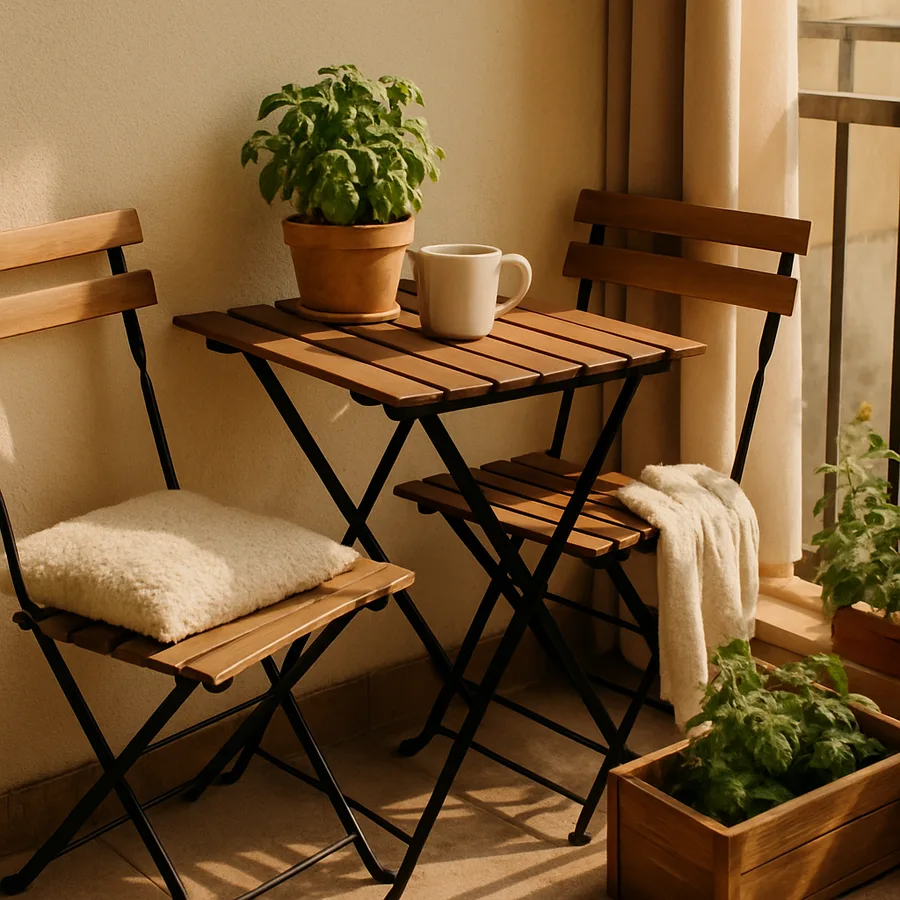
Living with a small balcony does not mean resigning yourself to a bare concrete slab with a single folding chair. The outdoor furniture market has responded to the urban apartment boom with an impressive range of pieces specifically engineered to fold flat, nest compactly, and transform limited square footage into genuinely functional outdoor rooms. The American Society of Interior Designers reports that demand for small-space outdoor furniture has grown steadily as urban populations increase and average apartment sizes shrink. What makes this category exciting is that the best foldable pieces no longer look like afterthoughts. They combine real materials, thoughtful proportions, and clever engineering to deliver comfort and style that rival their full-size counterparts. This guide covers everything from bistro sets and loungers to potting benches and vertical planters, all chosen for their ability to disappear into a closet or stand flat against a wall when not in use.
Measuring Your Balcony Before You Buy Anything
The single biggest mistake people make with balcony furniture is shopping by appearance before understanding their actual dimensions. A bistro table that looks petite in a warehouse showroom can overwhelm a four-by-six-foot balcony and block the door swing entirely. Start by measuring the total footprint of your balcony in both directions, then subtract twelve inches from each wall to account for comfortable movement space. Mark the door swing arc on your floor with painter's tape so you can visualize exactly how much usable area remains after the door opens fully. This exercise takes ten minutes and prevents expensive returns.
Next, consider the vertical clearance available on your balcony. Many apartments have a balcony above yours that limits headroom, and some building codes restrict the height of items placed on balconies for safety and aesthetic reasons. Measure the distance from your balcony floor to any overhead obstruction, and keep tall items like standing planters and privacy screens well below that limit. If you plan to use a folding market umbrella for shade, confirm that it clears the ceiling when opened and that the pole base fits within your floor plan without dominating the space. These vertical dimensions are just as important as the floor area when selecting furniture that truly fits.
Weight limits are the dimension most people never think about, yet they matter enormously. Residential balconies are engineered to support a specific load per square foot, and while most are rated for normal furniture and foot traffic, stacking heavy ceramic planters, a cast-iron bistro set, and a full rain barrel can push you uncomfortably close to the limit. Check your lease or building management guidelines for any stated weight restrictions. When in doubt, favor aluminum and synthetic wicker pieces over cast iron and solid hardwood. According to the National Association of Home Builders, aluminum-frame outdoor furniture typically weighs forty to sixty percent less than equivalent steel or iron pieces, making it the safest choice for elevated balconies.
Finally, map out your intended use zones before purchasing a single piece. Even on a tiny balcony, you likely want at least two functional areas: a spot for sitting with a morning coffee and a zone for your container garden. Sketching these zones on graph paper, with each square representing one square foot, lets you see whether a two-seat bistro set and a three-tier plant stand can coexist or whether you need to choose a piece that serves double duty. This planning step transforms impulse buying into intentional design, and it is the reason some tiny balconies feel spacious while others feel cluttered despite having less furniture.
Folding Bistro Sets That Actually Feel Comfortable
The folding bistro set is the cornerstone of small balcony living, and the range of quality available spans from flimsy discount store specials to heirloom-grade French steel. At the top of the market, brands like Fermob produce bistro chairs and tables that fold completely flat yet feel sturdy enough for a two-hour dinner. Their powder-coated steel construction resists rust and comes in dozens of colors, allowing you to match or contrast with your planter palette. A set of two chairs and one table folds to roughly four inches deep, standing easily against a wall or sliding behind a bookshelf indoors during winter storage.
For budget-conscious shoppers, acacia wood folding bistro sets offer a warm, natural look at a fraction of the cost. Acacia is naturally moisture-resistant and holds up well outdoors when treated with an annual coat of teak oil. The trade-off is weight. A solid acacia set weighs noticeably more than aluminum or steel alternatives, which matters if you plan to move it frequently. Look for sets with stainless steel hardware at the folding joints, as zinc-plated hardware tends to corrode within a season or two of outdoor exposure. The joint hardware is the failure point on most folding furniture, so this detail separates pieces that last five years from those that wobble after five months.
Comfort on a folding bistro chair comes down to seat depth and back angle. Chairs with a seat depth under fifteen inches feel perch-like and uncomfortable for anything beyond a quick espresso. Aim for sixteen to eighteen inches of seat depth and a back angle between ninety-five and one hundred degrees, which provides enough recline to feel relaxed without taking up extra floor space behind the chair. Some manufacturers now offer folding bistro chairs with a subtle contour in the seat that mimics the comfort of a cushion without requiring one. Have you ever noticed how a well-shaped wooden chair can feel more comfortable than a flat cushioned one? That ergonomic shaping makes a meaningful difference on furniture you might sit in for an hour every morning.
Round tables work better than square ones on small balconies because they eliminate sharp corners that catch hips and shins in tight spaces. A table diameter of twenty-four inches accommodates two place settings comfortably, while a twenty-eight-inch diameter allows enough room for a small centerpiece or a laptop alongside a coffee cup. Tables with a slight lip or raised edge are a quiet luxury on windy balconies because they prevent small items from sliding off. When folded, round tables store more compactly than square ones because their shape nests naturally against rounded chair backs, reducing the total storage footprint of the set.
Lounging Options That Collapse to Nearly Nothing
If your balcony vision involves reading a book in the afternoon sun rather than dining, you need a lounge option that delivers real relaxation without permanent spatial commitment. The modern folding sling lounger has evolved dramatically from the creaky aluminum-and-nylon beach chairs of decades past. Current designs use aircraft-grade aluminum frames with Textilene mesh sling fabric that supports body weight evenly, dries in minutes after rain, and resists UV fading for years. The best models fold to under five inches thick and weigh less than twelve pounds, making them easy to carry through a sliding door and tuck into a bedroom closet.
Zero-gravity recliners represent the premium end of folding lounge furniture, and several models are now designed specifically for compact spaces. These chairs use a bungee-cord suspension system that distributes weight across the entire sling surface, creating a floating sensation that reduces pressure points. When fully reclined, they position your legs above your heart, which doctors at the American Academy of Orthopaedic Surgeons note can reduce lower-back strain and improve circulation. When folded, most zero-gravity chairs collapse to a bundle roughly eighteen inches wide and six inches deep, complete with a carrying strap. The catch is that they require more floor space when deployed than a standard chair, so measure your balcony carefully before committing.
For the smallest balconies where even a lounge chair feels like too much, consider a hanging hammock chair that mounts to the ceiling rather than occupying floor space. These single-point-suspension chairs swing gently, support up to two hundred fifty pounds, and fold into a bag the size of a throw pillow. Installation requires a single heavy-duty ceiling hook rated for the load, which most landlords will permit if you patch the hole on move-out. The floor beneath the chair remains completely clear for a planter, a small side table, or simply open space. When you want to reclaim the balcony for a standing gathering, unhook the chair and toss it inside in seconds.
A floor cushion or outdoor pouf might seem too simple to mention, but these are arguably the most space-efficient seating options available. Modern outdoor poufs use Sunbrella or equivalent solution-dyed acrylic fabric filled with polystyrene beads that shed water and resist mildew. They weigh almost nothing, stack vertically, and serve as extra seating when guests arrive or a footrest when you are solo. A pair of outdoor poufs takes up less storage space than a single folded chair and adds a relaxed, bohemian character to a balcony garden that rigid furniture cannot replicate. How many seating options can you genuinely store inside a coat closet? Poufs make that possible without any compromise on outdoor comfort.
Storage Benches and Dual-Purpose Pieces
On a balcony where every square inch counts, furniture that serves a single purpose is a luxury you may not be able to afford. The storage bench solves two problems simultaneously by providing seating and a weatherproof compartment for cushions, gardening tools, potting soil, and seasonal items. The best balcony-scale storage benches measure roughly thirty-six to forty-eight inches wide, which fits against most balcony railings without blocking walkways. Look for models with gas-lift hinges that hold the lid open while you rummage inside, because propping a heavy lid with one hand while reaching in with the other gets old immediately.
Material selection matters more for storage benches than for other furniture types because the bench must protect its contents from rain, sun, and temperature swings. High-density polyethylene resin benches, like those from Keter and Suncast, are fully waterproof, UV-resistant, and maintenance-free. They weigh less than wood alternatives and never need staining or sealing. The aesthetic trade-off is that resin can look plasticky in certain finishes, though recent designs with wood-grain textures have become remarkably convincing. If natural material aesthetics are non-negotiable for you, marine-grade teak or pressure-treated cedar benches with a waterproof liner insert offer the look of real wood with reasonable weather protection.
Beyond the storage bench, several other dual-purpose pieces deserve consideration. Folding potting benches with a flip-up work surface give you a dedicated gardening station when open and a slim console table when closed. These typically measure about twenty inches deep when folded against the wall and extend to thirty-six inches when the work surface drops down. Wall-mounted fold-down tables operate on the same principle but mount permanently to your balcony wall, eliminating a free-standing piece entirely. A twelve-by-twenty-four-inch wall-mounted table provides enough surface for a drink and a plate, folds to under three inches from the wall, and supports up to fifty pounds in the deployed position.
Consider the nesting side table set as another intelligent space saver. These sets typically include two or three tables of graduated size that stack inside each other when not in use, occupying the footprint of the single largest table. Pull them apart when you have guests, and they become individual drink surfaces scattered around your seating area. When the gathering ends, nest them back together in seconds. The best nesting tables for outdoor use are powder-coated steel or aluminum with perforated tops that allow rain to drain through rather than pooling. This small detail prevents the standing water that breeds mosquitoes and stains surfaces, keeping your balcony both beautiful and practical.
Container Gardening Furniture and Vertical Solutions
A balcony garden is only as good as the infrastructure supporting it, and the right planting furniture can triple your growing capacity without consuming additional floor space. Vertical plant stands with three to five tiers arrange pots in a ladder formation against a wall, putting herbs, flowers, and trailing vines at multiple heights while occupying a base footprint of just two square feet. The best models for small balconies are A-frame designs that lean against the wall at a slight angle, because they provide natural drainage away from the building and are easier to fold flat for storage than free-standing tower designs. According to a report by the Better Homes and Gardens editorial team, vertical gardening on balconies has become one of the fastest-growing segments of urban horticulture.
Railing-mounted planters are perhaps the most space-efficient option available because they use real estate that would otherwise go completely wasted. These planters hook over the top of your balcony railing and hang on the exterior side, the interior side, or both, depending on the design and your building's rules. A set of four railing planters can hold a complete herb garden, several trailing flower varieties, or a mix of both, all without touching your floor space. Check that the planter's bracket adjusts to your specific railing width, as balcony railings vary from two to six inches in diameter. Also verify that your building permits exterior-hanging planters, as some high-rise associations restrict them to prevent falling-object hazards.
For renters who cannot drill into walls or railings, tension-pole plant stands offer a damage-free vertical solution. These spring-loaded poles press between your balcony floor and ceiling, supporting multiple adjustable arms or ring shelves at various heights. They can hold six to ten plants in a footprint barely larger than a dinner plate, and they disassemble completely for storage or moving. The tension mechanism requires a solid ceiling surface to press against, so test the firmness of your balcony ceiling before purchasing. If the ceiling is a thin material or has significant flex, the pole may not hold securely under load, and a traditional wall-leaning plant ladder would be the safer choice.
Folding garden work stations combine a potting surface, tool hooks, and shelf storage into a single unit that collapses to roughly six inches deep. These are ideal for balcony gardeners who repot frequently, mix soil blends, or start seeds in spring. The work surface provides a contained, waist-height area for messy tasks that would otherwise require kneeling on the balcony floor, and the tool hooks keep trowels, pruners, and gloves organized and accessible. When gardening season winds down or you simply need the space for entertaining, the entire station folds flat and stands in a closet corner. Pairing a folding work station with a rolling cart that tucks underneath creates a complete mobile gardening system that appears and disappears on demand.
Weatherproofing and Seasonal Storage Strategies
Even the best folding furniture needs protection from the elements to maintain its appearance and structural integrity over multiple seasons. Furniture covers sized specifically for bistro sets, loungers, and storage benches are an inexpensive insurance policy that adds years to the life of your pieces. Look for covers made from solution-dyed polyester with sealed seams and adjustable drawstring hems. The solution-dyeing process embeds color throughout the fabric fiber rather than applying it to the surface, which prevents the cover itself from fading and flaking onto your furniture. A complete set of covers for a typical balcony furniture arrangement costs less than a single replacement chair and stores in a drawer when not in use.
Seasonal storage is where foldable furniture truly earns its premium over fixed pieces. When winter arrives or you simply want to reclaim indoor space during a party, every piece on your balcony should be able to collapse and fit into a designated storage area. Designate a specific closet, under-bed space, or wall-mounted rack system for your balcony furniture, and measure that space before purchasing new pieces. A common frustration is buying a folding chair that technically folds but collapses to a size and shape that does not fit anywhere in your apartment. Write down your storage dimensions and carry them in your phone alongside your balcony measurements. Having both sets of numbers available while shopping prevents mismatches that lead to furniture living permanently on the balcony, exposed to weather it was not designed to endure year-round.
For items that remain outdoors through winter, elevation and airflow are your two most important allies against moisture damage. Placing furniture feet on rubber or plastic risers lifts them above standing water and snow accumulation, preventing the base from sitting in moisture for weeks at a time. Ensuring a few inches of clearance between stored furniture and the wall allows air to circulate and prevents the damp microclimate that encourages mold and mildew growth. If your balcony receives significant snow load, store folded furniture vertically rather than horizontally so snow slides off rather than accumulating on flat surfaces. These small habits require almost no effort but dramatically extend the life and appearance of every piece.
What about cushions and fabric accessories? Remove them and store them indoors whenever rain is expected, regardless of any water-resistant claims on the label. Water-resistant does not mean waterproof, and even Sunbrella-grade outdoor fabric will develop mildew if left soaking wet for extended periods. Store cushions vertically in a breathable fabric bag or standing upright in a closet to prevent compression of the fill material. If you use outdoor rugs on your balcony, roll them and stand them in a corner when not in use rather than leaving them flat where trapped moisture can damage your balcony surface. These storage habits take seconds each time and keep your soft furnishings looking fresh season after season.
Conclusion
Furnishing a small balcony is an exercise in creative problem-solving, and the best results come from treating every square foot as valuable real estate that deserves intentional planning. Measuring your space thoroughly, understanding weight and height limitations, and mapping use zones before shopping transforms the experience from overwhelming to enjoyable. The furniture options available for compact outdoor spaces have never been better, spanning from elegant steel bistro sets that fold to four inches thick to zero-gravity loungers that collapse into a carrying bundle.
Dual-purpose pieces like storage benches, wall-mounted fold-down tables, and nesting side tables multiply the functionality of your balcony without multiplying its footprint. Vertical gardening solutions move your plants upward, freeing floor space for the furniture that makes your balcony a room rather than just a ledge. Every piece you select should answer two questions: does it serve my daily needs, and can it disappear completely when those needs change?
Maintenance and seasonal storage close the loop on a well-planned balcony. Proper covers, elevated feet, indoor cushion storage, and a designated closet space for folded furniture ensure that your investment lasts for years and looks good every time you unfold it. The goal is a balcony that feels spacious when you are using it and invisible when you are not, and that dual identity is exactly what the best folding furniture delivers.
Start by measuring your balcony and your storage space today, then sketch your ideal layout on graph paper before visiting a single store. That ten-minute planning session will save you hours of returns and give you a balcony that works as hard as every other room in your home.
More Articles You May Like



Comments
Post a Comment