Built-In Cubbies vs Freestanding Mudroom Furniture Compared
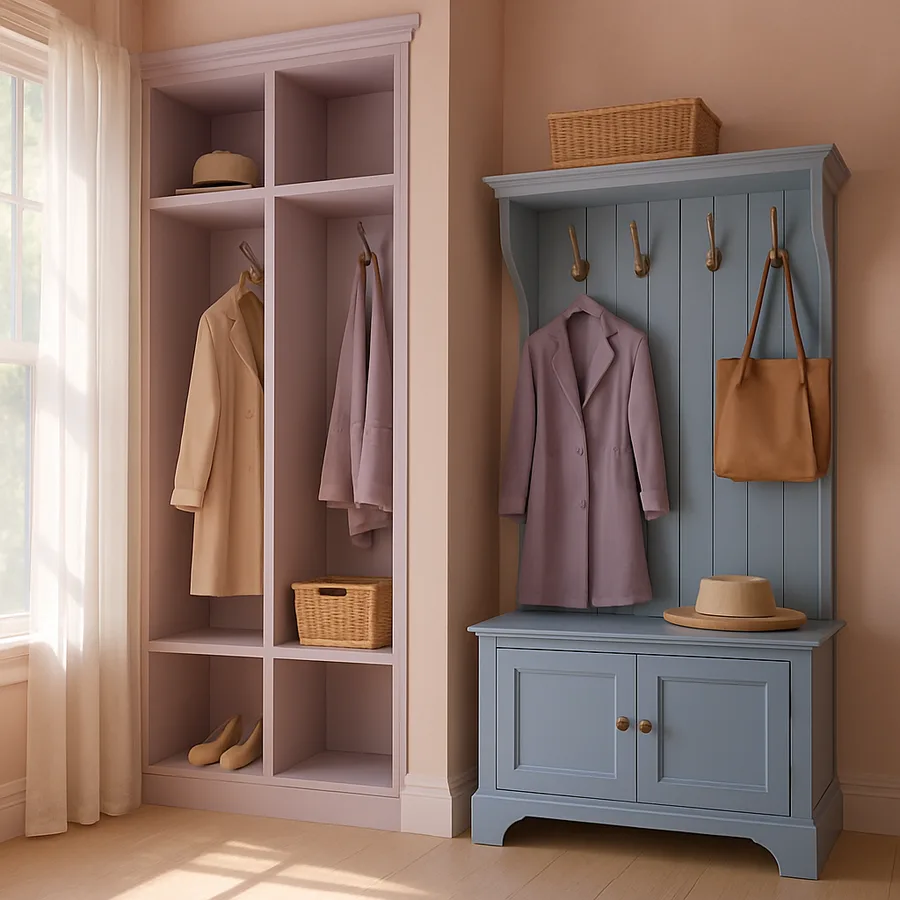
Why Mudroom Storage Matters More Than You Think
The mudroom serves as a critical transition zone between the outside world and the interior of your home. According to the National Association of Home Builders (NAHB), mudrooms ranked among the top five most-wanted features in new homes, with nearly 46 percent of buyers listing them as essential or desirable. This statistic underscores just how much homeowners value a dedicated space for managing coats, shoes, bags, and everyday clutter. A well-organized mudroom can set the tone for the entire house, preventing chaos from spreading into living areas.
When it comes to outfitting this space, homeowners face a fundamental choice: built-in cubbies or freestanding mudroom furniture. Each approach brings distinct advantages in terms of cost, flexibility, durability, and aesthetic impact. The right decision depends on your specific situation, including the size of your mudroom, your household habits, and how long you plan to stay in your home. Making the wrong choice can lead to wasted square footage and frustrating daily routines.
Have you ever walked into your entryway only to trip over shoes scattered across the floor? That experience is exactly what proper mudroom storage aims to eliminate. Whether you choose a permanent installation or a portable solution, the goal remains the same: creating a system that every family member will actually use. The key is matching the storage method to your lifestyle rather than simply following trends.
This comparison breaks down every major factor you should weigh before committing to either option. From installation costs and spatial requirements to resale value and maintenance demands, each section examines a specific dimension of the built-in versus freestanding debate. By the end, you should have a clear picture of which approach suits your home.
Built-In Cubbies: The Case for Permanent Installation
Built-in cubbies are custom-constructed storage units that attach directly to the wall studs and floor of your mudroom. They typically include a combination of open compartments, closed cabinets, bench seating, hooks, and shoe shelves all integrated into a single cohesive unit. Because they are designed specifically for your space, built-ins can maximize every inch of available wall area from floor to ceiling. The Houzz Kitchen and Bath Trends Study found that custom and semi-custom cabinetry accounts for over 60 percent of renovation projects, reflecting a strong preference for tailored solutions.
One of the strongest arguments for built-ins is their ability to handle awkward spaces. If your mudroom has sloped ceilings, odd angles, or narrow dimensions, a custom unit can be shaped to fit perfectly. Freestanding furniture, by contrast, comes in standard sizes that may leave gaps or feel cramped. Built-ins also tend to look more polished and intentional, blending seamlessly with the surrounding architecture. This visual integration can make a small mudroom appear larger because the storage feels like part of the wall rather than an added obstruction.
Durability is another significant advantage. Built-in cubbies are anchored to structural elements, making them extremely sturdy and resistant to tipping or shifting. Families with young children benefit from this stability since heavy use and occasional rough handling will not compromise the structure. The materials used in built-ins, often hardwood, MDF with melamine coating, or painted plywood, can be selected to withstand moisture and dirt that mudrooms inevitably accumulate.
The primary drawback is cost. A professionally installed built-in cubby system typically ranges from $2,000 to $8,000 depending on materials, complexity, and regional labor rates. The American Society of Interior Designers (ASID) notes that custom millwork consistently ranks among the higher-cost line items in residential projects. You also cannot take built-ins with you if you move, which means the investment stays with the property.
Freestanding Mudroom Furniture: Flexibility and Affordability
Freestanding mudroom furniture includes standalone pieces such as hall trees, storage benches, cubby shelving units, coat racks, and shoe cabinets. These items can be purchased individually or as coordinated sets from retailers ranging from budget outlets to high-end furniture stores. The average cost for a quality freestanding mudroom setup falls between $300 and $1,500, making it significantly more accessible than a custom built-in system. This price advantage is often the deciding factor for renters and homeowners on tighter budgets.
Flexibility is the standout benefit of freestanding pieces. If your storage needs change, perhaps because your family grows or your daily routines shift, you can swap out individual components without any construction work. Moving to a new home means your mudroom furniture comes with you. This portability also allows you to experiment with different arrangements until you find what works best, something that is impossible once built-ins are installed.
Assembly and setup are straightforward in most cases. Many freestanding units arrive flat-packed with hardware and instructions, requiring nothing more than a screwdriver and an hour of time. Even fully assembled pieces simply need to be positioned and optionally secured to the wall with an anti-tip bracket. The Better Homes & Gardens editorial team frequently highlights how freestanding entryway furniture can transform a space in a single afternoon without professional help.
The downsides include less efficient use of space and a potentially less cohesive look. Freestanding pieces often leave gaps between themselves and the walls or ceiling, and mixing brands can create a mismatched appearance. Stability can also be a concern with lighter-weight units, particularly those made from particleboard. Over time, the joints and connectors on assembled furniture may loosen with heavy daily use, requiring periodic tightening or replacement.
Comparing Cost, Resale Value, and Long-Term Return
The financial comparison between built-in cubbies and freestanding furniture extends beyond the initial purchase price. Built-ins represent a capital improvement to your property, which means they can increase your home's appraised value. The National Association of Realtors (NAR) reports that organized storage and mudroom features positively influence buyer perception, with many agents citing them as a selling point during showings. A well-executed built-in system can return 50 to 70 percent of its cost at resale, particularly in family-oriented neighborhoods.
Freestanding furniture, on the other hand, contributes nothing to your property value since it leaves with you. However, the lower upfront cost means less financial risk. If you spend $800 on freestanding mudroom pieces and use them for five years, your annual cost is just $160 with no construction disruption. The same calculation for a $5,000 built-in yields $1,000 per year, though the resale recoup partially offsets this. Homeowners planning to stay in their current residence for fewer than five years often find freestanding options more financially sensible.
Maintenance costs should also factor into your analysis. Built-ins may require professional repair if damaged, and repainting or refinishing integrated cabinetry costs more than touching up a standalone piece. Freestanding furniture can be replaced individually when worn out, spreading costs over time. Both options benefit from regular cleaning and occasional hardware tightening to maintain function and appearance.
Are you planning to sell your home within the next few years, or is this your long-term residence? That single question often clarifies which option delivers better financial value. Long-term homeowners who treat the mudroom as a permanent feature of the house generally find that built-ins justify their higher price through daily convenience and resale contribution. Short-term residents or renters almost always benefit from the flexibility and lower commitment of freestanding pieces.
Space Planning and Layout Considerations
The physical dimensions of your mudroom heavily influence which storage approach will work best. Built-in cubbies shine in spaces that are either very large or very small. In a generous mudroom, built-ins can span an entire wall and incorporate benches, upper cabinets, and even a dedicated space for each family member. In a tight mudroom, a custom solution can use every vertical inch efficiently, something standard-sized freestanding pieces simply cannot match. The American Society of Interior Designers recommends at least 24 inches of cubby width per person for comfortable daily use.
Freestanding furniture works best in medium-sized mudrooms where standard dimensions fit comfortably. A typical hall tree measures 35 to 40 inches wide, and storage benches range from 36 to 60 inches. These standard sizes assume a certain minimum clearance for walking paths and door swings. If your mudroom measures less than five feet wide, freestanding pieces may protrude too far into the walkway, creating a cramped and impractical arrangement.
Traffic flow is a critical factor that many homeowners overlook during the planning phase. A mudroom needs clear pathways so that multiple people can enter, remove outerwear, and stow items without creating a bottleneck. Built-in benches mounted at wall height keep the floor completely open beneath for shoe storage, while freestanding benches often have solid bases that limit floor-level access. Consider how many people typically use the mudroom at the same time, such as the morning school rush, and ensure your chosen solution accommodates that peak traffic.
Ceiling height also plays a role in the decision. Rooms with standard eight-foot ceilings work well with either approach. However, if you have higher ceilings, built-ins can extend upward to capture otherwise wasted vertical space for seasonal item storage. Freestanding units rarely exceed six feet in height, meaning two or more feet of wall space above them goes unused. For homes with lower or sloped ceilings, custom built-ins can be trimmed to fit precisely, whereas freestanding pieces may look disproportionate.
Style, Customization, and Material Options
From a design perspective, built-in cubbies offer virtually unlimited customization. You can select the exact wood species, finish color, hardware style, and configuration to match your home's existing aesthetic. A Craftsman-style home might feature built-in cubbies with beadboard backing and oil-rubbed bronze hooks, while a modern farmhouse could use painted white shaker-style panels with matte black fixtures. This level of design control ensures the mudroom feels like a natural extension of the home rather than an afterthought.
Freestanding furniture has improved significantly in both design quality and variety over the past decade. Retailers now offer pieces in dozens of finishes and styles, from rustic reclaimed wood to sleek contemporary laminate. Mixing and matching components from different collections allows a degree of personalization, though achieving the seamless look of a custom built-in remains difficult. Architectural Digest has noted the rising popularity of vintage and antique freestanding pieces repurposed as mudroom storage, which can add character that no new construction replicates.
Material durability should align with your mudroom's exposure level. A mudroom with direct exterior access sees more moisture, dirt, and temperature fluctuation than one that connects to a garage. Built-in cubbies constructed from moisture-resistant materials like marine-grade plywood or PVC trim boards handle these conditions well. Freestanding furniture made from solid hardwood also performs adequately, but particleboard and MDF pieces can swell and deteriorate when exposed to repeated moisture. Whichever option you choose, water-resistant finishes and sealed surfaces are essential in high-exposure mudrooms.
Hardware and accessories further differentiate the two approaches. Built-ins allow you to integrate specialized features such as pull-out boot trays, charging stations, lockable compartments, and ventilated shoe cubbies directly into the design. Freestanding furniture generally offers hooks, open shelves, and basic drawers, with fewer options for specialized add-ons. If your household has specific storage requirements, such as sports equipment, pet supplies, or work gear, built-ins can be configured to address those needs precisely.
Making the Right Choice for Your Household
Deciding between built-in cubbies and freestanding mudroom furniture ultimately comes down to four factors: budget, timeline, permanence, and specificity of need. If you own your home, plan to stay for many years, and want storage tailored to your family's exact routines, built-in cubbies deliver superior long-term value and daily functionality. The higher upfront cost is offset by durability, space efficiency, and contribution to property value.
If you rent, move frequently, have a modest budget, or prefer the ability to reconfigure your space as needs change, freestanding furniture is the practical choice. The lower cost of entry, zero construction requirement, and portability make it an accessible solution for nearly any living situation. Many homeowners also start with freestanding pieces and later upgrade to built-ins once they have a clearer understanding of how their mudroom actually gets used.
A hybrid approach deserves consideration as well. Some homeowners install a simple built-in bench with hooks along one wall and supplement with freestanding shoe storage and a coat rack on the opposite side. This combination captures some of the permanence and polish of built-ins while retaining the flexibility of freestanding components. The NAHB Design Committee has highlighted hybrid mudroom designs as an increasingly popular trend in mid-range home construction.
Whatever direction you choose, the most important principle is that your mudroom storage should reflect how your household actually lives, not how a magazine spread looks. Observe your family's drop-zone habits for a week before making any purchase. Note what gets dropped where, which items need the most accessible spots, and how much space the morning and evening rushes truly demand. That real-world data will guide you to a solution that works every single day. Start measuring your space this weekend and take one step closer to an organized entryway that welcomes you home.
More Articles You May Like



Comments
Post a Comment