Staging a Vacant Home Without Spending a Fortune on Furniture
The Empty Home Problem and Why It Matters
A vacant home presents one of the most challenging selling scenarios in residential real estate, not because the home itself is deficient but because the absence of furnishings creates a perceptual void that most buyers cannot bridge on their own. Empty rooms look smaller than furnished ones, a counterintuitive reality that confounds many sellers who assume that removing all furniture would make spaces appear larger. The explanation lies in how the human brain processes spatial information: without furniture to provide scale references, the eye loses its ability to gauge room dimensions accurately, and most people default to underestimating size. An empty twelve-by-fourteen-foot bedroom feels oddly small because there is no bed to confirm that the room comfortably accommodates one. An empty living room feels like a box rather than a living space because there is no seating arrangement to demonstrate how the room functions and flows.
The financial impact of selling a vacant, unstaged home is significant and well-documented. According to data compiled by the Real Estate Staging Association (RESA), vacant homes that are professionally staged sell on average for six to ten percent more than identical vacant homes that are left empty. On a three-hundred-thousand-dollar home, that differential represents eighteen thousand to thirty thousand dollars, a figure that dwarfs the cost of any reasonable staging investment. Additionally, vacant homes spend significantly longer on the market, averaging approximately seventy percent more days listed than staged comparable properties. Each additional month on the market adds carrying costs in mortgage payments, insurance, taxes, and utilities while simultaneously creating the stigma of a stale listing that prompts buyers and agents to wonder why the property has not sold.
Beyond the financial arithmetic, vacant homes suffer from an emotional deficit that photographs and online listings amplify. In an era when the vast majority of buyers first encounter a home through listing photos, a gallery of empty rooms communicates nothing about how the home lives. Photos of vacant rooms all look essentially the same: walls, floor, windows, ceiling. There is nothing for the eye to rest on, nothing to create an emotional response, and nothing to differentiate this property from any other vacant listing in the same price range. Staged listing photos, by contrast, tell a story about lifestyle, comfort, and possibility that engages buyers and motivates them to schedule a showing. The National Association of Realtors (NAR) reports that 82 percent of buyers' agents say staging helps their clients visualize a property as a home, and that visualization begins online, long before the buyer ever walks through the front door.
The good news for sellers facing a vacant staging challenge is that effective staging does not require furnishing every room to the standard of a model home. Strategic, budget-conscious approaches can achieve seventy to eighty percent of the impact of full professional staging at a fraction of the cost. The key is understanding which rooms matter most, which staging elements deliver the greatest return, and where affordable alternatives can substitute for expensive full-furnishing solutions. Have you ever walked through an empty home for sale and struggled to imagine where your sofa would go, or whether your dining table would fit, even in rooms that were objectively large enough?
Strategic Room Prioritization: Stage Three Rooms, Sell the Whole House
When budget constraints prevent full-house staging, the most effective strategy is to concentrate your resources on the three rooms that have the greatest influence on buyer decisions: the living room, the primary bedroom, and the kitchen. Research by the National Association of Realtors consistently identifies these three spaces as the rooms where staging has the most significant positive impact on buyer perception and offer behavior. Staging these three rooms while leaving others empty creates focal points that anchor the buyer's experience and provide enough visual information for them to extrapolate the potential of the remaining spaces. A buyer who sees a beautifully staged living room and primary bedroom is far more likely to imagine the empty secondary bedroom as equally appealing than a buyer who has seen nothing but empty rooms from the moment they walked in.
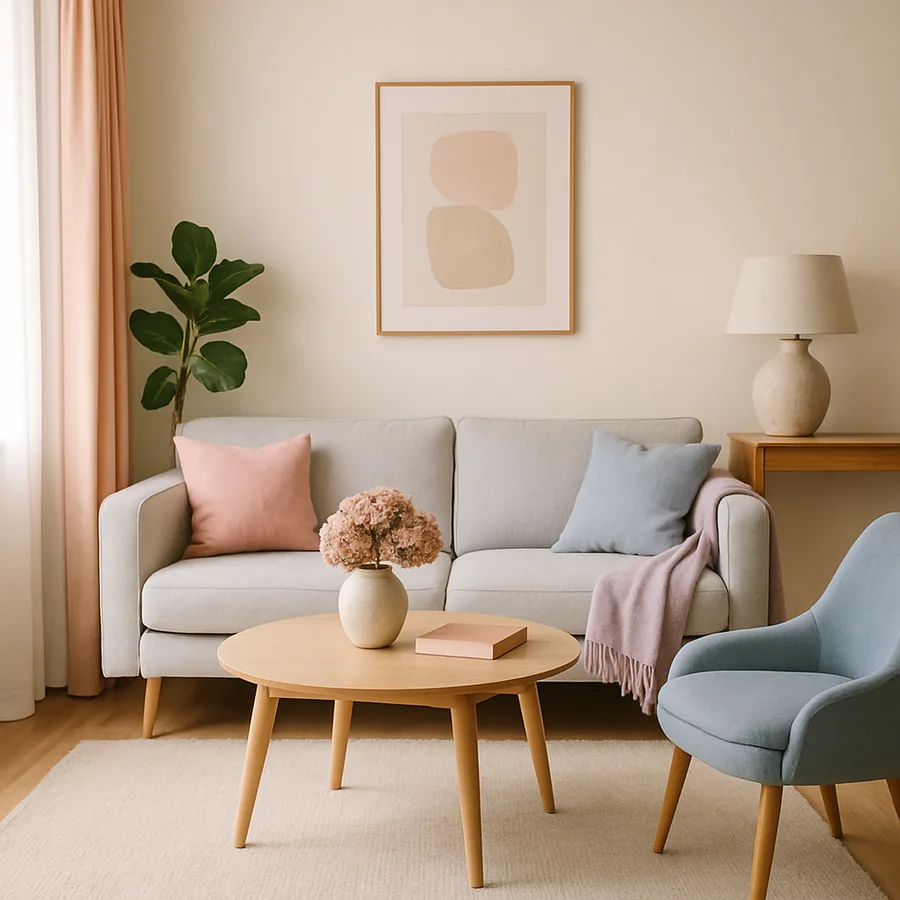
The living room should receive the largest share of your staging budget because it is typically the first room buyers enter and the space where they spend the most time during a showing. A basic living room staging package requires a sofa, a coffee table, an area rug, and two to three accent pieces such as throw pillows, a table lamp, and a decorative object. This minimal arrangement defines the room's function, demonstrates its scale, and creates a visual anchor that photographs well for the online listing. Position the sofa to face the room's strongest feature, whether that is a fireplace, a large window, or an open sightline to the kitchen, and arrange the remaining pieces to create a cohesive conversation area that feels intentional and inviting.
The primary bedroom requires even less to stage effectively: a bed with clean, attractive bedding, one or two nightstands with lamps, and an area rug are sufficient to transform an empty box into a convincing sanctuary. The bed is the single most important staging element in the entire house because it is the piece of furniture buyers are most uncertain about fitting into an empty room. A queen or king bed in the primary bedroom immediately communicates the room's scale and confirms that it can accommodate the furniture buyers already own. Dress the bed with a neutral duvet or comforter, matching pillows, and a throw blanket folded at the foot to create the layered, hotel-like look that buyers find irresistible.
The kitchen presents a unique staging challenge because its essential furniture, the cabinetry and appliances, is already built in. Kitchen staging in a vacant home is less about furniture and more about lifestyle accessories that warm the space and suggest daily use. A bowl of fresh fruit on the counter, a cutting board with a decorative arrangement, a potted herb plant near the window, and a set of matching canisters create enough visual warmth to transform a cold, empty kitchen into one that feels ready for morning coffee and weekend meals. If the kitchen has an eat-in area or breakfast bar, stage it with appropriate seating and a simple place setting to demonstrate the space's functionality. These kitchen staging elements are inexpensive, easy to source, and disproportionately effective at creating buyer engagement.
Furniture Rental: Professional Results on a Temporary Budget
Furniture rental companies represent the most direct path to professional-quality vacant home staging without the capital investment of purchasing furniture. The home staging rental industry has grown substantially in recent years, with companies like CORT, Brook Furniture Rental, and numerous local staging inventory providers offering packages specifically designed for the temporary needs of home sellers. Typical rental terms range from one to three months, and packages are available at multiple price points from basic room groupings to designer-curated collections with artwork, accessories, and decorative lighting. For a standard three-room staging package, monthly rental costs typically range from five hundred to fifteen hundred dollars depending on the market, the quality level, and the specific pieces selected.
The economics of furniture rental for staging are favorable when compared to the alternatives. Purchasing even basic furniture for staging would cost several thousand dollars and leave the seller with pieces they may not need at their next home, while rental companies handle delivery, setup, and pickup at the end of the listing period with no residual inventory to manage. More importantly, rental companies maintain inventories of staging-appropriate furniture specifically selected for broad appeal and visual impact. These are not pieces chosen for personal taste or comfort but for their ability to photograph well, define room scale, and create a neutral aesthetic that appeals to the widest possible buyer audience. This professional curation is part of what sellers are paying for, and it produces results that are difficult to replicate with personally purchased furniture, even at the same price point.
When selecting a furniture rental package, prioritize pieces that are proportionally appropriate for each room and stylistically consistent with the home's architecture and price point. A contemporary home benefits from clean-lined, modern rental furniture, while a traditional home calls for warmer, more classic pieces. Avoid rental packages that are too small for the rooms, as undersized furniture makes rooms look larger but also makes the furniture look inadequate, sending mixed signals to buyers. Conversely, avoid oversized pieces that crowd the space and replicate the overcrowding problem discussed in staging guidance. If the rental company offers a walk-through or virtual consultation before you commit to a package, take advantage of it to ensure the pieces will work in your specific rooms.
Some staging companies offer a full-service model that combines furniture rental with professional staging design and installation. The company visits the vacant home, develops a staging plan, sources all furniture and accessories, delivers and arranges everything according to the plan, and removes it all when the listing period ends. This full-service approach typically costs between two thousand and five thousand dollars for a standard three-bedroom home but delivers the highest-quality result because the staging is designed specifically for the home rather than assembled from a generic catalog. For higher-value properties where the difference between one offer and a bidding war can represent tens of thousands of dollars, full-service staging is one of the most cost-effective investments a seller can make. The Houzz professional directory is a reliable resource for finding rated staging professionals in your area.
Virtual Staging: The Digital Alternative
Virtual staging has emerged as a budget-friendly alternative that digitally adds furniture and decor to photographs of empty rooms, creating listing images that show the home as if it were physically staged. The technology has improved dramatically in recent years, with modern virtual staging producing images that are nearly indistinguishable from photographs of physically staged rooms to the casual viewer. Services typically charge between twenty and seventy-five dollars per photo, making a complete virtual staging package for an entire home achievable for two hundred to five hundred dollars, a fraction of what physical staging costs. Companies like BoxBrownie, Stuccco, and Virtual Staging Solutions have established strong reputations in this space, offering quick turnaround times and results that real estate agents increasingly accept as standard practice.
The primary advantage of virtual staging is cost, and for sellers operating under severe budget constraints, it provides a meaningful improvement over listing photos of empty rooms. Virtually staged photos give online buyers the ability to see how furniture fits in each room, understand the scale and proportions of the spaces, and begin the emotional connection process that bare-room photos cannot initiate. On listing platforms where photos are the first and often the decisive point of buyer engagement, virtually staged images generate measurably more clicks, saves, and showing requests than photos of empty rooms, making them a worthwhile investment even for sellers who cannot afford physical staging.
However, virtual staging carries important limitations that sellers should understand before relying on it as their primary staging strategy. The most significant limitation is the disconnect between the online listing photos and the in-person showing experience. A buyer who falls in love with the virtually staged listing photos will walk into an empty home that looks nothing like what they saw online, and that disconnect creates disappointment that can be difficult to overcome during the showing. Many buyers report feeling misled by virtual staging, even when the listing clearly identifies the images as virtually staged, because the emotional impact of the photos creates expectations that the empty reality cannot match. For this reason, physical staging of at least the key rooms is preferable whenever the budget allows it.
If you choose virtual staging, follow industry best practices to maintain buyer trust. Always disclose that images are virtually staged, both in the image captions and in the listing description. Use furniture and decor that is proportionally accurate for the rooms, as some virtual staging services use unrealistically small furniture to make rooms appear larger than they are. Avoid adding structural elements like built-in shelving, rugs that cover flooring defects, or furniture that conceals actual problems. Provide at least one unstaged photo of each room alongside the virtually staged version so buyers can see the actual condition of the space. Ethical virtual staging enhances understanding; deceptive virtual staging creates adversarial transactions. Does your budget allow for physical staging of even one or two key rooms, which combined with virtual staging for the rest could give you the best of both approaches?
Budget-Friendly Physical Staging Without Rental Companies
For sellers whose budgets fall between the cost of virtual staging and furniture rental, a resourceful DIY approach to physical staging can produce impressive results at minimal cost. The foundation of budget staging is the recognition that you do not need to furnish rooms completely; you need to provide enough visual information for buyers to understand the room's scale and function. A borrowed or secondhand sofa with fresh slipcovers, a coffee table from a thrift store, and an inexpensive area rug from a discount retailer can stage a living room for under three hundred dollars. The quality of individual pieces matters less than the overall composition: clean, coordinated, and appropriately scaled pieces arranged thoughtfully will outperform expensive furniture arranged poorly.
Thrift stores, estate sales, Facebook Marketplace, and community buy-nothing groups are rich sources of inexpensive staging furniture. Focus your search on pieces with clean lines and neutral upholstery that will photograph well and appeal broadly. Solid wood coffee tables, simple nightstands, and basic dining chairs can often be found for ten to fifty dollars each and serve their staging purpose perfectly well. If the finish is worn or the color is wrong, a can of spray paint in matte black, white, or a warm neutral can transform a dated piece into something that looks intentional and current. Slipcovers, available at department stores for thirty to sixty dollars, can make even a worn sofa look clean and contemporary for staging purposes.
Accessories and soft goods are where budget staging achieves its highest return on minimal investment. White bedding sets from retailers like Target or IKEA cost forty to eighty dollars and create the crisp, hotel-like bed presentation that buyers love. Matching white towels for bathrooms cost fifteen to thirty dollars per set. A few potted plants or faux greenery arrangements, which can be purchased for ten to twenty dollars each, add life and warmth to empty rooms at negligible cost. Candles in simple glass holders, a woven throw blanket, and a few neutral decorative objects from a discount home store can accessorize an entire house for under one hundred dollars. The American Society of Interior Designers (ASID) notes that soft goods and greenery consistently rank among the highest-impact staging elements relative to their cost.
Art and wall decor present a specific challenge in vacant staging because bare walls contribute significantly to the empty, institutional feeling that buyers dislike. Affordable solutions include oversized abstract prints from discount retailers, framed botanical prints, or even large-scale photographs printed at a copy shop and mounted in inexpensive frames. Position art at eye level on the wall that faces the room's entry point, as this is the wall buyers see first and the one that sets their impression of the room. Two or three large pieces distributed throughout the most important rooms are more effective than many small pieces scattered everywhere. If you cannot afford framed art, a large leaning mirror purchased from a home goods store for thirty to seventy dollars adds visual depth, reflects light, and provides a sophisticated focal point in a living room or bedroom.
Common Vacant Staging Mistakes and How to Avoid Them
The most damaging mistake in vacant home staging is doing nothing at all, rationalizing that the home's features will speak for themselves without any staging intervention. They will not. Empty rooms are silent, and buyers need visual cues, emotional warmth, and lifestyle suggestions that only furnishings and accessories can provide. Even a minimal, budget-conscious staging effort dramatically outperforms an empty house in both buyer engagement and sale price. If you cannot afford to stage and cannot borrow furniture, at minimum place an area rug, a potted plant, and a few accessories in the living room and primary bedroom to break the emptiness and give the listing photographer something to work with beyond bare walls and floors.
A second common mistake is over-staging, attempting to fill every room with furniture and accessories in a way that obscures the home's features rather than highlighting them. In a vacant staging context, less is consistently more. Each room needs just enough furniture to define its function and demonstrate its scale, and nothing beyond that. A living room with a sofa, coffee table, and area rug is properly staged. A living room with a sofa, loveseat, two armchairs, a coffee table, two end tables, a bookshelf, and floor lamps is overcrowded, particularly if the furniture was selected for availability rather than proportional fit. Resist the temptation to fill empty corners and wall spaces with furniture simply because they are empty; empty corners in a staged room read as spacious, while empty corners in a completely vacant room read as cold. The difference is context.
Inconsistent quality across rooms is another pitfall that undermines the overall staging effect. If you stage the living room beautifully but leave every other room completely empty, the contrast between the staged room and the vacant rooms is jarring and actually makes the empty rooms feel worse than they would in an entirely vacant home. It is better to distribute your staging resources modestly across three or four key rooms than to concentrate everything in one showpiece room. Each staged room does not need to be elaborate, but it needs to be present. A bedroom with just a bed and nightstand is still vastly more effective than an empty bedroom viewed immediately after a fully staged living room.
Finally, neglecting the sensory experience beyond visual staging is a mistake that vacant homes are particularly prone to. Empty homes often feel cold, smell stale, and sound echoey, all sensory cues that trigger negative buyer responses. Address temperature by ensuring the HVAC system is running at a comfortable setting before every showing. Address odor by airing out the home regularly, cleaning thoroughly, and placing a subtle reed diffuser in the entry area. Address sound by adding the area rugs and soft furnishings that absorb echo and make rooms feel furnished even when they are minimally staged. These sensory details are free or nearly so, and they meaningfully improve the buyer experience in a vacant home. What sensory impression does your vacant property currently create the moment someone opens the front door?
Conclusion: Smart Staging Beats Expensive Staging
Staging a vacant home does not require a lavish budget or a warehouse of designer furniture. It requires strategic thinking, creative resourcefulness, and a clear understanding of what buyers need to see in order to make an emotional connection with a property. The sellers who achieve the best results from vacant staging are not necessarily those who spend the most money but those who direct their resources toward the rooms and elements that deliver the greatest impact: a well-furnished living room, a hotel-ready primary bedroom, and a warm, accessorized kitchen. Everything beyond these essentials adds incremental value, but these three rooms form the foundation that makes or breaks a vacant home's appeal.
Whether you choose furniture rental, virtual staging, DIY budget staging, or a combination of approaches, the worst decision is to leave the home entirely empty and hope for the best. The data is unambiguous: staged vacant homes sell faster and for more money than unstaged vacant homes, and the gap is large enough to justify staging investments at virtually every budget level. Even the most modest staging effort, a rug and a few plants in key rooms, provides a measurably better outcome than bare floors and blank walls.
If you are preparing to sell a vacant home, assess your budget honestly, choose the staging approach that fits within it, and implement it before your listing photos are taken. The listing photos are the first showing, and they determine whether buyers will visit in person or scroll past to the next property. Contact a local staging professional for a consultation, or begin sourcing affordable furniture and accessories this week, and give your vacant home the presentation it needs to attract competitive offers.
More Articles You May Like



Comments
Post a Comment