Rechargeable Puck Lights for Closets Without Electrical Wiring
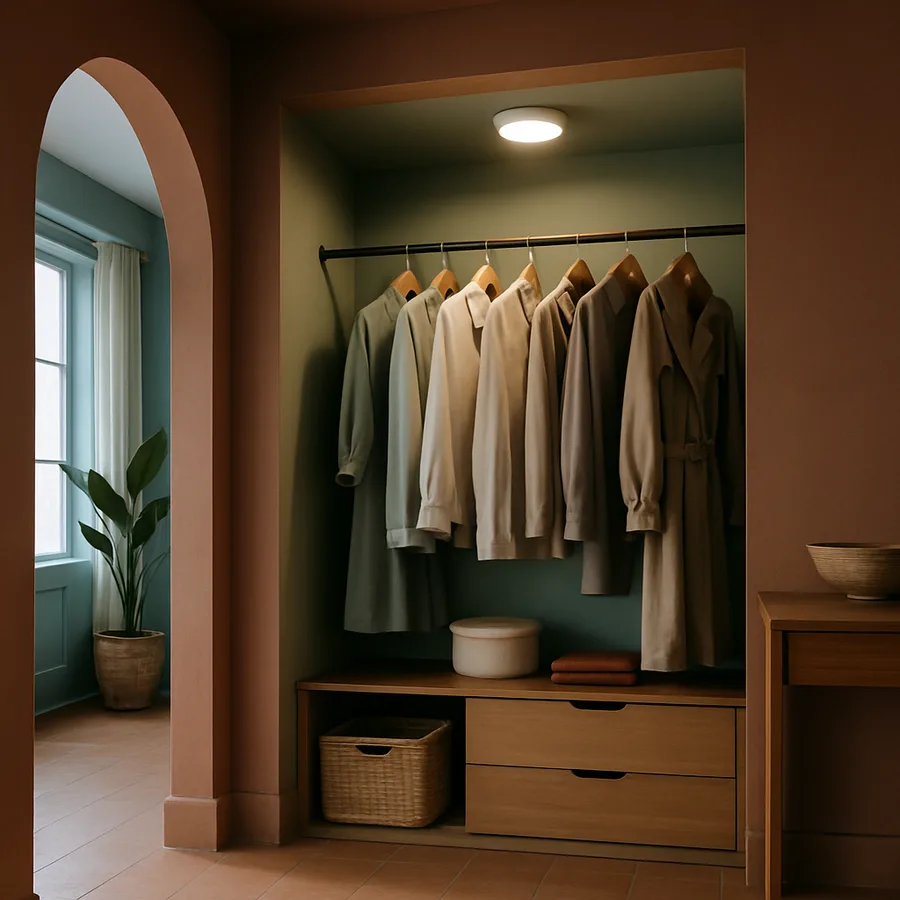
Millions of closets in homes across North America were built without any electrical wiring whatsoever, a construction shortcut that saves builders approximately $150 to $300 per closet but leaves homeowners reaching into dark cavities every day for the life of the home. Running new electrical circuits to these spaces is expensive, disruptive, and often impractical in finished homes where walls are insulated and covered. Rechargeable puck lights have emerged as the definitive solution to this problem, providing bright, targeted LED illumination that installs with adhesive or screws, operates for weeks on a single charge, and recharges through a standard USB cable. The Consumer Technology Association reported that wireless LED lighting products represented a $1.2 billion domestic market segment in 2024, with closet and cabinet applications accounting for roughly 30 percent of unit sales. These compact disc-shaped fixtures have fundamentally changed the calculus of closet lighting, making darkness a choice rather than a constraint.
Understanding Rechargeable Puck Light Technology
A rechargeable puck light is a self-contained lighting fixture typically measuring between 2.5 and 3.5 inches in diameter and less than an inch thick, housing a cluster of LED diodes, a lithium-ion or lithium-polymer battery, a charge management circuit, and an activation mechanism within a sealed polycarbonate shell. The circular form factor distributes light in a wide, even cone pattern that naturally complements the typical shelf-and-rod layout of residential closets, and the slim profile ensures that the fixture does not interfere with garments hung on rods or items stored on adjacent shelves. Most quality units produce between 100 and 200 lumens per puck, which is sufficient to illuminate an area of approximately eight to twelve square feet from a typical mounting distance of two to three feet above the illuminated surface.
The activation mechanism varies by model and represents one of the most important selection criteria for closet applications. Tap-on/tap-off puck lights require the user to physically press the lens to toggle the light, which is intuitive and reliable but demands that the fixture be mounted within arm's reach. Motion-sensor models detect infrared radiation from body movement and activate automatically when someone enters the closet, then deactivate after a preset interval, typically 15 to 30 seconds of no detected motion. Remote-controlled puck lights include a wireless transmitter, usually operating on 433 MHz radio frequency, that allows the user to toggle multiple lights simultaneously from across the room. Each activation type has a legitimate use case, but for closet applications where hands-free operation and automatic shutoff are both desirable, motion-sensor puck lights generally deliver the best combination of convenience and battery conservation.
Battery capacity in rechargeable puck lights is measured in milliamp-hours (mAh) and typically ranges from 500 mAh in compact models to 2,000 mAh in premium units. A 1,000 mAh puck light producing 150 lumens will deliver approximately four to five hours of continuous illumination on a full charge. Since closet visits rarely exceed two to three minutes each, and motion-sensor models automatically shut off between visits, a 1,000 mAh unit with motion activation provides roughly 80 to 120 individual closet visits per charge, translating to four to eight weeks of normal residential use. Charging times vary by capacity but generally fall between one and three hours via USB-C or Micro-USB connections. The shift toward USB-C charging in newer models is a welcome standardization that allows closet puck lights to share charging cables with phones, tablets, and other household devices.
The LED modules inside rechargeable puck lights use the same semiconductor technology found in commercial and architectural lighting fixtures, scaled down to match the power constraints of battery operation. Modern SMD (surface-mount device) LEDs convert electrical energy to light with approximately 30 to 40 percent efficiency, which means the remaining 60 to 70 percent becomes heat. In a well-designed puck light, the aluminum or polycarbonate housing acts as a heat sink that dissipates this thermal energy into the surrounding air, keeping the LED junction temperature below the threshold where accelerated degradation occurs. A quality rechargeable puck light with properly managed thermals will maintain at least 70 percent of its original brightness after 50,000 hours of cumulative operation, which at typical closet usage rates represents decades of reliable service.
Strategic Placement for Maximum Closet Coverage
The placement of rechargeable puck lights within a closet determines whether the result is genuine illumination or merely a collection of bright spots surrounded by persistent shadows, and the difference between these outcomes depends on understanding how light behaves within the enclosed, reflective environment of a typical closet. Light from a puck-style fixture radiates in a cone with a beam angle typically between 90 and 120 degrees, meaning the illuminated area on a surface below the fixture expands as the mounting distance increases. A puck light mounted 24 inches above a shelf with a 120-degree beam angle illuminates a circle approximately 48 inches in diameter, which is wide enough to cover the full depth and much of the width of a standard reach-in closet shelf from a single fixture.
For a standard reach-in closet measuring 24 to 48 inches wide and 24 inches deep, two puck lights mounted on the underside of the top shelf or on the header above the door opening provide comprehensive coverage. Position the first puck at one-third of the closet width from the left wall and the second at one-third from the right wall, creating overlapping light cones that eliminate the shadow strip that would occur along the center line if both pucks were pushed to the outer edges. This offset placement also ensures that the hanging rod area receives light from at least one fixture regardless of where along the rod the user is searching, a detail that matters more than raw lumen output for practical daily use.
Walk-in closets require a systematic approach that treats each wall and storage zone as a separate lighting challenge. The American Society of Interior Designers recommends a lighting density of approximately one fixture per 12 to 16 square feet of closet floor area for adequate task lighting in dressing and wardrobe selection environments. A six-by-eight-foot walk-in closet, with storage on three walls, benefits from a minimum of three puck lights: one centered above each storage wall, mounted on the ceiling or the underside of the top shelf. For deeper walk-in closets with island dressers or central shoe racks, a fourth puck centered over the island provides downlighting that prevents the central fixture from casting the user's shadow onto the items being examined.
Shelf-by-shelf illumination is the most effective puck light strategy for linen closets, pantries, and any closet where items are stored on multiple horizontal surfaces rather than hung vertically. Mounting a puck light on the underside of each shelf illuminates the shelf below with direct, shadow-free light that makes every item visible without requiring the user to bend, reach, or move items aside to see what is stored behind the front row. This approach uses more fixtures but each operates independently, and the total power consumption remains minimal because each puck illuminates only its assigned shelf zone. The visual effect is dramatic: a linen closet with under-shelf puck lights looks organized and intentional in a way that no overhead fixture can replicate.
Comparing Rechargeable Puck Lights to Alternatives
Rechargeable puck lights occupy a specific niche in the wireless closet lighting landscape, and understanding how they compare to competing solutions helps homeowners select the right product for their circumstances. Disposable-battery puck lights are the most widely available alternative, sold by nearly every hardware and home improvement retailer. They share the same form factor and mounting simplicity as rechargeable models but rely on AAA or AA batteries that must be replaced every two to four months under typical use. The ongoing cost of replacement batteries, approximately $8 to $15 per year per fixture assuming alkaline cells at retail prices, accumulates over time and eventually exceeds the higher upfront cost of a rechargeable unit. Environmental considerations also favor rechargeable models, with the Environmental Protection Agency estimating that Americans discard approximately 3 billion dry-cell batteries annually, a waste stream that rechargeable lighting products help reduce.
LED light bars, whether battery-operated or rechargeable, offer a linear illumination pattern that differs fundamentally from the circular distribution of puck lights. Light bars excel at illuminating the length of a hanging rod or a row of shelves, spreading light evenly along their linear axis. Puck lights, by contrast, create focused pools of illumination that are better suited to defined zones: a stack of folded sweaters, a shoe cubby, or a jewelry tray. In practice, many well-lit closets combine both form factors, using light bars along the primary hanging rod areas and puck lights for targeted illumination of shelving, accessories, and corners that fall outside the light bars' coverage pattern.
Hardwired closet lighting remains the gold standard for homes where electrical infrastructure is available or can be added during a renovation. A hardwired LED fixture connected to a wall switch or door-activated switch eliminates all battery-related maintenance and provides unlimited run time. However, the cost of adding electrical wiring to an existing closet, which the National Association of Home Builders estimates at $300 to $800 depending on the complexity of the wire run and the local electrician's rate, makes hardwired solutions disproportionately expensive for small closets that are adequately served by two or three rechargeable puck lights at a fraction of that cost. The decision between hardwired and rechargeable is fundamentally a cost-benefit calculation: if the total cost of rechargeable fixtures and the inconvenience of periodic recharging is less burdensome than the one-time cost of electrical installation, rechargeable puck lights are the more rational choice.
Have you calculated how much you spend annually on disposable batteries for existing wireless lights and devices in your home, and would redirecting that recurring cost toward rechargeable alternatives reduce both your expenses and your environmental footprint? Are there closets in your home that you avoid using fully because poor lighting makes it difficult to see what is stored inside? The closets that benefit most from puck light installations are often the ones that receive the least attention during home improvement projects: hall closets, coat closets, under-stair storage, and secondary bedroom closets that lack both natural light and electrical fixtures. Identifying these underserved spaces is the first step toward a targeted lighting upgrade that makes every cubic foot of closet space genuinely usable.
Installation Without Damage: Renter-Friendly and Reversible Methods
The ability to install and later remove rechargeable puck lights without leaving holes, marks, or adhesive residue on closet surfaces makes them particularly valuable for renters and homeowners who prefer reversible modifications. The most common damage-free mounting method uses a two-part system: a thin metal disc adheres to the closet surface with removable adhesive, and the puck light attaches to the disc magnetically. When the time comes to relocate or remove the lights, the magnetic puck lifts away cleanly, and the adhesive disc peels off the surface with gentle heat from a hair dryer, leaving no residue or surface damage. This system allows complete lighting installations that cost nothing to reverse, a significant advantage in rental properties where security deposits are at stake.
Command brand adhesive strips, manufactured by 3M, provide another renter-approved mounting solution with a well-documented removal process. These strips bond firmly to most smooth surfaces and support weights appropriate for puck lights, then release cleanly when the tab is pulled at a specific angle. The limitation of Command strips is their sensitivity to temperature and humidity: they perform poorly on surfaces that routinely exceed 105 degrees Fahrenheit or in high-humidity environments where condensation forms on the mounting surface. Closets in temperature-controlled living spaces rarely encounter these conditions, making Command strips a reliable choice for most residential puck light installations. The Better Homes and Gardens editorial team recommends testing any adhesive mounting system on an inconspicuous area of the closet surface before committing to a permanent placement, verifying both adhesion strength and clean removability on the specific paint or finish present in the closet.
For homeowners willing to make minor surface modifications, screw mounting provides the most secure and permanent attachment method. Most rechargeable puck lights include a mounting plate with pre-drilled screw holes, and installation requires only a Phillips-head screwdriver and two small wood screws. The mounting plate attaches to the closet surface, and the puck light twists or snaps onto the plate, creating a mechanical connection that is immune to adhesive degradation from heat, humidity, or time. Screw mounting is recommended for puck lights installed on ceilings, where adhesive must support the fixture's weight against gravity continuously, and in garages, attics, and utility spaces where temperature fluctuations and dusty surfaces compromise adhesive performance. The two small screw holes left after removal are easily filled with spackle and touched up with matching paint, making the modification effectively reversible in owned properties.
Regardless of the mounting method selected, the positioning of the USB charging port is a practical detail that affects daily convenience throughout the life of the fixture. Puck lights should be mounted with the charging port accessible without removing the unit from its mount, and the port should face downward or to the side rather than against the mounting surface. Some models solve this orientation challenge with a detachable design: the light unit lifts out of the mounting ring for tabletop charging, then clicks back into place. Others include a charging cable long enough to reach the mounted unit from a nearby outlet. Verifying that the charging logistics work with the planned mounting location before finalizing the adhesive or screw placement prevents the common frustration of discovering that the beautifully positioned puck light requires complete removal every time it needs a charge.
Brightness Settings and Smart Features in Modern Puck Lights
The evolution of rechargeable puck lights from single-function on/off devices to multi-mode smart fixtures has expanded their utility well beyond basic closet illumination, offering homeowners a degree of control over light output, color temperature, and activation behavior that was previously available only in hardwired lighting systems. Multi-brightness settings, typically offering three levels such as low, medium, and high, allow the user to balance light output against battery life for different situations. A midnight visit to the linen closet for a glass of water does not require the same 200-lumen output as a morning wardrobe selection session, and the ability to use a 50-lumen low setting for brief, casual access extends battery life by a factor of three or four compared to always operating at full brightness.
Color temperature adjustment is appearing in premium puck light models, allowing the user to shift between warm white (approximately 3000K) and cool white (approximately 5000K) using a button press or remote control. This feature is particularly valuable in closets that serve double duty as dressing areas, where warm light creates a more flattering ambiance for checking outfits in a mirror while cool light provides better color accuracy for selecting and coordinating garments. The ability to switch between these modes means a single set of puck lights can serve both functions, eliminating the compromise that fixed-color-temperature fixtures impose.
Timer functions built into some rechargeable puck lights provide a secondary shutoff mechanism that protects against battery drain when the primary activation method fails to deactivate the light. Motion-sensor puck lights occasionally false-trigger from air currents, settling fabrics, or vibrations transmitted through the closet structure, and without a timer, these false activations can keep the light running continuously until the battery is depleted. A 15-to-30-second auto-off timer ensures that false triggers result in only brief, inconsequential battery drain rather than hours of unintended operation. Some units allow the timer duration to be adjusted through a sequence of button presses, enabling longer active periods for walk-in closets where extended browsing is common.
Wireless grouping through proprietary remote controls or smartphone apps represents the latest advancement in puck light functionality. Systems like these allow multiple puck lights throughout the home to be organized into zones, each controlled independently or collectively. A single remote press can illuminate all closet puck lights on a floor, turn off all lights in unoccupied rooms, or activate a specific group for nighttime navigation. While this level of control exceeds what most closet lighting applications require, it demonstrates the trajectory of wireless LED technology toward integration with broader smart home ecosystems. For homeowners already invested in platforms like Apple HomeKit, Google Home, or Amazon Alexa, puck lights with smart-home compatibility add closet illumination to the centralized control interface they already use for room lighting, thermostats, and security systems.
Long-Term Cost Analysis and Environmental Considerations
The financial case for rechargeable puck lights over disposable-battery alternatives becomes clear when projected over a realistic ownership period. A quality rechargeable puck light costs approximately $12 to $25 per unit, while a comparable disposable-battery model costs $6 to $12 plus an ongoing battery expense of approximately $8 to $15 per year. Over a five-year period, the total cost of ownership for a rechargeable puck light is $12 to $25, representing only the initial purchase price plus negligible electricity costs for charging. The total cost for a disposable-battery alternative over the same period is $46 to $87 per unit, making the rechargeable option 50 to 70 percent less expensive over its useful life. For a home with six closets each using two puck lights, the five-year savings from choosing rechargeable over disposable-battery models ranges from approximately $250 to $750.
The environmental impact calculation reinforces the financial argument. Each disposable-battery puck light consumes approximately six to twelve AA or AAA batteries per year, totaling 30 to 60 batteries over a five-year period per fixture. A 12-fixture home installation using disposable batteries generates 360 to 720 spent batteries over five years, each requiring proper disposal to prevent heavy metals from entering landfill leachate. Rechargeable puck lights generate zero battery waste during their operational life, and at end of life, the embedded lithium-ion cells are recyclable through programs like Call2Recycle, which operates over 16,000 collection points across North America. The environmental advantage of rechargeable models is unambiguous and grows proportionally with the number of fixtures and the duration of use.
Electricity consumption for charging rechargeable puck lights is negligible in the context of household energy use. A 1,000 mAh puck light charging from a 5-volt USB source draws approximately 5 watt-hours per charge cycle. At a national average residential electricity rate of $0.16 per kilowatt-hour, each charge costs less than one-tenth of one cent. Charging twelve puck lights monthly for an entire year consumes approximately 0.72 kilowatt-hours of electricity, costing approximately $0.12 total. This annual electricity cost is less than the price of a single AA battery, making the energy cost of rechargeable puck lights effectively zero from a household budgeting perspective. The Department of Energy classifies LED lighting as the most energy-efficient residential lighting technology currently available, and battery-operated LED fixtures extend this efficiency advantage to spaces without electrical infrastructure.
Start with the closet you use most frequently and install two to three rechargeable puck lights with motion sensors to experience the difference that proper lighting makes before committing to a whole-home installation, because the improvement in daily convenience at $12 to $25 per fixture justifies treating the first closet as a zero-risk trial.
When you consider how many minutes each household member spends squinting into dark closets each week, does the cumulative time lost to poor visibility justify a one-time investment that pays for itself in convenience within the first month of use?
Conclusion
Rechargeable puck lights have transformed closet lighting from a problem that required electricians and construction budgets into a simple consumer product that anyone can install in minutes. The combination of adhesive or magnetic mounting, motion-sensor activation, USB recharging, and increasingly sophisticated features like adjustable brightness and color temperature means that no closet in any home needs to remain dark, regardless of whether electrical wiring reaches that space. The technology is mature, the products are affordable, and the installation is genuinely reversible, making rechargeable puck lights one of the few home improvements that carry zero risk and deliver immediate, tangible daily benefits.
The practical advantages of proper closet lighting ripple outward from the closet into the broader rhythms of daily life. Morning routines become faster when every garment is visible and colors can be accurately assessed. Forgotten items stored in dark corners rejoin active use. Guests visiting for the holidays no longer need a flashlight to navigate an unfamiliar coat closet. These improvements are small individually but significant in aggregate, representing a meaningful enhancement to the functionality of spaces that are used multiple times every day by every member of the household.
The economics of rechargeable puck lights are as compelling as their performance. With a total cost of ownership that is substantially lower than disposable-battery alternatives, an environmental footprint that is a fraction of competing solutions, and an installation process that preserves every surface in the home, rechargeable puck lights represent a rare convergence of superior performance, lower cost, and reduced environmental impact. They are the practical answer to a practical problem, delivered in a form factor that respects both the homeowner's budget and the integrity of the closet surfaces where they are installed.
More Articles You May Like



Comments
Post a Comment