Mirror Backsplash in Small Kitchens to Visually Double the Space
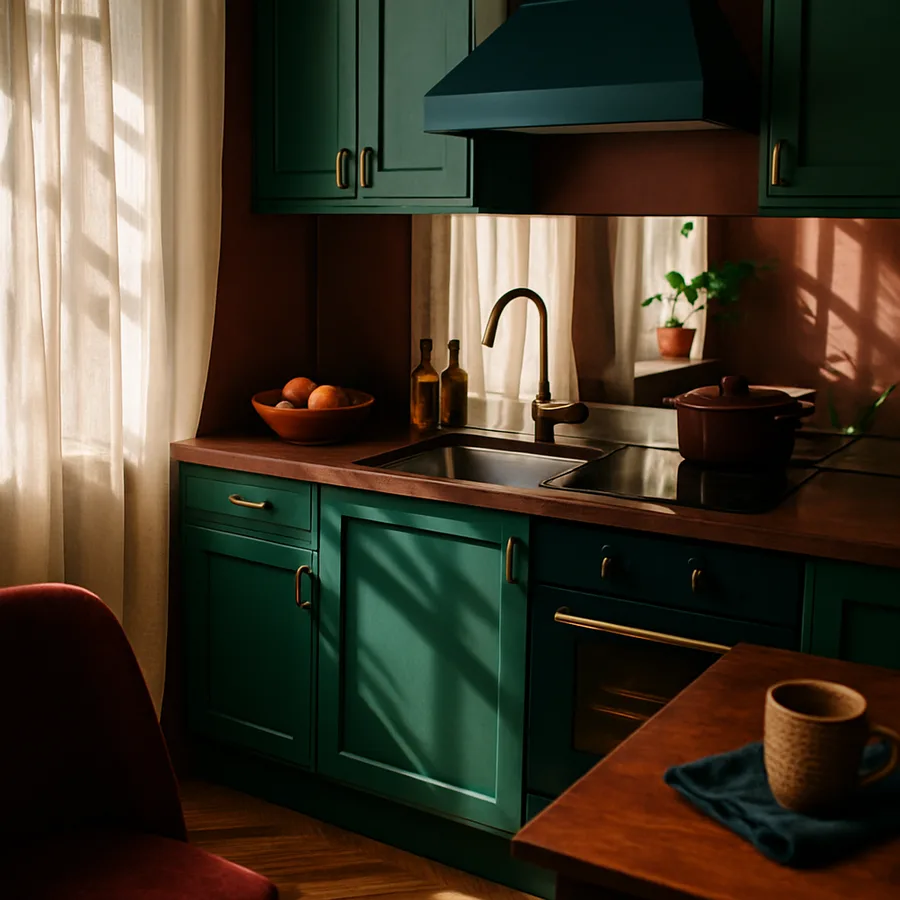
If you live in a city apartment, a mid-century ranch, or any home built before 1970, chances are your kitchen was not designed for the way modern households cook and gather. Narrow galley layouts, eight-foot ceilings, and tight between-cabinet runs leave many homeowners feeling boxed in at the one surface where they spend the most time. A mirror backsplash is one of the most effective, and most overlooked, tools for solving that compression problem. Used thoughtfully, it can visually double the perceived size of a small kitchen and transform the atmosphere of the entire room.
The idea is not new. Parisian bistros have used mirrored walls for more than a century to make narrow dining rooms feel expansive, and mid-century American designers carried the technique into residential kitchens during the 1950s and 1960s. What is new is the availability of modern low-iron glass, heat-tempered safety mirrors, and anti-fog coatings that make installation behind a cooktop more feasible than ever before.
The Visual Science Behind the Illusion
A mirror does not literally double a kitchen. It creates a virtual image of the space in front of it, which the brain processes as additional depth. Because the eye relies on parallax, shadow, and perspective cues to judge room size, a large mirrored surface introduces all three, creating the strong impression of expanded volume.
This is more than folklore. The Illuminating Engineering Society (IES) has published studies showing that reflective wall surfaces can increase perceived room size by 20 to 40 percent in small enclosed spaces, and can simultaneously raise perceived brightness by 15 to 30 percent due to doubled light travel. For a small kitchen with limited window area, those numbers translate directly into daily quality of life improvements.
Reader question: if you stood at your kitchen sink tomorrow morning and the opposite wall suddenly felt three feet farther away, how would that change your cooking experience? For most homeowners of small kitchens, the answer is "significantly," and a mirror backsplash is among the least invasive ways to deliver that change.
Types of Mirror Suitable for Kitchen Backsplashes
Not all mirrors are kitchen-safe. The three primary categories you will encounter are standard float glass mirrors, low-iron mirrors, and antiqued or smoked mirrors. Each has distinct strengths.
Standard float glass mirrors are what most people picture, with a faint green tint from the iron content in the glass. They are affordable and widely available but can look slightly muddy in low light. Low-iron mirrors, marketed under names like Starphire or Ultra Clear, remove most of the iron and deliver a dramatically cleaner, brighter reflection. For a kitchen that aims to maximize light, low-iron is almost always worth the 15 to 25 percent upcharge.
Antiqued or smoked mirrors soften the reflection, adding warmth and a vintage character that flatters traditional and bistro-style kitchens. They hide fingerprints and splatters better than clear mirrors and create a dreamier, less literal sense of depth. The National Glass Association (NGA) has published material guides that help homeowners distinguish between decorative and safety-rated glass, and in kitchens especially, safety-rated tempered mirror is worth the investment.
Tempering is critical behind a stove. A standard mirror exposed to sustained heat can develop stress fractures over years. Tempered safety mirror, which is heated and rapidly cooled during manufacture, resists heat stress and, if it does break, fractures into small rounded pieces rather than dangerous shards.
Design Strategies for Small Kitchens
A mirror backsplash can be deployed in several ways, each with a different visual effect. The full-height single pane approach installs one continuous mirror from countertop to upper cabinet, or in some cases all the way to the ceiling in kitchens without upper cabinets. This maximizes the depth illusion and creates the strongest commercial-bistro feel.
The mirrored subway tile approach uses small mirrored rectangles in an offset brick pattern, combining the reflective benefits with the familiar texture of classic tile. Grout lines soften the reflection and give the wall more tactile character, at the cost of some visual expansion. The antiqued mirror strip approach mounts a single horizontal band of mirror as an accent, often at eye level between cabinets, adding sparkle without committing the full wall to reflection.
The American Society of Interior Designers (ASID) routinely features mirrored backsplashes in small-space projects, and its published case studies show that even a 20-square-foot mirror can transform the perceived size of a 100-square-foot kitchen. That ratio is worth remembering: you do not need an enormous wall of mirror for the effect to register.
Installation, Safety, and Code Considerations
Installing a mirror behind a stove requires more care than installing one above a bathroom vanity. The International Residential Code (IRC) sets minimum clearance distances between combustible wall coverings and cooktops, and while tempered mirror itself is not combustible, the backing materials and adhesives must meet residential kitchen standards. Professional installers are familiar with these nuances and typically use high-temperature mastic adhesives plus mechanical clips at corners for long-term security.
Professional measurement and cutting are essential. Mirrors cannot be trimmed on-site with standard tile saws. They must be templated, cut by the glass shop with a diamond blade, and edge-polished before delivery. Rough edges are not only unsightly but also a cut hazard during handling. The National Kitchen & Bath Association (NKBA) advises homeowners to request eased or polished edges on all exposed mirror surfaces and to confirm that the installer uses neutral-cure silicone rather than acid-cure, which can damage the silver backing of the mirror over time.
Venting matters too. Because mirrors show every speck of splatter and every fingerprint, the range hood below the mirror must perform well. Most designers pair mirrored backsplashes with high-CFM ducted hoods rather than recirculating models, because heavy grease particulate will quickly coat any reflective surface.
Cleaning, Maintenance, and Longevity
Honesty is important here. A mirror backsplash shows every splatter, and it shows it instantly. If you cook frequently and dislike wiping surfaces daily, this may not be the right choice. For homeowners who enjoy the ritual of wiping down the kitchen after dinner, mirrors are actually easier to clean than grouted tile because there are no porous joints to absorb stains.
The recommended routine is straightforward. A daily wipe with a clean microfiber cloth, a weekly spray with a streak-free glass cleaner, and a monthly edge inspection to check for adhesive or silicone deterioration. Avoid ammonia-based cleaners if the mirror is antiqued or silver-backed, because ammonia can eventually damage the backing and create dark spots at the edges.
Longevity depends heavily on installation quality. A properly tempered, properly installed mirror backsplash behind a well-vented range can easily last 20 to 30 years with minimal visible wear. Poor installation, inadequate venting, or exposure to direct flame contact can shorten that lifespan considerably. Second reader question: if you are committing to a mirror backsplash, are you also committing to a proper ducted range hood? The two decisions belong together.
When a Mirror Backsplash Makes the Biggest Difference
The effect of a mirror backsplash scales inversely with kitchen size. In a large chef's kitchen with 14-foot ceilings and abundant windows, a mirror is a stylistic choice with minimal spatial impact. In a 9-by-10 galley with one small window and dark cabinetry, a mirror backsplash can fundamentally change how the room feels. The bistro effect is strongest in urban apartments, historic homes with small footprints, and carriage-house conversions.
Works best when paired with thoughtful color palettes. Cool whites, soft grays, warm off-whites, and muted sage greens all reflect beautifully in mirror. Heavily saturated colors, while striking, can look overwhelming when doubled by reflection. If your current kitchen includes bold red cabinets or navy-blue tilework, consider a smaller mirrored accent rather than a full wall.
Works less well in homes with pets and young children who may smudge the wall at low heights repeatedly. For those households, a half-height mirror starting 24 inches above the counter keeps the reflection in the adult sightline while reducing fingerprint traffic at the lower zones. Designers featured in the Houzz small-kitchen idea gallery frequently use this half-height approach to great effect.
Layout also matters. An L-shaped kitchen with a mirror on the longer leg benefits most from the expansion illusion, because the reflection elongates the dominant axis of the room. A U-shaped kitchen with mirrors on all three walls can feel disorienting rather than expansive, so designers typically limit mirror to one wall only. Galley kitchens, where two parallel runs face each other across a narrow aisle, achieve the strongest effect when only one side is mirrored, keeping the reflection directional and coherent.
Ceiling treatment can amplify or undercut the illusion. A bright white ceiling reflects additional light into the mirrored surface, multiplying the perceived depth. A dark ceiling absorbs light and flattens the effect. If you are committed to a mirror backsplash, consider freshening the ceiling paint at the same time. A fresh coat of ceiling white is among the least expensive upgrades in a kitchen and meaningfully increases the return on every other reflective element in the room.
Conclusion
A mirror backsplash is a bold, transformative choice that punches far above its cost in small kitchens. Between the measurable brightness increase documented by the IES, the perceived square-footage gains reported in ASID case studies, and the century of Parisian bistro precedent, the technique has earned a genuine place in the toolkit of smart small-space design.
Like every bold move, it requires commitment. Daily wiping is not optional. A high-performance range hood is essential. Tempered, properly installed safety mirror is the only responsible choice behind a cooktop. Given those conditions, the payoff can be remarkable, turning a cramped kitchen into a space that feels airy, lively, and bigger than the floor plan suggests.
If you are on the fence, start with a smaller installation. A mirror strip between the upper and lower cabinets, a short accent behind a coffee station, or a half-height pane in the dining area can all preview the effect without committing the full cooking wall to reflection. Many homeowners expand the installation after experiencing the impact firsthand.
Book a consultation this month. Reach out to a local glazier who specializes in residential mirror and schedule an in-home measure. Bring photos, discuss cabinetry colors and lighting, and ask specifically about low-iron tempered options. You may discover, as many apartment dwellers have, that a single well-placed mirror transforms the kitchen you thought you had outgrown.
Additional resources:
Historical Precedent and Contemporary Inspiration
Context deepens design confidence, and the mirror backsplash has a richer history than most homeowners realize. Parisian brasseries of the late nineteenth century used full-height mirrored walls to extend cramped dining rooms into visual infinity, a technique so successful it became shorthand for the bistro aesthetic worldwide. In the United States, mid-century modernist architects associated with movements documented by organizations like Docomomo US embraced mirrored walls as a way to dematerialize boundaries between kitchen and living spaces in compact postwar homes.
Contemporary designers continue to reinvent the technique. Brooklyn apartment renovations featured in Dwell Magazine and The New York Times Home section frequently use antiqued mirror backsplashes to introduce warmth into otherwise minimalist kitchens. London designers working with heritage buildings often choose mirror as a way to modernize a kitchen without disrupting original architectural details, because reflection carries far less physical presence than a solid cabinet or stone wall. Looking at these project portfolios before committing to a mirror backsplash can clarify exactly what visual direction you want for your own home.
Inspiration boards and in-person showroom visits both help. Collecting a dozen images of mirror backsplashes in kitchens similar in size and light to yours creates a clear brief for conversations with a glazier or designer. Pair that with a visit to a showroom where you can stand in a mirrored vignette and observe how the space actually reads at different distances. This combination of research and direct experience produces far better decisions than online browsing alone.
More Articles You May Like



Comments
Post a Comment