Small Space Solutions: Maximizing Style in Bedroom Interior Design
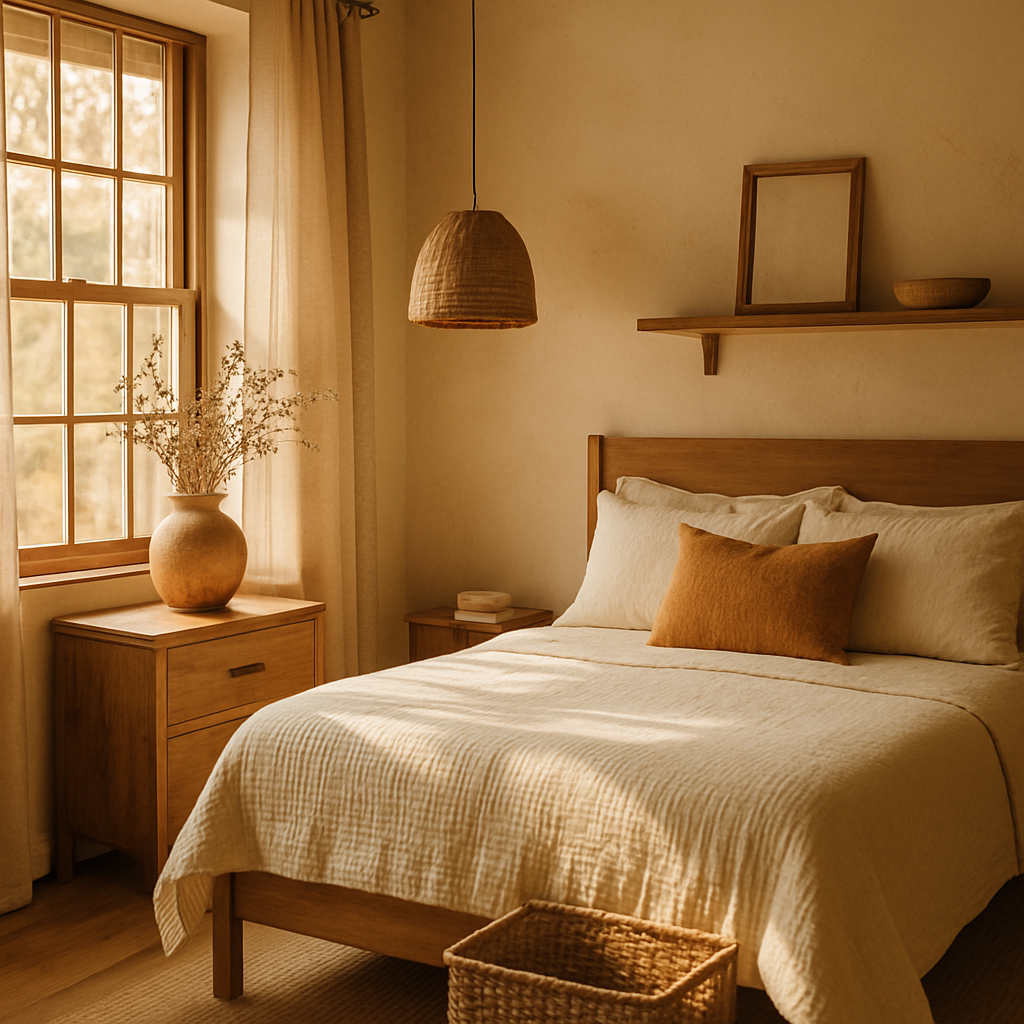
A small bedroom does not have to mean a compromised bedroom. Across major cities where real estate prices push living spaces below three hundred square feet, designers have developed sophisticated strategies for making compact rooms feel spacious, stylish, and deeply functional. The American Society of Interior Designers (ASID) reports that requests for small-space consultations have increased by 31% since 2021, driven by urbanization, rising housing costs, and the growing popularity of accessory dwelling units. The challenge is real, but so are the solutions, and the most effective approaches share a common philosophy: every square inch must earn its place, and every design decision must serve at least two purposes. If you have ever felt that your bedroom is too small to be beautiful, the strategies ahead will demonstrate that constraint is one of the most powerful catalysts for creative, intentional design.
Vertical Thinking: Unlocking the Power of Wall Space
In a small bedroom, the walls are your most underutilized asset. While floor space is limited and fixed, vertical space extends from baseboard to ceiling and offers storage, display, and design opportunities that most homeowners overlook entirely. Floating shelves installed at staggered heights can hold books, plants, and decorative objects without consuming any floor area. Wall-mounted nightstands, sometimes called floating nightstands, free up the space beneath them for a small basket or a pair of slippers and create the visual impression of a larger floor plane. The IIDA recommends treating wall space as functional real estate in any room under one hundred and fifty square feet.
Tall, narrow furniture pieces amplify the benefits of vertical thinking. A slim bookcase that reaches nearly to the ceiling stores more than a wide, low credenza while occupying a fraction of the footprint. Wardrobe systems with double-hung rods, stacked drawers, and overhead compartments extract maximum capacity from a standard closet opening. Even the back of your bedroom door can be fitted with a slim organizer for accessories, shoes, or toiletries. Have you measured the gap between the top of your tallest furniture piece and the ceiling? In most bedrooms, that unused zone represents several cubic feet of potential storage that currently holds nothing but air.
The visual effect of drawing the eye upward is equally important. Curtains hung several inches above the window frame and extending to the floor create the illusion of taller walls, which in turn makes the room feel more generous. A single piece of vertically oriented art, such as a tall, narrow print or a woven wall hanging, reinforces this upward pull. Crown molding or a simple painted stripe near the ceiling line adds architectural interest and guides attention toward the full height of the room. When every vertical surface is working, a small bedroom begins to feel less like a constrained box and more like a carefully curated capsule where nothing is wasted.
Multi-Functional Furniture That Works Twice as Hard
The cornerstone of effective small bedroom design is furniture that serves more than one purpose. Storage beds with built-in drawers beneath the mattress platform eliminate the need for a separate dresser, reclaiming four to six square feet of floor space that can be allocated to a reading nook or a small desk. Ottoman benches at the foot of the bed provide seating, storage, and a surface for laying out clothing, all within a single compact footprint. Houzz data from 2024 shows that multi-functional furniture purchases have increased by 47% among homeowners with bedrooms under two hundred square feet, confirming that the market has responded to this demand with a wide range of stylish, well-engineered options.
Murphy beds and wall beds represent the most dramatic multi-functional solution, transforming a bedroom into a living room or office during the day and reverting to a sleeping space at night. Modern Murphy bed systems are far removed from the flimsy, spring-loaded contraptions of decades past; today's models incorporate gas-piston mechanisms, integrated shelving, and fold-down desks that operate with a single smooth motion. A NCIDQ-certified designer can help you evaluate whether a Murphy bed is structurally feasible in your space and identify the wall configuration that maximizes the room's daytime utility. The cost of a quality Murphy bed system, typically between $2,000 and $6,000 installed, is often less than the cost of renting a larger apartment for even a few months.
Even standard furniture can be chosen with multi-functionality in mind. A nightstand with a built-in charging station eliminates the need for a separate cord organizer. A wall-mounted fold-down desk provides a work surface when needed and disappears when it is not. A full-length mirror mounted on a hinge can swing open to reveal a shallow jewelry cabinet behind it. The discipline required to select each piece of furniture for its dual capabilities forces a level of intentionality that often results in a more cohesive, thoughtfully designed room than you would achieve in a larger space with fewer constraints. Limitation, in this context, is a design advantage.
The Light Palette Advantage: Color and Reflection
Light colors reflect more ambient light than dark ones, and in a small bedroom, this optical property becomes a genuine spatial tool. A consistent palette of warm whites, soft creams, and pale warm grays across walls, ceiling, and trim creates a seamless visual envelope that minimizes the perception of boundaries and makes the room feel larger than its physical dimensions. The ASID recommends selecting a single warm white for all painted surfaces in small bedrooms, including the interior of closets and the back walls of shelving units, to create uninterrupted visual flow. Dark accent walls, while dramatic in larger rooms, tend to make small bedrooms feel boxy and cramped.
Mirrors and reflective surfaces are the second half of the light palette strategy. A large mirror positioned opposite or adjacent to a window effectively doubles the amount of natural light in the room and creates a visual depth that tricks the brain into perceiving more space than actually exists. Mirrored closet doors, a glass-topped nightstand, or a metallic-finish picture frame all contribute smaller but cumulative reflective effects. According to a 2023 report from Houzz, designers working on bedrooms under one hundred and twenty square feet use an average of three reflective elements per room, compared to fewer than one in standard-sized bedrooms.
Texture becomes especially important when working with a limited color palette, because without tonal variety, a monochromatic room can feel flat and unfinished. Layer different materials in similar shades: a white cotton duvet against linen pillowcases, a cream wool throw draped over a pale upholstered headboard, a light oak nightstand beside a whitewashed plank wall. These textural contrasts create visual interest and depth without introducing the color variation that would fragment the room into distinct zones. What is the dominant color in your bedroom right now, and could unifying the palette create a greater sense of openness? The answer, in most small bedrooms, is a definitive yes.
Strategic Storage That Stays Hidden
Clutter is the primary enemy of a well-designed small bedroom, and the only sustainable defense is storage that is both abundant and invisible. Built-in closet organizers with custom-fitted shelves, drawers, and hanging sections extract two to three times more usable capacity from a standard closet than a single rod and shelf. Under-bed storage, whether in built-in drawers or rolling bins with fitted lids, transforms the largest piece of furniture in the room into a storage asset. The IIDA emphasizes that storage design should be addressed before any decorative decisions are made, because insufficient storage will eventually overwhelm even the most beautiful small bedroom with visual and physical clutter.
Hidden storage solutions extend beyond closets and beds. A headboard with built-in cubbies or a narrow shelf along its top edge provides a landing zone for phones, glasses, and books without requiring a traditional nightstand. A bench with a hinged seat offers a spot for extra bedding, seasonal clothing, or luggage. Tension rods installed inside cabinet doors can hold scarves, belts, and jewelry pouches. The cumulative effect of these micro-storage interventions is a room where everything has a designated home and surfaces remain clear. When surfaces are clear, the room breathes, and the design choices you have made become visible rather than buried under accumulated stuff.
The psychological impact of organized storage in a small bedroom should not be underestimated. Research published by the Princeton Neuroscience Institute has demonstrated that visual clutter competes for attention, reduces working memory capacity, and increases stress hormone levels. In a bedroom, where relaxation and sleep quality are the primary objectives, these effects are particularly counterproductive. By investing in storage systems that keep possessions accessible but out of sight, you are not merely tidying a room; you are creating the neurological conditions for better rest. Every item you store intelligently is an item that no longer occupies mental bandwidth when you are trying to fall asleep.
Lighting Layers in Compact Rooms
Small bedrooms are especially sensitive to lighting because the quality of light directly affects the perceived size and mood of the space. A single overhead fixture, the default in most bedrooms, casts flat, even light that exposes every boundary and makes the room feel like exactly what it is: a small box with a light in the middle. By contrast, multiple light sources at different heights and intensities create shadows and highlights that add depth, dimension, and visual intrigue. AD PRO recommends a minimum of three light sources in any bedroom, regardless of size: one ambient, one task, and one accent.
Wall-mounted sconces are the small bedroom designer's best friend. Positioned on either side of the headboard, they replace table lamps and free up nightstand surface area for other purposes. Swing-arm models allow you to adjust the light direction for reading without disturbing a partner, and dimmable versions let you dial the intensity from bright task light to soft ambient glow. Recessed or track lighting on a dimmer switch provides adjustable ambient illumination without the visual bulk of a pendant or chandelier. In a room where every inch matters, the absence of a floor lamp or oversized table lamp is a meaningful spatial gain.
Accent lighting in a small bedroom should be used to create focal points and draw attention away from the room's boundaries. A strip of warm LED tape tucked behind a headboard or floating shelf produces a soft halo that adds depth to a flat wall. A small picture light above a favorite piece of art creates a gallery-like moment that elevates the room's design quotient. Even a candle, whether real or battery-operated, introduces a warm, flickering point of light that makes the room feel intimate rather than cramped. The distinction between a small bedroom that feels cozy and one that feels claustrophobic often comes down to lighting, and mastering this single element can be transformative.
Editing and Curation: The Art of Choosing Less
The most challenging and most important skill in small bedroom design is the willingness to edit ruthlessly. Every object in a compact room carries more visual weight than the same object would in a larger space, which means that each addition must justify its presence with either functional value or genuine emotional significance. NCIDQ-trained designers approach small rooms with a subtraction mindset: rather than asking what can be added to make the room better, they ask what can be removed to let the room's inherent qualities emerge. This is the principle behind the quiet luxury movement applied to compact living, where restraint itself becomes a form of elegance.
Start your editing process by removing everything from the room except the bed and evaluating the empty space. Notice how open and calm it feels. Then reintroduce items one at a time, pausing after each addition to assess whether the room still feels spacious and composed. You will likely reach a tipping point sooner than expected, a moment where one more object shifts the room from curated to cluttered. That tipping point is your guide, and everything beyond it should be stored elsewhere or released entirely. How many decorative items are currently sitting on your bedroom surfaces, and could you reduce that number by half without losing anything meaningful?
Curation also applies to the design elements themselves. In a small bedroom, limit yourself to one pattern, one accent color, and one statement piece of furniture or art. This discipline prevents the visual fragmentation that makes compact rooms feel chaotic and instead creates a focused, intentional aesthetic that reads as sophisticated rather than sparse. A single oversized botanical print on the wall, a bed dressed in solid-colored high-quality linens, and a simple wooden stool as a nightstand can compose a room that feels both complete and spacious. The art of small bedroom design is ultimately the art of knowing when to stop, and that knowledge, once developed, will serve you in rooms of every size for the rest of your design life.
Conclusion
Designing a beautiful small bedroom is not about compensating for limited square footage but about embracing the creative opportunities that constraint provides. The strategies outlined here, from vertical storage and multi-functional furniture to light palettes, strategic lighting, hidden storage, and disciplined editing, are the same tools that professional designers certified through ASID, IIDA, and the NCIDQ use to create compact rooms that feel spacious, stylish, and deeply personal. A typical bedroom redesign budget of $5,000 to $15,000 can accomplish remarkable results in a small space, and many of the highest-impact changes cost far less. Start by identifying the single biggest frustration in your current bedroom, whether it is clutter, poor lighting, or a lack of visual cohesion, and address that issue first. Once the most pressing problem is solved, the path forward becomes clear, and each subsequent improvement builds on a stronger foundation. Measure your walls this weekend, photograph the room from every angle, and begin imagining what those surfaces could do if you gave them permission to work harder.



Comments
Post a Comment