Maximize Space and Style: Innovative Kitchen Interior Design Ideas for Small Homes
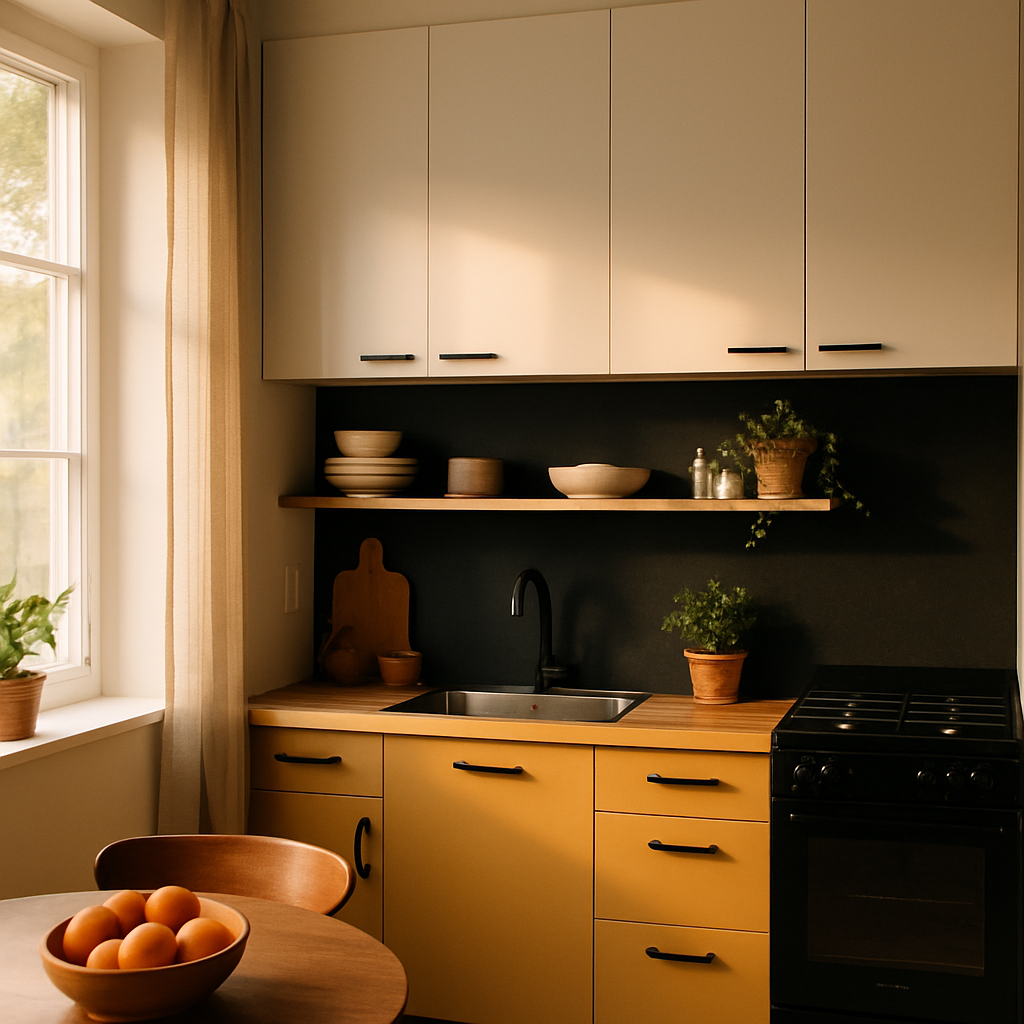
The kitchen remains the most heavily used room in any home, and when square footage is limited, every design decision carries outsized importance. According to the National Kitchen and Bath Association (NKBA), over 54 percent of kitchen renovations in 2024 involved spaces under 150 square feet, a clear signal that compact kitchens are the norm rather than the exception. Designing a small kitchen is not about accepting limitations but about strategically deploying spatial intelligence to create a room that feels open, functional, and visually compelling. Whether you rent a studio apartment or own a modest bungalow, the principles of thoughtful interior design can transform even the tightest galley into a space you genuinely enjoy cooking in. The American Society of Interior Designers (ASID) has long emphasized that good design is accessible at every scale, and nowhere is that philosophy more relevant than in the compact kitchen. What follows is a comprehensive guide to making your small kitchen work harder, look better, and feel larger than its footprint suggests.
Strategic Layout Planning for Compact Kitchens
The foundation of any successful small kitchen begins with its layout, and the work triangle concept remains the most reliable starting point. Developed decades ago and still endorsed by organizations like the NKBA, the work triangle connects the sink, stove, and refrigerator in an efficient path that minimizes unnecessary steps. In a small kitchen, the distances between these three points naturally shrink, which can be an advantage if the layout avoids placing obstacles in the walkway. Galley layouts, L-shaped configurations, and single-wall kitchens each offer distinct advantages depending on the shape of the room and the location of windows and doors. A galley kitchen, for instance, places countertops and appliances on two parallel walls, creating a corridor that channels movement efficiently. The key is ensuring at least 36 inches of clearance between opposing counters to allow comfortable passage.
L-shaped kitchens open up one side of the room entirely, making them well suited to open-plan living where the kitchen flows into a dining or living area. This configuration also creates a natural corner that can house a lazy Susan, a pull-out pantry, or a deep drawer system that recovers storage space that would otherwise be dead. Single-wall kitchens compress everything onto one plane, which demands careful sequencing of zones: prep, cook, and clean should flow in a logical order from one end to the other. According to Houzz's 2024 Kitchen Trends Study, 38 percent of homeowners who renovated small kitchens chose an L-shaped layout, making it the most popular configuration for spaces under 120 square feet. The study also found that satisfaction rates were highest among those who hired an NCIDQ-certified designer to plan the layout before any demolition began.
Beyond the basic shape, consider how the layout accommodates daily routines. Do you meal-prep in batches, requiring extended counter space? Do you entertain frequently, needing a pass-through or breakfast bar? Answering these questions honestly before committing to a layout prevents costly rework later. A qualified interior designer, typically charging between $150 and $300 per hour for kitchen planning, can model multiple layout scenarios using AR visualization tools, letting you walk through each option virtually before a single tile is laid. This upfront investment often saves thousands during construction by eliminating change orders. With layout decisions locked in, attention can shift to the vertical dimension, where storage solutions create the capacity a small footprint cannot provide on its own.
Vertical Storage Solutions That Reclaim Hidden Space
When floor space is scarce, walls become the primary storage frontier, and exploiting vertical real estate is the single most impactful move in small kitchen design. Open shelving mounted above countertops provides easy access to everyday dishes while creating visual depth that closed cabinets cannot match. The International Interior Design Association (IIDA) has highlighted open shelving as a defining feature of contemporary compact kitchens, noting that it encourages homeowners to curate their collections and eliminate clutter organically. Floating shelves in natural wood or powder-coated steel pair particularly well with the Japandi aesthetic, blending the warmth of Scandinavian design with the restraint of Japanese minimalism. Mounting shelves all the way to the ceiling draws the eye upward, making the room feel taller than its actual height.
Pegboard systems and magnetic knife strips represent another tier of vertical storage that keeps tools within arm's reach without consuming drawer space. A pegboard panel installed between the upper cabinets and the countertop can hold pots, pans, utensils, and even small herb planters, turning an otherwise dead zone into a functional display. For those who prefer a cleaner look, pull-out vertical dividers inside tall cabinets store baking sheets, cutting boards, and trays in a compact footprint that traditional shelves waste. Taller pantry-style cabinets with internal pull-out drawers outperform standard upper cabinets in both capacity and accessibility, and they can be recessed into a wall cavity to avoid protruding into the room. Have you ever measured how much space your current kitchen wastes above the upper cabinet line? That gap often represents two to three cubic feet of recoverable storage per linear foot of cabinetry.
Ceiling-mounted pot racks and hanging rail systems offer yet another layer of vertical utility, suspending cookware overhead where it occupies zero counter or cabinet space. These systems work best in kitchens with ceilings of at least eight feet, where the hanging items remain well above head height. The key to vertical storage is layering these systems so that frequently used items live at eye and hand level, seasonal items climb higher, and rarely used equipment occupies the topmost positions. A well-organized vertical strategy can effectively double the storage capacity of a small kitchen without adding a single square foot of floor area. With storage addressed, the next critical factor in making a compact kitchen feel spacious is the careful selection of colors and materials that manipulate perceived dimensions.
Color Palettes and Materials That Expand Perceived Space
Color is the most cost-effective tool for altering the perceived size of a room, and in small kitchens its impact is amplified by the proximity of every surface to the viewer. Light tones reflect more ambient light, pushing walls apart visually, which is why white, cream, pale gray, and soft sage remain the dominant palette choices for compact kitchens. Architectural Digest's AD PRO platform reported in 2024 that warm whites with subtle undertones of yellow or pink are overtaking cool whites, as they prevent the sterile, clinical feeling that pure white sometimes creates in enclosed spaces. Pairing a warm white on cabinetry with a slightly darker shade on the walls introduces depth without sacrificing brightness, a technique designers call tonal layering. Glossy finishes on cabinet doors further enhance the effect by bouncing light across the room, creating secondary reflections that simulate additional windows.
Material choices reinforce or undermine the color strategy, and in small kitchens the relationship between surface texture and light behavior deserves careful attention. Polished quartz or marble countertops with veining draw the eye along their length, creating a sense of horizontal extension that makes a short counter feel longer. Large-format porcelain tile on the backsplash minimizes grout lines, producing a cleaner visual plane that avoids the busyness of small mosaic patterns. Glass or mirrored backsplash panels take this further by literally reflecting the opposite wall, an old trick from restaurant design that remains remarkably effective in residential kitchens. The flooring material also matters: running the same flooring from the adjacent room into the kitchen eliminates the visual boundary that a threshold creates, making both rooms read as a single larger space.
While light palettes dominate, strategic accents in darker or bolder tones prevent the space from feeling washed out. A deep navy island, matte black hardware, or a single accent wall in forest green can anchor the room and give the eye a focal point. The quiet luxury trend, which favors rich textures and subtle tonal variation over bright colors, translates beautifully to small kitchens where every detail is visible at close range. Brushed brass fixtures, fluted glass cabinet inserts, and honed stone surfaces communicate quality without visual noise. What palette resonates with the way you actually use your kitchen, and how does natural light move through the space throughout the day? Answering that question honestly often leads to choices that feel inevitable rather than forced. With color and materials establishing the visual foundation, the next layer of innovation comes from appliances and technology designed specifically for compact living.
Smart Appliances and Technology for Small Kitchen Efficiency
The appliance industry has responded to the small-kitchen reality with a generation of products that compress full-size functionality into significantly smaller envelopes. Counter-depth refrigerators, 24-inch dishwashers, and combination microwave-convection ovens now deliver performance that rivals their standard-size counterparts while reclaiming inches that matter enormously in tight layouts. Smart home integration takes this further by connecting appliances to voice assistants and mobile apps, allowing you to preheat the oven, check the refrigerator inventory, or start the dishwasher without physically interacting with the machine. The ASID's 2024 Outlook report identified smart kitchen technology as the fastest-growing segment in residential interior design, with adoption rates climbing 27 percent year over year among homeowners under 40.
Induction cooktops deserve special mention in the small kitchen context because they deliver precise heat control without warming the surrounding air, a genuine comfort advantage in a room that may lack robust ventilation. Their flat glass surface doubles as additional prep space when not in use, a dual-purpose benefit that no gas or electric coil range can match. Under-counter appliances such as drawer-style dishwashers, warming drawers, and built-in coffee systems keep the counter surface clear, which is critical when every inch of workspace matters. Integrated range hoods that retract into the countertop or sit flush behind the cooktop eliminate the bulky canopy that traditional hoods require, preserving sight lines and headroom. For kitchens shorter than eight feet wide, a ventilation downdraft system pulls cooking fumes sideways and downward, eliminating the overhead hood entirely.
Technology also enhances the planning phase. AR and VR tools offered by major cabinet manufacturers and interior design firms allow homeowners to visualize their small kitchen renovation in three dimensions before committing to any purchases. Platforms like Houzz Pro and Cedreo enable designers to build photorealistic renderings that account for actual room measurements, appliance specifications, and lighting conditions. These digital previews have been shown to reduce renovation regret by giving clients a visceral understanding of how the finished space will look and feel. The investment in a designer-led AR walkthrough, typically included in consultation fees ranging from $200 to $500 per hour, pays for itself by preventing expensive mistakes and ensuring every appliance fits its intended location. The technology layer complete, the conversation naturally turns to lighting, which shapes the atmosphere of the kitchen more profoundly than any single fixture or finish.
Layered Lighting Strategies for Small Kitchen Environments
Lighting in a small kitchen must accomplish three things simultaneously: illuminate work surfaces for safe food preparation, create ambient warmth for casual use, and visually expand the room's boundaries. Professionals refer to this as layered lighting, a framework that combines task, ambient, and accent lighting into a cohesive scheme. Under-cabinet LED strips provide direct, shadow-free illumination exactly where cutting and cooking happen, and their slim profile makes them invisible from standing height. The International Interior Design Association (IIDA) recommends a color temperature between 2700K and 3000K for kitchen task lighting, warm enough to render food colors naturally but bright enough to see clearly. Installing these strips on a dimmer allows the same fixtures to transition from workday brightness to evening ambiance with a single adjustment.
Recessed ceiling lights or ultra-thin surface-mounted panels serve as the ambient layer, delivering even general illumination without the visual weight of hanging fixtures. In kitchens with standard eight-foot ceilings, recessed cans maintain the clean ceiling plane that makes the room feel taller, whereas pendant lights can visually lower the ceiling and create obstacles in the walkway. The exception is a pendant over a breakfast bar or island, where it functions as both a task light and a design statement. Choosing a pendant with a translucent or open-frame shade prevents it from blocking sight lines or casting harsh shadows. Dimmable smart bulbs controlled by a single switch or voice command add convenience and allow the lighting mood to match the activity, bright for meal prep and soft for a glass of wine after dinner.
Accent lighting is the layer most often neglected in small kitchens, yet it contributes the most to the perception of spaciousness. LED tape inside glass-front cabinets illuminates displayed items while creating a gentle glow that adds visual depth. Toe-kick lighting along the base of lower cabinets lifts the cabinetry visually, making it appear to float and revealing floor area that the eye would otherwise ignore. Backlighting a translucent backsplash or a niche shelf transforms a flat surface into a focal point that draws attention away from the room's compact dimensions. Natural light, of course, remains the most powerful spatial expander, and maximizing it through sheer window treatments, reflective surfaces, and unobstructed sight lines to windows should be the first priority before any artificial fixture is selected. With lighting designed to serve multiple roles, the final piece of the small kitchen puzzle is personalizing the space to reflect your taste without overwhelming its proportions.
Personalization and Biophilic Design in Tight Quarters
A small kitchen that functions perfectly but lacks character will never feel like home, and the challenge is introducing personality without tipping into visual clutter. Biophilic design, the practice of integrating natural elements into interior spaces, offers a framework that is both aesthetically rich and psychologically restorative. A windowsill herb garden, a small trailing pothos on an open shelf, or a single statement planter on the counter connects the kitchen to the natural world and introduces organic shapes that soften the geometry of cabinetry and appliances. Research published in the Journal of Environmental Psychology found that exposure to indoor plants reduces perceived stress by up to 15 percent, a meaningful benefit in a room where sharp knives and hot surfaces demand attention. The biophilic approach also extends to natural materials: a live-edge wooden cutting board displayed upright, a stone mortar and pestle, or a ceramic vase with seasonal branches all contribute warmth without consuming significant space.
Art and decorative objects should be chosen with restraint in a small kitchen, favoring one or two impactful pieces over a gallery wall that overwhelms the sightline. A single framed print above the sink, a handcrafted tile mural integrated into the backsplash, or a sculptural fruit bowl on the counter can anchor the room's aesthetic identity without competing for attention. Color accents through textiles like a patterned tea towel, a woven runner in front of the sink, or a set of hand-thrown ceramic canisters introduce texture and hue in proportions that a small room can absorb comfortably. The Japandi principle of wabi-sabi, finding beauty in imperfection and simplicity, is particularly well suited to compact kitchens because it discourages excess and celebrates the quality of individual objects. Each item earns its place not just by being useful but by contributing to the visual narrative of the room.
Personal touches also emerge from functional choices. Displaying a collection of vintage copper measuring cups, using a hand-painted ceramic soap dish, or choosing cabinet knobs from a local artisan forge transforms utilitarian elements into design statements. The goal is a kitchen that tells a story about the person who cooks in it, not a showroom that prioritizes appearance over livability. Budgets for personalizing a small kitchen typically range from $500 to $2,000 for accessories and decor, a modest investment that yields disproportionate emotional returns. When every object has been intentionally selected rather than hastily accumulated, the kitchen achieves a sense of calm coherence that no amount of square footage can substitute. This intentional approach to personalization sets the stage for a final synthesis of all the strategies discussed.
Conclusion
Designing a small kitchen is an exercise in disciplined creativity, where every layout decision, material selection, and lighting choice works together to create a space that transcends its physical boundaries. The strategies outlined here, from optimizing the work triangle and exploiting vertical storage to leveraging color psychology, smart appliances, layered lighting, and biophilic accents, provide a comprehensive toolkit for transforming any compact kitchen into a room that is both highly functional and deeply personal. The interior design profession, represented by organizations like ASID, IIDA, and NCIDQ, offers credentialed expertise that can accelerate this transformation and prevent costly missteps. If you are ready to reimagine your small kitchen, begin by measuring the room precisely, photographing it from multiple angles, and listing the three functions it must perform best. Take that documentation to a consultation with a certified interior designer, even a single two-hour session at $150 to $300 per hour, and you will leave with a clarity of vision that months of browsing inspiration boards cannot match. Your small kitchen does not need more space; it needs a smarter plan, and now you have the knowledge to build one.



Comments
Post a Comment