Double Vanity Bathroom Layouts for Couples Who Share Space
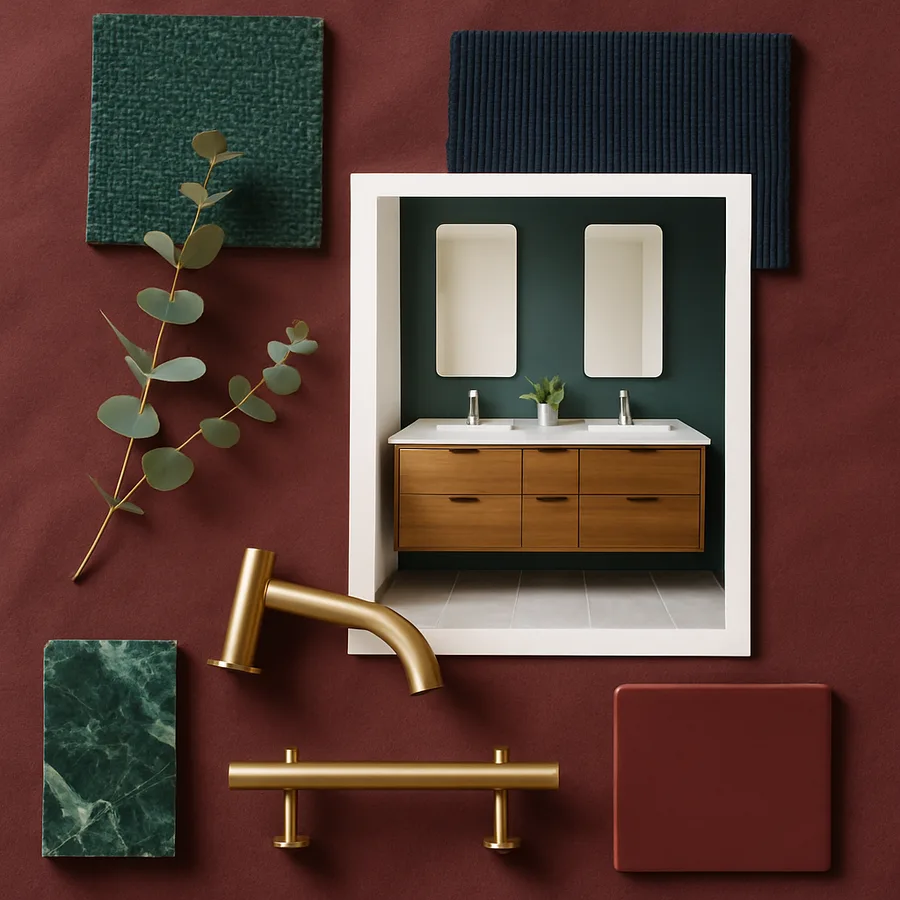
The Case for Separate Sinks and Why It Matters More Than You Think
Sharing a bathroom with a partner is an exercise in daily negotiation, and few design decisions impact that negotiation more directly than the vanity configuration. A double vanity is not a luxury; it is a functional solution to a logistical problem that plays out every morning and evening in homes across the country. When two people need to brush teeth, wash faces, apply products, and prepare for the day within the same time window, a single sink creates a bottleneck that breeds frustration. Two sinks with dedicated counter space and storage eliminate that bottleneck entirely, transforming the morning routine from a coordinated dance into two parallel, independent activities.
The National Kitchen and Bath Association (NKBA) has consistently ranked double vanities among the most requested features in primary bathroom renovations, with survey data showing that approximately seventy-two percent of couples remodeling their bathroom specify dual sinks as a non-negotiable requirement. This demand reflects a broader cultural shift toward recognizing that shared spaces function best when they provide individual zones within the shared environment. The double vanity is the bathroom equivalent of having your own side of the bed: a small territory that is entirely yours, within a space that belongs to both of you.
Beyond the morning routine, a double vanity addresses the fundamental challenge of different organizational styles coexisting in one room. One partner may prefer a clear countertop with everything stored in drawers, while the other keeps daily essentials within arm's reach on the surface. One may accumulate products steadily while the other maintains a minimalist kit. A double vanity with distinct storage zones allows each person to organize their space according to their own system without imposing that system on their partner. This seemingly minor accommodation has an outsized effect on daily satisfaction with the bathroom.
What would your mornings look like if you never had to wait for counter space, negotiate mirror access, or move someone else's products to find your own? For most couples, the answer is measurably less stressful, and that quality-of-life improvement compounds over years of daily use. The initial investment in a double vanity layout pays returns every single day, making it one of the most functionally valuable improvements you can make to a shared bathroom. The challenge is not whether to install a double vanity but how to configure it for maximum functionality within your specific room dimensions and plumbing constraints.
Three Layout Configurations That Solve Different Room Shapes
The side-by-side linear layout is the most common double vanity configuration, placing both sinks along a single wall with continuous countertop between them. This arrangement works best in bathrooms that are wider than they are deep, with a vanity wall of at least sixty inches, though seventy-two to ninety-six inches provides significantly more comfort. The advantages are straightforward: shared plumbing on a single wall simplifies installation and reduces cost, the continuous countertop provides maximum usable surface area, and the symmetrical arrangement creates a clean, balanced visual composition. The primary limitation is that both users face the same direction and are positioned side by side, which means elbow contact during simultaneous use in narrower installations.
The L-shaped or corner layout positions the two sinks on perpendicular walls, with each person facing a different direction during use. This configuration suits square or near-square bathrooms where no single wall is long enough for a comfortable linear double vanity. The L-shape provides natural separation between users, since you are not standing shoulder to shoulder, and it distributes the visual weight of the vanity across two walls rather than concentrating it on one. The corner where the two sections meet can incorporate a countertop-height tower cabinet, a makeup station, or simply additional counter space that serves as a buffer zone between the two sink areas. Plumbing costs are typically higher with an L-shaped layout because supply and drain lines must reach two separate walls.
The facing or split layout places one vanity on each of two opposing walls, creating completely independent sink stations. This is the most spatially generous configuration but requires a bathroom with sufficient depth, typically at least ten feet between the facing walls to allow comfortable passage and use of both vanities simultaneously. The facing layout provides the greatest sense of personal space, since each user has their own wall, mirror, lighting, and storage area with no shared surface between them. Some couples find this arrangement ideal because it eliminates all spatial negotiation. The Houzz bathroom design gallery features numerous examples of facing vanities in primary bathrooms, demonstrating that the configuration works across a range of styles from traditional to contemporary.
Which layout suits your bathroom depends on three factors: room dimensions, plumbing access, and personal preference for togetherness versus separation. Couples who enjoy the social aspect of sharing the morning routine often prefer the linear layout, where casual conversation happens naturally. Couples who prefer independent routines may gravitate toward the facing layout, where each person occupies their own zone. The L-shape offers a middle ground. There is no universally superior arrangement; the best layout is the one that matches how you and your partner actually use the bathroom, which is worth observing and discussing honestly before committing to a floor plan.
Dimensions, Clearances, and the NKBA Planning Guidelines
Successful double vanity layouts depend on specific dimensions that ensure comfort and functionality for both users. The NKBA bathroom planning guidelines provide research-based minimums and recommended dimensions that professional designers use as their foundation. For a double vanity, the recommended minimum distance between sink centerlines is thirty-six inches, which provides enough separation for two people to use their sinks simultaneously without physical contact. The preferred dimension is forty-two to forty-eight inches between centerlines, which allows comfortable use even when one person is leaning over the sink.
Each sink station should provide a minimum of thirty inches of counter width, measured from the sink centerline to the nearest wall, cabinet, or the midpoint between sinks. This dimension ensures adequate space for placing toiletry items, resting elbows during face washing, and performing grooming tasks without feeling cramped. A vanity countertop depth of twenty-two to twenty-four inches is standard, though twenty-five-inch-deep vanities are increasingly available and provide noticeably more usable surface area. For couples where one partner has a more extensive counter-based routine, specifying a deeper countertop is a small dimensional change with a meaningful functional impact.
Clearance in front of the vanity is equally important and often overlooked during planning. The NKBA recommends a minimum of thirty inches of clear floor space in front of each sink, measured from the front edge of the countertop to any opposing wall, fixture, or obstruction. In a bathroom where the vanity faces the bathtub or toilet, this clearance dimension determines whether two people can comfortably occupy the vanity area simultaneously. Thirty inches allows one person to stand at the sink while another passes behind. Thirty-six inches allows two people at adjacent sinks with reasonable comfort. Forty-two inches or more provides generous clearance that feels spacious rather than adequate.
Mirror and lighting dimensions must be planned in conjunction with the vanity layout. Each sink station needs its own dedicated mirror, centered on the sink, with a minimum width of twenty-four inches and ideally matching the width of the counter space allocated to that station. A single large mirror spanning both sinks is a common alternative that simplifies installation and creates a more expansive visual feel, particularly in smaller bathrooms where the continuous reflection adds perceived depth. Lighting should be symmetrical, with each station receiving equivalent illumination. The American Lighting Association (ALA) recommends side-mounted sconces at eye level flanking each mirror as the most flattering and functional bathroom lighting arrangement, superior to overhead lighting alone which casts unflattering shadows on the face.
Storage That Prevents the Shared Vanity From Becoming a Battlefield
Counter clutter is the most common complaint among couples sharing a double vanity, and the root cause is almost always insufficient or poorly organized storage. A double vanity with two sinks but shared, undifferentiated drawer and cabinet space beneath invites territorial disputes and organizational chaos. The solution is dedicated storage for each person, with clear physical separation that makes ownership obvious at a glance. This means each sink station has its own set of drawers and cabinet space, with the dividing line between territories clearly defined by a physical separator such as a plumbing panel, a center drawer stack, or a tower cabinet.
Drawer organization within each person's zone should accommodate the actual items that person stores. A deep bottom drawer for hair dryers, curling irons, and bulky items. A mid-height drawer with adjustable dividers for skincare products, medications, and smaller bottles. A shallow top drawer for daily essentials like toothbrush, razor, and frequently used products. This three-tier approach, recommended by professional bathroom designers and featured in Better Homes and Gardens storage guides, ensures that every item has a designated home and that the counter can remain clear or minimally occupied during daily use.
A shared center tower between the two sink zones provides common storage for items that both partners use: shared medications, first aid supplies, extra hand towels, and cleaning products. This tower can be countertop height, serving as a visual divider between the two stations, or it can extend to the ceiling, providing substantial additional storage in bathrooms where wall space is limited. The tower format is particularly effective in linear double vanity layouts where the continuous countertop benefits from a physical marker that delineates his-and-hers territory without building a wall.
Inside-cabinet accessories transform basic cabinet boxes into highly functional storage systems. Pull-out trays, tiered shelf inserts, door-mounted organizers, and under-sink pull-out drawers all increase the usable capacity of standard vanity cabinets by organizing the interior volume rather than leaving it as open cavities where items pile up and disappear. The National Association of Home Builders (NAHB) reports that organized bathroom storage is among the top five features that influence buyer satisfaction in new homes, ranking alongside kitchen storage, closet design, and overall floor plan functionality. Investing in vanity interior accessories costs a fraction of the vanity itself but multiplies its practical value significantly.
Plumbing Considerations That Affect Layout and Budget
The plumbing infrastructure behind your walls determines which double vanity layouts are practical and which will require significant additional investment. A linear double vanity on the same wall as existing plumbing is the most cost-effective configuration because both sinks can share supply lines and drain into a common waste pipe with relatively short connection runs. The plumber extends the existing hot and cold supply lines to reach the second sink location and installs a new drain connection that ties into the existing drain line. In many cases, this work can be accomplished without opening the wall cavity behind the vanity if the existing plumbing is accessible from beneath the vanity cabinet.
Moving plumbing to a different wall, as required by L-shaped or facing layouts, involves substantially more work and cost. New supply lines must be run through wall cavities or beneath the floor to reach the new sink location. A new drain connection must be established, which may require cutting into the subfloor to access the drain system below. In homes built on concrete slabs, relocating drain lines requires cutting the slab, a process that is noisy, dusty, and expensive but entirely feasible. According to remodeling cost databases maintained by the National Association of the Remodeling Industry (NARI), relocating plumbing for a second sink to a new wall typically adds between one thousand and three thousand dollars to the project cost compared to a same-wall installation.
Drain configuration for a double vanity requires attention to venting, which is the part of the plumbing system that allows air into the drain pipes so water flows freely rather than gurgling or draining slowly. Each sink needs its own vent connection, and the vent must be sized and configured according to local plumbing code. In some layouts, a single vent stack can serve both sinks if they are within the code-specified distance from the vent. In others, a separate vent connection or an air admittance valve (where permitted by code) is required. Your plumber should evaluate the venting requirements during the planning phase, as inadequate venting is a code violation and causes chronic drainage problems that are expensive to resolve after the walls are closed.
Water pressure is another factor worth evaluating before adding a second sink, particularly in older homes with galvanized steel supply pipes. If your existing bathroom faucet already runs at less than full pressure, adding a second faucet to the same supply lines will further reduce flow at both locations. A plumber can measure your current water pressure and flow rate to determine whether the existing supply infrastructure can support two sinks without performance degradation. In homes where supply capacity is marginal, upgrading the supply lines to the bathroom is a worthwhile addition to the project scope that improves the experience at both sinks and eliminates the frustrating scenario where one person's water pressure drops when the other turns on their faucet.
Mirror and Lighting Strategies for Each Station
Lighting at a double vanity must accomplish two things simultaneously: provide each person with flattering, functional illumination for grooming tasks, and create a cohesive visual composition that reads as a designed space rather than a utility room. The worst approach, and unfortunately the most common in builder-grade bathrooms, is a single overhead light fixture centered between the two sinks. This creates shadows on both faces, provides uneven illumination across the vanity, and makes the space feel like a commercial restroom rather than a personal retreat. Do both you and your partner deserve better lighting than that? The answer should inform your fixture budget.
The optimal lighting plan for a double vanity positions vertical sconces or light bars flanking each mirror, providing cross-illumination that minimizes shadows on the face. This means four light fixtures for a two-mirror layout: one on each side of each mirror. The fixtures should be mounted at approximately sixty-six inches above the floor, placing the light source at roughly eye level for average-height adults. The NKBA lighting guidelines specify a minimum of forty watts equivalent per fixture for adequate grooming illumination, with a color temperature between 2700K and 3000K for flattering skin tones. LED fixtures in this color range consume minimal energy while providing the warm, natural-looking light that makes grooming tasks easier and more pleasant.
Medicine cabinet mirrors with integrated LED lighting offer an increasingly popular alternative that combines mirror, lighting, and storage in a single unit. Recessed medicine cabinets sit flush with the wall surface, providing concealed storage behind each mirror without projecting into the room. The integrated LED lighting, typically positioned behind a frosted diffuser around the mirror perimeter, provides even, shadow-free illumination comparable to dedicated sconces. For bathrooms where wall space is limited or where a clean, streamlined aesthetic is the priority, integrated medicine cabinet mirrors eliminate the need for separate mirrors, light fixtures, and surface-mounted storage, consolidating three functions into one installation.
Mirror selection also affects the perceived size and brightness of the bathroom. Two generously sized mirrors, each spanning the width of its respective sink station, reflect light throughout the room and make the space feel larger than it is. Frameless mirrors with polished edges provide the most light reflection and the cleanest visual profile. Framed mirrors add character and can coordinate with the vanity finish, cabinet hardware, or light fixture style to create a more decorated look. The Architectural Digest bathroom gallery demonstrates both approaches extensively, showing that frameless mirrors suit modern and transitional bathrooms while framed mirrors complement traditional, farmhouse, and eclectic styles. The key is consistency: both mirrors should match in size, shape, frame style, and mounting height to maintain the balanced symmetry that defines a well-designed double vanity.
Making the Double Vanity Decision Work for Your Bathroom
The decision to install a double vanity is ultimately a decision about how you and your partner want to experience your daily routines in a shared space. Every layout option discussed here, from the efficient linear configuration to the generous facing arrangement, solves the same fundamental problem: giving two people simultaneous, comfortable access to sink, mirror, and storage within a single room. The right choice depends on your room dimensions, your plumbing situation, your budget, and most importantly, how you and your partner actually share the bathroom in daily life.
Start the planning process by measuring your bathroom carefully and comparing your available dimensions against the NKBA guidelines outlined above. If your bathroom cannot accommodate the recommended clearances for a double vanity, consider whether a single vanity with adjacent storage and a separate grooming station might serve you better than a cramped double installation. A well-planned single vanity with excellent storage often outperforms a forced double vanity where the sinks are too close together and the clearances are inadequate. Honesty about your room's limitations during the planning phase prevents expensive regrets after construction.
For couples moving forward with a double vanity project, the most productive next step is scheduling consultations with two or three bathroom designers or remodeling contractors who can evaluate your specific room, assess your plumbing infrastructure, and propose layout options with accurate cost estimates. Bring this article's dimensional guidelines and layout descriptions to those conversations as a starting point. A knowledgeable designer will refine these general principles to your specific situation, addressing quirks like off-center windows, oddly placed doors, existing plumbing locations, and structural constraints that generic advice cannot anticipate.
The investment in a properly planned double vanity delivers returns that are both tangible and intangible. Real estate data from the National Association of Realtors consistently shows that primary bathrooms with double vanities command higher resale values than equivalent bathrooms with single sinks, with the improvement typically recovering sixty to eighty percent of the installation cost at sale. The intangible return, measured in fewer morning negotiations, reduced daily friction, and the quiet satisfaction of having your own well-organized space within a shared room, is worth considerably more. Give your partnership and your bathroom the upgrade they both deserve, and approach the project with the careful planning that ensures the result exceeds your expectations.
More Articles You May Like



Comments
Post a Comment