Lever Door Handles vs Knobs for Arthritis-Friendly Homes
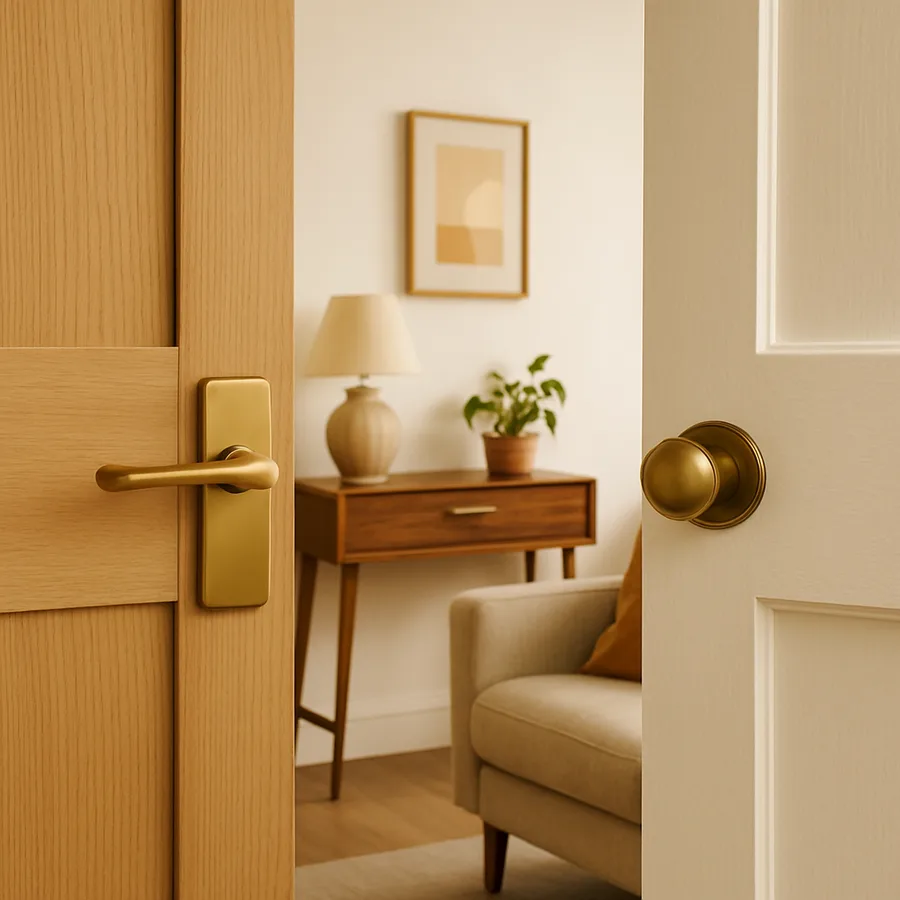
Something as routine as opening a door becomes a source of daily frustration for the nearly 54 million Americans living with arthritis, according to the Centers for Disease Control and Prevention. Swollen joints, reduced grip strength, and chronic pain in the fingers and wrists can turn a simple round doorknob into an adversary that must be confronted dozens of times each day. The choice between lever handles and knobs may seem like a minor design decision, but for anyone managing arthritis or other hand-mobility conditions, it ranks among the most consequential hardware selections in the entire home. This article examines the ergonomic differences, style options, installation considerations, and long-term value of each option so that you can make an informed choice that balances comfort, safety, and aesthetics throughout every room.
The Ergonomic Case for Lever Handles
Lever handles operate on a fundamentally different mechanical principle than round knobs, and that difference has profound implications for anyone with compromised hand function. A round knob requires the user to wrap their fingers around the sphere, apply sufficient grip pressure to prevent slipping, and then rotate the wrist through approximately 60 degrees while maintaining that grip. For a healthy hand, this sequence is automatic and effortless. For a hand affected by rheumatoid arthritis or osteoarthritis, however, each component of the motion can trigger sharp pain in the metacarpophalangeal joints and the wrist.
A lever handle, by contrast, requires only a downward pressing motion. The user can engage the handle with a closed fist, the side of the hand, a forearm, or even an elbow when both hands are occupied carrying groceries or laundry. This pressing action relies on large muscle groups in the arm and shoulder rather than the small, often inflamed joints of the fingers. The Arthritis Foundation specifically recommends lever-style hardware as a first-line home modification for people experiencing grip difficulties, noting that the reduction in required force can exceed 70 percent compared to a standard round knob.
Occupational therapists who specialize in home accessibility frequently point to lever handles as one of the highest-impact, lowest-cost modifications available. Unlike major renovations that require contractors and permits, swapping a doorknob for a lever handle is typically a 15-minute project that uses the same door prep and bolt pattern. The immediate relief that patients report after making this change underscores how much cumulative strain round knobs impose over the course of a day. When a single door is opened an average of eight to ten times daily, and a typical home contains 15 to 20 interior doors, the aggregate reduction in joint stress is substantial.
Beyond arthritis, lever handles benefit a wide range of users whose needs are often overlooked in conventional home design. Children who cannot yet generate sufficient grip force, adults carrying packages or children, individuals recovering from hand surgery, and elderly residents experiencing age-related strength decline all find lever handles easier and safer to operate. This breadth of benefit is why lever handles have become a cornerstone of universal design philosophy, which seeks to create environments usable by the widest possible range of people without the need for adaptation or specialized features.
When Round Knobs Still Make Sense
Despite the clear ergonomic advantages of lever handles, round knobs retain legitimate roles in certain residential contexts that deserve honest consideration. From a security perspective, round knobs are inherently more difficult for pets and very young children to operate, which can be an important safety feature for rooms containing hazardous materials, medications, or other items that need to be kept away from curious hands and paws. A lever handle's ease of operation, its greatest strength for arthritis sufferers, becomes a potential liability when a toddler or a large dog learns to press down on the lever and open doors unsupervised.
Aesthetic preference also plays a role that should not be dismissed. Homeowners restoring period properties, such as Victorian, Colonial Revival, or Craftsman-style homes, may find that round glass, porcelain, or brass knobs are integral to the architectural character they are working to preserve. In these cases, removing original hardware can diminish the home's historical authenticity and potentially its appraised value. Some manufacturers now offer compromise solutions in the form of round knobs with built-on lever extensions or ergonomic rubber grip covers that retain the visual profile of a traditional knob while reducing the force required to operate it.
It is also worth acknowledging that not everyone in a household will have the same hardware preference. In a multigenerational home where one resident has arthritis and another is concerned about a toddler's access to certain rooms, a mixed approach may be the most practical solution. Lever handles on the most frequently used doors, the front entry, kitchen, primary bedroom, and bathrooms, address the highest-impact pain points, while round knobs on lesser-used doors such as a home office or utility closet provide the child-resistant security that the household also needs. This targeted strategy avoids the all-or-nothing mentality that sometimes stalls accessibility improvements.
Have you evaluated which doors in your home cause the most discomfort, and could a targeted replacement of just those handles provide meaningful relief without a whole-house overhaul? Many occupational therapists recommend starting with the five doors opened most frequently and assessing the impact over two weeks before committing to a full replacement project. This phased approach manages costs while delivering immediate quality-of-life improvement where it matters most.
Style Options That Complement Every Interior
One of the most persistent myths about lever handles is that they look institutional or clinical, an association rooted in the utilitarian stainless-steel levers found in hospitals and commercial buildings. The residential hardware market has evolved dramatically, and today's lever handles are available in an extraordinary range of styles, finishes, and profiles that rival or exceed the decorative options available for round knobs. Manufacturers such as Schlage, Kwikset, Baldwin, and Emtek each offer dozens of lever designs spanning contemporary, transitional, and traditional aesthetics.
For modern and minimalist interiors, clean-lined levers in matte black, brushed nickel, or satin chrome create a sleek, architectural look that enhances the design rather than detracting from it. The Architectural Digest design team has highlighted matte black lever handles as a leading trend in door hardware, noting their ability to serve as subtle accent elements that anchor a room's color palette. Tubular lever designs with slim, cylindrical profiles are particularly popular in contemporary homes, offering a refined appearance that photographs beautifully and feels comfortable in the hand.
Traditional and transitional homes have equally compelling lever options. Scroll levers with gentle curves, hammered-texture levers in oil-rubbed bronze, and fluted levers in antique brass all evoke the warmth and craftsmanship associated with classic interior design. These designs prove that accessibility hardware can carry the same visual weight and decorative intent as any other element in a carefully designed room. Pairing the lever finish with other metal tones in the room, such as light fixtures, cabinet pulls, and curtain rods, creates a cohesive look that ties the space together.
Privacy and passage functions add another layer of selection. Lever handles are available in passage sets for hallways and closets, privacy sets with thumb-turn locks for bedrooms and bathrooms, and keyed entry sets for exterior doors. Matching all functions within the same design family ensures visual consistency throughout the home. Some manufacturers offer ADA-compliant return levers that curve back toward the door at the tip, preventing sleeves and bags from catching on the handle, an important safety detail for wheelchair users and anyone moving through doorways with limited clearance.
Installation Practicalities and Cost Comparison
The practical logistics of switching from knobs to levers are considerably simpler than most homeowners expect, which is good news for anyone eager to reduce daily joint pain without embarking on a major renovation. The vast majority of interior door hardware in North American homes uses a standard preparation with a 2-1/8 inch bore hole and a 2-3/8 or 2-3/4 inch backset. Lever handle sets designed for residential use conform to these same dimensions, meaning the existing holes in the door will accept the new hardware without any drilling, chiseling, or door replacement. The swap involves removing four screws, pulling out the old knob assembly, inserting the new lever assembly, and tightening four screws. Total time per door ranges from 10 to 20 minutes for someone with basic tool skills.
Cost is another area where lever handles compare favorably to common expectations. Entry-level residential lever sets from reputable manufacturers start at approximately $15 to $25 per door for passage and privacy functions, placing them in the same price bracket as equivalent-quality round knobs. Mid-range levers with designer finishes and solid construction typically fall between $30 and $60 per door. Premium and luxury options from brands like Baldwin or Emtek can reach $100 to $200 per set, but these prices reflect materials and craftsmanship rather than an accessibility premium. For a typical home with 15 interior doors, a mid-range lever replacement project costs between $450 and $900 in hardware, with no labor cost if the homeowner handles installation.
Exterior doors present a slightly more complex scenario because they involve keyed locksets and sometimes deadbolts. Lever-style entry sets with integrated keying are widely available and install using the same door prep as knob-style entry sets. If the home already has a deadbolt above the entry knob, the knob-to-lever swap can proceed independently without disturbing the deadbolt. For homeowners considering a complete exterior hardware upgrade, combination lever-and-deadbolt sets offer matched finishes and the convenience of a single keying system. Smart locks with lever handles add keyless entry via code, fingerprint, or smartphone, eliminating the fine-motor challenge of inserting and turning a physical key.
One installation detail that deserves attention is lever orientation. Most lever handles are designed as handed pairs, meaning the left-side lever and right-side lever are mirror images. Some manufacturers offer universal levers that can be installed on either side without modification, simplifying ordering for homeowners who are replacing hardware throughout the house. Confirm the handing requirement before purchasing to avoid the frustration of receiving hardware that does not fit the intended door. If in doubt, many hardware retailers offer online configurators where you input your door's swing direction and receive the correct set automatically.
Complementary Modifications for a Fully Arthritis-Friendly Home
Replacing doorknobs with lever handles is one of the most effective single modifications for arthritis sufferers, but it performs best as part of a broader strategy that addresses grip and mobility challenges throughout the home. Cabinet hardware is the next logical target: replacing small round cabinet knobs with D-shaped pulls or bar pulls in the kitchen and bathroom delivers the same ergonomic benefit as lever door handles. A 4-inch or 5-inch bar pull can be grasped with an open hand, hooked with a finger, or pulled with a forearm, distributing force away from the small joints that arthritis targets most aggressively.
Faucets represent another high-frequency touch point where hardware choice directly affects joint stress. Traditional cross-handle faucets require the same grip-and-twist motion as round doorknobs and should be replaced with single-lever faucets or, ideally, touchless sensor faucets that require no hand contact at all. The Houzz Bathroom Trends Report notes that touchless faucets have grown from a luxury feature to a mainstream selection, driven in part by hygiene awareness and in part by accessibility considerations. Installing lever faucets in the kitchen and bathroom completes the grip-reduction strategy that lever door handles begin.
Window hardware is frequently overlooked in arthritis-friendly home planning, yet opening and closing windows can be one of the most painful daily tasks for someone with hand involvement. Casement windows with crank handles are generally easier to operate than double-hung windows that require lifting force, but even crank handles can be difficult for arthritic hands. Motorized window operators, available as aftermarket additions for most casement and awning windows, allow control via wall switch, remote, or smart-home integration. For double-hung windows, spring-loaded sash lifts and friction-reducing channel liners can reduce the force needed to raise and lower the sash by more than half.
What other touch points in your home cause regular discomfort that you have simply learned to tolerate? Many arthritis sufferers become so accustomed to working around painful hardware that they stop recognizing the cumulative toll. Walking through your home with a notebook and rating each handle, knob, switch, and latch on a pain scale of one to five can reveal surprising concentrations of difficulty that are easy and inexpensive to resolve. This audit takes less than an hour and provides a prioritized action list that turns a vague sense of discomfort into a concrete improvement plan.
Long-Term Value and Resale Considerations
Investing in lever handles and complementary accessibility modifications carries financial implications that extend well beyond the immediate comfort benefit. The National Association of Realtors reports that buyers increasingly value homes with universal design features, particularly in markets with aging demographics. Lever handles, wider doorways, and accessible bathroom fixtures signal to prospective buyers that the home is move-in ready for a broad range of needs, reducing the mental and financial barrier to purchase. In competitive markets, these features can differentiate a listing from comparable properties that would require post-purchase modifications.
Insurance considerations also factor into the value equation. Some homeowner insurance providers offer premium discounts for documented accessibility modifications that reduce the risk of falls and injuries within the home. While lever handles alone may not trigger a discount, a comprehensive package of modifications, including lever handles, grab bars, improved lighting, and non-slip flooring, may qualify for reduced premiums under certain policies. Consult your insurance provider to determine whether your planned modifications align with their discount criteria.
From a purely practical standpoint, lever handles are also more durable than round knobs in high-traffic residential use. The pressing motion distributes force along the length of the lever and into the heavy-duty spring mechanism, whereas a round knob concentrates rotational torque on a smaller spindle connection. Over years of use, knob spindles are more prone to loosening, wobbling, and eventually failing. Lever mechanisms, particularly those with solid steel spring cartridges, maintain their feel and function for decades. This durability translates into lower replacement costs over the life of the home, making levers the more economical choice even before factoring in the ergonomic and accessibility benefits.
The decision to upgrade from knobs to levers is ultimately an investment in daily quality of life that happens to align with sound financial planning. Every morning begins and every evening ends with the act of opening and closing doors, and the cumulative effect of performing that action without pain cannot be overstated. For the millions of Americans managing arthritis, lever handles transform a source of recurring discomfort into a seamless, forgettable part of the daily routine, which is exactly what good design should do.
Take the first step toward an arthritis-friendly home today. Identify the five doors you open most frequently, measure the existing bore and backset dimensions, and visit a hardware showroom to feel the difference between lever styles in person. Your hands will thank you within the first week.
Making the Right Choice for Your Household
The lever-versus-knob decision is not a binary contest with a universal winner but rather a design choice that should be tailored to the specific needs, preferences, and circumstances of each household. For homes where arthritis, aging, or any form of reduced hand function is a present or anticipated concern, the evidence overwhelmingly favors lever handles as the primary hardware throughout the residence. The ergonomic advantages are well documented by medical and design professionals alike, the style options have expanded to suit every aesthetic vision, and the cost and installation requirements are modest enough to fit virtually any budget.
Where security concerns for young children or pets exist, a thoughtful mixed approach that places levers on high-use doors and retains knobs on specific restricted-access doors offers a practical compromise. The key insight is that accessibility modifications need not be all-or-nothing propositions. Strategic, targeted improvements can deliver the majority of the comfort benefit while respecting the full range of household needs. As universal design continues to move from specialty niche into mainstream expectation, the homes that embrace these principles today will be the ones best positioned for comfortable, independent living for years to come.
Ultimately, the hardware on your doors is something you interact with more frequently than almost any other element in your home. Giving that interaction the same design attention you would give to countertop materials or paint colors is not an indulgence but a recognition that comfort and function are inseparable from good design. Whether you choose levers throughout, knobs in select locations, or a combination of both, making that choice intentionally and with full awareness of the ergonomic implications ensures that your home works with your body rather than against it.
More Articles You May Like



Comments
Post a Comment