Mineral Paint vs Chalk Paint for Furniture Refinishing
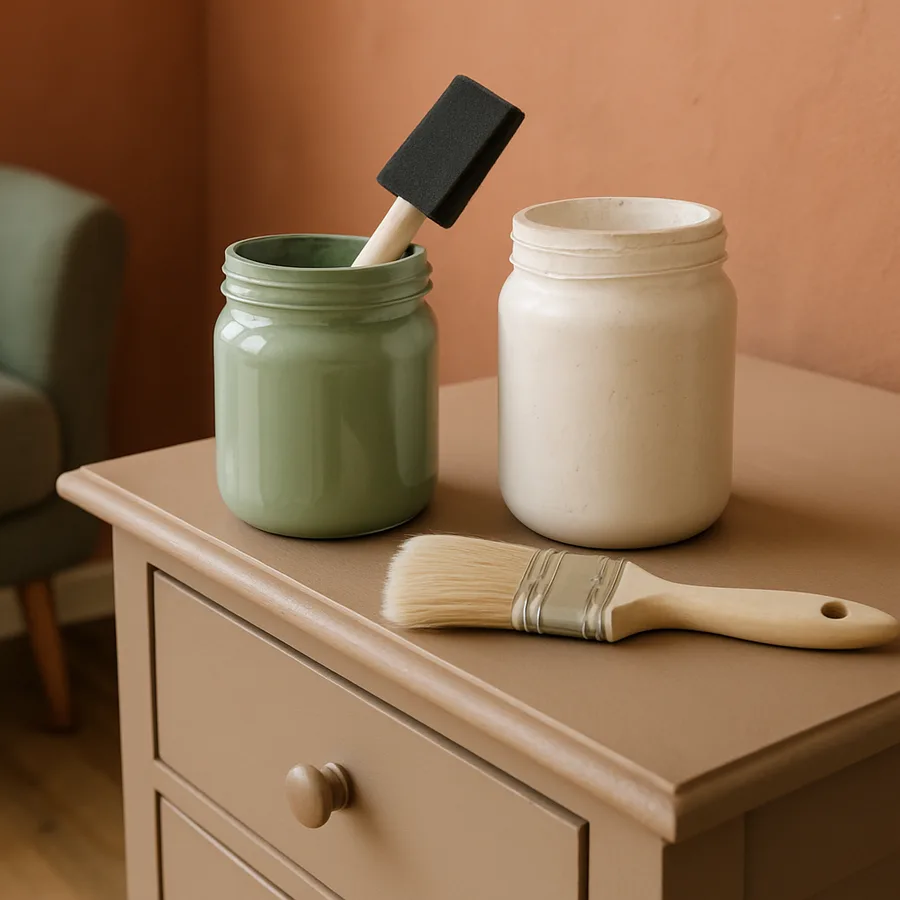
Two Paints Built for Furniture, Built on Different Philosophies
The furniture refinishing world has changed fundamentally over the past fifteen years, moving from a landscape dominated by oil-based enamels and spray lacquers to one where two specialty paint categories fight for the loyalty of every homeowner with a tired dresser and a weekend to spare. Chalk paint arrived first in the mainstream consciousness, popularized by Annie Sloan's branded product and the cottage-farmhouse aesthetic that swept through design culture. Mineral paint followed as a technologically distinct alternative, built on a different chemical foundation and promising a different set of performance characteristics. Both are marketed as furniture-friendly, low-prep, and beginner-accessible, but beneath those shared selling points lie meaningful differences in composition, application behavior, durability, and final appearance that should drive your choice based on the specific project in front of you rather than brand loyalty or social media momentum.
The Society for Protective Coatings (SSPC) classifies paint systems by their binder technology, which is the resin or polymer that holds pigment particles together and bonds them to the substrate. This classification matters because the binder determines virtually everything about how a paint performs: how it adheres, how it cures, how it resists wear, and how it ages over time. Chalk paint and mineral paint use fundamentally different binder systems, which is why they behave so differently despite occupying the same market niche. Understanding these differences at a practical level, without needing a chemistry degree, is the key to choosing the right product for your specific piece of furniture, your desired finish, and the level of durability your household demands.
The stakes of this choice are higher than they might initially seem. A dining table that gets repainted with the wrong product for its use case will show wear within months, requiring either a protective topcoat that changes the aesthetic or a complete redo that doubles the project's cost and time. A bedroom dresser painted with a product whose finish character does not match the room's design language will look subtly wrong every time you walk past it. The time investment in furniture refinishing is significant regardless of which paint you use, typically 4 to 8 hours of active work spread across two days, so making an informed product choice before you open the first can prevents the frustration of a result that falls short of your expectations.
What follows is a detailed, unbiased comparison of mineral paint and chalk paint across every dimension that matters to someone standing in front of a piece of furniture with a brush in hand. Neither product is universally superior; each excels in specific contexts and falls short in others. The goal is to match the right paint to the right project with enough confidence that you spend your weekend enjoying the process rather than second-guessing the product on your workbench.
Composition and How Each Paint Actually Works
Chalk paint gets its name from calcium carbonate, the same compound found in natural chalk, which serves as both a filler and a matting agent in the formula. The binder in most chalk paint products is a water-based acrylic or latex polymer, though the specific formulation varies significantly between brands. Annie Sloan Chalk Paint, the original branded product, uses a proprietary blend that the company does not fully disclose, while competitors like Rust-Oleum Chalked, Behr Chalk Decorative Paint, and numerous boutique brands each use their own variations. The calcium carbonate content gives chalk paint its signature ultra-matte, powdery finish and its thick, creamy consistency that holds brush strokes and texture. This composition also means chalk paint dries to a relatively soft, porous film that absorbs fingerprints and stains readily unless sealed with a protective topcoat.
Mineral paint operates on a fundamentally different chemistry. The term "mineral" refers to the use of mineral-based binders and pigments rather than synthetic polymers as the primary film-forming technology. Fusion Mineral Paint, the most prominent brand in this category, uses a proprietary resin system that the manufacturer describes as a built-in topcoat technology: the paint cures to a hard, self-sealing surface that does not require wax, polyurethane, or any additional protective layer. Other mineral paint brands like Homestead House and Country Chic Paint use similar self-sealing formulations with varying degrees of mineral content. The resulting film is significantly harder and more durable than chalk paint's soft finish, with a subtle satin sheen that falls between matte and eggshell.
The practical implication of these compositional differences shows up most clearly in the curing process. Chalk paint dries quickly, often within 30 minutes to the touch, because the water in the formula evaporates rapidly from the porous, calcium-carbonate-heavy film. However, drying is not curing. The acrylic binder continues to cross-link and harden for several days after application, and the paint remains vulnerable to scratching and marking during this period. Mineral paint typically takes longer to become touch-dry, approximately one to two hours depending on humidity, but its resin system cures to a substantially harder film over 21 days. The Better Homes and Gardens furniture refinishing guide emphasizes that respecting full cure times, regardless of which product you use, is the most commonly skipped step and the most common cause of premature wear in refinished furniture.
Pigment loading and coverage also differ between the two categories. Chalk paint is generally formulated with high pigment density that delivers excellent opacity, often covering dark substrates in two coats without primer. Mineral paint achieves similar coverage but through a different mechanism: the self-sealing resin system builds an opaque film more gradually, with each coat contributing both color and protective depth. Some mineral paint colors, particularly lighter shades applied over dark surfaces, may require three coats for complete opacity, while the equivalent chalk paint color might achieve full coverage in two. This difference affects both the quantity of paint consumed per project and the total application time, practical factors that matter when you are budgeting materials and planning your weekend.
Surface Preparation and Adhesion Differences
Both chalk paint and mineral paint are marketed as low-prep or no-prep products, and both deliver on that promise to a greater degree than traditional furniture paints that demand thorough sanding and priming. However, the degree of surface preparation each product tolerates and the adhesion mechanisms they rely on are not identical, and understanding these differences prevents the heartbreak of paint that peels off a treasured piece of furniture six months after you finished it.
Chalk paint's adhesion relies primarily on mechanical bonding: the calcium carbonate particles create a slightly rough, porous film that grips textured surfaces effectively. On raw wood, previously painted surfaces with some tooth, and lightly sanded finishes, chalk paint adheres well without primer. Where chalk paint struggles is on extremely smooth, glossy, or non-porous surfaces like factory-lacquered furniture, laminate, melamine, and high-gloss polyurethane. On these surfaces, the mechanical bond has nothing to grip, and the paint can scratch off with a fingernail or peel in sheets under light use. The standard recommendation from most chalk paint manufacturers is to lightly sand glossy surfaces with 150-grit sandpaper to create tooth, even though the marketing implies no sanding is necessary. This disconnect between marketing claims and practical requirements is the single largest source of chalk paint adhesion failures.
Mineral paint's adhesion mechanism combines mechanical bonding with a degree of chemical adhesion that gives it a meaningful advantage on difficult surfaces. The resin system in products like Fusion Mineral Paint is formulated to bite into smooth surfaces more aggressively than chalk paint's acrylic binder, which is why Fusion and similar brands can credibly claim adhesion to laminate, melamine, and previously varnished surfaces without sanding. Independent testing by refinishing professionals and the Painting and Decorating Contractors of America (PDCA) has confirmed that mineral paint outperforms chalk paint in adhesion pull-off tests on non-porous substrates by a significant margin. This does not mean mineral paint is foolproof on every surface, greasy or waxy surfaces still require degreasing regardless of paint type, but it does mean the no-prep promise is more reliably true for mineral paint than for chalk paint.
Regardless of which product you choose, one preparation step is universally non-negotiable: thorough cleaning. Furniture accumulates oils from hands, cooking residue, dust, and polishing products over years of use, and no paint bonds well to a greasy or waxy surface. Wiping down the entire piece with a solution of trisodium phosphate (TSP) or a dedicated deglosser removes the invisible contamination layer that causes adhesion failures even on surfaces that look clean. This five-minute step is the most effective insurance policy against peeling, and skipping it is responsible for more refinishing failures than any product deficiency. Have you ever had paint peel off a refinished piece and blamed the product when the real culprit was surface contamination you could not see?
Finish Quality, Texture, and Aesthetic Character
The visible and tactile differences between a chalk paint finish and a mineral paint finish are substantial enough that choosing based on aesthetic preference alone is entirely reasonable. Chalk paint produces an ultra-matte, velvety surface with a powdery quality that absorbs light rather than reflecting it. This finish has a distinctly handcrafted, vintage character that lends itself naturally to shabby chic, farmhouse, cottage, and European country aesthetics. The thick consistency of chalk paint holds brush strokes visibly, which is either a feature or a flaw depending on your preference: some refinishers prize the textured, painterly quality, while others find it frustratingly difficult to achieve a smooth result. Distressing, the deliberate sanding of edges and high-wear points to reveal the underlying surface, is dramatically easier with chalk paint because the soft film sands away smoothly and predictably with fine-grit sandpaper.
Mineral paint produces a smooth, subtly sheened surface that splits the difference between matte and satin. The finish is significantly harder to the touch than chalk paint, feeling more like a factory-applied coating than a hand-brushed one. Brush strokes self-level more readily in mineral paint formulations because the resin system has better flow characteristics than chalk paint's thick, calcium-carbonate-laden formula. The result is a more refined, contemporary finish that suits modern, mid-century, Scandinavian, and transitional design styles. Distressing mineral paint is possible but requires more aggressive sanding because the harder film resists abrasion, which can make it difficult to achieve the graduated, naturally worn appearance that comes so easily with chalk paint.
Color depth and vibrancy differ notably between the two paint types. Chalk paint's matte finish absorbs light uniformly, which gives colors a soft, slightly faded quality even when freshly applied. This chalky muting is part of the product's charm and is responsible for the distinctively gentle palette that chalk-painted furniture is known for. Mineral paint's satin finish reflects a small amount of light, which gives colors more depth and intensity. A dark navy applied in mineral paint will look richer and more saturated than the same pigment in chalk paint form, while a bright white will appear cleaner and more luminous. The American Society of Interior Designers notes that finish sheen is one of the most underestimated factors in how furniture color interacts with room decor, and choosing between matte and satin on a large piece like a buffet or armoire can meaningfully shift the character of the room it occupies.
The waxing process that chalk paint requires introduces another layer of aesthetic consideration. Furniture wax, whether clear or tinted, transforms the chalk paint surface from powdery matte to a soft, burnished lustre with a slightly waxy hand-feel. Clear wax deepens the color slightly and adds a protective layer without changing the overall tone. Dark wax, applied over lighter chalk paint, settles into crevices, molding profiles, and brush-stroke textures to create an antiqued, aged appearance that is the signature aesthetic of the chalk paint movement. This waxing step is both a creative opportunity and an additional labor requirement: applying and buffing wax on a large piece of furniture adds 30 to 60 minutes to the project and requires reapplication every 6 to 12 months to maintain the protective layer. Mineral paint's self-sealing film requires no such maintenance step, which is a practical advantage that accumulates over years of ownership.
Durability, Maintenance, and Long-Term Performance
Durability is the category where the differences between chalk paint and mineral paint are most consequential for everyday living. Chalk paint without a topcoat is not a durable surface for furniture that receives regular physical contact. The soft, porous film scratches easily, absorbs liquid spills that leave permanent marks, and picks up dirt and oils from hands over time. This is not a deficiency in the product so much as a characteristic of the calcium carbonate chemistry: the same porosity that gives chalk paint its beautiful matte texture also makes it vulnerable to the friction, moisture, and handling that furniture endures daily. On decorative pieces that are rarely touched, like a display shelf, a picture frame, or a decorative tray, unprotected chalk paint performs perfectly well for years. On a dining table, a kitchen island, a child's dresser, or any surface that gets daily use, unprotected chalk paint will show wear within weeks.
The standard solution is a protective topcoat applied over the cured chalk paint. Furniture wax is the traditional and most popular option, providing moderate protection while maintaining the matte aesthetic. However, wax is not waterproof, not heat-resistant, and not permanent; it must be reapplied periodically and can be damaged by cleaning products, hot dishes, and spilled liquids. For surfaces requiring serious durability, a water-based polyurethane or polycrylic topcoat over chalk paint provides far superior protection but fundamentally changes the finish from matte to satin or semi-gloss, which may or may not be acceptable depending on the aesthetic you are pursuing. The Wood Finishing Enterprises Association testing data shows that chalk paint with a polyurethane topcoat performs comparably to mineral paint in abrasion and moisture resistance, but the combination requires more total product, more application steps, and a longer total project time than mineral paint alone.
Mineral paint's self-sealing formulation is its most significant practical advantage over chalk paint for functional furniture. The cured mineral paint film, typically reaching full hardness after 21 days, resists scratching, moisture penetration, and staining without any additional topcoat. Independent wear testing has demonstrated that fully cured Fusion Mineral Paint withstands standardized abrasion testing at levels comparable to commercial-grade furniture finishes, a performance claim that no unprotected chalk paint can match. For kitchen tables, bathroom vanities, children's furniture, and any piece that will be cleaned regularly, mineral paint's built-in durability eliminates both the initial topcoat application step and the ongoing maintenance burden of wax reapplication.
Long-term aging is the final durability consideration. Chalk paint protected with wax develops a patina over years that many owners find beautiful, a gradual softening and deepening of the color that gives the piece an authentic aged quality. This aging is not damage; it is the natural evolution of a wax-protected surface interacting with light, air, and human touch. Mineral paint ages differently, maintaining its original color and sheen more consistently over time because the harder, less porous film resists the environmental interactions that create patina. Neither aging pattern is objectively better, but they appeal to different sensibilities. If you want furniture that looks and feels increasingly vintage over time, chalk paint's aging character serves that goal. If you want furniture that looks the same in year five as it did on day one, mineral paint's stability is the better match. Which aging pattern aligns with how you want your furniture to feel a decade from now?
Cost Comparison and Project Economics
The per-unit price of chalk paint and mineral paint varies significantly by brand, but a meaningful cost comparison must look beyond the price on the can to account for total project cost including primers, topcoats, tools, and coverage rates. A quart of premium chalk paint from brands like Annie Sloan or Country Chic typically costs between 35 and 45 dollars and covers approximately 120 to 150 square feet on smooth surfaces, or roughly two medium dressers with two coats. A quart of Fusion Mineral Paint costs approximately 25 to 30 dollars and covers a comparable area. On raw product cost per square foot, mineral paint holds a moderate price advantage.
However, chalk paint projects incur additional material costs that mineral paint projects do not. Furniture wax, the minimum protective topcoat for chalk paint, costs between 15 and 25 dollars per tin and must be reapplied every 6 to 12 months on regularly used surfaces. If you opt for a polyurethane topcoat instead of wax for higher-traffic pieces, add another 15 to 20 dollars for a quart of quality water-based poly. Mineral paint requires no topcoat purchase. Over a three-year ownership period with biannual wax reapplication, the total material cost of a chalk paint project can exceed the equivalent mineral paint project by 40 to 60 percent, primarily driven by the ongoing wax expense.
Time is a cost that homeowners routinely undervalue in furniture refinishing decisions. A typical chalk paint project on a medium dresser involves cleaning, two coats of paint with drying time between them, wax application, and wax buffing, totaling approximately 5 to 7 hours of active work across two days. The equivalent mineral paint project involves cleaning and two to three coats of paint, totaling approximately 3 to 5 hours of active work. The elimination of the waxing step saves roughly 60 to 90 minutes per project, and the elimination of ongoing wax maintenance saves additional time over the life of the piece. For prolific refinishers who complete multiple projects per year, these time savings compound meaningfully. The National Kitchen and Bath Association notes that cabinet and furniture painting labor constitutes the majority of project cost in professional applications, making any product that reduces total application steps a material cost saver at scale.
The economic comparison shifts if you factor in the creative techniques that chalk paint enables and mineral paint does not easily replicate. Distressing, color washing, dry brushing, and dark wax antiquing are all significantly easier to execute with chalk paint, and for refinishers who value these techniques, the additional material and time costs are justified by creative outcomes that mineral paint cannot match. If your project goals include any of these decorative techniques, the economic comparison is less relevant than the aesthetic one, because no amount of cost savings on mineral paint compensates for an inability to achieve the finish you envision. Define your project goals clearly before comparing prices, because the cheapest path to a finish you do not love is the most expensive mistake in furniture refinishing.
Conclusion: Matching the Product to the Project, Not the Hype
The chalk paint versus mineral paint debate generates passionate opinions precisely because both products do their specific jobs well, and advocates on each side are speaking from genuine positive experience. The furniture refinisher who paints decorative pieces in a cottage style, who loves the meditative process of applying and buffing wax, and who appreciates the soft, evolving patina of a wax-protected surface is entirely right that chalk paint is the superior product for their needs. The refinisher who paints functional furniture for busy households, who wants a durable finish with minimal ongoing maintenance, and who prefers a smooth, contemporary aesthetic is equally right that mineral paint is the better choice. The products are not competitors so much as they are tools designed for different outcomes.
The decision framework is simpler than the marketing complexity suggests. Choose chalk paint when your primary goals include achieving an ultra-matte or distressed finish, when the piece is decorative or low-contact, when you plan to use creative techniques like dark wax or color washing, and when you enjoy the tactile process of waxing and buffing as part of the refinishing ritual. Choose mineral paint when durability and low maintenance are priorities, when the piece will receive daily physical contact or frequent cleaning, when you prefer a smoother and more contemporary finish, and when you want a single product that does not require supplementary topcoats or ongoing reapplication.
Many experienced refinishers keep both products in their workshop and select between them on a per-project basis, which is perhaps the most practical resolution to the debate. A vintage china cabinet destined for display might receive chalk paint and dark wax, while a kitchen table destined for daily family meals gets mineral paint and nothing else. This project-specific approach honors the strengths of each product without forcing either one into applications where it will underperform. Whatever you choose, invest your preparation time in thorough cleaning, respect the manufacturer's recommended cure times before putting the piece into service, and trust that the finish will reward the care you put into the process.
More Articles You May Like



Comments
Post a Comment