LED Strip Lighting Under Cabinets: Warm White vs Cool White
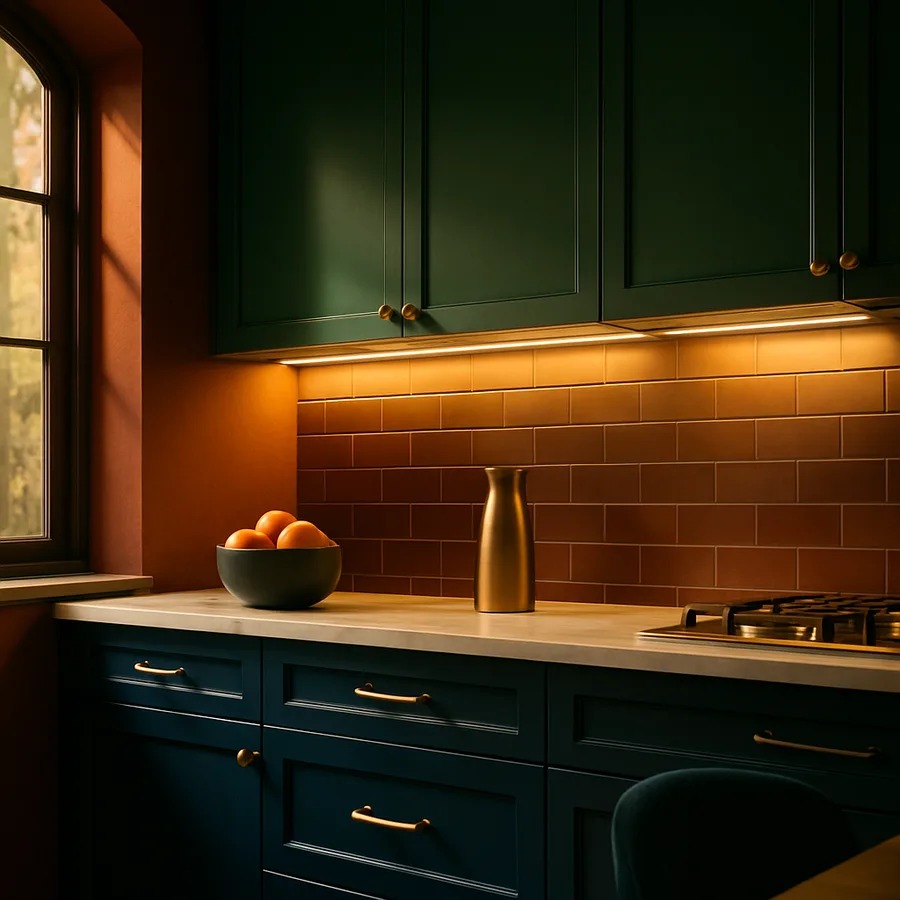
The Color Temperature Decision That Shapes Your Kitchen
Choosing between warm white and cool white LED strip lighting for your under-cabinet installation is not a minor cosmetic detail. It is a decision that will affect how your kitchen looks, how your food appears during preparation, and how comfortable you feel spending time at the counter every day. Color temperature, measured in Kelvins on a scale where lower numbers are warmer and higher numbers are cooler, determines whether your countertops glow with an inviting amber warmth or are bathed in a crisp, clinical white that emphasizes clarity and contrast. Neither option is objectively better; the right choice depends on your kitchen's materials, your cooking habits, and the atmosphere you want to create in the space where you likely spend more waking hours than any other room in your home.
Warm white LED strips, typically rated between 2700K and 3000K, produce a yellowish light that closely resembles the traditional incandescent bulbs that lit kitchens for over a century. This color temperature flatters warm materials like wood cabinetry, granite or butcher block countertops, and copper or brass fixtures by enhancing their natural warmth and richness. Cool white LED strips, rated between 4000K and 5000K, emit a bluish-white light that approximates natural daylight and provides higher visual contrast, which can be advantageous for detailed food preparation tasks. The American Lighting Association (ALA) recommends 2700K to 3000K for residential kitchens where ambiance is a priority and 3500K to 4000K for kitchens that function primarily as serious cooking workspaces.
The impact of color temperature becomes most apparent when you consider how it interacts with the specific surfaces in your kitchen. A white marble countertop under warm white light develops a creamy, golden quality that many people find inviting and luxurious. The same countertop under cool white light appears brighter, whiter, and more true to its natural color, which some homeowners prefer because it shows the stone as it actually looks in daylight. Dark countertop materials like soapstone, black granite, or dark quartz generally benefit from warmer light, which softens their visual weight and prevents them from looking like black holes beneath the cabinets. The interaction between light and surface is a partnership, and the color temperature you select is essentially choosing which version of your kitchen you want to see most often.
According to a study published by the Lighting Research Center at Rensselaer Polytechnic Institute, residential occupants overwhelmingly prefer warm white lighting in kitchens during evening hours, with approximately 78 percent of study participants rating 2700K more comfortable than 4000K after sunset. During daytime hours, the preference gap narrowed considerably, with about 55 percent still preferring warm white and 45 percent choosing cooler temperatures. This data suggests that if your under-cabinet lights will be used primarily in the evening for dinner preparation and casual kitchen time, warm white is statistically more likely to satisfy you. If your kitchen sees heavy use during daylight hours, cooler temperatures become more competitive.
How Each Temperature Affects Food and Cooking
Professional chefs and food stylists have long understood that light color dramatically influences how food looks, and this knowledge translates directly to home kitchen lighting decisions. Warm white light enhances the appearance of baked goods, roasted meats, pasta dishes, and any food with golden, brown, or amber tones by amplifying those warm colors and making the food look richer and more appetizing. Bread appears more golden, grilled chicken looks more perfectly browned, and pasta sauce takes on a deeper, more inviting red. These are subtle enhancements, not distortions, and they align with how our brains have evolved to interpret warm-toned food as fresh and desirable under firelight and candlelight conditions.
Cool white light serves a different purpose that has its own merits in a cooking environment. The higher color temperature provides truer color rendering for green vegetables, raw fish, and ingredients where freshness assessment depends on detecting subtle color variations. Under warm light, the slight yellowing that indicates a head of lettuce is past its prime becomes nearly invisible, while cool white light reveals it clearly. For home cooks who prize ingredient quality and want to see every detail of their raw materials before cooking, cooler under-cabinet lighting delivers a practical advantage. The National Restaurant Association notes that commercial kitchens typically use 4000K to 5000K task lighting precisely because color accuracy in food inspection reduces waste and ensures quality.
The Color Rendering Index (CRI) of your LED strips matters at least as much as the color temperature when it comes to food appearance. CRI measures how faithfully a light source reproduces the full spectrum of colors compared to natural sunlight, on a scale from 0 to 100. Under-cabinet LED strips with a CRI of 90 or above render food colors accurately regardless of whether the color temperature is warm or cool, while strips with CRI below 80 can make food look washed out, grayish, or oddly tinted. A 2700K strip with CRI 95 will show warm, beautiful, and accurate colors. A 5000K strip with CRI 70 may appear bright but will distort reds and oranges noticeably. When shopping for LED strip lighting, treat CRI 90 as the minimum acceptable specification for any installation that will illuminate food preparation areas.
Have you ever taken a photograph of a beautifully plated meal and been disappointed that the picture looks nothing like what you see with your eyes? The culprit is often the light source. Under-cabinet LEDs illuminate food from a close distance and a favorable angle, which is why the color quality of these strips has a disproportionate impact on how your cooking looks both in person and in the smartphone photos that many home cooks take regularly. If food photography is part of your kitchen life, warm white strips in the 2700K to 3000K range with CRI above 95 consistently produce the most photogenic results without requiring any post-processing color correction.
Matching LED Color to Your Kitchen's Material Palette
The materials and finishes in your kitchen create a color context that either harmonizes with or fights against the light you introduce under the cabinets. Natural wood cabinets in oak, cherry, walnut, or maple contain warm undertones that warm white LED strips reinforce beautifully. The light enhances the grain patterns and rich tones that drew you to real wood in the first place, creating a cohesive palette that feels organic and unified. Cool white light against warm wood can create a visual disconnect, making the cabinets look slightly orange by contrast while the countertop below appears bluish. This clash is particularly noticeable in kitchens where the under-cabinet area is the primary source of evening illumination.
White and gray painted cabinets, which dominate contemporary kitchen design, are more flexible in their response to different color temperatures. Bright white cabinets with blue or gray undertones pair naturally with cooler LED strips that reinforce their crisp, clean character, while creamy or warm white cabinets respond better to warm white light that maintains their intended warmth. The NKBA kitchen design guidelines suggest testing LED strip samples against your actual cabinet finish before committing to a full installation, as the difference between 2700K and 4000K against the same white paint can be dramatic enough to make a cabinet color you love look like a completely different shade.
Countertop materials introduce another layer of interaction. Quartz and solid surface countertops with warm veining, such as Calacatta-inspired patterns with gold and cream tones, sing under warm white light that brings out those embedded colors. Countertops with cool gray or blue veining, like Carrara marble or certain concrete surfaces, look more natural under neutral or cool white light that respects their inherent color temperature. Butcher block and wood countertops follow the same rule as wood cabinets: warm light enriches their natural warmth, while cool light can make them look dull and flat. The countertop is the surface most directly illuminated by under-cabinet strips, which makes it the single most important material to consider when choosing your color temperature.
Backsplash materials complete the material equation. Subway tile in classic white reads as warm and inviting under 2700K light or clean and bright under 4000K, both legitimate choices that create different moods. Colored backsplash tiles, whether zellige, glass mosaic, or hand-painted ceramic, can shift dramatically in perceived color under different light temperatures, and testing is the only reliable way to predict the result. Metallic backsplash materials like stainless steel, copper, or bronze tile respond to light temperature in predictable ways: warm light makes warm metals glow while muting silver tones, and cool light does the reverse. Understanding these interactions before you purchase your LED strips prevents the frustrating discovery that your carefully coordinated kitchen palette looks different under artificial light than it did in the showroom.
Installation Methods and Practical Considerations
LED strip lighting for under-cabinet use comes in two primary formats: adhesive-backed flexible strips that attach directly to the underside of the cabinet, and rigid LED bar fixtures that mount with screws or clips. Flexible strips offer easier installation around obstacles like cabinet supports, electrical outlets, and corner transitions, and they can be cut to exact lengths at designated cut points marked every one to two inches along the strip. Rigid bars provide a more finished appearance with built-in diffuser lenses that eliminate the dotting effect of visible individual LED chips, and their solid construction prevents the sagging and peeling issues that can plague adhesive strips over time. Both formats perform well when properly installed, and the choice between them often comes down to whether you prioritize installation flexibility or long-term fit and finish.
Placement within the cabinet underside affects both lighting quality and visibility of the fixture itself. Mounting the LED strip at the very front edge of the cabinet, closest to the countertop's front, produces the most even countertop illumination but makes the strip visible to anyone standing at the counter or looking up from a seated position. Mounting it toward the back of the cabinet, near the wall, hides the fixture more effectively but concentrates light on the backsplash rather than the work surface. The optimal compromise for most kitchens is mounting the strip one-third of the way back from the front edge, behind a small light rail or trim piece that shields the strip from direct view while allowing light to fall across the full depth of the countertop. The National Electrical Manufacturers Association (NEMA) classifies under-cabinet LED strips as Class 2 low-voltage devices when powered by appropriate transformers, meaning they present minimal electrical hazard and do not typically require permits for installation in most jurisdictions.
The power supply and driver selection is a technical detail that has significant practical consequences. LED strips require a constant-voltage DC driver, typically 12V or 24V, that converts household AC power to the low voltage the strips operate on. A 24V system is generally preferable for kitchen runs because it experiences less voltage drop over longer distances, maintaining consistent brightness from one end of the strip to the other. The driver must be rated for at least 20 percent more wattage than the total strip length requires, which provides a safety margin that extends the driver's lifespan and prevents overheating. The driver itself generates a small amount of heat and produces a faint electronic hum in some models, so mounting it inside a nearby cabinet or utility closet rather than directly behind the LED strip keeps both heat and noise out of the kitchen workspace.
Would you rather replace your LED strips after three years because moisture corroded the circuitry, or invest slightly more upfront for a decade of reliable performance? Waterproofing ratings matter for under-cabinet LED strips, even though they are installed indoors, because kitchen environments involve steam, splashing water, and grease vapor that can infiltrate unprotected electronics over time. Strips rated IP65 or higher feature a silicone coating that protects the LED chips and circuitry from moisture ingress, adding durability without significantly affecting light output or color quality. Non-waterproof strips rated IP20 are less expensive and slightly brighter per watt, but they are more vulnerable to the moisture that inevitably accumulates in the space between cabinets and countertops during cooking. For a kitchen installation expected to last five to ten years or more, the modest cost premium for IP65-rated strips is a worthwhile investment in reliability.
Dimming: The Feature That Makes Both Temperatures Work
The single most important accessory for under-cabinet LED strip lighting is a compatible dimmer, because the ability to adjust brightness transforms either warm white or cool white strips from a fixed lighting condition into a flexible system that adapts to different needs throughout the day. Full brightness at 100 percent provides task-level illumination for food preparation and cleaning, while dimming to 20 or 30 percent creates a soft ambient glow that serves as nighttime navigation lighting or gentle atmosphere for evening entertaining. Without a dimmer, under-cabinet lights are either on at full power or off, which eliminates most of the ambiance value that makes these strips worth installing in the first place.
Not all dimmers are compatible with all LED strips, and mismatched pairings produce flickering, buzzing, limited dimming range, or complete failure to dim below a certain threshold. PWM (Pulse Width Modulation) dimmers designed specifically for low-voltage LED strips provide the smoothest, most flicker-free dimming performance across the full range from 100 percent down to near zero. Standard TRIAC dimmers designed for incandescent bulbs and mains-voltage LED fixtures often perform poorly with 12V or 24V LED strip systems, producing visible flicker at low levels and an abrupt cutoff rather than a smooth fade to dark. The Houzz lighting forum archives contain thousands of posts from homeowners troubleshooting dimmer compatibility issues, and the overwhelming consensus is that matching the dimmer type to the LED driver type before purchase eliminates virtually all problems.
Tunable white LED strips represent the technological solution for homeowners who genuinely cannot decide between warm and cool white. These dual-channel strips contain both warm white and cool white LED chips along the same strip, and a compatible controller blends the two channels to produce any color temperature between approximately 2700K and 6500K. This means you can have warm, relaxed lighting at 2700K during dinner preparation and switch to a bright, alert 4000K for detailed tasks or morning coffee, all from the same installed strip. Tunable systems cost approximately 30 to 50 percent more than single-temperature strips when you include the dual-channel controller, but they eliminate the compromise inherent in choosing a single color temperature for all situations.
Smart home integration adds another dimension of control that appeals to technology-oriented homeowners. LED strip controllers compatible with platforms like Apple HomeKit, Google Home, or Amazon Alexa allow voice-controlled and app-controlled dimming, scheduling, and, with tunable strips, color temperature adjustment. Automated schedules can shift the under-cabinet lighting from bright and cool in the morning to warm and dim in the evening, mimicking the natural progression of daylight in a way that supports circadian rhythm. According to a survey conducted by the Consumer Technology Association (CTA), approximately 45 percent of smart home device owners cite lighting control as their most frequently used automation, suggesting that the convenience of automated under-cabinet lighting justifies the additional cost for many households.
Making the Final Decision for Your Kitchen
If your kitchen features warm wood tones, earthy countertops, brass or copper hardware, and a design sensibility that leans traditional, farmhouse, or transitional, warm white at 2700K to 3000K is almost certainly the right choice. This color temperature reinforces the warmth already present in your material palette and creates an inviting atmosphere that makes the kitchen feel like the heart of the home. The vast majority of residential kitchen lighting professionals default to warm white for good reason: it works with the broadest range of materials, it flatters food and people equally, and it creates the relaxed ambiance that most homeowners want from their kitchen in the evening hours when under-cabinet lighting is most visible and most needed.
If your kitchen is designed around cool whites, grays, concrete, stainless steel, and a distinctly modern aesthetic, or if you are an avid cook who prioritizes ingredient visibility and color accuracy above ambiance, neutral white at 3500K to 4000K deserves serious consideration. This temperature range splits the difference between warm coziness and cool clarity, providing enough warmth to avoid a clinical feel while delivering the higher contrast and truer color rendering that detail-oriented cooks appreciate. True cool white at 5000K and above is rarely recommended for residential kitchens because it skews so far toward blue-white that most people find it harsh and uninviting in a home setting, regardless of the kitchen's design style.
The most reliable way to make this decision is to purchase one-meter sample lengths of both warm white and cool white LED strips and temporarily mount them under adjacent cabinets for a few days. Live with both temperatures through morning coffee, afternoon light, and evening cooking, observing how each interacts with your specific countertops, backsplash, and cabinet finish at different times of day. This small investment of twenty to thirty dollars and fifteen minutes of installation time provides direct, personal experience that no article, showroom display, or online review can replicate. Your eyes and your instincts, calibrated in your actual kitchen, are the most trustworthy guide to the color temperature that will make you happiest over the thousands of hours you will spend at your countertop in the years ahead.
Whatever temperature you choose, prioritize LED strips with CRI 90 or above, IP65 or higher waterproofing, a properly rated 24V driver, and a compatible PWM dimmer. These specifications ensure that your under-cabinet lighting looks beautiful, lasts reliably, and gives you the control to adjust brightness for any situation. Invest in proper installation with hidden mounting and a shielding light rail, and your LED strips will contribute quiet, consistent beauty to your kitchen every time you flip the switch.
Conclusion: Light as a Kitchen Design Material
Under-cabinet LED strip lighting is one of the most cost-effective upgrades available in kitchen design, yet the warm white versus cool white decision receives far less attention than it deserves. The color temperature you install under your cabinets will color every surface, every meal, and every moment you spend at the counter, making it as consequential a material choice as the countertop itself. Warm white wraps the kitchen in a gentle glow that most people instinctively associate with comfort and home. Cool white sharpens the space with clarity and precision that supports focused work and clean aesthetics. Both are valid, and both produce beautiful kitchens when matched thoughtfully to the surrounding materials and the homeowner's priorities.
The technology available today, including high-CRI strips, tunable white systems, PWM dimmers, and smart home integration, means that the compromises that once defined under-cabinet lighting have largely disappeared. You can have warm light that is also accurate, bright light that is also dimmable, and a fixed installation that adapts to different needs throughout the day. These capabilities make the decision less about choosing one temperature forever and more about deciding how much flexibility you want to build into the system from the start.
Before placing your order, take the sample test described above and spend a few evenings cooking under both warm and cool white light in your own kitchen. Notice which version makes you want to linger at the counter and which one makes you want to finish and move to another room. That visceral response contains more useful information than any specification sheet, and it will lead you to the color temperature that transforms your under-cabinet lighting from a functional afterthought into an integral part of your kitchen's character and warmth.
More Articles You May Like



Comments
Post a Comment