Laundry Room Cabinets: Upper vs Full-Height Storage Compared
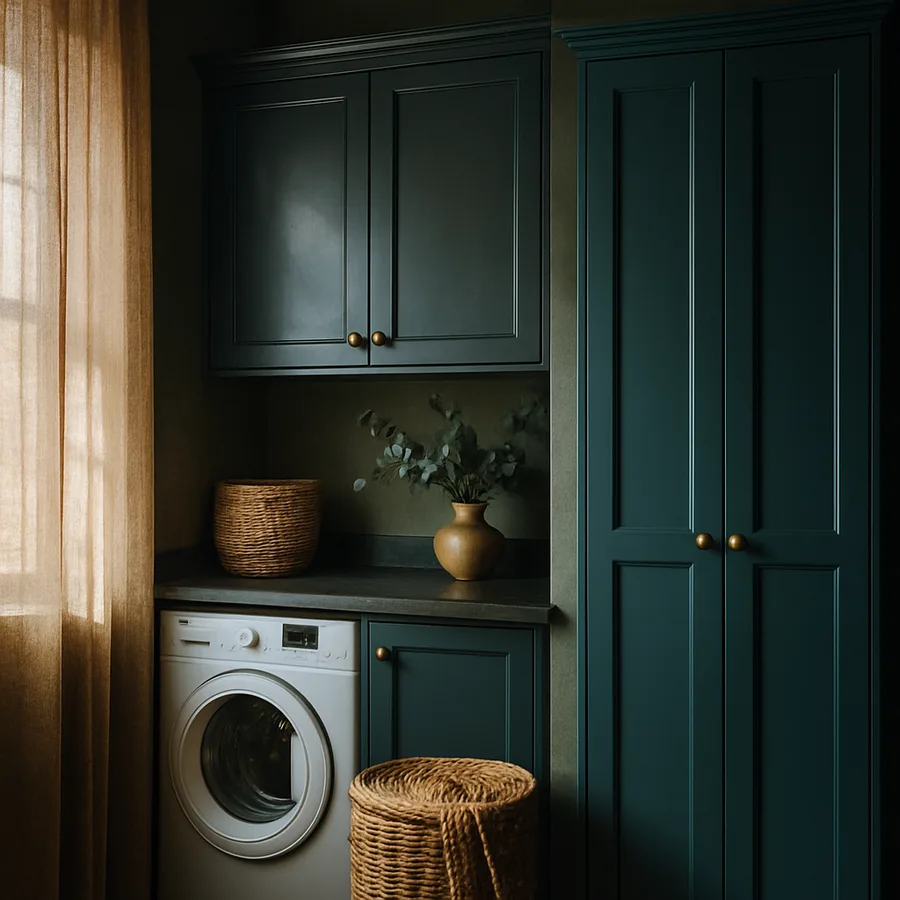
The Storage Problem Every Laundry Room Faces
Laundry rooms accumulate more supplies and equipment than most homeowners anticipate when they first design or remodel the space. Detergent bottles, fabric softener, stain removers, dryer sheets, cleaning sprays, ironing supplies, extra hangers, seasonal storage, and overflow household items all compete for limited room. Without adequate cabinetry, these items end up on top of machines, stacked on open shelves, or shoved into corners where they create visual clutter and functional chaos.
The choice between upper wall cabinets and full-height floor-to-ceiling cabinets defines the storage capacity, accessibility, and overall design character of the room. Each option serves different room layouts, budgets, and usage patterns. Understanding the strengths and trade-offs of both approaches prevents the common mistake of installing cabinets that look attractive but fail to solve the actual storage needs of the household.
According to the National Kitchen and Bath Association (NKBA), storage capacity is the number one complaint homeowners have about their existing laundry rooms, surpassing concerns about room size, lighting, and machine quality. That statistic underscores how important it is to get the cabinet decision right from the start. Replacing cabinets later is expensive, disruptive, and avoidable with proper planning.
This comparison examines both cabinet types across six dimensions that matter most: storage volume, accessibility, room compatibility, cost, installation complexity, and design impact. By the end, you will have a clear framework for deciding which approach, or which combination, works best for your specific laundry room.
Upper Wall Cabinets: Strengths and Limitations
Upper wall cabinets mount to the wall above the washer, dryer, folding counter, or open floor space. They typically measure 12 to 15 inches deep and 30 to 42 inches tall, with widths ranging from 12 to 36 inches per unit. Their primary advantage is that they leave the lower portion of the wall open for machines, countertops, hanging rods, or standing workspace. In rooms where floor area is limited, uppers provide storage without consuming any footprint at ground level.
Accessibility is straightforward for items stored at eye level and just above. The bottom shelf of a well-positioned upper cabinet sits approximately 54 inches from the floor, within easy reach for most adults. However, the top shelf can reach 84 inches or higher, making it impractical for frequently used items unless the homeowner uses a step stool. This accessibility gradient means uppers work best when organized strategically: daily-use items at the bottom, seldom-used items at the top.
Upper cabinets create a sense of openness in the laundry room because they do not fully enclose the walls. The gap between the counter surface and the cabinet bottom provides visual breathing room and allows natural or artificial light to spread across the work area. Designers at the American Society of Interior Designers (ASID) frequently recommend uppers in smaller laundry rooms precisely because full-height cabinets can make a compact space feel enclosed and cave-like.
The limitation of upper cabinets is raw storage volume. A standard 36-inch-wide upper cabinet with two shelves holds roughly 8 to 10 cubic feet of storage. Compare that to a full-height cabinet of the same width, which delivers 20 to 24 cubic feet. For households with extensive cleaning supply inventories, multiple laundry products, or overflow pantry storage needs, uppers alone may not provide enough capacity without supplementing with other solutions.
Full-Height Cabinets: Strengths and Limitations
Full-height cabinets, sometimes called pantry cabinets or tall cabinets, extend from floor to ceiling, typically 84 to 96 inches tall. They measure 18 to 24 inches deep and come in widths from 12 to 36 inches. A single full-height cabinet delivers more than double the storage volume of an upper cabinet of equivalent width. For laundry rooms that also serve as utility closets, cleaning supply depots, or household storage hubs, this volume is difficult to replicate with any other approach.
The interior layout options for full-height cabinets are remarkably versatile. Adjustable shelves accommodate items of different heights. Pull-out drawers at the base eliminate the need to crouch and rummage. Built-in hamper compartments with tilt-out fronts hide dirty laundry behind a closed door. A narrow full-height cabinet with an interior rod becomes a dedicated space for hanging garments fresh from the dryer. This configurability makes tall cabinets feel custom even when purchased as standard stock sizes.
The primary trade-off is floor space consumption. A 24-inch-deep full-height cabinet consumes two feet of floor area along whatever wall it occupies. In a laundry room that measures only 48 inches wide, placing a full-height cabinet on the side wall opposite the machines reduces the aisle to 24 inches, which is below the minimum 36-inch width recommended for comfortable movement. Have you measured your laundry room aisle width after accounting for open machine doors? That measurement determines whether full-height cabinets are viable.
Cost is higher for full-height units, both for the cabinets themselves and for installation. A stock full-height cabinet from a home improvement retailer runs $300 to $600 per unit, compared to $100 to $250 for a comparable upper cabinet. Installation requires precise leveling across the full vertical span, shimming for out-of-plumb walls, and secure anchoring into studs at multiple heights. The weight of a loaded tall cabinet demands robust wall connections that upper cabinets, being lighter and shorter, do not require to the same degree.
Room Layout Scenarios: Which Type Fits Where
In a single-wall laundry room where the washer, dryer, and all storage share one wall, upper cabinets are the natural choice. They mount above the machines and a folding countertop without interfering with the appliance footprint. Full-height cabinets would require a second wall or the elimination of one machine, neither of which is practical. This layout is common in apartments, condominiums, and homes where the laundry area is carved from a hallway or former closet.
An L-shaped laundry room offers the best of both worlds. Machines and a countertop occupy one wall with upper cabinets above, while full-height cabinets line the perpendicular wall. This configuration maximizes storage while maintaining clear floor space in the center of the room. The NKBA identifies the L-shaped layout as the most efficient configuration for laundry rooms between 50 and 80 square feet, balancing workflow, storage, and movement space.
A galley-style laundry room with machines on one wall and the opposite wall open for cabinetry can accommodate full-height cabinets only if the room is at least 66 inches wide. Machines project 28 to 30 inches from the wall, and a full-height cabinet at 24 inches deep leaves an aisle of 12 to 18 inches, which is far too narrow. Reducing cabinet depth to 12 or 15 inches with upper cabinets on the opposite wall solves this problem while still providing meaningful storage.
For dedicated laundry rooms of 70 square feet or more, a combination approach delivers maximum versatility. Place upper cabinets above the work zone for frequently accessed items like detergent and stain removers, and install one or two full-height cabinets at the end of the room or flanking the doorway for bulk storage, cleaning equipment, and seldom-used supplies. This hybrid strategy appears in the majority of designer-specified laundry rooms featured on Houzz and similar platforms.
Cost Comparison and Budget Planning
Budget-conscious homeowners often default to upper cabinets because the per-unit cost is lower. Stock upper cabinets from major retailers range from $80 to $250 per cabinet, depending on material, finish, and size. A typical laundry room requires two to three upper cabinets, bringing the total cabinet cost to $240 to $750 before installation. Hardware, mounting screws, and finishing touches add another $50 to $100.
Full-height cabinets cost more per unit and per cubic foot of storage. A single stock pantry cabinet runs $300 to $600, and most laundry rooms benefit from one or two units. Semi-custom and custom full-height cabinets, which allow specification of interior configurations like pull-out hampers and adjustable shelving, start at $800 per unit and can exceed $1,500 for premium finishes. The National Association of Home Builders (NAHB) estimates that cabinetry accounts for 30 to 40 percent of total laundry room remodel costs.
Installation labor adds another layer to the budget comparison. Upper cabinets are lighter, faster to mount, and require less structural reinforcement. A skilled installer can hang three upper cabinets in two to three hours. Full-height cabinets take longer to position, level, and secure, particularly if the floor is uneven or the walls are out of plumb. Expect four to six hours of installation labor per pair of tall cabinets, which translates to $200 to $400 more in labor costs than an equivalent upper cabinet project.
The cost-per-cubic-foot metric reveals an interesting finding. Despite higher unit prices, full-height cabinets deliver storage at roughly $25 to $30 per cubic foot, while upper cabinets come in at $30 to $40 per cubic foot. If raw storage capacity is the priority and room dimensions allow, full-height cabinets are actually the more economical choice on a volume basis. The premium pricing reflects the additional material, not inefficiency.
Design and Aesthetic Considerations
Upper cabinets contribute to a lighter, more open visual composition in the laundry room. The visible wall space between the countertop and the cabinets can be finished with tile, beadboard, or painted surfaces that add color and texture to the room. This exposed zone also provides space for task lighting, decorative elements, or a window that brings natural light into what is often an interior room. From a design perspective, uppers allow the room to breathe.
Full-height cabinets create a more formal, furniture-like presence. When finished with raised-panel doors, crown molding, and matching hardware, they can make a laundry room feel like an extension of the kitchen or a built-in mudroom. The continuous vertical surface from floor to ceiling reads as intentional architecture rather than ad hoc storage, which appeals to homeowners who want their laundry room to reflect the same design standards as the rest of the home.
Color and material choices interact differently with each cabinet type. Upper cabinets in a dark finish can feel heavy and oppressive in a small room, making white or light gray the safer choice for most installations. Full-height cabinets handle darker finishes more gracefully because the continuous surface from floor to ceiling reads as a single design element rather than a floating mass. The International Interior Design Association (IIDA) notes that two-tone cabinet schemes, with different colors for uppers and lowers or for full-height units and wall cabinets, are increasingly popular in utility spaces.
How important is the visual impression of your laundry room to your overall home design? If the room is visible from a hallway or adjacent living space, the aesthetic impact of your cabinet choice extends beyond the laundry room itself. Full-height cabinets with closed doors present a clean, uncluttered facade when glimpsed in passing, while upper cabinets with glass inserts or open shelving can display neatly organized supplies as a design feature.
Conclusion: Matching Cabinet Type to Your Specific Needs
The choice between upper and full-height cabinets is not about which type is objectively better. It is about which type, or combination, aligns with your room dimensions, storage requirements, budget, and design preferences. Upper cabinets excel in compact spaces, single-wall layouts, and rooms where preserving openness matters. Full-height cabinets dominate in larger rooms where maximum storage volume and interior configurability are the priorities.
Most well-designed laundry rooms use both types in complementary roles. Uppers handle daily-access items above the work zone, while one or two full-height units absorb bulk storage, cleaning equipment, and overflow household goods. This combination approach is more versatile than committing entirely to one type and adapts more gracefully as your storage needs change over time.
Before purchasing any cabinets, measure your room carefully and create a scaled floor plan that accounts for machine locations, door swings, aisle widths, and plumbing access points. Tape the cabinet outlines on the walls using painter's tape to visualize how each option occupies the space. This low-tech simulation reveals clearance problems and proportion issues that measurements alone can miss.
Start your cabinet plan now: sketch your laundry room dimensions, list everything you need to store, and visit a cabinet showroom to see both upper and full-height options in person. Touching the hardware, testing the drawer slides, and standing next to a full-height unit will give you confidence in the choice that measurements on paper cannot provide.
More Articles You May Like



Comments
Post a Comment