Japandi Bathroom Vanities: Minimal Wood and Stone Combinations
The Philosophy Behind Japandi Vanity Design
Japandi design sits at the intersection of two cultures that share a deep respect for natural materials, functional simplicity, and quiet beauty. Japanese wabi-sabi embraces imperfection and the passage of time, while Scandinavian hygge prioritizes warmth, comfort, and human-centered spaces. When these philosophies converge in a bathroom vanity, the result is a piece that feels both serene and substantial -- stripped of unnecessary ornamentation but rich in material quality. Every joint, every grain line, every stone vein becomes a deliberate design element rather than a surface to be hidden.
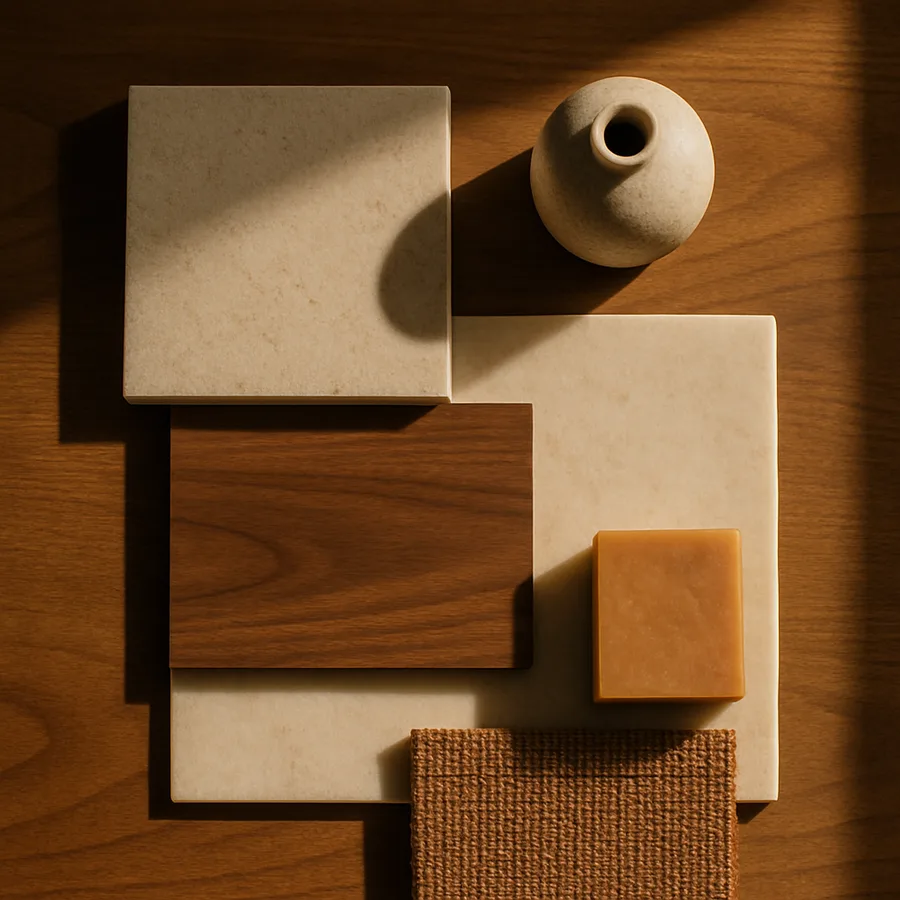
The bathroom vanity is an ideal testing ground for Japandi principles because it demands the marriage of two primary natural materials: wood and stone. Unlike a kitchen where cabinetry and countertops serve primarily utilitarian purposes, a bathroom vanity occupies a more contemplative role. It is where you begin and end each day, and its material character sets the tone for those moments. The Japandi approach insists that these materials speak honestly -- that the oak looks like oak, the stone reads as stone, and neither is forced into an unnatural form or finish.
The American Society of Interior Designers (ASID) identified Japandi as one of the most enduring cross-cultural design movements in its annual outlook, noting that its appeal stems from a shared value system rather than a superficial aesthetic trend. This philosophical grounding is precisely what gives Japandi vanities their staying power. They are not defined by a particular color or shape that will feel dated in five years, but by a commitment to materiality and proportion that transcends seasonal fashion. The question is not whether Japandi will remain relevant, but how to execute it with the authenticity it demands.
Understanding this philosophy is essential before selecting materials, because it prevents the common mistake of simply combining any light wood with any natural stone and calling it Japandi. True Japandi design requires intentionality in every choice -- the wood species must complement the stone's character, the proportions must feel balanced rather than heavy, and the hardware (if any) must disappear into the composition rather than announcing itself. This discipline is what separates a genuinely Japandi vanity from a generic modern one with natural materials.
Wood Species That Define the Japandi Aesthetic
Not every wood species suits the Japandi sensibility, and the selection process begins with understanding what each timber brings to the composition. White oak is the workhorse of Japandi vanity design, valued for its tight, straight grain and its ability to accept light washes and natural oil finishes that preserve its inherent warmth. Japanese craftsmen have long favored oak for its workability and strength, while Scandinavian furniture makers prize it for the same reasons. This shared heritage makes white oak a culturally authentic choice that bridges both design traditions.
Japanese hinoki cypress occupies a revered place in traditional Japanese woodworking and brings a distinctly Eastern character to a Japandi vanity. Its pale, almost creamy color and fine, uniform grain create a clean backdrop that lets stone elements take center stage. Hinoki also has natural antimicrobial properties and a subtle, pleasant fragrance that makes it particularly well-suited for bathroom environments. However, it is softer than oak and requires more attentive sealing in wet areas, making it better suited for vanity cabinets that sit above the splash zone rather than directly adjacent to the sink.
Ash and maple offer lighter alternatives that lean more toward the Scandinavian side of the Japandi spectrum. Both have a pale, almost blonde quality that brightens a bathroom while maintaining the natural warmth that distinguishes Japandi from cold minimalism. Ash has a more visible grain pattern that adds subtle movement to flat cabinet surfaces, while maple is tighter and more uniform. For a darker interpretation, black walnut provides a Japanese shibui quality -- a term describing understated elegance and quiet depth. Walnut Japandi vanities feel more grounded and serious, better suited to moody, intimate bathrooms with low lighting and deep stone tones.
Regardless of species, the finish is paramount. High-gloss lacquers and thick polyurethane coatings have no place in Japandi design, as they obscure the very texture and character that justify using real wood. Hardwax oils, such as those produced by Rubio Monocoat and Osmo, are the preferred finish among Japandi-focused designers. These penetrating finishes protect the wood from moisture while allowing the grain to remain visible and the surface to retain its natural tactile quality. The wood should feel like wood when you touch it, not like plastic. According to a survey by Houzz, natural oil finishes have become the most requested wood treatment in bathroom renovations oriented toward organic and minimalist styles.
Stone Selections: From Countertops to Integrated Basins
The stone component of a Japandi vanity serves as the visual and functional counterpoint to the wood, and the interplay between these two materials is where the design lives or dies. Natural stone is always preferred over engineered alternatives in authentic Japandi design, because the irregular veining, subtle color variations, and unique surface textures of real stone embody the wabi-sabi appreciation for imperfection. Each slab is one of a kind, and that singularity is central to the philosophy.
Honed marble -- particularly Carrara and Calacatta -- brings a softness that pairs beautifully with light wood species. The honed finish eliminates the reflective sheen of polished marble, creating a matte surface that feels more natural and less formal. This finish also hides water spots and minor etching better than polished surfaces, a practical consideration in a bathroom. However, marble requires regular sealing and care, and homeowners must accept that it will develop a patina over time. In the Japandi context, this patina is not a flaw but a feature -- the stone tells the story of its use, gaining character with every passing month.
For a more rugged, earthbound aesthetic, consider limestone, basalt, or river stone. These materials introduce a textural contrast to smooth wood surfaces that feels deeply grounded. Basalt, with its dark gray-to-black coloring and fine grain, creates a striking pairing with pale oak or ash. Limestone in warm beige or cool gray tones provides a quieter complement that does not compete with the wood for attention. The Natural Stone Institute reports that honed and leathered stone finishes now account for over 40 percent of residential bathroom installations, reflecting the broader shift toward tactile, matte surfaces that Japandi design champions.
Integrated stone basins -- where the sink is carved directly from a single block of stone -- represent the highest expression of this material in a Japandi vanity. A vessel basin carved from river stone or a shallow trough cut into a marble countertop eliminates the visual interruption of a separate sink and creates a monolithic, sculptural presence. These pieces are expensive and heavy, requiring reinforced cabinet construction, but their visual impact is unmatched. For those working within tighter budgets, a simple round vessel basin in honed stone sitting atop a wooden vanity top achieves a similar aesthetic at a more accessible price point. What type of stone speaks to your personal sense of quiet beauty?
Proportions, Hardware, and the Art of Restraint
Japandi design is governed by proportion more than any other single principle, and nowhere is this more apparent than in vanity design. The vanity should feel appropriately scaled to its bathroom -- neither so large that it dominates the room nor so small that it reads as an afterthought. A common mistake is choosing a vanity that is too deep from front to back, which makes it feel heavy and intrusive. Japandi vanities typically favor shallower depths, often in the range of 18 to 20 inches rather than the standard 22 to 24, creating a lighter profile that leaves more open floor space visible. This openness is essential to the aesthetic.
Floating or wall-mounted installation is nearly universal in Japandi bathroom design. Lifting the vanity off the floor by eight to twelve inches creates a visual gap that makes the piece feel lighter and allows the floor plane to flow uninterrupted beneath it. This floating effect also makes the bathroom easier to clean and prevents the water damage that can occur where a floor-standing cabinet meets tile. The mounting hardware must be engineered to support the combined weight of the wood cabinet, stone countertop, and water-filled basin, so proper wall blocking during construction is non-negotiable.
Hardware -- or the deliberate absence of it -- defines the Japandi vanity's character. The purest expressions use push-to-open mechanisms or routed finger pulls integrated into the cabinet faces, eliminating visible hardware entirely. When pulls or knobs are used, they should be minimal in scale and honest in material: blackened steel, brushed brass, or raw bronze in simple bar or D-ring profiles. Ornate, decorative hardware violates the Japandi principle of restraint, as does hardware that draws attention to itself. The goal is for the eye to move across the vanity and register only wood, stone, and space, not the mechanics of opening a drawer.
The National Kitchen and Bath Association (NKBA) has observed that concealed hardware and integrated pulls are among the top three requested features in bathroom vanity specifications, a trend that aligns perfectly with Japandi values. Drawer interiors deserve the same attention as exterior surfaces -- unfinished plywood or particleboard drawer boxes undermine the sense of quality that defines the style. Solid wood or bamboo drawer boxes with dovetail joinery maintain the craftsmanship ethos inside and out. Every detail that a user touches or sees, even briefly, should reflect the same level of care.
Creating a Cohesive Japandi Bathroom Around the Vanity
A Japandi vanity cannot exist in isolation; the surrounding bathroom must support and extend the same material language and spatial philosophy. Wall treatments should be simple and tactile -- limewash paint, microcement, or large-format natural stone tiles with minimal grout lines. Busy patterns, mosaic tiles, and high-contrast color blocking work against the calm, unified atmosphere that Japandi demands. If you use tile, choose matte or textured finishes in earth tones that echo the stone in your vanity countertop, creating a material through-line that ties the room together.
Flooring should feel continuous and grounding. Large-format porcelain tiles that mimic natural stone, poured concrete, or actual stone slabs create an uninterrupted base that makes the floating vanity appear to hover above a solid, earthy foundation. Heated floors add a layer of Scandinavian hygge comfort that is deeply appreciated in bathroom spaces, particularly during colder months. The transition between the floor material and the wall material should be clean and minimal, with slim baseboards or shadow gaps rather than ornate molding profiles.
Mirrors and lighting complete the composition. A single round mirror with a thin black or natural wood frame is the quintessential Japandi choice, though frameless mirrors with softened edges also work well. The mirror should be generously sized relative to the vanity width but not so large that it overwhelms the wall. Lighting should be warm, diffused, and positioned to illuminate the face evenly without creating harsh shadows. Wall-mounted sconces in materials that complement the vanity hardware -- blackened steel, brushed brass -- provide functional light while maintaining the spare aesthetic. How does the lighting in your current bathroom affect the mood of the space?
Accessories and styling should follow the "less but better" principle that both Japanese and Scandinavian design share. A single ceramic soap dish, a wooden tray holding one or two essential items, and a small potted plant or a branch in a stoneware vase are sufficient. Every object on the vanity surface should earn its place through daily utility or genuine beauty -- preferably both. Clutter is the enemy of Japandi design, and a well-planned vanity with adequate interior storage makes it possible to keep the countertop clear and serene. The Architectural Digest editorial team has consistently emphasized that the power of Japandi bathrooms lies in what is removed, not what is added.
Sourcing, Budget Considerations, and Custom vs. Ready-Made
The market for Japandi-style bathroom vanities has expanded significantly, offering options at nearly every price point. At the entry level, brands like IKEA offer simple oak-veneer floating vanities that capture the proportions and material feel of Japandi design at accessible prices. These mass-produced pieces lack the bespoke craftsmanship of custom work, but when paired with an independently sourced stone countertop or vessel basin, they can approximate the aesthetic convincingly. The key is upgrading the finish -- sanding away any factory lacquer and applying a hardwax oil transforms the surface quality dramatically.
Mid-range options from companies specializing in modern bathroom furniture provide better material quality and more design flexibility. Brands such as Ethnicraft, which produces solid oak furniture using traditional joinery, offer vanity-appropriate pieces that embody Japandi craftsmanship values. At this level, you can expect solid wood construction, dovetailed drawers, and finishes that do justice to the material. Stone countertops and basins purchased separately from stone fabricators allow you to customize the material pairing to your specific taste and bathroom context.
Custom vanity work from a skilled cabinetmaker or furniture maker represents the highest tier and delivers the most authentic Japandi result. A custom piece can be sized precisely to your bathroom, constructed from your chosen wood species, and finished to your exact specifications. The cost is significantly higher -- typically three to five times the price of a comparable ready-made unit -- but the result is a piece of furniture rather than a cabinet. For homeowners who view their bathroom vanity as a long-term investment in daily quality of life, custom work is often worth the premium. The Architectural Woodwork Institute (AWI) maintains a directory of certified custom woodworkers who specialize in residential cabinetry and furniture.
Budget allocation matters as much as total spend. If your overall bathroom renovation budget is limited, it is better to invest heavily in the vanity and stone while keeping wall treatments and fixtures simple than to spread the budget evenly across every element. The vanity is the centerpiece that carries the design, and compromising on its quality undermines the entire Japandi vision. A beautiful solid oak vanity with a honed marble countertop will anchor a bathroom even if the surrounding walls are simply painted and the floor is basic porcelain tile. Prioritize the pieces you touch and see most closely, and let the background elements recede into quiet simplicity.
A Vanity That Grows More Beautiful With Time
The deepest appeal of a Japandi bathroom vanity lies in its relationship with time. Unlike trendy bathroom finishes that look best on installation day and gradually decline, a well-made wood and stone vanity develops character as it ages. The wood develops a richer patina as its oils oxidize and the grain deepens. The stone records the soft erosion of daily use, its edges smoothing imperceptibly. These changes are not signs of deterioration -- they are evidence of a life lived, markers of the wabi-sabi impermanence that gives Japandi design its emotional depth.
Choosing a Japandi vanity is choosing to participate in a design philosophy that values authenticity over novelty. It means accepting that your bathroom will not look like a magazine photograph forever, and finding beauty in that evolution. It means selecting materials for their inherent qualities rather than their ability to mimic something else. And it means committing to the discipline of restraint, allowing each material to be fully itself without competition or distraction.
As you plan your Japandi bathroom vanity, return repeatedly to the core question: does this choice serve simplicity, warmth, and natural beauty? If a material, a finish, a piece of hardware, or an accessory does not clearly serve one of those values, it does not belong. This editorial discipline is what transforms a bathroom from a utilitarian space into a daily sanctuary, and it is the gift that Japandi design offers to anyone willing to embrace its quiet, generous principles.
Begin your Japandi vanity journey by visiting a stone yard to select your countertop slab in person -- the character of the stone you choose will guide every other material decision in the room.
More Articles You May Like



Comments
Post a Comment