Stone Vessel Sinks for Powder Rooms: Styles and Maintenance
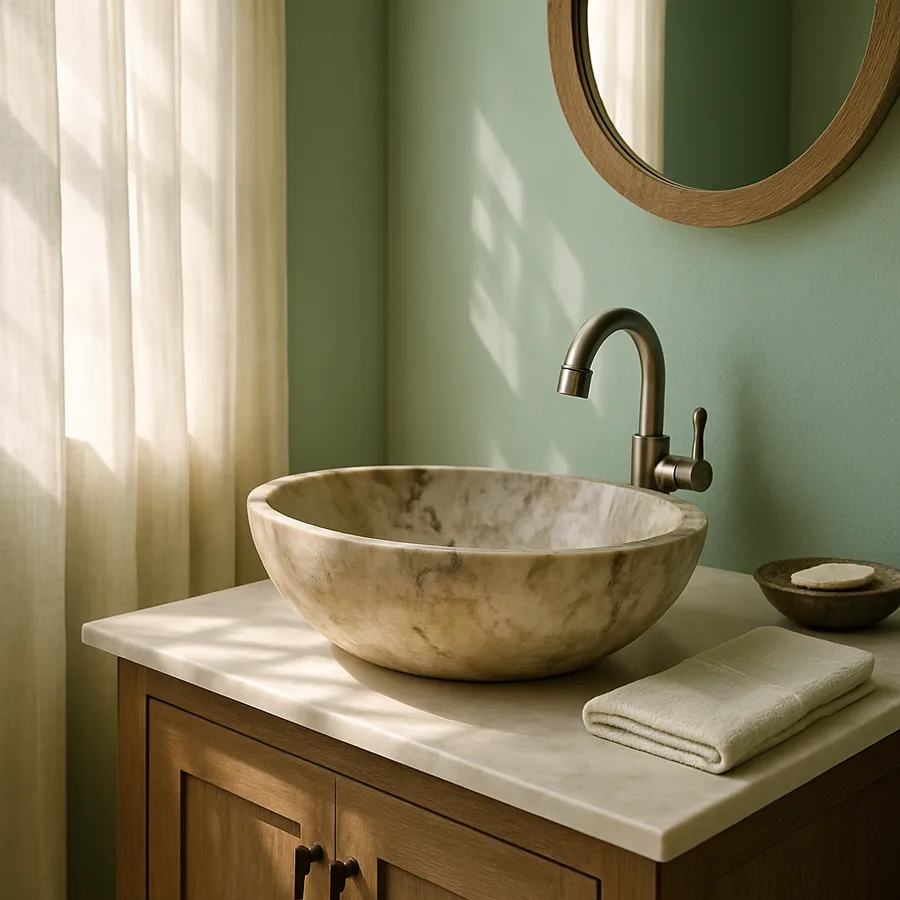
The Appeal of Stone Vessel Sinks in Small Spaces
A powder room is one of the smallest rooms in a home, yet it offers one of the greatest opportunities for bold design choices. Because powder rooms serve guests rather than the household's daily routines, they invite a level of drama and material extravagance that would be impractical in a primary bathroom. A stone vessel sink transforms this compact space into a memorable design moment, turning a purely functional fixture into a sculptural centerpiece that guests notice and remember.
Vessel sinks sit on top of the vanity counter rather than being recessed into it, which immediately gives them a more prominent visual presence than undermount or drop-in alternatives. When that vessel is carved from natural stone, the effect is amplified by the material's inherent weight, texture, and geological character. Each stone vessel sink is unique because the veining, color variation, and surface patterns are determined by millions of years of mineral formation. No two pieces are identical, which gives your powder room a one-of-a-kind quality that manufactured fixtures cannot achieve.
The National Kitchen and Bath Association (NKBA) reports that vessel sinks remain among the top three most specified fixture styles for powder room renovations, with natural stone commanding the highest interest among premium options. This sustained popularity reflects both the visual impact of stone vessels and the practical reality that powder rooms receive relatively light use compared to family bathrooms. A material that might be high-maintenance in a daily-use setting becomes entirely manageable in a room used a few times per day by guests.
Scale is an important consideration when selecting a stone vessel sink for a powder room. These sinks add height to the vanity setup because the bowl sits above the counter surface, which means the vanity itself should be lower than standard height to maintain a comfortable hand-washing position. Most designers recommend a vanity height of 30 to 32 inches when pairing it with a vessel sink, compared to the standard 34 to 36 inches for undermount installations. Getting this proportion right ensures the finished fixture feels inviting rather than awkward.
Marble Vessel Sinks: Timeless Sophistication
Marble is the most popular stone choice for vessel sinks, and for good reason. Its luminous surface quality, dramatic veining, and cultural associations with classical architecture and fine art make it an inherently luxurious material. A Carrara marble vessel sink with its characteristic gray veining on a white ground brings instant refinement to a powder room. Calacatta marble, with bolder and more golden veining, creates an even more dramatic statement for those who want their sink to command attention.
The variety of marble types available for vessel sinks extends well beyond the Italian classics. Nero Marquina from Spain offers striking white veins against a jet-black ground, creating a sophisticated contrast that works beautifully with brass or gold hardware. Green marble varieties like Verde Guatemala introduce an unexpected color that pairs well with warm wood vanities and botanical-themed powder rooms. Each marble type brings its own personality, allowing you to match the stone to the broader design language of your home.
Marble vessel sinks are available in shapes ranging from simple round bowls to rectangular troughs and organic freeform designs. Round and oval shapes tend to feel more traditional, while rectangular vessels with sharp edges project a contemporary sensibility. Some artisan fabricators carve marble vessels with intentionally rough, chiseled exteriors and smooth polished interiors, creating a contrast between raw geological texture and refined craftsmanship. This approach highlights the dual nature of marble as both a natural material and a medium for human artistry.
The primary concern with marble vessel sinks is the material's porosity and susceptibility to etching. Marble is a calcium-based stone that reacts with acidic substances, including many common household products. Lemon juice, vinegar, and even some hand soaps can leave dull marks called etch marks on a polished marble surface. In a powder room where guests are primarily washing their hands, this exposure is minimal compared to a kitchen, but selecting a pH-neutral hand soap for the powder room is a simple precaution that protects your investment.
Granite, Basalt, and River Stone Alternatives
For homeowners who love the look of stone but want greater resistance to staining and etching, granite vessel sinks offer an excellent alternative. Granite is an igneous rock that is significantly harder and less porous than marble, making it more forgiving of acidic contact and less prone to absorbing spills. Black granite vessels create a sleek, modern look, while speckled varieties like Baltic Brown or Santa Cecilia add warmth and visual complexity. The durability advantage of granite is considerable for anyone who prefers a lower-maintenance approach to natural stone.
Basalt, a dense volcanic stone, has emerged as a favorite among contemporary designers for its matte texture and deep charcoal coloring. A basalt vessel sink with a honed or natural-cleft finish feels primordial and sculptural, making it a striking choice for minimalist or Japanese-inspired powder rooms. The material's density makes it exceptionally resistant to scratching and staining, though its weight requires careful attention to vanity construction and wall mounting to ensure adequate support. According to the Marble Institute of America, basalt rates a seven on the Mohs hardness scale, compared to three to four for marble.
River stone vessel sinks represent the most organic option in this category. These sinks are carved from large cobblestones collected from riverbeds, retaining the stone's natural exterior shape while hollowing and polishing the interior bowl. The result is a sink that looks like a found object from nature, complete with the rounded, water-worn exterior that only decades of river tumbling can produce. Each river stone vessel is dramatically unique in size, shape, and coloring, which makes them conversation pieces in any powder room.
Have you considered how the stone type affects the overall mood of your powder room? Polished marble creates a refined, almost spa-like atmosphere. Rough-hewn granite conveys rugged permanence. River stone suggests organic, nature-connected design. Basalt communicates contemporary sophistication. The stone you choose does more than fill a functional need; it establishes the emotional register of the entire room. Taking time to visit stone yards or showrooms where you can see and touch these materials in person is invaluable for making a confident selection.
Installation Considerations and Plumbing Requirements
Installing a stone vessel sink differs from standard sink installation in several important ways. The most critical is weight management. A marble vessel sink can weigh between 30 and 80 pounds depending on size and stone thickness, which means the vanity and its mounting system must be engineered to support this load safely. Wall-mounted floating vanities, while aesthetically appealing, require robust blocking within the wall framing and heavy-duty mounting brackets when paired with stone vessels.
The drain configuration for vessel sinks is unique because the drain hole sits at the bottom of a bowl that rests above the counter surface. This requires a vessel sink drain assembly that is taller than a standard pop-up drain, extending through both the vessel bottom and the counter surface to connect with the P-trap below. Most stone vessel sinks are pre-drilled with a standard 1.75-inch drain opening, but confirming this measurement before purchasing your drain hardware prevents frustrating incompatibilities during installation.
Faucet selection and placement require special attention with vessel sinks. Because the bowl sits above the counter, the faucet must be tall enough for the spout to clear the vessel rim comfortably. Wall-mounted faucets are an elegant solution that avoids height concerns entirely while keeping the counter surface uncluttered. Counter-mounted vessel faucets, which are specifically designed with extended height, are the alternative for situations where wall plumbing is impractical. The National Kitchen and Bath Association recommends that the faucet spout extend at least six inches above the vessel rim to prevent splashing during hand washing.
Waterproofing the junction between the vessel and the counter surface is a step that some installers overlook with costly consequences. A bead of clear silicone sealant around the base of the vessel prevents water from seeping beneath the sink and damaging the vanity surface or cabinet interior. This seal should be inspected annually and refreshed if it shows signs of deterioration. For stone vessel sinks specifically, use a silicone product rated for natural stone to avoid discoloration or chemical interaction with the stone's mineral composition.
Daily Care and Long-Term Maintenance Protocols
Maintaining a stone vessel sink in pristine condition requires understanding the specific needs of your stone type and committing to a simple but consistent care routine. The most important daily practice is wiping the sink dry after each use. Standing water leaves mineral deposits that accumulate over time, creating white spots and rings that dull the stone's natural beauty. A small hand towel kept near the sink makes this habit easy for both household members and guests to follow.
Cleaning products matter enormously for natural stone. Conventional bathroom cleaners containing bleach, ammonia, or acidic ingredients will damage most stone surfaces. The Houzz cleaning guides recommend using only pH-neutral cleaners specifically formulated for natural stone, such as those manufactured by StoneTech or Granite Gold. A few drops of mild dish soap in warm water also works well for routine cleaning. The key is consistency: wiping down the vessel two to three times per week prevents buildup that requires more aggressive intervention later.
Sealing is the most important long-term maintenance task for any natural stone vessel sink. A quality penetrating stone sealer fills the microscopic pores in the stone's surface, reducing its ability to absorb liquids and stains. Most stone professionals recommend sealing a new vessel sink immediately after installation, then resealing every six to twelve months depending on use intensity and stone porosity. Marble and limestone require more frequent sealing than granite or basalt due to their greater porosity. Testing whether your seal is still effective is simple: sprinkle a few drops of water on the stone surface. If the water beads up, the seal is intact. If it absorbs into the stone, it is time to reseal.
What should you do if your stone vessel sink develops a stain despite your preventive efforts? For organic stains like coffee or makeup, a poultice made from baking soda and water applied to the stain and covered with plastic wrap for 24 to 48 hours often draws the stain out of the stone. For oil-based stains, a poultice using baking soda and acetone is more effective. The Natural Stone Institute maintains detailed stain removal guides for every major stone type on their website, which are an invaluable resource for homeowners dealing with specific staining situations.
Pairing Stone Vessels with Complementary Powder Room Elements
A stone vessel sink should be the starting point for your powder room design, not an afterthought. The stone's color, texture, and finish should inform your choices for the vanity, faucet, mirror, lighting, and wall treatment. A Carrara marble vessel pairs naturally with a clean white vanity and polished chrome or nickel hardware for a classic look, or with a dark walnut vanity and unlacquered brass hardware for a warmer, more layered aesthetic. The stone's veining pattern can even guide your selection of complementary materials elsewhere in the room.
Wall treatments in stone vessel powder rooms should complement rather than compete with the sink. If your vessel is highly figured marble with dramatic veining, keep the walls simple with paint or subtle texture. If your vessel is a more restrained granite or basalt, the walls can handle bolder treatments like hand-applied plaster, textured wallpaper, or even a complementary stone accent wall. The principle is balance: one dominant material anchors the room while supporting elements provide context without visual competition.
Lighting deserves special consideration because it dramatically affects how stone reads in a small space. Downlighting from recessed ceiling fixtures can create harsh shadows inside the vessel bowl, while side-mounted sconces provide more flattering, even illumination that highlights the stone's surface qualities. Architectural Digest frequently showcases powder rooms where strategic lighting transforms a stone vessel from a simple sink into a glowing sculptural element. Consider a dimmer switch to allow adjustable ambiance that showcases your stone differently at various times of day.
Mirror selection completes the powder room composition. An oversized mirror above a stone vessel sink amplifies the room's perceived size while reflecting the stone's beauty from multiple angles. Alternatively, a smaller decorative mirror creates a more intimate, jewelry-box feel that concentrates attention on the sink below. The frame material should relate to your faucet finish for visual coherence: brass mirror frames with brass faucets, matte black frames with black fixtures, and so on. These coordinated details create the sense of intentional design that transforms a small powder room into a genuinely memorable space.
Conclusion: Investing in a Stone Statement Piece
A stone vessel sink is more than a plumbing fixture. It is a geological artifact, a piece of sculptural art, and a functional element that anchors the most compact yet expressive room in your home. The investment in quality stone and proper installation pays dividends every time a guest steps into your powder room and pauses to admire the material's natural beauty. Few design choices deliver this kind of impact per square foot, which is why stone vessels remain a favorite among designers and homeowners who understand the power of well-chosen materials.
The maintenance requirements, while real, are modest for a powder room application where the sink sees limited daily use. A commitment to pH-neutral cleaners, periodic sealing, and daily wiping is all that stands between you and a stone fixture that will look stunning for decades. The patina that develops on well-maintained stone over the years adds character and depth that new fixtures lack, making your powder room more beautiful with age rather than less.
Whether you choose the luminous sophistication of marble, the rugged permanence of granite, the contemporary edge of basalt, or the organic charm of river stone, let the material itself guide your supporting design choices. The stone has been forming for millennia before it reached your home, and giving it a setting that honors that history is the difference between a decorated room and a designed one.
Explore our curated gallery of stone vessel sink installations for inspiration, and connect with our recommended stone fabricators to begin designing the powder room centerpiece your home deserves.
More Articles You May Like



Comments
Post a Comment