Wabi-Sabi Bathroom Design: Embracing Raw Concrete and Imperfection
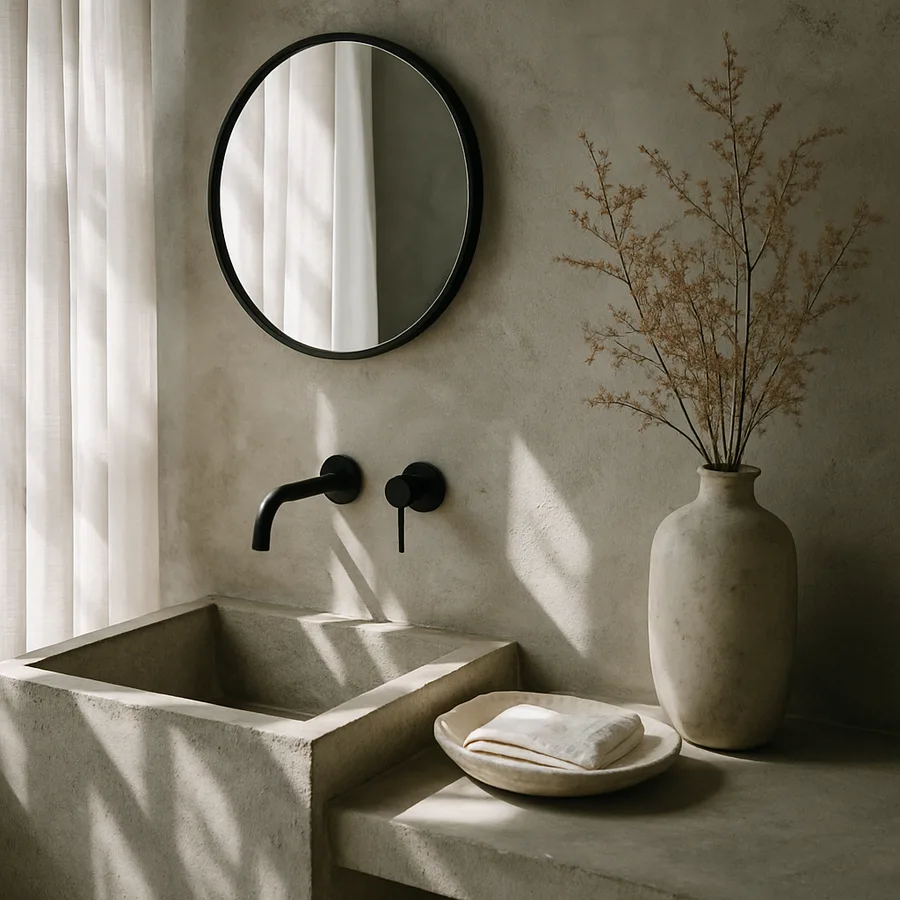
The Philosophy Behind Wabi-Sabi Interiors
Rooted in centuries of Japanese aesthetic tradition, wabi-sabi celebrates the beauty found in transience, asymmetry, and natural wear. Rather than striving for flawless surfaces and machine-perfect edges, this philosophy invites us to find peace in materials that age, patina that deepens, and forms that remain deliberately unrefined. The concept draws from Buddhist teachings on impermanence and has influenced Japanese tea ceremony architecture for over five hundred years. When applied to interior spaces, it produces rooms that feel profoundly calm and deeply human.
In the context of bathroom design, wabi-sabi challenges nearly every convention of the modern renovation playbook. Glossy porcelain, spotless chrome fixtures, and seamless glass enclosures represent the opposite of this approach. Instead, a wabi-sabi bathroom might feature a hand-shaped concrete sink with visible aggregate, a wooden stool worn smooth by years of use, or walls finished in lime plaster that develops hairline cracks over time. The American Society of Interior Designers (ASID) has noted a measurable shift in client requests toward organic and imperfect finishes, with their member surveys indicating a 34 percent increase in demand for natural material palettes since 2023.
What makes this philosophy so compelling for bathrooms specifically is the relationship between water and material. Water stains stone, softens wood, and leaves mineral traces on concrete. In a conventional bathroom, these marks are problems to solve. In a wabi-sabi bathroom, they become part of the story. Every splash, every drip, every season of humidity adds another layer of character to surfaces that were chosen precisely because they respond to their environment. This is not neglect masquerading as style; it is a conscious decision to let a room evolve.
Have you ever walked into a space and felt immediately at ease without being able to articulate why? That sensation is often the result of materials and proportions that echo the natural world rather than fighting against it. Wabi-sabi design achieves this by removing visual noise, reducing the number of competing finishes, and allowing a few honest materials to speak for themselves. The result is a bathroom that functions as a genuine retreat rather than a showroom.
Raw Concrete as a Primary Surface Material
Raw concrete has become the signature material of wabi-sabi bathrooms, and for good reason. Its mottled surface, subtle color variations, and visible pour lines create a texture that is impossible to replicate with printed tiles or engineered surfaces. Concrete is formed by a chemical process that is inherently unpredictable at the micro level, meaning no two walls or countertops will ever look identical. This built-in uniqueness aligns perfectly with the wabi-sabi rejection of mass-produced uniformity.
From a practical standpoint, concrete performs well in wet environments when properly sealed. A penetrating silane or siloxane sealer protects against moisture absorption without adding a glossy film that would undermine the material's matte, tactile quality. The Portland Cement Association recommends resealing concrete surfaces in high-moisture areas every three to five years, depending on exposure levels. This maintenance cycle is modest compared to the regrouting that conventional tile installations require over the same period.
The tonal range of concrete extends far beyond industrial gray. By adjusting the aggregate mix, adding natural pigments, or applying mineral washes, concrete can present in warm taupes, soft charcoals, pale creams, and even muted terracotta tones. A bathroom with pigmented concrete walls in a warm putty shade, paired with a poured concrete floor in a slightly darker tone, achieves a monolithic serenity that tile layouts cannot match. The absence of grout lines and seams contributes to this effect, allowing the eye to travel across surfaces without interruption.
Concrete also ages in ways that enhance rather than diminish its appearance. Efflorescence, the white mineral deposits that sometimes bloom on concrete surfaces, can add a ghostly patina that many wabi-sabi practitioners consider beautiful. Minor surface crazing creates a web of fine lines that catches light differently throughout the day. These are the marks of a living material interacting with its environment, and they represent precisely the kind of beauty that this design philosophy seeks to honor. For homeowners accustomed to chasing perfection, this shift in perspective can be genuinely liberating.
Selecting Complementary Organic Materials
While concrete provides the foundational surface, a successful wabi-sabi bathroom layers in additional natural materials that create warmth and sensory variety. Reclaimed wood is among the most effective companions to concrete, offering visual softness and a warm undertone that prevents the space from feeling cold or austere. A thick slab of salvaged timber serving as a vanity countertop, or weathered planks forming an accent wall behind a freestanding tub, introduces the grain patterns and tonal complexity that only aged wood can provide.
Natural stone, particularly varieties that have not been polished to a mirror finish, contributes another layer of organic texture. Honed travertine, tumbled limestone, and river-worn pebbles all display the kind of irregular surfaces and earthy coloring that align with wabi-sabi principles. The National Kitchen and Bath Association (NKBA) recommends specifying slip-resistant finishes for bathroom floor applications, and the naturally textured surfaces of these stones meet that requirement while also serving the aesthetic vision. A shower floor of loose river pebbles set in mortar, for example, provides both grip underfoot and a gentle foot massage.
Linen and raw cotton textiles complete the material palette. Heavyweight linen bath towels in undyed oatmeal or soft gray tones drape with a casual elegance that terry cloth cannot replicate. A linen shower curtain, left unhemmed at the bottom edge, contributes to the sense of deliberate imperfection. Even the hardware selections should follow this logic: unlacquered brass that develops a living patina, blackened iron towel bars that show the marks of the forge, or hand-thrown ceramic hooks with visible fingerprints in the glaze.
The key to combining these materials is restraint. A wabi-sabi bathroom typically limits itself to three or four primary materials and allows each one room to breathe. Overcrowding the space with too many textures, no matter how individually beautiful, creates visual clutter that undermines the calm the philosophy is meant to produce. Each material should earn its place by contributing something the others cannot, whether that is warmth, weight, softness, or luminosity.
Designing for Imperfection Without Disorder
One of the most common misunderstandings about wabi-sabi design is that it means anything goes. In reality, designing a space that looks effortlessly imperfect requires more planning and precision than a conventional approach. Every seemingly casual element, from the slightly off-center placement of a mirror to the asymmetric arrangement of open shelving, must be composed with intention. The goal is curated imperfection, not random messiness, and the distinction matters enormously.
Spatial planning in a wabi-sabi bathroom often emphasizes negative space as much as occupied space. Leaving a long stretch of wall bare, allowing a generous gap between the vanity and the adjacent wall, or positioning the tub so that it sits in a pool of open floor space creates breathing room that makes the featured materials and objects more visible and more impactful. According to a survey published by Houzz, 67 percent of homeowners who completed bathroom renovations in the past two years prioritized a sense of spaciousness over additional storage or features. This trend aligns naturally with the wabi-sabi emphasis on simplicity.
Color palettes in these bathrooms stay within a narrow band of muted, earthy tones. Think of the colors found in a dry riverbed: warm grays, sandy beiges, soft whites with yellow or pink undertones, and the deep brown-black of wet stone. Bright whites, stark blacks, and saturated accent colors are generally avoided because they create visual contrast that demands attention. The wabi-sabi palette instead creates a soft, enveloping atmosphere where individual colors blend into one another and the overall impression is one of warmth and stillness.
Lighting plays a critical supporting role. Natural light is preferred wherever possible, and many wabi-sabi bathrooms feature a single high window or a skylight that washes the concrete walls with diffused daylight. When artificial lighting is necessary, warm-toned fixtures with low color temperatures, around 2200 to 2700 Kelvin, preserve the earthy atmosphere. Exposed filament bulbs or shielded sconces that cast light indirectly prevent the harsh, shadowless illumination that makes imperfect surfaces look like mistakes rather than features.
Practical Considerations for Moisture and Maintenance
Embracing imperfection does not mean ignoring the practical realities of a room that gets wet multiple times a day. Moisture management remains critical in any bathroom, and wabi-sabi materials require specific strategies to ensure they age gracefully rather than deteriorate. Concrete, wood, and natural stone are all porous to varying degrees, and each needs appropriate protection to perform well in a humid environment over the long term.
For concrete surfaces, the sealing approach described earlier provides the primary defense. Beyond sealing, proper ventilation is essential. An exhaust fan rated for the room's cubic footage should run during and for at least twenty minutes after every shower or bath. The Home Ventilating Institute recommends a minimum of one cubic foot per minute of airflow per square foot of bathroom floor area. In a wabi-sabi bathroom where materials are more moisture-sensitive than glazed tile, exceeding this minimum by twenty to thirty percent is a wise precaution.
Wood elements require the most careful attention. Any timber used in direct splash zones should be a naturally rot-resistant species such as teak, white oak, or western red cedar. These woods contain oils and tannins that resist fungal growth without chemical treatment. For pieces outside the splash zone, such as a wooden stool or a shelf unit, a natural oil finish like tung oil or Danish oil provides water resistance while allowing the wood grain to remain visible and tactile. These finishes need refreshing once or twice a year, a simple process that takes minutes and can become a meditative maintenance ritual in its own right.
Natural stone floors should be sealed with an impregnating sealer that fills the stone's pores without altering its surface appearance. Soap scum and mineral deposits from hard water will accumulate on stone surfaces, but a weekly wipe with a pH-neutral stone cleaner keeps these in check. What about mold in grout lines between stone tiles? Using a narrower grout joint and an epoxy-based grout significantly reduces this risk. Alternatively, large-format stone slabs eliminate grout lines entirely, though at a higher material cost.
Finding Fixtures and Fittings That Honor the Aesthetic
Standard bathroom fixtures, with their polished chrome finishes and geometric precision, feel out of place in a wabi-sabi setting. Sourcing hardware and fittings that align with the philosophy requires looking beyond the mainstream bathroom showroom. Artisan manufacturers and specialty importers offer fixtures with the handcrafted quality and organic forms that this approach demands, though they often come at a premium compared to mass-produced alternatives.
For faucets and shower hardware, brands that specialize in unlacquered brass and raw copper finishes provide options that will develop a natural patina over time. A wall-mounted faucet with a simple spout and cross handles, finished in uncoated brass, will gradually shift from bright gold to a deep, mottled bronze as it oxidizes. This transformation is one of the most visible expressions of wabi-sabi in the bathroom, a functional object that becomes more beautiful through daily use and the passage of time.
Sinks and basins present a particularly rich opportunity for wabi-sabi expression. A vessel sink carved from a single piece of natural stone, with the exterior left in its rough-hewn state while the interior is smoothed for function, captures the philosophy in miniature. Hand-poured concrete basins with visible air bubbles and slight asymmetry are another option, and several small studios now produce these to order. Even a simple, deep ceramic basin with a hand-applied glaze that shows brush marks and color variation can serve the aesthetic beautifully.
Do you find yourself drawn to objects that show the hand of their maker? If so, the wabi-sabi bathroom offers a space to collect and display these pieces in a functional context. A hand-forged towel hook, a ceramic soap dish with a thumb impression in its base, or a mirror framed in driftwood each tells a story of human craft and natural process. The American Society of Interior Designers encourages the integration of artisan-made elements as a strategy for creating spaces with genuine character and emotional resonance, qualities that factory-produced furnishings rarely achieve.
Bringing the Wabi-Sabi Bathroom Together
Creating a wabi-sabi bathroom is ultimately an exercise in subtraction rather than addition. Begin by identifying the few materials that speak to you most honestly, whether that is the cool solidity of raw concrete, the warm grain of salvaged timber, or the soft texture of honed limestone. Build your palette around two or three of these materials and resist the urge to introduce more. Every element you leave out strengthens the impact of the elements you keep.
The spatial composition should prioritize openness and calm. Position your fixtures and furnishings to create generous negative space, and let at least one wall remain largely unadorned so the material itself becomes the focal point. Light the room to emphasize texture and shadow rather than to eliminate them. Choose fixtures and accessories that show evidence of human craft and that will age alongside the room, developing patina and character as the years pass.
Remember that a wabi-sabi bathroom is not a finished product but an ongoing relationship between you and your space. The concrete will develop new markings, the brass will darken, the wood will shift in tone, and the stone will accumulate the mineral traces of your daily routines. These changes are not flaws to correct but chapters in the story of a room that is fully, honestly lived in. The Architectural Digest design team has described this philosophy as one of the most enduring movements in residential interiors precisely because it grows richer with time rather than dating itself to a trend cycle.
If you are ready to explore this approach for your own home, start small. Replace a single element in your current bathroom, perhaps a mass-produced soap dispenser with a hand-thrown ceramic one, or a chrome towel bar with an unlacquered brass alternative, and observe how that one change shifts the feeling of the room. Subscribe to our newsletter for a curated list of artisan bathroom fixture sources and a downloadable wabi-sabi material palette guide. The path to a more serene, more honest bathroom begins with a single imperfect step.
More Articles You May Like


Comments
Post a Comment