Integrated Dishwasher Panels That Match Your Kitchen Cabinetry
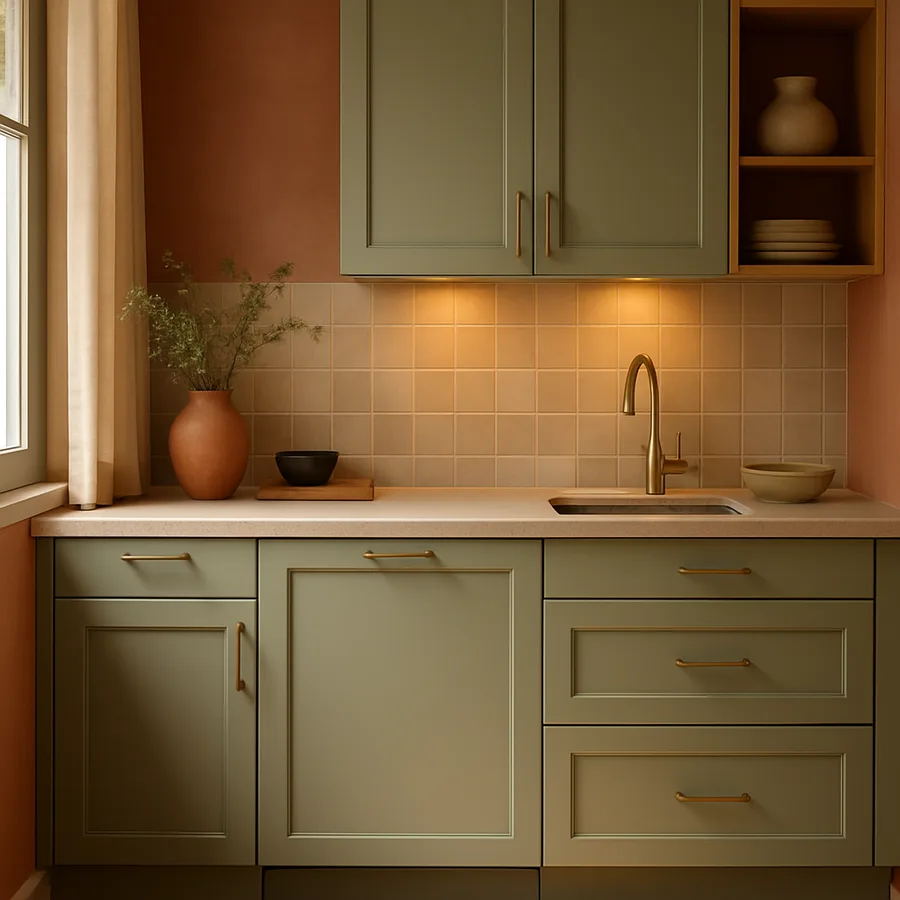
The dishwasher occupies a prominent position in most kitchen layouts, typically flanking the sink where it sits at eye level for anyone seated at a nearby table or island. When that prominent face is a generic stainless steel slab stamped with a manufacturer's logo, it introduces a visual break in what might otherwise be a beautifully unified run of cabinetry. Integrated dishwasher panels solve this problem by replacing the appliance's factory front with a custom panel that matches the surrounding cabinet doors in material, color, profile, and hardware. The result is a kitchen where the dishwasher essentially vanishes, its presence revealed only by the control buttons hidden along the top edge of the door. A report from the National Kitchen and Bath Association found that 41 percent of kitchen designers specified panel-ready dishwashers in their projects during the past year, a figure that has nearly doubled over the preceding decade. This guide covers every aspect of choosing, building, and installing dishwasher panels that deliver a seamless cabinetry line.
How Panel-Ready Dishwashers Differ From Standard Models
A panel-ready dishwasher is engineered from the factory to accept a decorative front panel supplied by the homeowner's cabinet maker. The appliance ships without a finished door face, presenting instead a flat mounting surface with pre-drilled holes or a bracket rail designed to secure a custom panel. The control interface is relocated to the top edge of the door, completely hidden from view when the door is closed, a feature commonly described as top-control or fully integrated design. This contrasts with front-control models where buttons and displays remain visible on the door face, making true visual integration impossible regardless of any panel treatment.
The major appliance manufacturers approach panel integration with slightly different engineering. Bosch and its sister brand Thermador use a flexible bracket system that accommodates panels ranging from three-quarters of an inch down to quarter-inch thickness, giving fabricators latitude in material choice. Miele employs a precision rail system that clicks the panel into position with tool-free engagement, simplifying installation but requiring exact dimensional compliance. Fisher & Paykel's drawer dishwashers accept smaller panels for each drawer face, creating a unique aesthetic that mimics the look of deep cabinet drawers. Understanding the specific mounting system before ordering panels prevents the expensive discovery that a beautifully crafted panel does not fit the brackets on the appliance sitting in the kitchen.
The distinction between a fully integrated and a semi-integrated dishwasher is important for homeowners pursuing maximum visual concealment. A semi-integrated model accepts a panel on the lower portion of the door but retains a visible control strip across the top, typically in stainless steel or black. This strip breaks the cabinet line and reveals the appliance's identity, which may or may not be acceptable depending on the design intent. Fully integrated models hide everything, and the only visual clue is the thin handle or the absence of a handle, depending on the hardware approach chosen. For kitchens where seamless integration is the primary goal, fully integrated models are the only option that delivers a complete disappearing act.
What cycle is running, and how much time remains? Fully integrated dishwashers answer this question in creative ways since there is no visible display. Many models project a small light beam onto the floor, red during the wash cycle and green when complete. Others use a subtle sound signal. The Bosch 800 Series, one of the most widely specified panel-ready lines in North America, projects a countdown timer onto the floor using LED technology, providing cycle information without any visible display on the door. These solutions are elegant, but homeowners accustomed to glancing at a front-mounted display should test the alternative feedback mechanism in a showroom before committing to a fully integrated model.
Matching Materials and Finishes to Existing Cabinetry
The success of an integrated dishwasher panel rises or falls on the precision of its material match to the surrounding cabinet doors. The most dependable approach is ordering the dishwasher panel as a line item within the main cabinetry order, fabricated from the same wood lot, finished in the same spray session, and shipped with the same batch of doors. This eliminates the color and grain variations that inevitably arise when panels are sourced from a different supplier or produced at a different time. Cabinet companies including Wood-Mode, Shiloh, and Crystal Cabinets offer dishwasher panel programs integrated into their standard ordering systems, making this process straightforward for designers and homeowners alike.
For kitchens with painted cabinetry, color matching across the panel and doors is critical. Even when the same paint formula is used, variations in substrate material, primer absorption, spray distance, and drying environment can produce visible differences in sheen or tone. Professional cabinet finishers mitigate this risk by spraying the dishwasher panel alongside the cabinet doors in the same finishing session, ensuring identical conditions for every coated surface. If the panel must be produced separately, requesting a sample spray-out from the finisher, applied to the same substrate material, allows a side-by-side comparison before committing to the full panel.
Wood-grain panels introduce an additional matching variable: the direction and character of the grain pattern. Cabinet doors within a single kitchen are typically selected for grain consistency during the lay-up process at the mill, and the dishwasher panel should participate in this selection. A panel with dramatically different grain figure, whether more or less pronounced than its neighbors, will draw the eye and announce itself as an outsider in the cabinetry line. Communicating to the cabinet maker that the dishwasher panel must be grain-matched to its adjacent doors is a small instruction that prevents a disproportionately large visual problem.
The panel's edge profile must also replicate the cabinet door style. A shaker-style kitchen with a recessed flat center panel surrounded by a narrow rail-and-stile frame requires a dishwasher panel built with the same frame dimensions and center panel recess. A slab-front kitchen with eased edges needs a panel with identically eased edges. Even the bevel depth on a raised-panel door must be duplicated on the dishwasher panel for the line to read as continuous. This level of detail is second nature to experienced cabinet shops but may be overlooked by general contractors or appliance installers unfamiliar with the visual standards of integrated paneling.
Installation Techniques for a Flush, Gap-Free Finish
Proper installation transforms a well-made panel into a seamless component of the cabinetry wall, while poor installation can make even a perfect panel look conspicuously wrong. The process begins with confirming that the dishwasher is correctly positioned within its cabinet opening: level from side to side, plumb from front to back, and set at the correct depth so that the panel face, once attached, sits flush with the adjacent cabinet doors. Most dishwashers provide adjustable leveling legs and an anti-tip bracket that together control all three axes of alignment. Taking the time to achieve precise positioning before attaching the panel is the single most impactful step in the entire installation.
Panel attachment follows the manufacturer's specified method. Bracket-based systems require the installer to first mount the brackets on the panel's back face at the exact positions indicated on the template, then hang the panel on the corresponding rails or hooks on the dishwasher door. Screw-through systems use fasteners that pass through the dishwasher's inner door panel and into the back of the decorative panel, pulling it tight against the door surface. In either case, the panel must be centered within the opening with even reveal gaps on all four sides that match the gaps between adjacent cabinet doors, typically one-eighth to three-sixteenths of an inch.
The top edge of the panel deserves particular attention because it is the most visible edge when the dishwasher is closed. On a fully integrated model, the top control strip sits behind the upper edge of the panel, and the panel must extend high enough to conceal this strip completely while still clearing the countertop when the door opens. A gap of approximately one-quarter inch between the panel's top edge and the underside of the countertop is standard, matching the gap above neighboring cabinet doors. If this gap is too large, the control strip becomes visible, defeating the integrated aesthetic. If too small, the panel may scrape the countertop during opening, damaging both surfaces over time.
Hardware installation is the finishing detail that either completes the illusion or reveals the ruse. The handle or pull on the dishwasher panel should be the same model, finish, and size as the handles on adjacent drawers, mounted at the same height. For handleless push-to-open kitchens, the dishwasher panel typically integrates a recessed finger pull along the top edge or uses the same J-channel profile as the cabinet doors. Some fully integrated dishwashers include a knock-to-open feature where two taps on the panel trigger the door latch, eliminating the need for any handle at all. This feature pairs naturally with minimalist slab-front designs where hardware is intentionally absent from the entire kitchen.
Weight, Thickness, and Structural Considerations
Dishwasher panels must balance visual substance with practical weight limits imposed by the appliance's door hinge mechanism. Most panel-ready dishwashers specify a maximum panel weight of 8 to 15 pounds, which is lower than refrigerator panel limits because the dishwasher door pivots downward on a counterbalanced hinge system calibrated for a specific load range. Exceeding this weight causes the door to drop open abruptly rather than lowering in a controlled manner, creating both a safety hazard and an annoying daily experience. The Association of Home Appliance Manufacturers recommends confirming the maximum panel weight with the appliance specification sheet before fabricating any panel.
Panel thickness is the second critical structural parameter. Most mounting systems accommodate panels between half an inch and three-quarters of an inch thick, though some European models accept panels up to one inch. Thicker panels provide a more substantial feel and better replicate the depth of standard cabinet doors, which are typically three-quarters of an inch. Thinner panels feel less substantial when touched but stay well within weight limits, even in heavy hardwoods. The chosen thickness must also account for the panel's projection beyond the surrounding cabinet face: a panel that is too thick will protrude beyond the neighboring doors, while one that is too thin will sit recessed behind them.
The counterbalance springs inside the dishwasher door are adjustable on most panel-ready models, allowing the technician to increase spring tension to compensate for the added panel weight. This adjustment is often overlooked during installation, resulting in a door that falls open too quickly or, if the springs are set too tight, a door that resists opening and requires excessive force. Proper spring calibration produces a door that opens smoothly to a fully horizontal position and remains there without bouncing or drifting. The adjustment procedure is documented in the appliance installation manual, and performing it after the panel is mounted ensures the calibration accounts for the actual panel weight rather than a theoretical estimate.
Does the panel material need to withstand moisture exposure from steam venting? When a dishwasher door is opened mid-cycle or immediately after completion, a burst of hot steam rises from the tub and contacts the inside face of the panel. Solid wood and unfinished MDF absorb this moisture, which over months of exposure can cause warping, delamination, or finish failure. Sealing the panel's back face with a moisture-resistant coating, even a simple coat of shellac or polyurethane, provides a vapor barrier that protects the panel from steam damage. This step takes fifteen minutes and costs almost nothing but is omitted with surprising frequency, particularly when the panel is fabricated by a cabinet shop unfamiliar with the dishwasher application.
Cost Breakdown and Value Considerations
The total cost of integrating a dishwasher panel into a kitchen involves three components: the panel-ready appliance premium, the panel fabrication, and the installation labor. The appliance premium is the most significant element. A panel-ready Bosch 800 Series dishwasher, for example, retails for approximately $1,100 to $1,400, while its front-control stainless counterpart in the same series sells for $900 to $1,100. This premium of $200 to $300 reflects the top-mounted control engineering and the integrated bracket system. At the luxury end, a Miele panel-ready dishwasher ranges from $1,500 to $2,500, commanding a larger premium but delivering correspondingly quieter operation and more specialized wash programs.
Panel fabrication costs vary widely based on material and sourcing. A dishwasher panel ordered as part of a production cabinet package adds $150 to $400 to the cabinetry order, depending on the manufacturer and the door style. Custom panels from independent shops run $300 to $800, reflecting the smaller production scale and the need for individual template work. Painted panels are typically less expensive than stained wood because the substrate can be MDF rather than species-specific hardwood. The most cost-effective approach is always to include the panel in the original cabinet order, capturing the economies of batch production and ensuring a guaranteed material match.
Installation labor for the panel attachment itself is modest, typically $100 to $250 when performed by the cabinet installer as part of the overall kitchen installation. However, if the dishwasher requires repositioning, the counterbalance springs need adjustment, or the cabinet opening dimensions do not match the appliance specifications, additional labor charges accumulate quickly. According to data from HomeAdvisor, the average total project cost for a panel-ready dishwasher installation, including the appliance, panel, and labor, falls between $1,500 and $2,800 for mid-range projects and $2,500 to $4,500 for premium installations.
The return on investment for dishwasher panel integration is difficult to isolate from the overall kitchen renovation value but is best understood as a component of the kitchen's total design cohesion. A kitchen where every visible surface, including appliance fronts, contributes to a unified design narrative commands a higher perceived value than one where appliances interrupt the cabinetry line. The National Association of the Remodeling Industry notes that design cohesion is among the top three factors cited by appraisers when evaluating kitchen renovation quality, placing it alongside material quality and functional layout as a driver of appraised value.
Living With Integrated Dishwasher Panels Long-Term
Daily life with a paneled dishwasher is nearly identical to living with a standard model, with a few practical nuances that owners should anticipate. The most common adjustment involves learning to locate the dishwasher by memory rather than by sight. In a kitchen where the dishwasher panel matches its neighbors perfectly, guests and even family members occasionally pull the wrong door, expecting a cabinet and finding an appliance. Some homeowners address this with a subtle cue, such as placing the dishwasher handle slightly higher or lower than the adjacent drawer pulls, while purists accept the occasional confusion as the price of total visual integration.
Cleaning and maintaining the panel surface follows the same protocols as the rest of the cabinetry. Wood panels should be wiped with a damp cloth and dried immediately, avoiding pooling water at the bottom edge where the panel meets the kickplate. Painted and laminate panels tolerate slightly more aggressive cleaning but remain vulnerable to abrasive scrubbers and harsh solvents. The bottom edge of the panel accumulates the most grime because it sits closest to the floor and is exposed to splashes during kitchen activity. Running a damp cloth along this edge weekly prevents the buildup that eventually requires more aggressive cleaning.
When the dishwasher reaches end of life, typically after 10 to 15 years according to Consumer Reports appliance longevity data, the panel can often be transferred to the replacement unit if the new dishwasher uses the same mounting system and door dimensions. Staying within the same manufacturer and model family maximizes the likelihood of panel compatibility. Before disposing of the old appliance, the installer should carefully remove the panel and its brackets, noting the attachment points so the panel can be remounted on the new unit with minimal modification. If the new dishwasher uses a different bracket system, most panels can be re-drilled to match, provided the new mounting points fall within the panel's structural area.
Coordinate your dishwasher panel order with your cabinetry order from the very first measurement appointment, and provide your cabinet maker with the appliance specification sheet before any shop drawings are produced. This ensures the panel dimensions, thickness, weight, and mounting details are incorporated into the cabinetry design from the outset rather than retrofitted as an afterthought. The fifteen minutes spent sharing this document at the beginning of the project saves hours of troubleshooting and potential rework at the end, delivering the seamless kitchen line that motivated the integrated panel decision in the first place.
Conclusion
Integrated dishwasher panels represent one of the most effective strategies for achieving visual unity in a kitchen, eliminating the appliance's industrial appearance and replacing it with a surface that continues the cabinetry design without interruption. The technology relies on panel-ready dishwashers engineered to accept custom fronts, combined with panels fabricated from the same materials and in the same finish session as the kitchen doors. When the material match is precise, the reveal gaps are consistent, and the hardware aligns with adjacent doors, the dishwasher becomes genuinely invisible within the cabinet line.
The investment is moderate relative to the overall kitchen budget, with the appliance premium and panel fabrication together adding roughly $500 to $1,500 beyond the cost of a standard dishwasher. Installation demands precision but not complexity, and the maintenance burden is no greater than that of the surrounding cabinetry. For kitchens where design cohesion is a stated priority, the integrated dishwasher panel delivers outsized visual impact for a proportionally small expenditure, anchoring the lower cabinet run as a continuous, uninterrupted composition.
Long-term ownership is straightforward, with panel transfer to replacement appliances possible in most cases and routine cleaning identical to cabinet care. The growing availability of mid-market panel-ready dishwashers from brands like Bosch and Fisher & Paykel has made this feature accessible well beyond the luxury segment, and the design community's enthusiastic adoption continues to drive consumer awareness. For any homeowner who has ever looked at their kitchen and wished the dishwasher would simply disappear into the cabinetry, the integrated panel is the proven, practical answer.
More Articles You May Like



Comments
Post a Comment