Home Bar Cabinet Designs for Living Room Entertaining
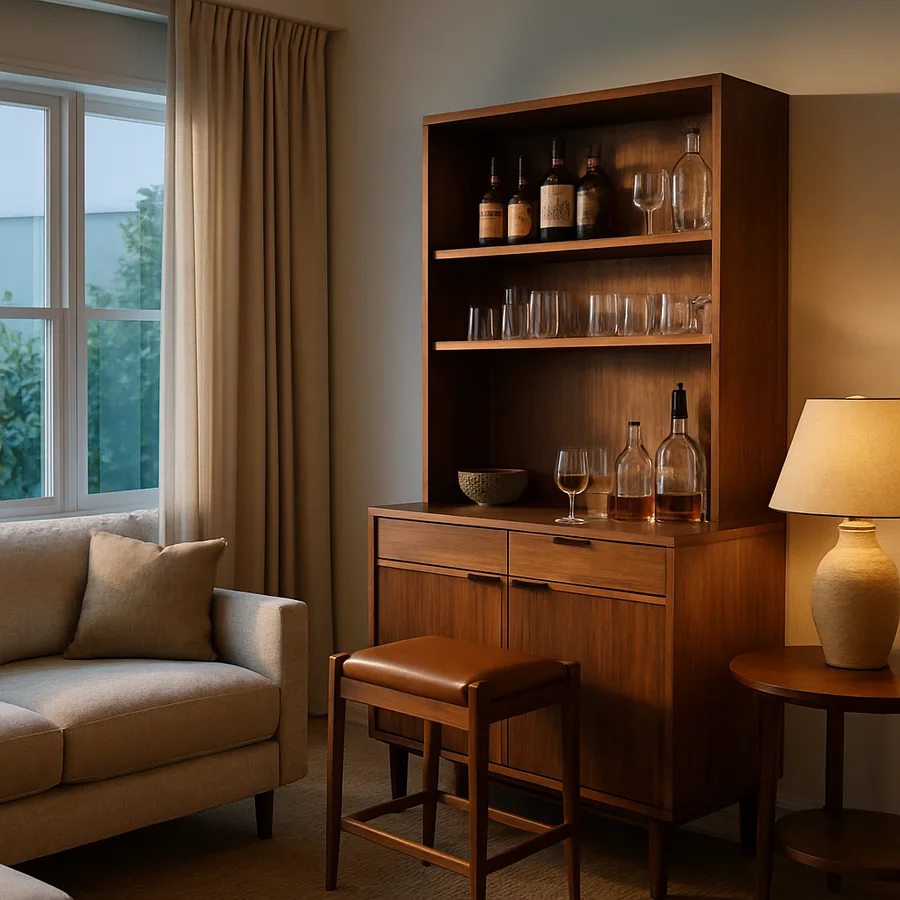
A well-designed home bar cabinet can transform an ordinary living room into the most memorable room in the house, and the trend toward at-home entertaining has only accelerated since the pandemic reshaped how Americans socialize. According to a 2023 Houzz Kitchen & Bath Trends report, nearly 36% of homeowners renovating social spaces added a dedicated beverage station, up from 22% just five years earlier. The National Kitchen and Bath Association (NKBA) has also noted a steady rise in what designers are calling the "beverage moment," a micro-zone in the main living area where glassware, spirits, and tools live in a single cohesive piece of cabinetry. This article walks through the design decisions that make a living-room bar cabinet functional, beautiful, and flexible enough to grow with your entertaining style.
Why the Living Room Is the Right Home for a Bar Cabinet
The living room sits at the social center of most homes, and that centrality is exactly why it has become the preferred location for integrated bar cabinetry. When guests arrive, most hosts instinctively guide them toward the sofa or sectional rather than the kitchen, and placing the bar within that gathering zone reduces the awkward shuffle between rooms. Jamie Drake, a past president of the American Society of Interior Designers (ASID), has long advocated for "living-first" planning, where the rooms guests actually occupy receive the same investment as kitchens. A bar cabinet in the living room honors that principle by turning a utilitarian task into part of the conversation.
There is also a practical argument rooted in traffic flow. Kitchens are typically the busiest rooms in a home, and when someone needs to pour a drink during a dinner party, they often have to weave around cooks, ovens, and counter prep. A dedicated living-room bar removes that conflict entirely and lets the host remain engaged with guests while pouring. Wine Spectator has also reported that wine consumption during home entertaining is more relaxed and more likely to lead to repeat pours when the bottle lives in the same room as the sofa, rather than requiring a trip to another space.
Finally, a living-room bar cabinet is a statement piece in a way that a built-in kitchen bar can never be. Because the cabinet stands against a visible wall, it becomes a design focal point, displaying glassware, artwork, and spirits like a curated collection. Have you ever noticed how the most photographed corner of a well-designed home is often the bar? There is a reason for that, and it has everything to do with the way light, glass, and symmetry converge in a small footprint. Building that focal point intentionally, rather than as an afterthought, is what separates a great bar cabinet from a simple sideboard with bottles on top.
Cabinet Styles: From Heirloom Armoire to Modern Minimalist
The first decision in designing a home bar cabinet is the silhouette, and that choice drives nearly every other selection down the line. A traditional armoire-style bar with tall doors and a drop-down front evokes the formality of a library or a gentleman's study, and it works beautifully in rooms with millwork, paneling, or classical architecture. A mid-century credenza sits lower and longer, with hairpin or tapered legs, and it pairs naturally with sectional sofas and minimalist art. A fully built-in bar wall with floor-to-ceiling cabinetry reads as architecture rather than furniture, and it is increasingly popular in great rooms where the living and dining areas share a single volume.
Within each silhouette there are meaningful material choices. Solid walnut, white oak, and rift-sawn ash are the three species most often specified for high-end bar cabinetry because they age gracefully and resist the moisture fluctuations that come with ice buckets and wet glassware. The Architectural Woodwork Institute (AWI) classifies these as Premium Grade when specified with matched veneers and continuous grain, and for a bar that will be photographed and admired, Premium Grade is worth the specification. Lacquered finishes, whether in classic neutrals or saturated tones like forest green and oxblood, have also returned to favor, often paired with unlacquered brass pulls that develop a living patina over time.
For smaller living rooms or rental-friendly installations, a freestanding bar cart or compact cabinet still delivers most of the function of a larger built-in. The key is scale: a piece that is too narrow will feel flimsy next to an eight-foot sofa, while one that is too deep will crowd the walkway. A good rule of thumb is to keep the cabinet's width at roughly one-third the length of the primary seating piece across from it, and to leave at least 36 inches of clear walking space in front of the doors when they are fully open.
Storage Planning: Glassware, Bottles, Tools, and Ice
Storage planning is where bar cabinets succeed or fail, and the mistake most homeowners make is designing for the bottles they own today rather than the entertaining they want to do tomorrow. A thoughtful layout includes at least four distinct zones: bottle storage, glassware display, tool drawers, and a work surface for pouring. Each zone has different depth, height, and lighting needs, and combining them carelessly leads to the cluttered, stacked-bottle look that plagues so many first-generation bar cabinets.
Bottle storage should accommodate the tallest bottles you actually buy, not the average. A standard 750ml wine bottle is about 12 inches tall, but bourbon, armagnac, and specialty amari routinely run 13 to 14 inches, and large-format champagne can exceed 15 inches. Designing a bottle shelf with 15 inches of clear interior height gives you room to grow. For wine, stemware expert Georg Riedel has noted that even short-term horizontal storage is better than upright for corked bottles because it keeps the cork moist and the seal tight, so a small wine drawer or angled rack section is a worthwhile addition even for non-collectors.
Glassware storage deserves its own careful thought. Stemware needs hanging racks or tall shelves with at least nine inches of clearance, while rocks, coupes, and highball glasses can live on shorter shelves. How many glasses do you actually need within reach? Most hosts find that six to eight of each primary glass type is enough for typical gatherings, and overbuying crystal that lives permanently in a box defeats the purpose of a display cabinet. Tools, bar towels, cocktail napkins, and strainers belong in a shallow upper drawer with felt or cork lining to prevent rattling, and an ice bucket should have a dedicated home within arm's reach of the work surface.
Lighting That Makes Glass Come Alive
Lighting is the single most underrated element in a home bar cabinet, and it is often the difference between a space that photographs well and one that quietly recedes into the wall. There are three layers of bar lighting to consider: interior shelf lighting, task lighting at the pour surface, and ambient glow that spills into the room. Each layer uses different fixtures, beam angles, and color temperatures, and all three should be on separate dimmers so you can tune the scene for anything from a quiet nightcap to a full party.
Interior shelf lighting is usually accomplished with low-profile LED strips mounted under each shelf's front edge. The Illuminating Engineering Society (IES) recommends a color temperature in the 2700K to 3000K range for residential display lighting because warmer light flatters amber spirits and crystal, while cooler light tends to make glassware look clinical. A color rendering index (CRI) of 90 or above ensures that the actual color of the liquid in the bottle reads accurately, which matters more than most people realize when you are choosing between a light rye and a golden tequila. Strip placement should be at the front of the shelf, facing backward, so the light washes the bottles from behind rather than reflecting off the glass directly into guests' eyes.
Task lighting at the pour surface is typically a small puck light or a linear fixture above the work zone, and it should be brighter than the display lighting by at least a factor of two. This is the only spot in the bar where you genuinely need to see what you are doing, whether that is measuring a pour, zesting a lemon, or reading the back of a bottle label. Ambient spill lighting is the softest layer, sometimes just a warm glow behind the cabinet or an uplight at the base, and it is what turns a lit cabinet into a design moment rather than a display case.
Hardware, Finishes, and the Details That Signal Quality
Hardware is the jewelry of a bar cabinet, and the details tell a careful observer whether a piece was built to last decades or to look good in photographs for a season. Solid brass pulls, hand-forged iron handles, and turned wood knobs each carry a different character, and the right choice depends on the rest of the room. Unlacquered brass is especially popular in contemporary bar design because it develops a living patina that deepens the cabinet's character over time, and brands like Rejuvenation and Rocky Mountain Hardware have become go-to sources for designers working in this space.
Hinges and drawer slides are less visible but more important. Look for soft-close hinges rated for at least 50,000 cycles and full-extension undermount drawer slides, which let you see and reach the back of every drawer. The Business and Institutional Furniture Manufacturers Association (BIFMA) publishes durability standards that reputable cabinet makers voluntarily meet or exceed, and asking your cabinet maker whether they build to BIFMA standards is a reasonable question even for residential work. Interior surfaces deserve attention too: a velvet-lined jewelry-style drawer for cocktail tools, a removable rubber mat under bottles for easy cleanup, and a stainless or stone work surface that shrugs off citrus and spills are details guests will not name but will absolutely notice.
Finally, consider the cabinet's back wall. A mirrored back doubles the apparent bottle count and throws light back into the room, while a stone slab back, a fluted wood panel, or a painted contrast color creates a more controlled, curated look. What mood do you want the cabinet to set when guests walk through the door? If the answer is "sparkle and abundance," go with mirror. If it is "quiet sophistication," go with stone or wood.
Layout, Clearances, and Integrating With the Room
Even the most beautiful cabinet fails if it is placed incorrectly in the room, and layout is where designers spend disproportionate time for good reason. The cabinet should be visible from the primary seating but not so close that a guest pouring a drink feels like they are in the middle of a conversation. A good target is between six and ten feet from the nearest sofa, with a clear sightline from the room's main entry so arriving guests can orient themselves quickly. The National Association of Home Builders (NAHB) publishes residential design guidelines that include universal clearance recommendations, and those numbers translate well to bar placement.
Walkway clearance in front of the cabinet should be a minimum of 42 inches when the doors are closed and 36 inches when they are fully open, because nothing kills the flow of a party faster than a bottleneck in front of the drinks. If the cabinet is built-in, coordinate the face frame and crown with any existing millwork in the room so the piece reads as original architecture rather than a later addition. For freestanding pieces, the top surface should align either with a nearby windowsill or with the picture-rail height of the room to create a calm horizontal line across the wall.
Electrical planning deserves special mention. A living-room bar cabinet needs at least one dedicated 20-amp circuit if you plan to add a wine fridge or ice maker, plus low-voltage wiring for LED shelf lighting routed through a transformer in the cabinet base. Outlets should be placed inside the cabinet, not on the wall behind it, so cords disappear. Have you thought about whether you want the wine fridge door to match the cabinet fronts? Integrated panel-ready appliances add cost but make the cabinet read as furniture rather than as a hybrid appliance wall, and that distinction matters in a living room where the bar is on display.
Conclusion
A home bar cabinet in the living room is one of those projects where the decisions compound, because every choice from silhouette to lighting temperature influences how the piece is used and how it photographs a year into ownership. Getting the basics right, meaning proper bottle and glassware clearances, layered lighting on separate dimmers, quality hardware, and generous walkway dimensions, sets up the cabinet to serve decades of entertaining rather than one season of novelty. The organizations that publish design standards, from NKBA to AWI to BIFMA, exist precisely because these details are knowable and specifiable, and leaning on their guidance is how pros consistently deliver bars that work.
The best home bar cabinets also reflect their owners' actual entertaining habits, not an idealized version of them. If you host big groups, prioritize glassware capacity and a wide pour surface. If you entertain in small, intimate clusters, a compact cabinet with exceptional finishes will deliver more joy per square foot than a sprawling built-in. Either way, plan the cabinet as the social anchor of the room, because that is the role it will ultimately play whether you design for it or not.
Finally, remember that a bar cabinet is never truly finished. It grows with your collection, your glassware discoveries, and the small ritual items you pick up traveling. The cabinet is a stage, and the performance is whatever you pour and serve on any given evening. Design it to be flexible enough to hold that evolving story, and it will continue to reward you long after the initial novelty fades.
Ready to start planning your own living-room bar? Sketch your entertaining style, measure your longest wall, and take the first step by pulling together a materials palette that reflects how you actually live. The next conversation you host at home could be the first one that starts right at your new bar.
Authority resources: National Kitchen and Bath Association, American Society of Interior Designers, and Wine Spectator.
More Articles You May Like



Comments
Post a Comment