Gaming Laptops and Interior Design: Merging Technology with Home Aesthetics
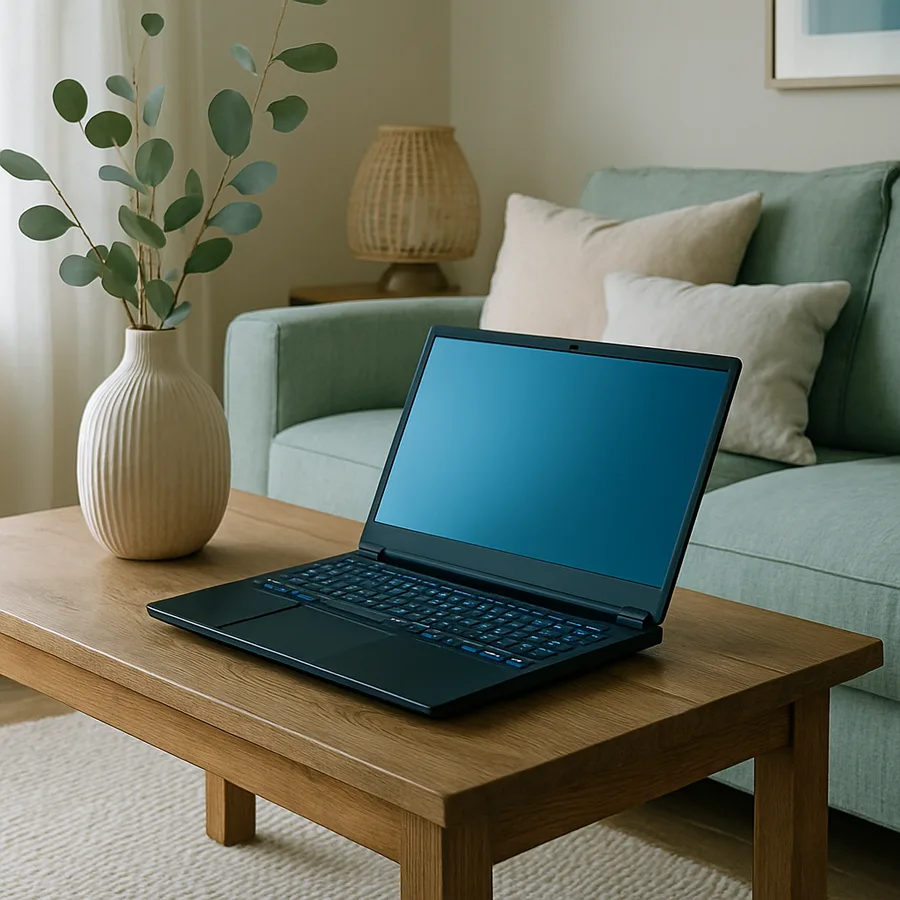
The relationship between technology and interior design has always been one of creative tension, with each new generation of electronic devices presenting both opportunities and challenges for the spaces they inhabit. Gaming laptops represent one of the most interesting frontiers of this relationship, as they embody the most visually expressive category of personal computing hardware while increasingly needing to coexist with the carefully curated aesthetics of modern homes. The American Society of Interior Designers (ASID) has tracked the growing integration of gaming technology into residential design over the past decade, noting that the conversation has shifted from "how do we hide the gaming equipment" to "how do we feature it as part of the design." This evolution reflects a broader cultural acceptance of gaming as a mainstream leisure activity and a corresponding expectation that gaming hardware should meet the same aesthetic standards as other objects in the home.
The merger of gaming laptops and interior design is not merely a matter of making hardware look prettier; it involves a fundamental rethinking of how technology fits into the lived experience of a designed space. Sound, light, materiality, proportion, and spatial flow are all affected by the presence of a gaming laptop and its associated peripherals, and each of these factors falls squarely within the domain of professional interior design practice. The International Interior Design Association (IIDA) has identified technology integration as one of the defining challenges and opportunities of contemporary residential design, and gaming hardware, with its unique combination of visual presence, performance demands, and emotional significance to its users, represents this challenge in its most concentrated form.
This article explores the intersection of gaming laptops and interior design from multiple angles, examining how the design evolution of gaming hardware has aligned with broader interior design trends, how the principles of professional design practice can guide the integration of gaming technology into residential spaces, and how forward-thinking designers and homeowners are creating environments where technology and aesthetics enhance each other rather than competing for dominance. Have you ever walked into a room and felt that the technology present diminished the beauty of the space, or conversely, that the space elevated the technology within it? The difference between these experiences is a matter of design, and the insights that follow will help you achieve the latter.
The Design Evolution of Gaming Hardware
The visual history of gaming hardware is a story of gradual maturation from adolescent exuberance to adult sophistication, and understanding this trajectory helps explain why today's gaming laptops are better suited to interior design integration than their predecessors. Early gaming laptops were designed to communicate power and aggression through sharp angles, bold color accents in red or green, oversized logos, and chassis designs that seemed inspired by science fiction vehicles rather than by any established design tradition. These machines were created for a specific demographic and a specific context, the dedicated gaming den or the LAN party, and they made no apology for their visual assertiveness. The ASID has documented similar evolutionary patterns in other product categories, noting that as a product category matures and its user base broadens, design language tends to shift from niche signaling toward broader aesthetic accessibility.
The turning point in gaming laptop design came when manufacturers recognized that their customers were aging, their needs were diversifying, and their sensitivity to design quality was increasing. Gamers who had once been students in dormitories were now professionals in home offices, and the laptop that had been acceptable in a dorm room looked jarringly out of place on a walnut desk in a thoughtfully designed apartment. This recognition prompted a design revolution that prioritized refined materials, slimmer profiles, neutral color options, and subdued branding, resulting in machines that could transition between gaming sessions and professional meetings without embarrassment. According to market research cited by Houzz, the fastest-growing segment of the gaming laptop market is the "stealth" category, machines whose gaming capabilities are concealed behind professional or design-forward exteriors, reflecting the demand for hardware that serves multiple contexts and meets broader aesthetic expectations.
Contemporary gaming laptop design draws from the same design movements that influence interior design, including minimalism, Scandinavian simplicity, industrial authenticity, and biophilic design, creating a natural affinity between current hardware aesthetics and current interior trends. The warm gray tones, clean lines, and emphasis on material quality found in many flagship gaming laptops echo the design vocabulary of contemporary furniture, lighting, and architectural finishes, making it easier than ever to integrate gaming technology into a cohesive interior scheme. The NCIDQ has recognized the importance of understanding product design trends as they relate to interior environments, and the current alignment between gaming hardware design and residential interior design represents a particularly productive moment for creating spaces that honor both pursuits. This alignment is not coincidental; it reflects a shared response to the same cultural values of refinement, intentionality, and quality that define contemporary design taste across categories.
Principles of Technology Integration in Professional Interior Design
Professional interior designers approach technology integration through a set of established principles that ensure electronic devices serve the space rather than dominating it, and these principles are directly applicable to the challenge of incorporating gaming laptops into residential interiors. The first principle is contextual appropriateness: every technological element in a space should be evaluated in terms of its visual, acoustic, and spatial impact on the surrounding environment, and adjustments should be made to minimize negative impacts while maximizing positive contributions. The IIDA defines contextual appropriateness as one of the foundational concepts of professional design practice, and applying it to a gaming laptop means considering not just the laptop itself but its relationship to the desk, the room, the lighting, and the patterns of use that will govern its presence in the space.
The second principle is visual hierarchy, which refers to the deliberate ordering of visual elements in a space so that the most important elements receive the most attention and supporting elements recede appropriately. In a living room, the visual hierarchy might place a fireplace or a significant piece of artwork at the top, with furniture, lighting, and accessories arranged in descending order of visual importance. A gaming laptop should typically occupy a position in the middle or lower tiers of this hierarchy, visible and accessible but not competing with the room's primary focal points for attention. The ASID teaches that disruptions in visual hierarchy create feelings of confusion and visual discomfort, and a gaming setup that inadvertently becomes the loudest element in a room, through aggressive styling, bright lighting, or excessive scale, undermines the carefully constructed hierarchy that gives the space its sense of order and calm.
The third principle is material and finish consistency, which dictates that the materials, colors, and surface treatments used throughout a space should form a coherent palette that creates visual unity. When a gaming laptop's finish echoes the metal of a light fixture, the leather of a chair, or the matte texture of a wall paint, it becomes woven into the material story of the room rather than standing apart as a foreign object. The NCIDQ includes material specification among its core professional competencies, and while homeowners making gaming hardware purchases may not think of themselves as specifying materials, that is precisely what they are doing when they choose between a brushed aluminum laptop and a textured plastic one. According to research published by the ASID, material consistency is among the top three factors that distinguish professionally designed spaces from self-decorated ones, and extending this consistency to include technology hardware is one of the simplest ways to elevate the overall design quality of a room.
Creating Zones: The Gaming Area as a Design Destination
The concept of zoning, dividing a larger space into distinct functional areas through design cues rather than physical barriers, is one of the most powerful tools available for integrating a gaming area into a multi-use room. Effective zoning communicates that the gaming area is intentional, considered, and valued, rather than a random accumulation of equipment that has settled in an available corner. The tools of zoning include floor treatment changes such as area rugs, lighting differentiation that creates a distinct atmosphere in the gaming zone, furniture arrangement that defines boundaries, and vertical elements such as shelving or screen panels that provide partial visual separation without closing off the space. The IIDA advocates zoning as a primary strategy for multi-functional residential design, and the gaming area is an ideal candidate for this approach because it has specific functional requirements, a distinct atmospheric quality, and a defined set of furnishings and equipment that naturally distinguish it from adjacent zones.
The transitional elements between a gaming zone and the surrounding space deserve particular attention, as they determine whether the zone feels integrated or isolated. A gaming corner that shares its desk material with a nearby bookshelf, its rug texture with the living room carpet, or its accent color with cushions on the sofa maintains a dialogue with the rest of the room that prevents it from feeling like an alien intrusion. These shared design threads create continuity that allows the eye to move smoothly from one zone to another, acknowledging the functional distinction between areas while maintaining the overall coherence of the space. The ASID has described this approach as "connected differentiation," a concept in which distinct zones share enough design DNA to read as parts of a unified whole rather than as independent spaces that happen to share a room.
The emotional quality of the gaming zone is another important design consideration, as the atmosphere of this area should support the immersive, engaging experiences that gaming provides. Slightly lower ambient lighting, warmer color temperatures, and more enclosing spatial proportions can create a sense of cocoon-like intimacy that enhances the gaming experience while clearly differentiating the zone from the brighter, more open character of adjacent living areas. Houzz research indicates that homeowners who create intentionally atmospheric gaming areas report higher satisfaction with both their gaming experience and their home's overall design, compared to those who game in undifferentiated general-purpose spaces. The NCIDQ curriculum addresses the relationship between spatial atmosphere and occupant well-being, and applying this understanding to the design of a gaming zone creates a space that serves its purpose with the same intentionality and care that a professionally designed reading nook or meditation corner would receive. What atmosphere would best support your ideal gaming experience, and does your current setup create that atmosphere or work against it?
The Role of Cable Management and Digital Minimalism
Cable management is the unglamorous but essential practice that separates a polished, professionally finished gaming area from a chaotic tangle of wires that undermines every other design decision in the space. The visual impact of exposed cables is consistently underestimated by homeowners and consistently emphasized by interior designers, and in a gaming setup where multiple devices, chargers, and peripherals may be connected, the cable management challenge can be significant. Solutions range from simple adhesive cable clips and Velcro ties to dedicated cable management trays that mount beneath the desk surface, raceways that conceal cables against walls and baseboards, and wireless alternatives that eliminate cables entirely. The IIDA includes cable and wire management in its specifications for technology-integrated spaces, recognizing that the cleanest hardware and the most beautiful furniture will be undermined if the connections between them are visible, tangled, and dusty.
The laptop form factor offers a natural advantage in cable management, as a single power cable is often the only permanent connection required, with Wi-Fi handling network connectivity and Bluetooth managing peripheral connections. This represents a dramatic reduction in cable complexity compared to a desktop gaming setup, where power cables, display cables, USB connections, audio cables, and network cables can quickly accumulate into an unmanageable mass. For design-conscious gamers, this inherent simplicity is one of the strongest arguments in favor of a laptop-centric gaming setup, and it is worth preserving by choosing wireless peripherals wherever possible and by investing in a quality cable management solution for the remaining connections. According to survey data compiled by the ASID, visible cable clutter is the second most common source of design dissatisfaction in home offices and gaming areas, trailing only uncomfortable seating, which makes cable management an investment with outsized returns in daily visual satisfaction.
Digital minimalism, the practice of reducing the number of visible technology devices to only those that are actively needed, is a complementary philosophy that extends the principles of cable management to the broader gaming setup. A gaming corner that displays only the laptop, perhaps a quality headphone set on an attractive stand, and one or two carefully chosen accessories projects a sense of restraint and intention that is more visually appealing than a desk crowded with every peripheral and gadget the owner possesses. The practice of storing items that are not currently in use, whether in a desk drawer, a closed cabinet, or a dedicated storage box, keeps the gaming area looking clean and curated at all times. The NCIDQ principle of "visual editing," in which every visible element earns its place through both functional necessity and aesthetic contribution, applies powerfully to the gaming corner, and practicing this discipline transforms the area from a technology dump into a designed space that happens to accommodate technology.
Sound Design: Creating an Acoustic Environment for Gaming
The acoustic dimension of a gaming space is as important to the quality of the experience as the visual dimension, and interior design principles offer valuable guidance for creating an acoustic environment that enhances gaming immersion without imposing on the rest of the household. Sound in a gaming context includes three distinct elements: the audio content of the games themselves, the mechanical sounds produced by the laptop and peripherals, and the ambient sound environment of the room. Professional interior designers approach sound holistically, considering how sound is produced, how it travels through a space, and how it is absorbed or reflected by surfaces and materials, and applying this holistic approach to a gaming area produces a more satisfying and less disruptive acoustic experience.
Soft furnishings are the primary tool for managing acoustics in a residential gaming space, and they serve the dual purpose of improving sound quality and enhancing visual warmth and texture. Upholstered seating, area rugs, curtains, cushions, and wall-mounted textile art all absorb sound energy, reducing echo and reverberation that can make a room feel harsh and tiring during extended gaming sessions. These same elements contribute visual softness, color, and pattern that counterbalance the hard surfaces of technology, creating a space that is as pleasant to look at as it is to listen in. The ASID has published extensive guidance on the relationship between material selection and acoustic comfort in residential environments, noting that rooms with a balanced mix of hard and soft surfaces consistently score higher in occupant satisfaction surveys than rooms dominated by either extreme. A study by the Acoustical Society of America found that rooms with appropriate soft furnishing coverage reduce ambient noise reflection by up to 50%, which translates directly to a more comfortable and immersive gaming experience.
Headphones offer the most direct solution to the acoustic challenge of gaming in a shared living space, allowing the gamer to enjoy full audio immersion without any sound reaching others in the room. From a design perspective, headphones present their own integration challenge, as they are visible objects that must be stored somewhere when not in use. A dedicated headphone stand, whether a freestanding desk accessory or a wall-mounted hook, provides an elegant storage solution that keeps the headphones accessible while treating them as a design object in their own right. The IIDA has observed that the best-designed spaces treat functional objects as opportunities for aesthetic expression, and a quality headphone stand that complements the desk, laptop, and room palette exemplifies this principle. The choice of headphones themselves can also be a design decision, as many manufacturers now offer models in colors, materials, and forms that are as visually considered as they are acoustically capable. Have you considered that your headphones, visible on their stand for most of the day, are as much a part of your room's decor as a vase or a picture frame?
Future Trends: Where Gaming Technology and Interior Design Converge
The trajectory of both gaming technology and interior design points toward deeper integration and more sophisticated coexistence, and understanding emerging trends in both fields helps homeowners and designers prepare for the spaces of tomorrow. Transparent and translucent materials are appearing in both furniture design and technology hardware, creating opportunities for gaming setups that feel lighter, more open, and more visually integrated with their surroundings than opaque black boxes on solid desks. Biophilic design principles, which emphasize the incorporation of natural elements and patterns into built environments, are increasingly influencing both interior design and product design, and gaming hardware that incorporates natural materials, organic forms, and earth-toned color palettes is beginning to appear on the market. The ASID has identified biophilic design as one of the most significant trends in residential interiors, and gaming hardware that aligns with this trend will find a natural home in the spaces it creates.
The rise of ambient computing, in which technology recedes into the background of daily life rather than demanding foreground attention, has profound implications for how gaming hardware will integrate into future interiors. Gaming laptops that can be closed and stowed in furniture with integrated charging, displays that double as artwork or mirrors when not in active gaming use, and wireless peripherals that are indistinguishable from decorative objects all represent incremental steps toward a future in which the boundaries between technology and interior design dissolve entirely. The IIDA has explored this concept through its research on responsive environments, spaces that adapt their character and functionality to the activities occurring within them, and gaming represents one of the most compelling use cases for this kind of adaptive design. The NCIDQ has similarly addressed the need for design professionals to anticipate and plan for technological evolution in the spaces they create, ensuring that today's design decisions accommodate tomorrow's technological possibilities.
Sustainability is the third major trend that will shape the convergence of gaming technology and interior design, as both industries face increasing pressure to reduce their environmental impact and embrace circular economy principles. Gaming laptops built from recycled materials, designed for repairability and upgradeability, and packaged in sustainable materials align with the values of environmentally conscious interior design, which prioritizes longevity, material responsibility, and reduced waste. Houzz data shows that sustainability considerations now influence the purchasing decisions of over 60% of homeowners in design-related categories, and this figure is trending upward. The gaming hardware industry is responding with products that address these concerns, and consumers who prioritize both gaming performance and environmental responsibility will find an expanding range of options that satisfy both values. The future of gaming in the home is one of seamless, sustainable, beautiful integration, and the foundations of that future are being built today by designers, manufacturers, and homeowners who refuse to accept that technology and beauty are incompatible.
Conclusion
The merger of gaming laptops and interior design represents one of the most dynamic and personally relevant intersections of technology and aesthetics in contemporary residential living. As gaming hardware continues its evolution toward greater design sophistication, and as interior design practice increasingly embraces the integration of technology as a core competency, the opportunities for creating gaming spaces that are both high-performing and beautiful multiply with each passing season. The principles outlined by organizations such as ASID, IIDA, NCIDQ, and Houzz provide a reliable framework for navigating this integration, and the strategies discussed throughout this article offer practical, actionable guidance for applying those principles to your own space.
The common thread connecting every section of this exploration is intentionality: the deliberate, thoughtful approach to every design decision, from the selection of a gaming laptop and its placement on a desk to the acoustic treatment of the surrounding space and the cable management beneath it. Interior design at its best is an expression of care, a statement that every element of a lived environment has been considered, evaluated, and chosen with purpose. Applying this standard of care to a gaming setup transforms it from a collection of electronic equipment into a curated, atmospheric, and deeply personal component of your home that enhances your daily experience in multiple dimensions.
Begin the process of merging your gaming life with your design aspirations by selecting one area of focus from the topics covered in this article, whether that is upgrading to a gaming laptop with genuine design merit, implementing a lighting plan for your gaming area, establishing effective cable management, or rethinking the acoustic character of your space. Each improvement you make will create momentum for the next, and the cumulative effect will be a gaming environment that serves your needs, reflects your taste, and contributes positively to the beauty and comfort of your home. Engage with a professional interior designer experienced in technology integration to develop a comprehensive plan that transforms your vision into reality, and discover how rewarding it can be when your passion for gaming and your love of design finally find common ground.
More Articles You May Like



Comments
Post a Comment