Frameless Glass Shower Enclosures vs Shower Curtains Compared
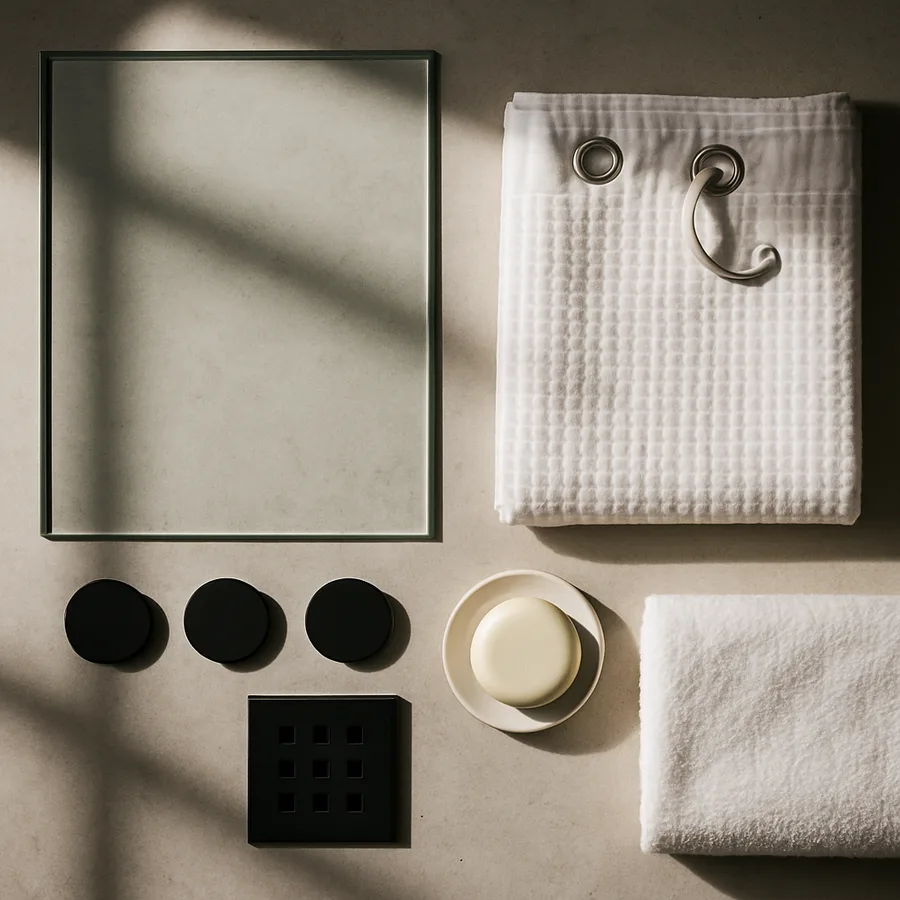
Two Fundamentally Different Approaches to the Same Problem
Every shower needs a way to keep water inside the wet zone, and the two most common solutions, frameless glass enclosures and shower curtains, could hardly be more different in cost, appearance, durability, and maintenance requirements. A frameless glass enclosure is a permanent architectural installation that becomes part of the bathroom's structure. A shower curtain is a replaceable textile or vinyl barrier that can be changed in minutes. Understanding the full implications of each choice prevents regret and ensures your bathroom functions well for the way you actually live.
The market for shower enclosures has expanded significantly in recent years. According to a report by Grand View Research, the global shower enclosure market was valued at over $9 billion and is projected to grow at a compound annual rate of approximately 6 percent through the next decade. Much of this growth is driven by homeowner preference for glass over curtains in bathroom renovations, reflecting a broader trend toward permanent, high-quality bathroom fixtures that increase property value.
Shower curtains, meanwhile, remain the default choice in the majority of rental apartments, guest bathrooms, and budget renovations. Their low cost and instant replaceability make them practical in situations where permanence is not the goal. The tension between these two solutions is not about which is objectively better but about which is better for a specific bathroom, a specific budget, and a specific set of priorities. A thoughtful comparison on each relevant dimension reveals where each option genuinely excels.
Before committing to either direction, consider not just the initial cost but the total cost of ownership over five to ten years, including maintenance time, replacement cycles, cleaning products, and the impact on your bathroom's resale appeal. That longer view often shifts the calculus in surprising ways, particularly for homeowners who plan to stay in their current home for the foreseeable future.
Visual Impact and Design Versatility
A frameless glass enclosure makes a bathroom look larger, brighter, and more cohesive by allowing uninterrupted sight lines from one wall to another. The transparency of clear tempered glass means the tile work inside the shower is always visible, which turns the shower into a design feature rather than a hidden alcove behind an opaque barrier. For bathrooms where the tile selection, niche design, or fixture hardware represents a significant design investment, glass enclosures ensure that investment is on full display.
The minimalist aesthetic of frameless glass aligns with the clean-lined design sensibilities that dominate contemporary interior design. The American Society of Interior Designers (ASID) consistently identifies glass shower enclosures as a preferred specification in designer-driven bathroom projects, noting that the absence of a frame eliminates one of the most visually distracting elements in the shower zone. Without bulky aluminum framing, the glass reads as barely there, a functional boundary that does not impose itself on the room's visual composition.
Shower curtains offer a different kind of design versatility: the ability to change the bathroom's look instantly and inexpensively. A curtain with a bold pattern or vibrant color can transform a neutral bathroom into a lively space in the time it takes to swap one curtain for another. Seasonal changes, evolving tastes, and even mood-driven redecorations are possible at a cost of $15 to $60 per curtain. For renters and design enthusiasts who enjoy refreshing their spaces frequently, this flexibility is a genuine advantage that permanent glass installations cannot match.
However, even the most attractive shower curtain introduces an opaque or semi-opaque plane that visually divides the bathroom in half. In small bathrooms under 50 square feet, this division can make the room feel significantly smaller. A clear curtain liner mitigates the problem somewhat, but it lacks the structural rigidity and polished appearance of glass. Have you noticed how hotel bathrooms that use glass enclosures feel more spacious than similarly sized bathrooms with curtains? That perception is not accidental. It is the direct result of unobstructed sight lines.
Cost Breakdown from Purchase Through Ownership
The upfront cost difference between glass and curtains is substantial. A quality shower curtain setup, including a decorative outer curtain, a waterproof liner, a tension or mounted rod, rings, and a set of replacement liners for the first year, typically costs between $50 and $150 total. This makes curtains accessible to virtually any budget and explains their dominance in starter homes, rental properties, and guest bathrooms where the investment must remain modest.
A frameless glass shower enclosure installed by a professional glazier typically costs between $1,200 and $3,500 for a standard alcove or corner configuration, with complex custom shapes or oversized panels reaching $5,000 or more. This price includes the tempered glass panels, hardware (hinges, clamps, and handles), waterproof seals, and professional installation. The National Kitchen and Bath Association (NKBA) estimates that the shower enclosure represents roughly 8 to 12 percent of a typical mid-range bathroom remodel budget.
Over a ten-year period, however, the cost gap narrows considerably. Shower curtain liners should be replaced every three to six months to prevent mildew buildup, and decorative curtains themselves typically last one to three years before showing wear, fading, or style fatigue. At an average annual curtain and liner cost of $40 to $80, the ten-year expenditure reaches $400 to $800. A frameless glass enclosure, by contrast, has no replacement cost during that period because the glass itself is permanent. Maintenance costs are limited to occasional seal replacement and cleaning supplies.
The resale value impact is another financial consideration. Real estate professionals consistently report that glass shower enclosures contribute positively to bathroom appraisals, while shower curtains are viewed as a neutral or mildly negative feature that signals an unfinished or budget-conscious bathroom. A glass enclosure does not guarantee a dollar-for-dollar return on investment, but it does support the overall perception of a well-appointed bathroom that commands a higher sale price.
Cleaning and Maintenance Realities
Glass shower enclosures are beautiful when clean and conspicuously unsightly when neglected. Hard water spots, soap film, and mineral deposits show clearly on transparent glass, and they accumulate faster than most new glass enclosure owners expect. In areas with hard water, a glass panel can go from sparkling to spotted in a matter of days without intervention. Regular squeegee use after every shower is the single most effective preventive measure, reducing cleaning sessions from weekly to monthly.
Protective coatings such as EnduroShield and Diamon-Fusion apply a hydrophobic nano-coating to the glass surface that causes water to bead and roll off rather than drying in place. These coatings reduce water spot formation by 70 to 90 percent according to manufacturer testing and typically last three to five years before reapplication is needed. The initial coating costs $100 to $200 for professional application or $30 to $50 for a DIY kit. Given the cleaning time they save, most homeowners consider them essential rather than optional.
Shower curtains require a different maintenance approach. Fabric curtains should be machine-washed every two to four weeks to prevent mildew and soap residue buildup. Vinyl or PEVA liners are more resistant to mildew but develop a slimy texture over time that washing only partially resolves, which is why regular replacement is recommended. The bottom hem of any curtain, where it contacts the tub or shower floor, is the most mildew-prone area and benefits from being lifted to dry between uses. A curved shower rod that holds the curtain away from the body during use also improves air circulation and reduces mildew growth.
The hardware associated with each option has its own maintenance profile. Frameless glass hardware, typically stainless steel or brass clamps and hinges, requires occasional tightening as the repeated swing of a door can loosen fasteners over months. The silicone seals along the bottom and sides of glass panels degrade over several years and should be inspected annually and replaced when they begin to crack or peel. Curtain rods and rings are essentially maintenance-free but may develop rust spots in high-humidity bathrooms if they are not made from corrosion-resistant materials.
Durability, Safety, and Longevity
Tempered glass used in shower enclosures is engineered to be four to five times stronger than ordinary annealed glass. It resists impact from dropped shampoo bottles, accidental elbow contact, and the thermal stress of alternating hot and cold water without cracking. In the rare event that tempered glass does break, it shatters into small, relatively blunt granules rather than dangerous shards, a safety feature mandated by building codes for all bathroom glass installations. The Consumer Product Safety Commission (CPSC) requires that shower enclosure glass meet ANSI Z97.1 safety glazing standards.
A properly installed frameless glass enclosure can last 20 to 30 years or more. The glass itself does not degrade, and the hardware, if made from quality materials, withstands decades of daily use. The components most likely to need replacement during that lifespan are the silicone seals and gaskets, which cost under $50 and can be replaced in an hour. This extreme longevity makes glass enclosures one of the most durable fixtures in any bathroom, far outlasting most faucets, toilets, and even tile installations.
Shower curtains, by contrast, are inherently temporary. Fabric curtains fade and thin over one to three years of regular washing. Vinyl liners become brittle and develop permanent creases. Even high-end curtains from premium brands are designed as consumable items rather than permanent fixtures. This disposable nature is both a disadvantage, in that it generates ongoing waste and cost, and an advantage, in that a worn-out or outdated curtain can be discarded and replaced in minutes without any tools or professional assistance.
Safety considerations differ between the two options. A glass door that swings outward into the bathroom can strike someone standing nearby, which is why many installations use sliding panels or fixed glass with an open entry for smaller bathrooms. Shower curtains pose no collision risk but can create a slipping hazard if they stick to wet skin and pull the user off balance, or if the rod pulls free from the wall under the weight of a person grabbing the curtain during a slip. Is your household one where children or elderly family members use the shower? If so, a fixed glass panel with no swinging door and grab bars inside the shower may be the safest possible configuration.
Making the Right Choice for Your Specific Situation
Choose a frameless glass enclosure if you own your home, plan to stay for at least five years, value the visual openness that glass provides, and are willing to commit to the squeegee-after-every-shower maintenance habit. Glass is the clear winner for primary bathrooms where design quality and long-term value matter, for bathrooms with beautiful tile work that deserves to be seen, and for any renovation where the goal is a polished, permanent result. The higher upfront cost is an investment that pays returns in daily satisfaction and eventual resale value.
Choose a shower curtain if you rent your home, if the bathroom is a secondary or guest space that does not justify a major investment, if you enjoy changing your bathroom's look frequently, or if the budget for the project simply does not accommodate a glass installation. Curtains are also the practical choice for bathtub showers where a full enclosure would complicate entry and exit, and for temporary living situations where any permanent installation would be left behind. A beautiful curtain in a well-designed bathroom can look perfectly intentional rather than budget-driven.
A hybrid approach works well in some situations. A single fixed glass panel at the showerhead end of a tub, combined with a curtain covering the remaining opening, provides splash protection where it matters most while keeping costs moderate. This configuration is common in renovated older homes where the bathtub is staying but the homeowner wants to introduce some glass for visual openness. The shower design galleries at Better Homes and Gardens show numerous examples of this hybrid approach executed with style.
Whichever direction you choose, match the quality of the enclosure or curtain to the quality of the rest of the bathroom. A frameless glass enclosure in a bathroom with peeling caulk and a dripping faucet calls attention to the deficiencies rather than overcoming them. Similarly, a cheap vinyl curtain in an otherwise well-appointed bathroom becomes the weak link that undermines the entire design. Consistency across all elements is what makes a bathroom feel intentional and complete.
Conclusion
Frameless glass shower enclosures and shower curtains serve the same basic function but deliver fundamentally different experiences in cost, aesthetics, maintenance, and longevity. Glass is the premium choice that rewards homeowners with decades of durability, visual sophistication, and property value support. Curtains are the practical choice that offers unmatched flexibility, low upfront cost, and effortless replacement. Neither option is universally superior; the right choice depends entirely on your ownership situation, budget horizon, and design priorities.
The most common regret homeowners express is choosing a curtain for a primary bathroom renovation to save money, only to wish they had invested in glass once the renovation was complete and the curtain became the one element that felt temporary. If budget is the primary constraint, consider phasing the project by completing the tile work and plumbing now, using a curtain temporarily, and adding the glass enclosure in a second phase once funds are available. This approach avoids compromising the permanent elements while keeping the glass option open.
Visit a local glass showroom to see and touch the hardware options, feel the weight and clarity of tempered glass panels, and get a quote specific to your shower dimensions. Comparing that quote to the ten-year cost of curtain replacements will give you the clearest picture of which option makes financial sense for your household, and the showroom visit itself often resolves the decision for homeowners who have been deliberating between the two.
More Articles You May Like



Comments
Post a Comment