Dog Washing Station in the Mudroom or Laundry Room
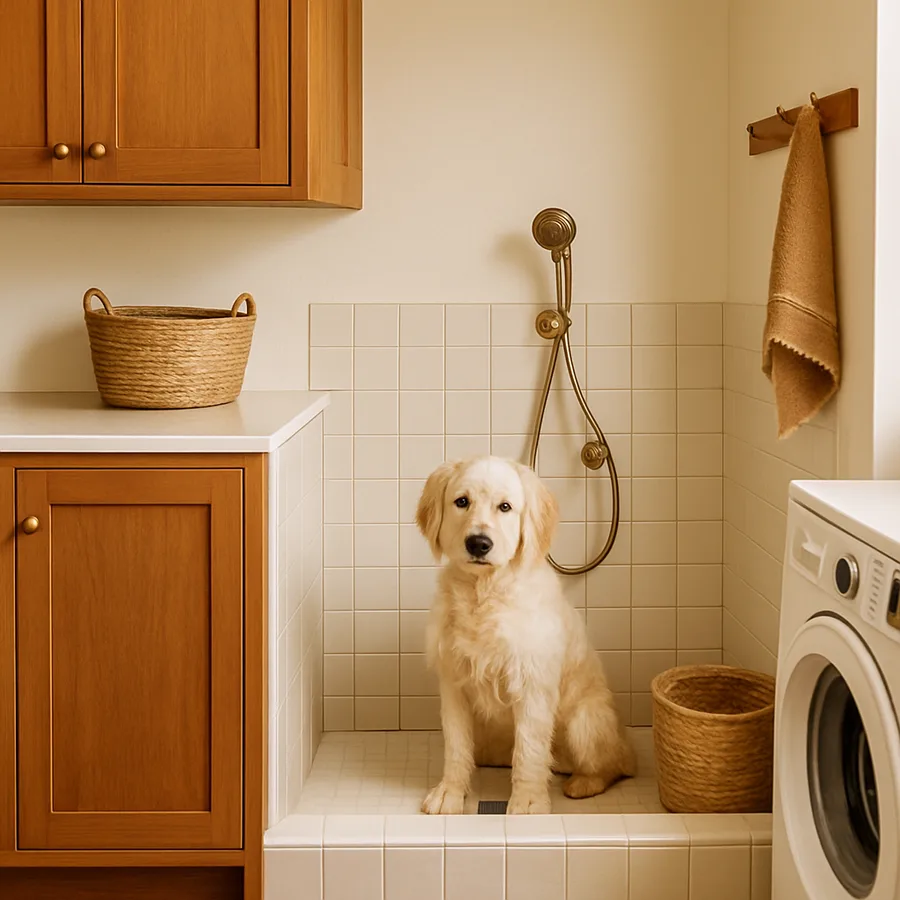
Why Every Dog Household Deserves a Dedicated Washing Station
Bathing a dog in a household bathtub is an exercise in compromise that leaves nobody satisfied. The dog stands in a slippery basin designed for human feet, anxious and unsteady. The owner kneels on a hard bathroom floor, reaching awkwardly over the tub rim while trying to control a wet, unhappy animal that wants to be anywhere else. The bathroom afterward is coated in a fine mist of dog water, loose fur clogs the drain designed for human hair, and the tub itself retains a faint canine scent that no amount of scrubbing fully eliminates before the next human bath. A dedicated dog washing station in the mudroom or laundry room solves every one of these problems by providing a purpose-built space with the right dimensions, fixtures, and drainage for washing animals efficiently, comfortably, and without contaminating the family bathroom.
The practical case for a dedicated station becomes even stronger when you consider the frequency of washing that active dogs require. The American Kennel Club (AKC) recommends bathing most dogs every four to six weeks, but dogs that spend time outdoors in muddy conditions, swim regularly, or have skin conditions requiring medicated baths may need washing weekly or even more frequently. A family with two active dogs averaging a bath every three weeks faces roughly thirty-five dog baths per year, each one a twenty-to-forty-minute ordeal when performed in a standard bathtub. A purpose-built washing station with a raised basin, handheld sprayer, and proper drainage reduces that time to ten to fifteen minutes per bath, saving hundreds of minutes annually while producing a better result for both the dog and the home.
The National Association of Home Builders has tracked a steady increase in dedicated pet amenity installations in new home construction, with dog washing stations now appearing in approximately 15 percent of new homes priced above $500,000. This trend reflects both the growing cultural status of pets as family members deserving thoughtful accommodation and the practical recognition that pet-specific infrastructure prevents damage to spaces designed for human use. For existing homes, retrofitting a dog washing station into a mudroom or laundry room is a renovation project that typically costs between two thousand and six thousand dollars depending on complexity, and it delivers both daily convenience and measurable resale value in a market where pet amenities increasingly influence buyer decisions.
The mudroom and laundry room are the two best locations for a dog washing station because both rooms already have plumbing access, waterproof or water-resistant flooring, and a transitional function between the outdoor and indoor environments that makes wet, muddy dog activities appropriate rather than disruptive. A mudroom station catches the dog immediately upon entry from outside, before dirty paws track through the house, which is the ideal workflow for active dogs that return from walks, hikes, or yard play needing a rinse. A laundry room station shares plumbing with the washer and dryer, simplifying installation, and benefits from the room's existing tolerance for water, humidity, and utilitarian activities that do not belong in the home's living spaces.
Basin Types and Sizing for Different Dog Breeds
The basin is the centerpiece of any dog washing station, and selecting the right type and size for your dog or dogs determines whether the station is comfortable and functional or frustratingly inadequate. Elevated basins mounted at twenty-four to thirty inches above the floor, roughly counter height, are the most ergonomic option for the human doing the washing because they eliminate the back-breaking bending required by floor-level basins and bathtubs. A raised basin allows you to wash the dog while standing upright, with both hands free to handle the sprayer and the animal, which reduces physical strain and gives you better control over the washing process. For dogs that are calm and manageable during baths, an elevated basin is almost always the superior choice.
The interior dimensions of the basin must accommodate your largest dog comfortably, with enough room for the animal to stand and turn without being cramped but not so much room that a smaller dog can escape to the far corner and evade the sprayer. For small dogs under thirty pounds, a basin measuring approximately twenty-four inches wide by thirty inches deep by twelve inches tall provides adequate space. Medium dogs between thirty and sixty pounds need a basin approximately thirty inches wide by thirty-six inches deep by sixteen inches tall. Large dogs above sixty pounds, including retrievers, German shepherds, and similar breeds, require a basin at minimum thirty-six inches wide by forty-two inches deep by eighteen inches tall. Great Danes, mastiffs, and other giant breeds may exceed the practical limits of a raised basin entirely, and a walk-in floor-level shower enclosure with a low threshold is typically the more realistic option for dogs above one hundred pounds.
Prefabricated dog wash basins manufactured from fiberglass, acrylic, or stainless steel are available in standard sizes and install similarly to a utility sink, mounting on a cabinet base, wall brackets, or freestanding legs. These ready-made units offer the fastest and most predictable installation path, with integrated drain fittings, sloped floors for water flow, and finished surfaces that require no additional tiling or waterproofing. Stainless steel basins, commonly used in veterinary clinics and professional grooming salons, are the most durable and hygienic option, resisting scratches, stains, bacteria, and the chemical exposure of flea shampoos and medicated washes without degradation. The clinical appearance of stainless steel may not appeal to homeowners seeking a residential aesthetic, but the material's longevity and ease of maintenance make it the choice of professionals who wash dogs as a livelihood.
Custom-built tiled basins offer the most design flexibility and the most seamless integration with the room's existing architecture but require more complex construction involving waterproof membrane installation, tile setting, and careful attention to drainage slope. A tiled basin built from a waterproofed cementboard shell allows complete customization of size, shape, height, and finish material, enabling homeowners to match the station to their mudroom's tile, stone, or decorative aesthetic. The Houzz pet-friendly home gallery showcases hundreds of custom tiled dog wash stations that range from simple subway tile enclosures to elaborate stone-clad installations with decorative borders and accent tiles. Custom construction adds approximately one thousand to two thousand dollars above the cost of a prefabricated basin but produces a station that looks like an original architectural feature of the home rather than a retrofitted utility fixture.
Plumbing, Fixtures, and Sprayer Selection
The plumbing requirements for a dog washing station parallel those of a utility sink or shower, requiring both hot and cold water supply lines and a drain connection. If the station is located in a room that already has plumbing, such as a laundry room with washer connections or a mudroom with an existing utility sink, the supply and drain connections can typically be extended to the station location with moderate plumbing work. If the station requires new plumbing in a room without existing water lines, the cost and complexity increase significantly because supply pipes and drain lines must be routed through walls and floors from the nearest existing plumbing. A licensed plumber can assess the routing options and provide a cost estimate before construction begins, and this assessment should be the first professional consultation in any dog wash station project.
A handheld sprayer on a flexible hose is the single most important fixture in a dog washing station because it allows you to direct water exactly where it is needed, rinsing shampoo from under the belly, behind the ears, and between the toes in ways that a fixed showerhead or faucet spout cannot reach. The hose should extend at least four feet from the wall mount to provide enough reach to work around a large dog from all angles, and the sprayer head should offer at least two spray patterns: a wide, gentle spray for wetting and rinsing the coat, and a focused stream for directing water into specific areas. Commercial pet washing sprayers with built-in soap dispensers eliminate the need to set down the sprayer to apply shampoo, keeping one hand on the dog and one on the sprayer throughout the bath, which reduces both washing time and the opportunity for the dog to shake or escape while you fumble with a bottle.
Water temperature control matters more than many installers realize because dogs are sensitive to water temperature and can be scalded by water that feels merely warm to a human hand. A thermostatic mixing valve installed on the station's supply line maintains a constant water temperature regardless of fluctuations in the home's hot water system, preventing the sudden temperature spikes that occur when someone elsewhere in the house flushes a toilet or starts a dishwasher. Setting the mixing valve to a maximum temperature of 102 degrees Fahrenheit, which is the temperature recommended by the American Veterinary Medical Association (AVMA) for dog bathing, ensures that the water can never exceed a safe temperature regardless of how the faucet handle is adjusted. This safety measure is inexpensive to include during installation and eliminates one of the most common sources of dog bathing stress and injury.
Drainage capacity and hair management are plumbing considerations specific to dog washing that standard bathroom plumbing design does not address. Dogs shed enormous quantities of loose hair during bathing, and this hair will clog a standard residential drain within a few uses if no hair management strategy is in place. A hair trap or strainer basket installed over the drain catches loose hair before it enters the plumbing, and the trap should be removable for easy cleaning after each bath. Commercial dog wash drain assemblies include built-in hair baskets that lift out, dump, and replace in seconds, and these purpose-built drains are worth specifying even though they cost twenty to forty dollars more than a standard drain fitting. The alternative, clearing hair clogs from the drain pipe after every few baths, is both unpleasant and damaging to the plumbing over time, making the upfront investment in proper hair management a clear value proposition.
Flooring, Walls, and Waterproofing the Surrounding Area
Water will escape the basin during every dog bath. This is not a possibility to plan against but a certainty to design around, because even the calmest dog shakes water from its coat, and even the most careful owner splashes water while rinsing a wriggling animal. The floor surrounding the washing station, extending at least three feet in every accessible direction, must be waterproof, slip-resistant, and easy to clean. Porcelain tile with a textured or matte finish is the most popular flooring choice for dog wash areas because it is completely waterproof, resists scratching from claws, cleans with a mop, and is available in styles that coordinate with any residential design aesthetic. The grout lines between tiles should be sealed with an epoxy or urethane grout sealer to prevent moisture penetration, as unsealed grout absorbs water, develops stains, and eventually harbors mold in the perpetually damp conditions around a dog wash station.
Luxury vinyl plank (LVP) flooring provides a waterproof alternative to tile that is warmer underfoot, softer on dog joints, and faster to install, though it is more vulnerable to scratching from large dogs' claws than porcelain tile. High-quality LVP with a wear layer of twenty mils or thicker resists most claw damage, but dogs that scramble and dig at the floor when being placed in or removed from the basin can scratch through thinner wear layers over time. Placing a rubber bath mat on the LVP floor directly in front of the station protects the highest-traffic zone and provides additional slip resistance for both the dog and the person during the transfer into and out of the basin. Concrete flooring, sealed with a waterproof epoxy coating, is another excellent option for mudrooms and laundry rooms that embrace a utilitarian aesthetic, offering absolute waterproofing and the ability to slope the floor toward a central drain that captures any water that escapes the basin.
Wall protection behind and beside the washing station prevents water damage to drywall, which absorbs moisture, swells, and develops mold when repeatedly wetted. Tile, waterproof wall panels, or fiberglass-reinforced plastic (FRP) panels applied to the walls within the splash zone create a waterproof barrier that can be wiped dry after each use. The splash zone extends at least eighteen inches above the basin rim on all sides and further in the direction a dog typically shakes, which is usually facing away from the wall. For tiled basins, extending the wall tile from inside the basin up and over the rim to the surrounding wall creates a continuous waterproof surface with no seams or transitions where water can penetrate. This continuous tile treatment also produces the most visually cohesive result, making the station look like a single designed element rather than a basin placed against a bare wall.
Is the area under and behind your planned station properly waterproofed at the structural level? Surface finishes like tile and wall panels prevent water contact with the wall surface, but any water that penetrates through grout joints, around fixture penetrations, or through gaps in panels reaches the wall structure behind the finish material. Installing a waterproof membrane, such as Schluter Kerdi or Laticrete Hydro Ban, on the wall substrate and floor substrate before applying tile or other finishes provides a secondary waterproofing layer that protects the structure even if the surface finish is compromised. This belt-and-suspenders approach is standard practice in shower construction, and a dog washing station subjects the surrounding surfaces to comparable water exposure over its lifespan. The additional cost of membrane installation is typically three hundred to five hundred dollars for a dog wash area, which is a modest insurance policy against the thousands of dollars in mold remediation and structural repair that undetected moisture intrusion can eventually require.
Making the Station Comfortable and Safe for Your Dog
A dog washing station that is comfortable for the human but stressful for the dog produces resistant behavior that makes every bath a struggle, undermining the convenience that motivated the station's construction. Designing the station with the dog's comfort and safety as equal priorities to human ergonomics creates a washing experience that becomes routine and tolerable for the animal over time, reducing resistance and making baths faster, easier, and less physically demanding for everyone involved. The Association of Professional Dog Trainers (APDT) emphasizes that a dog's willingness to cooperate during grooming procedures is directly related to the comfort and positive associations built during early experiences, which makes the station's design a behavioral investment as much as a physical one.
The basin floor surface is the most critical comfort element because a dog that feels insecure footing will panic, scramble, and fight to escape regardless of how comfortable the water temperature and handling are. Smooth fiberglass, acrylic, and tile surfaces become dangerously slippery when wet, and a dog's claws provide no traction on these materials. A rubber bath mat with suction cups covering the basin floor provides the traction dogs need to stand confidently, and the mat should extend to cover the entire floor area rather than just a portion. For tiled custom basins, specifying a tile with a high coefficient of friction, such as small-format mosaic tile with abundant grout lines, provides inherent traction without requiring a separate mat, though a rubber mat adds an additional comfort layer that dogs appreciate regardless of the tile's slip resistance.
A tethering point inside the basin keeps the dog safely contained during the bath without requiring you to maintain a physical hold on the animal at all times. A stainless steel eye bolt or D-ring mounted to the wall above the basin at the dog's head height provides an attachment point for a grooming loop or short leash that prevents the dog from jumping out of the basin while allowing enough freedom of movement for the animal to stand, sit, and turn. Professional grooming salons universally use tethering systems because they free both of the groomer's hands for washing and rinsing, and the same principle applies in a home installation. The tethering point should be mounted securely into a wall stud or backing board, not into drywall alone, because a large dog lunging against the tether can exert significant force that would pull a drywall-only anchor free.
Introducing your dog to the washing station gradually, before the first actual bath, builds positive associations that prevent the station from becoming a source of anxiety. Place treats in the dry basin and allow the dog to climb in and eat them on several occasions before adding water to the equation. Run the sprayer near the basin without directing it at the dog so the sound becomes familiar and non-threatening. Give the first bath as a brief, warm, treat-filled experience that ends before the dog becomes stressed, and gradually extend the duration of subsequent baths as the dog's comfort level increases. According to veterinary behaviorists quoted by the Better Homes and Gardens pet care section, this gradual desensitization process typically takes three to five short sessions spread over a week or two and produces dramatically calmer bath behavior for the lifetime of the dog compared to forcing an unprepared animal into an unfamiliar washing station for a full-length bath on the first attempt.
Storage, Accessories, and Keeping the Station Organized
A well-organized washing station keeps every supply within arm's reach so you never need to leave the dog unattended to retrieve a forgotten bottle of shampoo or a towel. Wall-mounted shelving or cubbies installed within reach of the basin but above the splash zone provide storage for shampoo, conditioner, ear cleaner, towels, and grooming tools that stays dry and accessible during every bath. Stainless steel wire shelving resists the humidity and occasional splashing better than wood shelving, which can warp and develop mildew in the persistently damp environment near a dog wash station. A small cabinet or closed storage unit for items that should not be exposed to moisture, such as medications, brushes, and nail trimming equipment, completes the storage system.
Towel management is a practical detail that affects how smoothly the post-bath process flows. Large dogs require two to three full-size bath towels per wash, and having dedicated dog towels stored at the station eliminates the scramble through linen closets while a wet dog drips on the floor. A towel hook or bar mounted directly beside the basin keeps towels within immediate reach for wrapping the dog as soon as rinsing is complete, which is the critical moment when the dog most wants to shake and the owner most needs to contain the water. Some homeowners install a wall-mounted towel warming rack near the station, which is a luxury that dogs genuinely appreciate during cold weather baths and which helps towels dry fully between uses rather than remaining damp and developing musty odors in an enclosed mudroom.
A built-in drying area adjacent to the washing station, even if it is simply a designated section of waterproof floor with a hook for a leash, provides a contained space where the dog can shake, drip, and air-dry after the bath without spreading water throughout the house. If the mudroom or laundry room is large enough, a small drying pen with a waterproof floor and a warm air dryer mounted to the wall creates a grooming-salon-quality drying experience that produces a fully dry dog in ten to fifteen minutes rather than the hour or more that air drying requires for thick-coated breeds. Wall-mounted pet dryers designed for home use typically cost between one hundred and three hundred dollars and operate at lower noise levels than professional salon dryers, making them tolerable for noise-sensitive dogs and household members alike.
Keeping the station clean between uses prevents the buildup of hair, soap residue, and bacterial growth that can make the space unpleasant and unsanitary over time. A quick rinse of the basin with the sprayer after each bath, followed by a wipe-down of the rim and surrounding surfaces with a disinfectant, takes less than two minutes and maintains the station in ready-to-use condition. The removable hair trap should be emptied after every bath without exception, as accumulated hair combined with soap residue creates a breeding ground for odor-causing bacteria that can make the entire room smell unpleasant within days. A monthly deep cleaning with a bathroom cleaner or diluted bleach solution addresses any soap film, mineral deposits, or mildew that accumulates despite regular rinse-downs, keeping the station as hygienic and inviting as the day it was installed.
Conclusion: An Investment in Daily Convenience and Home Cleanliness
A dedicated dog washing station in the mudroom or laundry room transforms one of the least enjoyable aspects of dog ownership into a quick, manageable routine that protects your home's living spaces from the water, mud, and hair that bathroom dog baths inevitably spread. The station pays for itself not in a single dramatic return but in the accumulated convenience of every bath that takes fifteen minutes instead of forty, every bathroom that stays clean and dry, and every evening when a muddy dog gets rinsed at the door rather than tracking prints across the kitchen floor. For households with active dogs, this daily convenience quickly becomes one of the most valued features in the home.
The construction requirements, including proper plumbing, waterproofing, a well-sized basin, a handheld sprayer with thermostatic temperature control, and a thoughtful drainage and hair management system, are straightforward for any competent plumber and contractor. The total investment for a quality installation ranges from two thousand dollars for a prefabricated basin in a room with existing plumbing to six thousand dollars for a custom tiled station with premium fixtures in a room requiring new plumbing runs. This cost is modest relative to major bathroom or kitchen renovations and delivers a feature that improves the household's quality of life with every use.
Whether you choose a simple utility-style basin or an architecturally integrated custom installation, the most important design decisions center on making the station comfortable and safe for the dog, ergonomic for the person, and waterproof in the surrounding area. A dog that enters the washing station calmly, stands securely on a non-slip surface, and experiences consistently warm water through a gentle handheld sprayer is a dog that cooperates with bathing as a familiar routine rather than fighting it as an ordeal. That cooperation, built through thoughtful station design and patient introduction, is the ultimate return on the investment and the feature that makes a dedicated dog washing station genuinely worth building.
More Articles You May Like



Comments
Post a Comment