Bright and Cheerful Laundry Room Color Schemes That Motivate
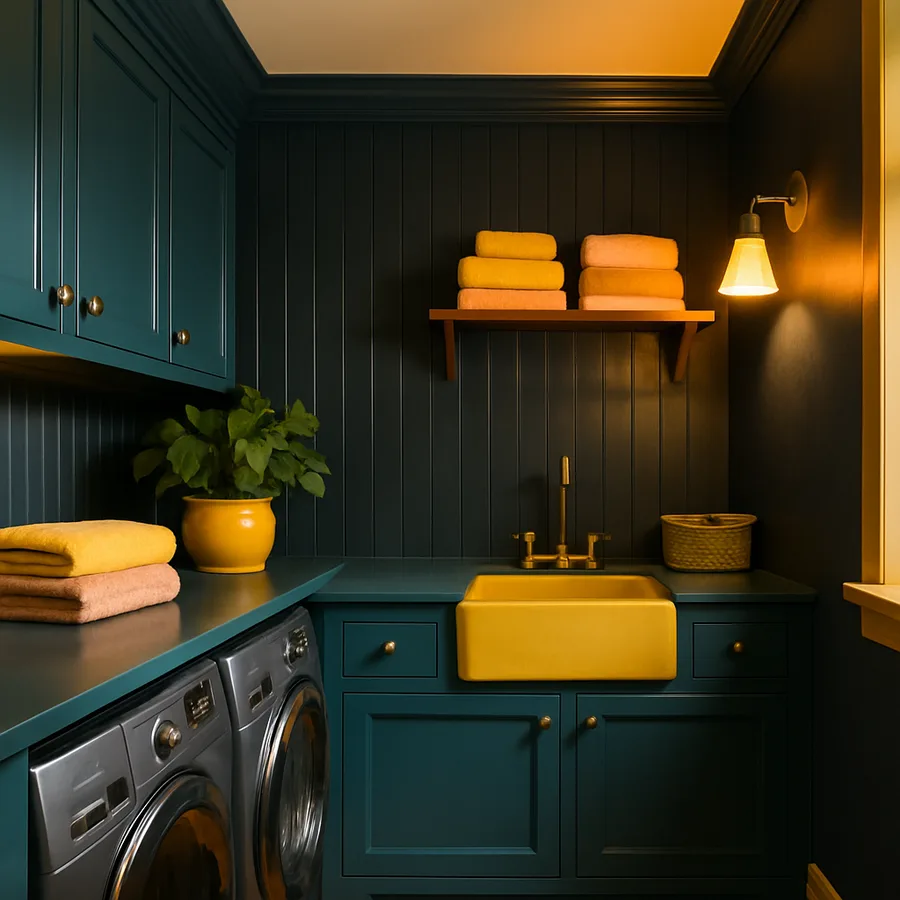
Why Color Matters More in the Laundry Room Than You Think
The laundry room is one of the most frequently visited spaces in any home. The average American household runs between 300 and 400 loads of laundry per year, according to the American Cleaning Institute (ACI). That frequency means you spend significant cumulative hours in this room, sorting, loading, folding, and organizing. Yet laundry rooms are among the last spaces homeowners consider when making color and design decisions, often defaulting to builder-grade white or leftover paint from another project.
Color psychology research consistently demonstrates that specific hues influence mood, energy, and motivation. Warm tones like yellow and coral stimulate alertness and positive feelings. Cool tones like soft blue and green promote calm focus. Bright, saturated colors inject energy into repetitive tasks, while muted neutrals can make a mundane chore feel even more monotonous. Applying these principles to the laundry room transforms a space you tolerate into one you genuinely do not mind entering.
The laundry room also presents a low-risk opportunity to experiment with bolder colors. Unlike a living room or bedroom where you spend extended periods and where resale neutrality matters, the laundry room is a contained, private space. A vibrant wall color that might overwhelm a large room can feel perfectly balanced in a 50-square-foot laundry area. Designers at the American Society of Interior Designers (ASID) often recommend utility spaces as testing grounds for colors that clients love but hesitate to commit to in primary living areas.
The right color scheme does not just make the room look better. It makes laundry day feel different. When the space you work in reflects energy and intention, the task itself feels less burdensome. That psychological shift is the real value of a well-chosen palette, and it costs nothing more than a gallon of paint and a few hours of application time.
Five Cheerful Color Palettes That Work in Any Laundry Room
Sunshine yellow and crisp white is the most universally energizing combination for a laundry room. Paint the walls in a soft butter yellow, keep cabinets and trim in bright white, and the room instantly feels warm and inviting. Yellow stimulates optimism without the intensity of red or orange, making it sustainable for a room you visit daily. Benjamin Moore's Hawthorne Yellow and Sherwin-Williams's Friendly Yellow are popular choices that balance warmth with sophistication.
Coastal blue and sandy beige creates a relaxed, spa-like atmosphere that makes folding laundry feel meditative rather than tedious. A pale aqua or sky blue on the walls, paired with cream or warm beige cabinets, evokes a beachside calm that counteracts the mechanical nature of laundry work. This palette works exceptionally well in laundry rooms with natural light, where the blue tones shift beautifully throughout the day as the sun moves.
Mint green and white offers a fresh, clean aesthetic that reinforces the purpose of the room itself. Green is the color most associated with cleanliness and renewal, making it psychologically aligned with laundry tasks. A soft mint or sage on the walls, complemented by white shelving and countertops, produces a room that feels hygienic and inviting. The Better Homes and Gardens design team has featured mint green laundry rooms repeatedly as a timeless choice that resists trend fatigue.
Coral and warm gray brings a contemporary energy that feels both stylish and approachable. Coral adds warmth and vibrancy without the aggression of pure red, and warm gray provides a grounding neutral that prevents the space from feeling overwhelming. Use coral as the wall color and gray for cabinetry, or reverse the proportions for a subtler effect. This palette is particularly effective in laundry rooms that are visible from adjacent living spaces, where it reads as intentional and designed.
How to Apply Color Strategically in a Small Space
Small laundry rooms demand a thoughtful approach to color placement. Painting every surface in a bold color can shrink the perceived size of the room and create a claustrophobic feeling. The 60-30-10 rule used by interior designers provides a reliable framework: 60 percent of the room in a dominant color, 30 percent in a secondary color, and 10 percent in an accent. In a laundry room, this typically translates to walls as the dominant surface, cabinets and countertops as the secondary, and hardware, textiles, and accessories as the accent.
Consider painting only one accent wall in a bold color while keeping the remaining walls in white or a very light neutral. This technique delivers visual impact without overwhelming the space. The wall behind the machines or the wall opposite the entry door are the two strongest candidates for an accent treatment because they create a focal point that draws the eye into the room rather than around it.
Ceiling color is an underutilized tool in laundry room design. Painting the ceiling a lighter tint of the wall color, rather than default white, creates a cohesive envelope of color that makes the room feel intentional and finished. A pale sky blue ceiling above white walls, for example, adds cheer without competing with other elements in the room. The National Kitchen and Bath Association (NKBA) notes that colored ceilings in utility spaces are a growing specification trend among their certified designers.
What color would make you smile every time you walk into your laundry room? The answer is personal, and the laundry room is exactly the right place to honor that preference. Unlike a kitchen where resale considerations often dictate neutral choices, the laundry room is your space to enjoy bold, personality-driven color decisions without worrying about market appeal.
The Role of Lighting in Making Colors Pop
Even the most carefully chosen paint color will fall flat under poor lighting. Many laundry rooms rely on a single overhead fluorescent fixture that casts a flat, unflattering light across every surface. Fluorescent tubes with a cool color temperature, around 4000K to 5000K, wash out warm colors like yellow and coral, making them appear dingy rather than cheerful. Replacing these fixtures with LED panels or recessed cans in a warm-white temperature of 2700K to 3000K immediately transforms how wall colors read in the space.
Under-cabinet lighting adds a functional and atmospheric layer that overhead fixtures cannot provide. LED strip lights mounted beneath upper cabinets illuminate the countertop work surface and create a glow that highlights the wall color between the counter and cabinet bottom. This zone is often the most visible color surface in the room, and illuminating it properly ensures the paint choice you agonized over actually shows its true character.
Natural light, when available, is the best possible complement to any color scheme. If your laundry room has a window, maximize its contribution by keeping window treatments minimal. A sheer roller shade or a frosted glass film provides privacy without blocking daylight. According to a study published by the Lighting Research Center at Rensselaer Polytechnic Institute, exposure to natural daylight during routine tasks improves mood and reduces perceived effort, both of which directly benefit the laundry experience.
Mirrors and reflective surfaces amplify available light in windowless laundry rooms. A framed mirror on the wall opposite the main light source effectively doubles the illumination reaching colored surfaces. Glossy or semi-gloss paint finishes reflect more light than matte finishes, making walls appear brighter. However, semi-gloss also reveals surface imperfections more readily, so wall preparation including filling, sanding, and priming is essential before applying a reflective finish.
Accent Elements That Reinforce Your Color Scheme
Paint establishes the foundation, but accent elements complete the color story and prevent the room from feeling one-dimensional. Colorful storage containers, bins, and baskets bring the accent layer of the 60-30-10 rule to life. A set of matching bins on open shelving in a contrasting accent color, turquoise bins against coral walls, or yellow containers against blue walls, creates visual rhythm that makes the space feel curated and intentional.
Textiles offer another opportunity to inject color. A patterned runner rug on the floor, colorful hand towels hanging near the sink, and a fabric-lined laundry basket all contribute to the palette without permanence. Textiles can be swapped seasonally or whenever you want a refresh, making them the most flexible and lowest-commitment accent option. A striped or geometric rug in colors that tie the wall and cabinet tones together anchors the room visually.
Cabinet hardware is a small detail with outsized impact. Brushed brass knobs on white cabinets add warmth. Matte black pulls on green or blue cabinets create contemporary contrast. Ceramic knobs in a complementary color introduce pattern and texture at a scale that does not overpower. The hardware aisle at any home improvement store offers hundreds of options, and replacing cabinet knobs is a ten-minute project that costs under $50 for an entire laundry room.
Wall art and signage have become common in laundry rooms, ranging from humorous prints to watercolor botanicals. Choose pieces whose color palette connects to the room's scheme rather than introducing entirely new hues. A framed print with accents that echo the wall color or cabinet finish ties the decor to the architecture and prevents the art from looking like an afterthought. Even a simple framed fabric swatch in a coordinating print can serve as an effective and inexpensive piece of wall decor.
Paint Finish Selection and Practical Application Tips
The paint finish you choose affects both the appearance and durability of the color in a laundry room environment. Satin finish is the most recommended option for laundry room walls because it balances light reflectivity with forgiving coverage of minor wall imperfections. It also resists moisture better than flat or eggshell finishes, an important consideration in a room that generates humidity every time the washer or dryer runs. Satin cleans easily with a damp cloth, which matters when detergent splashes or dryer lint settle on the walls.
Semi-gloss finish is the standard for trim, doors, and cabinetry surfaces. It provides a subtle sheen that distinguishes these elements from the wall color and creates visual depth. Semi-gloss is the most washable of all standard finishes, making it ideal for surfaces that receive frequent contact. Painting cabinet doors in semi-gloss and walls in satin creates a layered effect where the architectural elements read slightly differently from the background, even when painted in similar tones.
Before painting, address the practical realities of the laundry room environment. Ensure adequate ventilation during and after painting by running any exhaust fans and opening windows or doors. Apply a mildew-resistant primer to all surfaces, especially if the room has a history of condensation or humidity buildup. Architectural Digest recommends specifically formulated kitchen and bath paints for utility rooms, as these products contain additional mildewcides and moisture barriers that standard interior paints lack.
Allow each coat to cure fully before subjecting the room to normal humidity levels. Most latex paints reach full hardness in 30 days, during which time the film is vulnerable to moisture damage. If possible, avoid running the washer and dryer for the first 48 hours after painting, and keep the room ventilated for at least two weeks. This patience during the curing period ensures the color you selected looks as vibrant in month twelve as it did on day one.
Conclusion: Color Is the Easiest and Most Impactful Laundry Room Upgrade
Changing the color of your laundry room requires minimal investment, no structural work, and delivers an immediate transformation that affects how you feel about the space every single day. A bright, cheerful palette turns a utilitarian room into one that energizes and motivates, making repetitive household tasks measurably less tedious. The psychology is real, the cost is low, and the results are visible the moment the last coat dries.
The five palettes outlined here, sunshine yellow, coastal blue, mint green, coral, and their complementary neutrals, represent starting points, not prescriptions. Your ideal laundry room color is the one that makes you feel good when you open the door. Test your top two or three choices with large paint samples applied directly to the wall, and live with them for at least three days under different lighting conditions before committing to a full application.
Do not underestimate the power of accent elements to complete the transformation. Coordinated bins, textiles, hardware, and art turn a painted room into a designed space. These finishing touches cost little and can be updated whenever you want a change, keeping the room feeling fresh long after the walls are painted.
Pick up paint samples this week and tape large swatches to your laundry room wall. Step back, observe them in morning light and evening light, and notice which color lifts your mood when you walk past. That emotional response is all the guidance you need to choose a scheme that will make laundry day something you approach with a lighter step.
More Articles You May Like



Comments
Post a Comment