Pocket Office Inside Kitchens for Family Schedules and Meal Planning
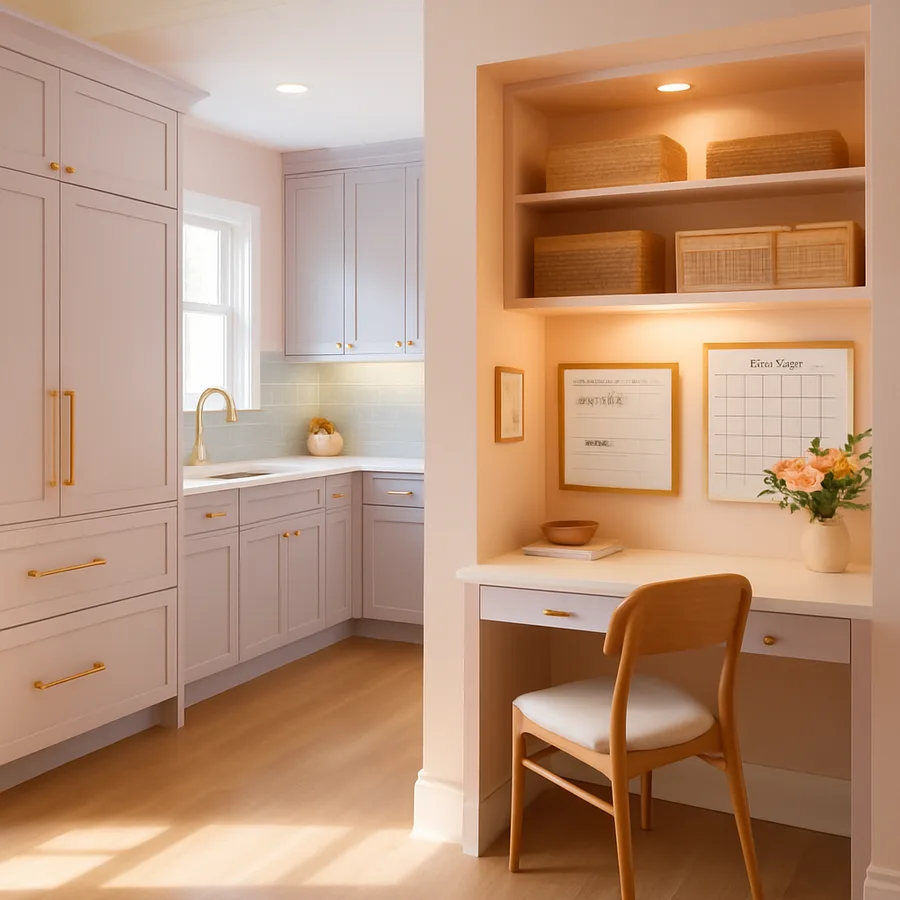
The kitchen has long been the unofficial command center of the American home, the place where school permission slips get signed, weeknight menus get debated, and the family calendar gets argued over in real time. The pocket office formalizes that reality. It is a tightly planned, two-to-four-foot run of cabinetry tucked into the kitchen footprint, equipped with a writing surface, a charging shelf, a printer cubby, and a clearly visible scheduling wall that makes weekly planning a five-minute task rather than an hour-long hunt for paperwork. Done well, the pocket office disappears when company arrives and reappears the moment a parent needs to triage a school week.
The category is growing for good reason. According to a Bureau of Labor Statistics American Time Use Survey, working parents spend roughly two and a half hours per day on household coordination tasks, much of which happens at the kitchen table or counter. Burying that work into a dedicated nook recovers the dining surface for actual eating, which both kitchen designers and family therapists have been quietly recommending for years. Where in your kitchen do permission slips currently land? If the honest answer is "wherever there is space," your kitchen is asking for a pocket office.
What Counts as a Pocket Office and What Does Not
A true pocket office has four non-negotiable features. It has a horizontal writing surface at desk height, typically 29 to 30 inches, that is deep enough for a laptop and a notebook side by side. It has a vertical planning surface within arm's reach, whether a cork board, a magnetic chalk wall, a dry-erase panel, or a simple calendar frame. It has integrated power, ideally a small undermount strip with USB-C, so charging never competes with food prep outlets. And it has at least one closed storage element, drawer or door, where loose paperwork can disappear before guests arrive.
What a pocket office is not, despite frequent confusion in real estate listings, is a desk-height countertop slapped between two cabinets without any of the above. That kind of catch-all surface inevitably becomes a clutter trap because nothing has been designed to enter or leave it. The pocket office is small, but every inch is purposeful. Square footage is not the metric that matters; intentionality is.
The minimum viable footprint is roughly 24 inches wide by 18 inches deep, which fits between two standard base cabinets and accepts a slim chair or stool that tucks fully under the surface. Generous installations stretch four to six feet wide and may include a printer drawer, a paper sorter, and a tall slim cabinet for a vacuum or step stool. Anything larger usually crosses into the territory of a full home office and stops being "pocket" in spirit.
Site Selection Inside the Kitchen Floor Plan
Where you put the pocket office matters more than what you put in it. Kitchen designers generally avoid placing a desk inside the working triangle formed by the sink, range, and refrigerator, because parking a chair there blocks the path that does the most labor in the room. The strongest locations are usually at the end of a run of cabinetry, in a dead corner that lacks plumbing, or against an unbroken wall outside the cooking zone. A spot near a window is ideal both for daylight and because the view interrupts the screen-glaze that comes from spending too long on a laptop.
If your kitchen has an open-concept layout, consider how the chair will feel from the living area. A pocket office facing into the family room creates a connection that working parents often appreciate; one facing the wall feels more focused and less performative. Avoid placing the desk under wall cabinets that are deeper than nine inches, because the overhang will collide with the user's head when they stand up. The National Kitchen and Bath Association publishes generous clearance guidelines, and kitchen renovators referencing those guidelines, available at the National Kitchen and Bath Association site, rarely regret the extra elbow room.
If your existing kitchen has no obvious slot for a pocket office, look at the pantry. A walk-in pantry with a window or a borrowed-light interior can absorb a desk along its end wall, which both expands counter use in the main kitchen and gives the office surprising privacy. Have you ever opened a pantry and thought "this room is doing too little"? That instinct is usually correct, and a pocket desk is among the easiest ways to fix it.
Surface Height, Seating, and the Ergonomics That Actually Matter
Most kitchen counters sit at 36 inches, while desks typically sit at 29 to 30 inches. The pocket office should follow the desk standard, not the counter standard, because typing at counter height produces shoulder pain within weeks for most users. Drop the surface seven inches relative to the surrounding cabinets and you get a cleaner visual rhythm too, since the eye reads the desk as deliberately different rather than as an awkward extension.
For chairs, prioritize a slim profile that fully tucks under the surface so the kitchen feels uncluttered when the office is not in use. A simple wood side chair with a thin seat cushion outperforms a bulky task chair in most pocket-office applications. If the user spends more than 30 minutes at a stretch at the desk, however, ergonomics matter more, and a small, low-profile task chair becomes worth its visual weight. Look for adjustable seat height and a backrest that supports the lumbar curve, the two features the OSHA ergonomics guidelines emphasize for short and medium-duration computer work, summarized at OSHA's ergonomics resource page.
The ergonomics conversation also extends to the screen. If the user works on a laptop, plan for a low-profile laptop riser and an external keyboard, so the screen lands at eye level without the user hunching forward. A small, wall-mounted monitor on a swing arm is even better when budget allows; it folds back against the wall when not in use, which preserves the kitchen aesthetic. BIFMA, the trade association for office furniture, publishes performance standards for desks and chairs, and choosing pieces that meet BIFMA standards, described at the Business and Institutional Furniture Manufacturers Association site, helps ensure the furniture survives daily mixed-use abuse.
Storage for Schedules, Recipes, and Real Family Paperwork
The single most useful storage piece in a pocket office is a vertical paper sorter with five to seven slots, one each for school, sports, medical, bills, recipes, and "this week." Train every member of the family to drop incoming paper into the correct slot, and the kitchen counter stops being a paperwork dumping ground within a few weeks. A second drawer fitted with file rails handles longer-term storage for tax receipts, owner's manuals, and the medical packets that accumulate during any year with kids.
Above the desk, a shallow shelf at roughly eye level holds the books and binders the family uses weekly. A meal-planning binder, a cookbook or two, and a small box of recipe cards are common. A magnetic or cork strip running the full width of the cabinet serves as the working planning surface; permission slips, RSVP cards, and the current week's school menu pin up here and come down when handled. Avoid the temptation to mount a giant pin board, which only invites clutter; a strip 24 to 36 inches wide and 6 to 8 inches tall is large enough to be useful and small enough to enforce discipline.
For meal planning specifically, a dedicated set of tools earns its space quickly. A weekly menu printable in a simple acrylic frame, refilled with a dry-erase marker each Sunday, makes the week visible to everyone in the household. A standing tray for the current grocery list keeps it off the fridge. A small plastic bin labeled "to try" holds recipe clippings and printouts that you have not yet committed to. Have you ever realized at 5 p.m. on a Wednesday that nothing was thawed because no one had thought past Tuesday? That bin and that frame, used together, make that scenario rare.
Lighting, Power, and the Always-On Family Display
A pocket office needs three layers of light: ambient from the surrounding kitchen, task lighting directly on the desk, and a soft accent light that makes the niche feel inviting at night. The most effective task light is a slim LED bar mounted to the underside of the lowest shelf, throwing a clean white beam across the desk surface without glare. Add a small dimmable lamp for the evenings when the user is paying bills after the kids are in bed; warm light at low brightness keeps the kitchen from feeling like a workplace at night.
Power planning is where most pocket offices fall short. A single duplex outlet on the back wall is rarely enough; you will want one circuit that handles a laptop, a printer, a phone charger, a tablet charger, and possibly a small monitor. Plan a four- to six-outlet strip mounted under the front edge of the desk, ideally with USB-C built in, and a dedicated outlet inside the printer cubby that does not share with anything else. Have a licensed electrician verify the circuit's load and confirm whether your jurisdiction requires tamper-resistant receptacles in this kind of installation; many do.
If the household leans technical, consider an always-on family display: a small wall-mounted tablet running a shared calendar, a chore list, or a meal-planning dashboard. Mount it at standing height beside the desk, on a swing arm, with a hidden charging cable run through a grommet. Position it where everyone can glance at it without sitting down, because the entire value of the display is that it informs the household passively. A digital display does not replace the paper calendar; the two work together, with paper handling immediate weekly tasks and the screen handling longer-term coordination.
Pocket Offices That Disappear: Cabinetry, Color, and Style Integration
The hallmark of a great pocket office is that it reads as a calm, intentional part of the kitchen rather than a bolt-on workspace. The simplest way to achieve that is to match the cabinetry exactly, using the same door style, hardware, and finish as the rest of the kitchen. The desk surface itself can match the counter or contrast deliberately; many designers like a wood-tone desk against a stone counter, which signals function without screaming "office."
Color choices matter. A pocket office tucked into a soft white kitchen often benefits from a slightly darker or warmer accent on the inside back of the niche, painted or wallpapered, to add depth and to camouflage the inevitable papers and sticky notes. A pocket office inside a darker, moodier kitchen can do the opposite, lightening the inside with a creamy paint or a soft natural fiber wallcovering to draw the eye in and brighten the work surface. Either move beats leaving the niche the same color as the surrounding cabinetry, which tends to flatten the visual.
Hide screens, cables, and clutter behind a single closing element when possible. Bifold doors, a tambour, or a simple barn-style sliding panel can all turn the office back into clean cabinetry in a few seconds. Designers experienced with hardworking family kitchens, including many associated with the American Society of Interior Designers, frequently recommend this kind of "off switch" so the kitchen can transition from operations center to dinner-party setting without a clean-up sprint.
Conclusion: A Small Footprint That Reorganizes the Whole House
The pocket office is one of those rare renovations that punches well above its square footage. It moves household admin out of the kitchen counter and into a defined zone, gives the family calendar a permanent and visible home, and quietly disciplines the paper flow that otherwise creeps across every flat surface in the house. Most households that install a well-planned pocket office report that the kitchen feels larger within weeks, even though no walls have moved, simply because the counter is no longer doing three jobs.
The recipe is consistent across budgets. Pick a location outside the working triangle, drop the surface to desk height, integrate real power and good task light, and design storage around the actual paperwork your family handles, not a generic stationery aesthetic. Add a planning wall that updates weekly, a meal-planning frame that updates Sundays, and ideally a way to close the niche when company arrives. Match the cabinetry so the office reads as kitchen, and pick a chair that tucks fully under the surface so the room feels open the moment the user stands up.
Finally, treat the office as a habit-forming tool, not a furniture purchase. The desk only works if the family uses it consistently, and consistency comes from low-friction design: enough light, enough power, enough labeled storage, and a clear visible surface for this week's plan. Build in those four ingredients and the rest takes care of itself.
Your action step this week: walk through your kitchen with a tape measure, identify the single best 24- to 48-inch wall segment outside the working triangle, and sketch a pocket office on that wall using the principles above. Bring the sketch to your contractor or cabinet designer at your next conversation. Even a modest pocket office, built from stock cabinets and a custom planning wall, can reorganize the rhythm of an entire household within a single weekend of installation.
More Articles You May Like



Comments
Post a Comment