Arched Wall Mirrors for Entryways and Living Room Focal Points
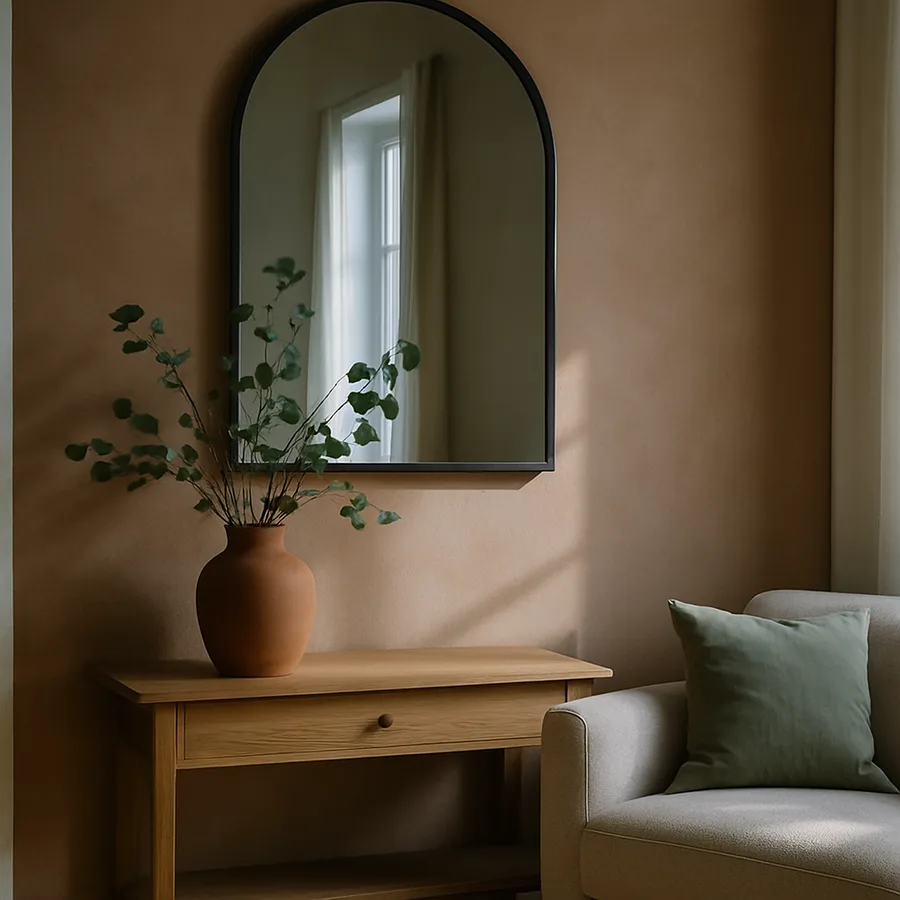
The arched wall mirror has quietly become one of the most requested decorative elements in contemporary interiors, and the reason is not purely aesthetic. When you walk into a home and immediately feel a sense of balance, openness, and intention at the threshold, there is almost always a well-chosen mirror doing invisible work. The arched silhouette, borrowed from classical architecture and Mediterranean doorways, softens the rigid rectangles that dominate most rooms and introduces a vertical rhythm that the eye genuinely enjoys. In entryways and living rooms, where first impressions are formed in seconds, this shape is no accident.
Homeowners are also responding to measurable data: according to a National Association of Realtors buyer survey, staged homes featuring strategically placed mirrors sell up to 73% faster than comparable unstaged listings, and arched mirrors consistently rank among the most photographed staging accessories. Meanwhile, a 2025 trend report from the Houzz design community tracked a 48% year-over-year increase in search traffic for curved and arched mirror shapes, signaling that this is not a passing moment but a structural shift in how people frame their walls.
Why the Arched Silhouette Works in Transitional Spaces
Entryways are transitional by nature. You are leaving one state of mind, the outside world, and entering another, the private interior. A rectangular mirror mounted here performs the function of reflection but does little to ease that psychological shift. An arched mirror, by contrast, introduces a doorway-within-a-doorway effect that architects refer to as a threshold motif. The curve at the top mimics the keystone arch, a feature that has signaled passage, welcome, and shelter in Western architecture since Roman times.
In a living room, the same principle operates differently. Living rooms are gathering spaces, and gathering spaces benefit from visual anchors that pull attention without demanding it. The arch is subtly magnetic. It draws the eye upward, which is especially valuable in rooms with standard eight-foot ceilings where you want the illusion of extra height. Interior designer Kelly Wearstler has frequently noted in her published work that vertical elements create what she calls "breathing room for the ceiling," and arched mirrors accomplish this without adding bulk or drawing attention away from the surrounding décor.
Have you ever noticed how certain rooms feel taller than they actually are? Part of that illusion comes from the shapes on the walls. A rectangle stops the eye horizontally; an arch keeps it moving. When you place an arched mirror above a console table or a sofa, you are not just decorating, you are choreographing how visitors read the room.
Entryway Placement: Height, Width, and Proximity to the Door
Placement is where most homeowners go wrong, and it is also where a few precise rules can make an enormous difference. The general guideline from the American Society of Interior Designers (ASID) is that the center of any decorative mirror should sit at roughly 57 to 60 inches from the floor, which corresponds to average human eye level. In an entryway, however, you also have to account for the mirror's function as a last-look checkpoint before leaving the house. That means the top of the arch should ideally clear the top of your own head with room to spare, while the bottom should reveal at least your shoulders and upper torso.
Width matters too. Over a console table, the mirror should span between two-thirds and three-quarters of the console's length, never wider than the furniture itself. If your console is 48 inches wide, target an arched mirror in the 32 to 36 inch width range. This proportion keeps the vignette visually grounded. An oversized mirror perched on a narrow console looks top-heavy, and a mirror that is too small gets swallowed by the wall.
Proximity to the door is the detail almost no one mentions, yet it affects how well the mirror performs. If the front door swings inward and the mirror sits on the adjacent wall, make sure the door at full swing does not strike or scrape the frame. Building codes referenced by the International Code Council recommend a minimum 36-inch clear entry path, and your mirror placement should respect that same buffer. A mirror hung too close to the swing arc will eventually chip, crack, or fall.
Living Room Focal Points: Above the Mantel, the Sofa, or the Console
In the living room, the arched mirror has three primary homes: above the fireplace mantel, above the longest sofa, or above a console table used as a bar or display surface. Each position demands a slightly different treatment. Above a mantel, the mirror reinforces the vertical chimney breast and often reflects the chandelier or pendant across the room, doubling the light. Above a sofa, it anchors the largest piece of furniture and prevents the dreaded "floating wall" effect where the sofa appears adrift against a blank surface.
A common question from readers is whether an arched mirror can coexist with other wall art in the same room. The answer is yes, provided you respect scale hierarchy. The mirror should be the dominant shape on its wall; smaller framed art or gallery arrangements should live on adjacent walls and echo the arch with softer curves such as round prints or oval frames. A 2024 survey by Architectural Digest found that 62% of professional designers consider mirror placement more consequential than artwork placement when establishing a room's focal point, precisely because mirrors add light and perceived depth in ways that flat art cannot.
Another reader question worth addressing: should the arched mirror match the style of the room, or contrast with it? The most successful rooms tend to use the mirror as a bridge. In a modern room with clean-lined furniture, an arched mirror with a slightly ornate or aged-brass frame introduces warmth. In a traditional room full of tufted upholstery and mahogany, a minimalist black iron arch provides visual relief. Contrast, used thoughtfully, is almost always more memorable than perfect matching.
Frame Materials and Their Light Behavior
Not all arched mirrors reflect light the same way, and the frame plays a surprising role. A thin metal frame in black, brass, or brushed nickel lets the mirror surface do nearly all the work; the reflection spreads unimpeded to the edges, which maximizes perceived room size. A wide wooden frame, particularly in a distressed or limewashed finish, absorbs more peripheral light and makes the mirror feel more like an object on the wall rather than a window through it. Neither is wrong, but they serve different goals.
The Glass Association of North America publishes technical guidelines on mirror silvering quality, and they note that mirrors with a copper-free backing resist oxidation better in humid rooms. This matters less in a dry living room but becomes critical near entryways in coastal or humid climates where salt air and temperature swings can dull the silvering within a few years. When shopping, look for terms like "copper-free," "eco-silver," or "moisture-resistant backing" on the product description.
Finish finishes also interact with the surrounding décor. A warm gold arch picks up the undertones in oak flooring and caramel leather; a cool chrome or polished nickel arch sharpens the cleanness of marble, white walls, and gray upholstery. Designers at Studio McGee have popularized a layered approach in which the arch frame deliberately clashes slightly with one element in the room to create tension, which is what makes a space feel collected rather than catalog-purchased.
Anchoring Safely: Hardware, Drywall, and Weight Distribution
Large arched mirrors can weigh anywhere from 25 to over 80 pounds, and mounting failures are more common than most homeowners realize. The U.S. Consumer Product Safety Commission (CPSC) has issued advisories on heavy decorative mirrors, noting that falling wall décor accounts for thousands of household injuries annually, many of them preventable with correct anchoring. The fix is not complicated, but it does require resisting the temptation to use a single drywall nail.
For any mirror over 20 pounds, use two anchor points spaced to match a stud or install heavy-duty toggle bolts rated for at least double the mirror's weight. French cleats, which consist of two interlocking angled brackets, distribute weight across a wider area and are the gold standard for oversized mirrors. A licensed contractor or member of the National Association of Home Builders can usually install one in under thirty minutes for a modest fee.
Another safety consideration: the floor underneath. If the mirror is leaning or partially resting on a console, make sure the console itself is secure and cannot tip forward if bumped. In households with young children or pets, furniture anchor straps sold at most hardware stores add a critical second line of defense. Mirrors do not forgive gravity, and the cost of replacing a cracked arched mirror, plus flooring damage, often exceeds the cost of the mirror itself.
Styling the Vignette Beneath the Arch
A mirror on a bare wall is a mirror. A mirror above a carefully composed vignette becomes a room's emotional center. Underneath an arched entryway mirror, the classic layered vignette includes a low console, a sculptural table lamp, a ceramic bowl or tray for keys, a stack of two or three hardcover books, and a single organic element such as a eucalyptus stem or a small orchid. The rule of odd numbers applies: three to five objects read as intentional, while four or six can feel formal and static.
In the living room, the space beneath an arched mirror might instead hold a console styled as a bar, with a pair of decanters, short tumblers, and a small tray. Or it might hold nothing at all, if the mirror sits above a sofa. Empty space is not a failure; it is breathing room. Designers affiliated with the International Interior Design Association (IIDA) often recommend leaving at least 20 to 30 percent of any display surface intentionally bare to prevent visual fatigue.
Lighting the vignette matters as much as the objects in it. A small picture light mounted above the mirror's arch, or a pair of sconces flanking it, transforms the piece at night. Without supplemental light, even a beautifully framed mirror disappears after sunset. Warm bulbs in the 2700K range flatter most frame finishes and complement the ambient light of lamps and overhead fixtures.
Conclusion
An arched wall mirror is not merely a decorative choice; it is a structural element that shapes how a room breathes, how light travels, and how guests feel the moment they cross the threshold. The curve at the top performs architectural work that a rectangle cannot, introducing softness, vertical momentum, and a subtle reference to classical doorways that registers even when the viewer cannot name why. Whether you mount it above an entryway console, a sofa, or a mantel, the arched mirror rewards careful sizing, intentional placement, and honest attention to the hardware that holds it in place.
The financial case is also real. A well-placed mirror amplifies natural light, reducing the perceived need for additional fixtures, and consistently appears on the short list of design changes that influence both resale value and buyer first impressions. Given the relatively modest investment, often between two hundred and twelve hundred dollars for a well-made piece, the return on attention is among the highest in the entire décor category. Few other objects can transform a wall, a room, and a mood so quickly.
If you are considering an arched mirror for your entryway or living room, start by measuring the wall, the furniture beneath it, and the ceiling height, then work backward from those numbers rather than falling in love with a mirror first. Take a photograph of the wall, sketch the proposed placement, and live with painter's tape outlines for a day or two before committing. The best rooms are rarely accidental; they are the product of small, informed decisions made in the right order.
Ready to transform your entryway or living room focal point? Browse our curated collection of arched wall mirrors, download the free Interior Bliss placement guide, and sign up for our weekly newsletter to receive expert styling advice, exclusive discounts, and seasonal trend reports delivered directly to your inbox.
More Articles You May Like



Comments
Post a Comment