Cozy Winter Living Room Layers: Throws, Pillows, and Rugs
The Psychology of Layering for Winter Comfort
When temperatures drop and daylight contracts to a few brief hours, the living room becomes the emotional center of the household. It is where families gather, where guests are welcomed, and where the longest evening hours are spent. Layering textiles in a living room during winter is not merely a decorative exercise; it is a response to a deep human need for warmth, enclosure, and tactile comfort. The act of wrapping yourself in a throw or sinking into a pile of pillows on a cold evening satisfies something primal, a desire for shelter that goes well beyond what the thermostat can provide.
Research published by the Environmental Design Research Association (EDRA) has demonstrated that perceived warmth in interior spaces is influenced as much by visual and tactile cues as by actual air temperature. Rooms with visible soft textiles, warm-toned lighting, and layered surfaces are consistently rated as feeling warmer than minimally furnished spaces at identical thermostat settings. This means that investing in winter textile layers is not just about aesthetics; it can genuinely reduce your reliance on heating and lower energy costs by making occupants feel comfortable at slightly lower ambient temperatures.
Have you ever noticed how a hotel lobby feels inviting on a cold day, even before you reach the fireplace? That feeling is engineered through textile layering: heavy curtains at the windows, upholstered seating with multiple cushions, thick rugs underfoot, and throws positioned as visual invitations to settle in. You can apply the same principles in your own living room with materials and investment levels appropriate to your budget. The goal is a space that announces warmth the moment you walk in, a room that looks as good as it feels.
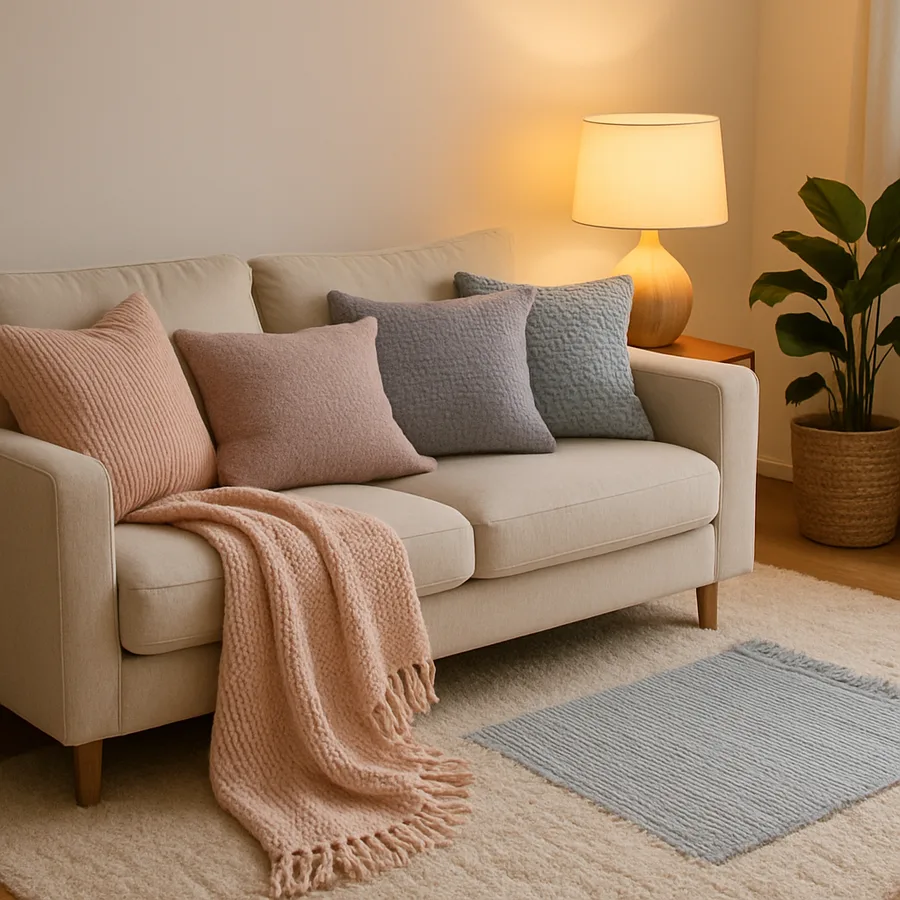
The concept of layering borrows from fashion, where combining multiple garments creates both warmth and visual interest. In interior design, layering means building up textile surfaces from the floor to the furniture to the accessories, creating depth that a single textile element cannot achieve alone. A sofa with one throw looks pleasant. A sofa with a textured throw, three varied pillows, positioned near a plush rug and framed by heavy curtains, looks like a destination. Each layer adds to the cumulative effect, and the whole becomes significantly more than the sum of its parts.
Selecting Throws That Perform and Look Beautiful
The throw is the most versatile textile in a winter living room. It serves as a blanket, a decorative accent, a color anchor, and a texture source all at once. But not all throws are created equal, and selecting the right ones requires attention to fiber content, weight, size, and hand feel. Wool throws are the gold standard for winter warmth, and within that broad category, the range of options is enormous. Merino wool is soft, fine-gauge, and lightweight relative to its warmth. Lambswool is lofty and resilient. Shetland wool has a rustic character with more visible texture. Each type produces a different look and feel, even when the color is identical.
The National Kitchen and Bath Association (NKBA) may focus on kitchens and bathrooms, but their research on material quality applies broadly: consumers increasingly prioritize natural fibers over synthetics, citing both sustainability and sensory quality as motivating factors. This trend holds especially true for throws, where the difference between a wool or cashmere throw and a polyester fleece is immediately apparent to anyone who touches them. Natural fibers breathe, regulate moisture, and develop a patina over time that synthetics cannot replicate. If budget allows, invest in at least one high-quality natural fiber throw for your primary seating area.
Cashmere throws occupy the luxury end of the spectrum and deliver an unmatched combination of softness, warmth, and lightweight drape. A genuine cashmere throw weighs far less than an equivalent wool one while providing comparable insulation, making it ideal for living room use where you want warmth without bulk. The Cashmere and Camel Hair Manufacturers Institute recommends looking for throws with a fiber content of at least 90 percent cashmere and a weight of at least 300 grams for adequate warmth and durability. While the upfront cost is higher, a well-maintained cashmere throw can last decades.
How you display your throws matters as much as which ones you choose. A throw folded neatly over the arm of a sofa looks intentional and inviting. One draped casually over the back of an armchair suggests relaxed comfort. A collection of throws stacked in a large basket beside the seating area creates a self-serve invitation for guests to help themselves. Avoid bunching throws into shapeless lumps on cushions, which reads as messy rather than cozy. The goal is an arrangement that looks effortlessly styled while remaining genuinely accessible for actual use. A throw that looks too perfect to touch defeats its own purpose.
Building a Pillow Collection With Depth and Variety
Pillows are where a winter living room gets its personality. While throws provide warmth and rugs ground the space, pillows introduce pattern, texture, and color variety at a scale that is easy to change, affordable to experiment with, and forgiving of bold choices. A single sofa can comfortably hold three to five pillows in varying sizes, and the combination of those pillows sets the visual tone for the entire seating area. Getting the mix right requires thinking about contrast: contrast in texture, contrast in scale, and contrast in pattern density.
Start with texture as your primary variable. In winter, you have access to the richest textile vocabulary of the year: velvet, boucle, chunky knit, faux fur, wool felt, and corduroy are all seasonally appropriate and visually warm. A successful pillow grouping might include a large velvet lumbar pillow in a deep jewel tone, a medium boucle square pillow in a warm neutral, and a smaller knit pillow in a complementary color. The textural variety creates visual interest that prevents the arrangement from looking flat, even if the color palette is restrained. According to Houzz, velvet and boucle remain the most searched pillow textures during the autumn and winter months.
Scale variation is the second key to a well-composed pillow arrangement. Mixing pillow sizes creates depth and prevents the lineup from looking like a uniform row. Place larger pillows (typically 22 to 24 inches square) at the back, medium pillows (18 to 20 inches) in front of those, and finish with a smaller accent pillow or a lumbar shape (12 by 20 inches) at the front. This layered sizing creates a cascading effect that invites the eye to move through the arrangement rather than bouncing off a flat wall of identically sized cushions.
Pattern deserves careful consideration but should not be feared. If your throws and rug are predominantly solid, pillows are the natural place to introduce pattern. A geometric print, a plaid, or an abstract motif in your winter color palette adds energy without overwhelming the room. The traditional design guideline suggests mixing pattern scales: one large-scale pattern, one medium, and one small or textural. But in a winter context where the overall mood skews rich and layered, you can also succeed with all solids if your textures are varied enough to carry the visual weight. The goal is a collection that feels gathered over time, not purchased in a matching set.
Rugs That Transform Cold Floors Into Warm Foundations
A living room rug in winter does more than protect hardwood or tile from foot traffic. It provides thermal insulation between your feet and the cold floor surface beneath, absorbs sound to create a quieter and more intimate atmosphere, and defines the seating area as a cohesive zone within the larger room. The right winter rug transforms a living room from a space you pass through into a space you settle into. It is the foundation layer upon which all other textile decisions are built, and its selection deserves proportional attention.
For winter warmth and luxury, high-pile wool rugs are difficult to surpass. A thick wool rug with a pile height of half an inch or more provides genuine insulation, and the density of the fibers creates a cushioned surface that feels indulgent underfoot. Hand-knotted wool rugs from traditional weaving regions offer exceptional quality and character, though they represent a significant investment. Machine-made wool-blend rugs provide a more accessible alternative with similar thermal benefits. The Oriental Rug Importers Association (ORIA) notes that wool rugs naturally resist staining, repel moisture, and maintain their appearance for decades with proper care, making them a sound long-term investment.
Rug sizing is a frequent source of error in living rooms, and the mistake almost always runs in the same direction: too small. A rug that is too small for the seating arrangement floats in the center of the room like an island, failing to connect the furniture grouping and leaving cold floor exposed where feet actually rest. The general rule is that all front legs of seating furniture should rest on the rug, and ideally the rug extends at least 18 inches beyond the furniture edges. For a standard sofa-and-chairs arrangement, this typically means a rug of at least 8 by 10 feet. Larger rooms may require 9 by 12 or even bigger.
Layering rugs is a technique that adds exceptional depth to a winter living room. Place a larger, neutral-toned flatweave or sisal rug as a base layer, then position a smaller, richer rug on top as a focal accent. This approach works particularly well when you want the warmth of a thick rug in the primary seating area but prefer a lighter treatment in the surrounding space. The layered look adds visual complexity and allows you to mix textures, from a rough jute base to a plush wool top layer, in a way that a single rug cannot achieve. It also gives you flexibility to remove the top layer in warmer months while keeping the base in place year-round.
Color and Light: Setting the Winter Mood
The colors you choose for your winter textile layers shape the emotional atmosphere of the room as powerfully as the textures and materials themselves. Warm, saturated tones are the backbone of a winter living room palette: deep burgundy, forest green, navy, burnt sienna, chocolate brown, mustard gold, and rich plum all read as warm and enveloping. These colors absorb light rather than reflecting it, which creates a sense of intimacy and enclosure that lighter tones cannot replicate. Combined with the soft glow of lamplight and firelight, deep colors transform a living room into a refuge from the grey winter world outside.
Neutrals play an equally important role, providing the breathing room that prevents a winter palette from feeling heavy or oppressive. Warm neutrals like cream, oatmeal, camel, and soft taupe balance richer accent colors without introducing the coolness that white or grey can bring. A cream boucle pillow between two deep green velvet ones provides visual relief and keeps the arrangement from reading as monotone. The interplay between saturated and neutral tones creates rhythm across the textile layers, guiding the eye through the room in a way that feels natural and balanced.
Lighting deserves consideration as a partner to your textile choices. Winter evenings are long, and the quality of artificial light in your living room determines how your carefully chosen colors and textures actually appear after dark. Warm-toned bulbs in the 2700K range complement winter palettes beautifully, casting a golden glow that enriches deep colors and softens textures. Better Homes and Gardens recommends a layered lighting approach for winter living rooms: ambient overhead light on a dimmer, task lighting from table and floor lamps, and accent lighting from candles or shelf-mounted fixtures. This combination allows you to adjust the room's mood from functional to intimate as the evening progresses.
Do your current winter textiles feel cohesive, or have they accumulated randomly over multiple seasons? Take stock of what you have and identify gaps. Perhaps you have warm throws but your pillows are leftover summer pieces in cool tones. Maybe your rug is the right size but too light in color to anchor a winter arrangement. Addressing these gaps strategically, rather than replacing everything at once, builds a winter textile collection that improves each year. Buy one quality piece per season, a beautiful wool throw this year, a set of velvet pillow covers next year, and within a few cycles you will have a winter living room that feels genuinely luxurious.
Maintaining and Storing Your Winter Textile Investment
Quality winter textiles represent a real financial investment, and protecting that investment through proper care and storage ensures you get years of beauty and performance from each piece. Wool throws and pillow covers should be aired regularly during the season, either outdoors on a dry day or in a well-ventilated room, to refresh the fibers and release any trapped moisture or odors. Spot clean stains promptly with a gentle wool-safe detergent, and reserve full washing or dry cleaning for end-of-season care. Overwashing wool accelerates fiber breakdown and can cause shrinkage, so less frequent cleaning with proper maintenance between washes is the best approach.
Rugs require their own care regimen. Vacuum high-pile wool rugs weekly during winter months, using a suction-only setting if available to avoid pulling loops or damaging the pile. Rotate the rug 180 degrees every few months to distribute wear evenly, especially in high-traffic zones around seating areas. Professional rug cleaning every one to two years removes deep-set dirt and allergens that regular vacuuming cannot reach. The Institute of Inspection, Cleaning and Restoration Certification (IICRC) recommends professional cleaning for any wool or silk rug, as improper cleaning methods can cause irreversible damage to natural fibers.
When spring arrives and it is time to transition your living room to lighter layers, store winter textiles carefully. Clean every piece before storage, as body oils, food residue, and perspiration attract moths and can cause permanent staining if left untreated over months of storage. Fold throws and pillow covers with acid-free tissue paper between folds to prevent creasing. Store in breathable cotton bags or cedar-lined chests rather than plastic containers, which trap moisture and prevent air circulation. Cedar and lavender provide natural moth deterrence and leave a pleasant scent on stored textiles.
Building a winter textile collection is a cumulative project that rewards patience and selective purchasing. Rather than buying everything in a single shopping trip, identify the pieces that will make the greatest impact in your specific living room and prioritize those first. A stunning wool throw and two or three quality pillow covers can transform a sofa overnight. A properly sized rug changes the entire room. Each addition raises the baseline, and over several winters, your collection evolves into something that feels genuinely personal and irreplaceable. Start with the piece you will reach for most often on a cold evening, the one that makes you want to stay in the room a little longer, and build from there. For professional guidance on creating cohesive seasonal interiors, explore the resources available through ASID.
More Articles You May Like



Comments
Post a Comment