Walkout Basement Living Room Ideas With Natural Light Maximized
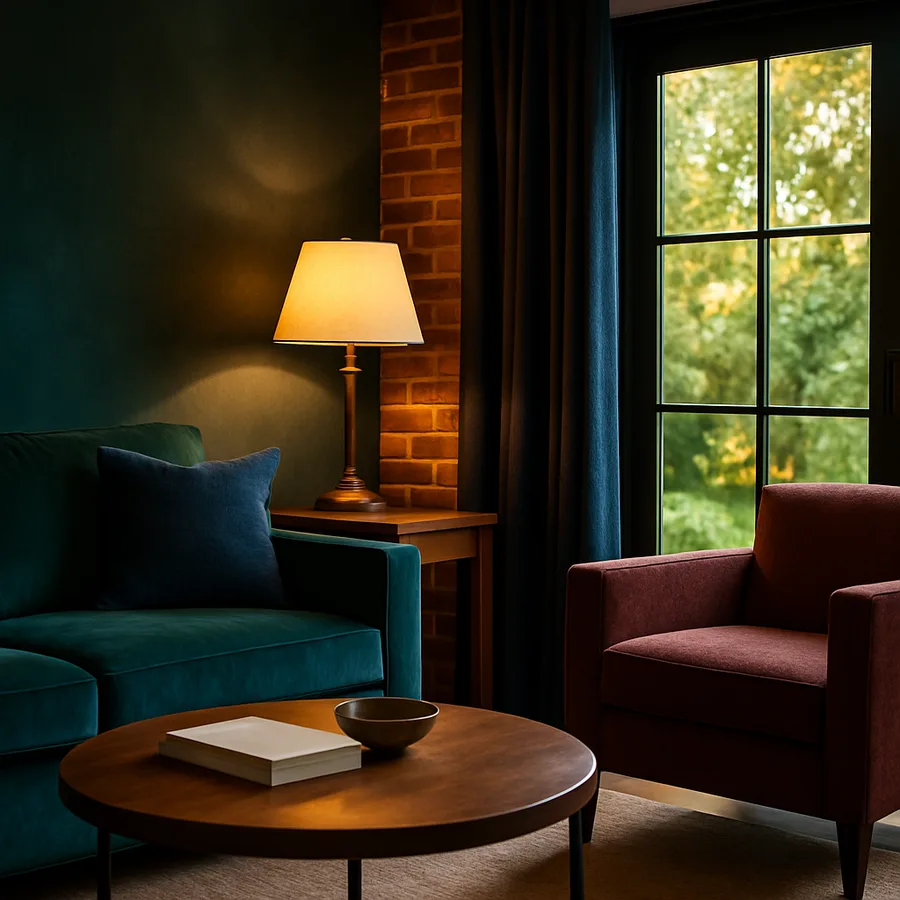
A walkout basement starts with an enormous advantage over conventional below-grade spaces: at least one exterior wall opens at grade level, which means you can install full-height doors and windows that pour daylight into the interior all day long. Treated well, a walkout living room rivals any main-floor family room and often outperforms it on quiet, privacy, and connection to the backyard. The U.S. Department of Energy (DOE) notes that rooms with well-planned south- and east-facing glazing can reduce daytime lighting energy demand by 20 to 60 percent compared to fully enclosed rooms, a savings that compounds year over year.
This guide is built around one idea: light is the material. Every layout decision, finish choice, and furniture placement either amplifies daylight or squanders it. The sections below walk through glazing strategy, reflective finish selection, layout geometry, window treatments, electric-light layering that complements sun patterns, and the technology that makes a walkout feel indoor-outdoor even in winter. Read in order the first time; return to individual sections as you finalize specifications.
Push the Glazing Envelope
Most walkout basements are built with builder-standard patio doors and a single window or two, which is roughly 60 to 75 percent of the glazing the wall could actually support. Pushing to a larger opening changes the room profoundly. Consider a multi-panel sliding door that stacks or pockets, a fixed picture window flanking the door, and transom windows above to catch high-angle light. The National Fenestration Rating Council (NFRC) labels on each unit report U-factor, solar heat gain coefficient (SHGC), visible transmittance (VT), and air leakage, and you want VT as high as reasonably possible (above 0.50) in rooms where daylight is the priority.
Orientation shapes everything. A south-facing wall delivers consistent daylight all day with the strongest midday energy; east-facing glass produces dramatic morning light; west-facing glass can overheat in late afternoon without shading. A north-facing walkout gives the softest, most even daylight but the smallest energy contribution. The ENERGY STAR program certifies windows and doors tuned for specific climate zones, and picking the right product for your zone balances daylight with thermal performance. You can visit ENERGY STAR's window resources for current climate-zone maps and certified product lookups.
Before you commit to sizes, ask yourself whether the sill height and head height match the view you actually care about. A sill of 18 inches feels generous and furniture-friendly; a sill at 30 inches feels choked. A head height of 8 feet pulls sky into the room; a head height of 6 feet 8 inches feels like a doorway. Small tweaks at the framing stage are free. The same changes after drywall are very expensive.
Color, Finish, and the Physics of Reflected Light
Once light enters, the surfaces inside the room either bounce it deeper or absorb it on contact. Light reflectance value (LRV) is the metric that matters, published on most paint fan decks. Walls in the 70 to 85 LRV range (very soft whites, warm off-whites, pale greige) reflect most of the light that hits them; deep charcoals or navies in the 5 to 15 LRV range absorb it. This does not mean everything must be white, but the primary reflective surfaces (walls, ceilings, large upholstery) should sit high on the LRV scale if daylight is the goal.
Ceilings deserve special attention. A ceiling painted the same LRV as the walls (or one step lighter) creates a seamless "light tent" effect that lifts the room visually. Avoid stark flat-white ceilings in rooms with warm-toned walls; the contrast reads as institutional. The American Society of Interior Designers (ASID) consistently recommends matte or eggshell finishes for ceilings to diffuse light gently, and low-sheen satin for walls to bounce light without glare.
Flooring follows the same logic. A light-toned wide-plank floor (white oak, hickory, or pale LVP) kicks daylight back up into the room, while a dark stain swallows it. Area rugs can add warmth and acoustic softness while still exposing light borders of flooring around the perimeter. The Carpet and Rug Institute (CRI) Green Label Plus program certifies low-VOC rugs that are safe in high-occupancy spaces like a daily family room.
Layouts That Face the Light, Not the Wall
The most common mistake in walkout basements is orienting the sectional or media unit to face the interior wall rather than the glass. This treats the windows as background and undermines the entire advantage of the walkout. Instead, pull the seating toward the center of the room with sightlines that include both the television and the view. Sectionals with chaise ends and low backs preserve that dual orientation without blocking light paths.
Traffic flow matters too. A clear circulation path of 36 to 42 inches between the main seating and the door preserves the indoor-outdoor connection. Avoid placing bulky consoles or bookshelves directly against glass walls; they interrupt the reflection of light off the floor and create visual dead zones. If storage is needed, lean toward low-profile credenzas no more than 36 inches tall that let light pass over them.
Here is a useful design exercise. Imagine a summer afternoon with the doors open, a breeze moving through, and a guest stepping in from the patio with a drink. Can they take three easy steps to a seat, set the drink on a side table, and still see the backyard? If the answer is yes, the layout is working. If the path zigzags or the seat faces away from the view, rethink the furniture plan before buying anything new.
Window Treatments That Disappear at the Right Moments
Great window treatments in a walkout living room are invisible during the day. Top-down, bottom-up cellular shades, motorized solar shades at 3 to 5 percent openness, and side-draw linen drapes on ceiling-mounted tracks all deliver the trifecta of privacy control, glare reduction, and full retraction when not needed. Avoid heavy valances or deep cornices that eat glass height; they look stately in a formal dining room but they rob a family room of the very light you worked hard to bring in.
Solar shades with a solar heat gain coefficient benefit of 30 to 50 percent reduction can prevent a west-facing walkout from overheating on summer afternoons while still preserving enough view to enjoy the backyard. The Attachments Energy Rating Council (AERC) rates window-attachment products across climate zones and provides a directory of certified products, a useful second filter when you are comparing proposals.
Motorization earns its keep in tall glazing. A battery-powered or hardwired motor tied to a home-automation hub can lower shades automatically on hot afternoons and raise them at dawn. Local control via a wall keypad preserves the ability to intervene manually, which matters when a movie starts mid-afternoon and the room needs to dim quickly. Integrating with a lighting control system keeps the whole room responsive to the time of day rather than static.
Electric Light That Complements the Sun
Electric lighting in a daylit room is not a replacement for the sun; it is a complement to it. The Illuminating Engineering Society (IES) recommends designing electric lighting to fill in where daylight falls short, particularly at the perimeter of the room and in evening hours. That means layered ambient, task, and accent fixtures on independent dimmers, all tuned to a warm color temperature (2700K to 3000K) that feels continuous with late-afternoon sunlight.
Wall sconces flanking the media wall, a floor lamp arched over the primary seating, and a pair of table lamps on side tables cover 80 percent of evening needs without a single overhead fixture running. Recessed lights in a walkout should be adjustable gimbals with anti-glare baffles aimed at walls and art rather than centered over seating, which flattens the room and competes with the fireplace or view. The U.S. Department of Energy (DOE) solid-state lighting program publishes performance data on LED fixtures that is useful when specifying a whole-room lighting package.
Have you thought about how the room transitions at dusk? The half-hour between sunset and full dark is when many homes feel dim and uncomfortable because the daylight fades before anyone turns on a lamp. A "dusk" scene on a lighting control system that ramps ambient light up over 10 minutes as the sky darkens eliminates that awkward gap and keeps the room continuously inviting.
Indoor-Outdoor Extensions and the Backyard Interface
The strongest walkout living rooms feel like interior rooms that happen to open onto patios rather than bolted-on accessory spaces. Matching floor materials across the threshold (for instance, porcelain pavers outside and porcelain tile inside of the same plank format) visually erases the edge. A flush-sill multi-slide door with a ADA-compliant threshold continues the floor plane through the opening, which is the detail that separates "good" from "unforgettable."
Covered or partially covered patio areas extend the useful season of the indoor room. Deep overhangs shade the interior in summer and allow low-angle winter sun to warm it. A retractable awning or a louvered pergola certified by the American Institute of Architects (AIA)-recognized manufacturers offers flexible overhead shelter without committing to a permanent roof. The National Association of Home Builders (NAHB) consistently ranks outdoor living as one of the top three features buyers want in new homes, and a walkout living room that connects cleanly to the yard delivers that feature at a fraction of the cost of a separate addition.
Plan the landscape beyond the glass as carefully as the furniture inside. A privacy hedge at 6 to 8 feet creates a backdrop that turns the view into a curated garden scene, while a simple lawn often reads as empty from a seated position inside. Layered plantings, a water feature, and a low-voltage landscape lighting scheme tie the exterior to the interior and extend the enjoyment of the view into the evening. You can visit the American Society of Landscape Architects for directories of licensed landscape designers who specialize in residential indoor-outdoor transitions.
Technology, Comfort, and Future-Proofing
A walkout living room benefits from the same smart-home investments as any high-use space, and a few are especially valuable with lots of glass. Automated HVAC zoning keeps the room comfortable despite afternoon solar gain; a thermostat with a humidity sensor prevents the condensation that can appear on cold glass during winter cooking or showering upstairs; a ceiling fan reverses direction seasonally to equalize temperature between the room and the rest of the house. The DOE estimates that well-managed zoning can reduce heating and cooling costs by 10 to 30 percent, which funds many of these upgrades over a decade.
Acoustics deserve attention even in a bright room. Glass reflects sound sharply, and a large glazed wall can make dialogue harder to follow during movie nights. Adding an area rug, upholstered seating, and one or two acoustic art panels on the opposite wall restores balance without looking like a recording studio. The Acoustical Society of America (ASA) publishes homeowner-friendly primers on residential acoustics that are worth reading before finalizing finishes.
Finally, future-proof the wiring. Pull two CAT6A cables and a conduit sleeve to every likely display, speaker, and access-point location before drywall. The cost to do this during rough-in is negligible; the cost to add it later is dramatic. Label and photograph every cable path for the homeowner's records so future upgrades can happen without opening walls.
Conclusion
A walkout basement living room can be the best room in the house when its design treats daylight as a primary material, not a happy accident. Push the glazing as far as the wall and budget allow; choose high-LRV finishes that bounce that light deep into the room; orient furniture to share the view with the screen; deploy window treatments that disappear on cue; layer electric light to extend the day gracefully; and connect the interior to the yard through matching floors and thoughtful landscape. Every one of those moves rewards the others.
Think of the project in phases. Phase one locks in the glazing, floor, and layout, because those choices shape everything else. Phase two addresses finishes, fixtures, and window treatments, where you can fine-tune the light quality at lower cost. Phase three brings in technology, acoustics, and landscape, turning a good room into a great one. Keeping this order prevents the common trap of picking paint colors before the window package is finalized, which often leads to regrettable compromises.
The payoff is a space that people gravitate toward throughout the day: morning coffee by the east-facing window, midday work at the dining end of the sectional, late-afternoon conversation with the doors open, a movie at night with the shades gently closing on a timer. That kind of continuous use is how a room earns its place at the heart of family life, and it is exactly what a well-planned walkout can deliver.
Begin your walkout transformation by measuring the existing glazing this weekend, noting orientation and any obstructions, and booking a consultation with a licensed architect or an ASID-affiliated designer. Share your measured sketch and your favorite reference images, and ask specifically about glazing size, threshold detailing, and lighting scenes. A focused two-hour meeting will sharpen your brief and set the project up for a result you will love for decades.
More Articles You May Like



Comments
Post a Comment