Self Watering Planter Mechanism Pros And Cons
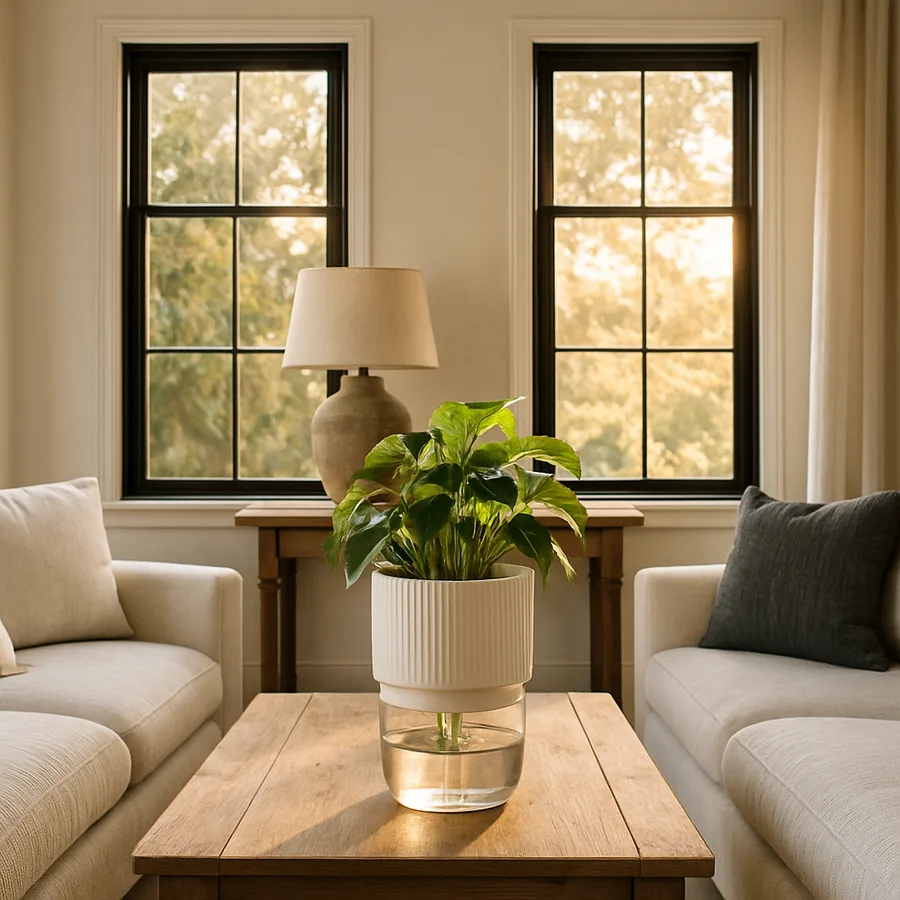
Self-watering planters get sold as the solution to every plant-care problem at once. Forget to water for a week? Solved. Inconsistent moisture? Solved. Travel a lot? Solved. The marketing is so clean it triggers a small skeptical alarm in anyone who has spent time with plants. The truth is more interesting. Self-watering systems are genuinely excellent for specific plants in specific conditions and quietly disastrous for others. The choice of when to use them is what separates a thriving collection from one slowly killed by good intentions.
This guide explains how the mechanisms actually work, where they excel, where they fail, and the decision tree you can use to figure out whether to buy one for your specific situation. I have used them across maybe 40 different plant types over the years. The pattern of wins and losses is consistent enough to be useful.
How A Self-Watering Planter Actually Works
The phrase "self-watering" is a slight misnomer. Nothing self-waters. What these planters do is store a reservoir of water below the soil and deliver it to the root zone passively, either through capillary wicking or through a porous soil-to-water contact zone. The plant draws water as it needs it, and the reservoir extends the time between human refills.
The most common mechanism is the wick system. A fabric or rope wick extends from the reservoir into the soil above. Water moves up the wick by capillary action and dampens the soil from below. As the plant absorbs moisture, more is drawn up. When the wick reaches a saturation equilibrium with the soil, water transfer slows.
The second common design is the capillary mat or sub-irrigation chamber. The pot sits above a reservoir with a small mat or porous shelf separating them. Soil contacts the mat at multiple points and draws water across a larger surface than a single wick. Brands like Lechuza, Hydrofarm, and Click and Grow use variations of this approach. According to a 2023 industry survey by the Garden Center Association, sub-irrigation planters now make up roughly 22 percent of all premium houseplant container sales in North America, up from 8 percent five years earlier.
A third, more sophisticated variant adds a water-level indicator and an overflow drain, giving you visual feedback on reservoir status and preventing overfilling. These are the planters I generally recommend for beginners, because they remove the guesswork from the system.
One mechanical detail that gets overlooked is the air gap. Well-designed sub-irrigation planters maintain an air gap between the bottom of the soil and the water reservoir. This gap is critical - it allows oxygen to reach the lower roots and prevents the soil from becoming permanently waterlogged through direct contact with standing water. Cheaper designs skip the air gap, relying only on capillary action through a wick. They sort of work, but they are also the designs most likely to produce root rot. When evaluating a self-watering planter, lift the inner pot out and look at how the water reservoir interfaces with the soil chamber. If the soil bottom would sit directly in standing water, you are looking at a poor design.
The Real Pros: What These Planters Do Well
Self-watering planters genuinely solve several common problems, and pretending otherwise is dishonest. Let me list what they actually deliver before getting to the limitations.
They buffer against inconsistent watering. If you travel, work long hours, or forget to water for stretches of a week or two, a planter with a 1- to 2-liter reservoir will keep most appropriate plants alive without intervention. For a typical apartment dweller with a peace lily and a pothos, this single benefit is worth the higher price.
They provide more consistent soil moisture than top-watering. Top-watering produces a cycle of saturation followed by progressive drying. Sub-irrigation maintains a more stable moisture gradient - wetter at the bottom, drier at the top, and roots grow downward to follow it. The University of Vermont Extension notes that this gradient encourages deeper, healthier root systems in compatible species.
They reduce surface-level pests like fungus gnats. Fungus gnats lay eggs in the top inch of wet soil. When that top inch stays drier (because water comes from below), the gnat life cycle is interrupted. This is a quiet but real benefit for anyone fighting recurring infestations.
They look clean. No saucer of overflow water on the floor, no soil splash on the leaves, no streaks down the side of the pot. For decor-conscious owners, this matters. Have you ever tried to keep a white pot from getting water stains? Self-watering reservoirs solve that problem at a structural level.
They also reduce risk on hardwood floors and rugs. A traditional pot saucer can overflow if you overwater, leaving a slow puddle that warps wood or stains fiber. A reservoir-based planter contains overflow inside the unit until you intentionally drain it. For anyone with valuable flooring under their plants, this is a meaningful safety feature beyond the convenience benefits.
One last underrated benefit: they simplify plant sitting when you travel. Telling a neighbor "refill the reservoir if it shows empty in the window" is a much more reliable instruction than "water this plant when the top inch of soil feels dry, but not too much, and only if it actually needs it." Friends who would normally kill your plants can keep them alive with a sub-irrigation system because the interface is so simple.
The Real Cons: Where Things Go Wrong
Now the honest other half. Self-watering planters have failure modes that owners often do not see coming.
The biggest problem is plant mismatch. Plants that require periodic dry-down between waterings - most succulents, cacti, Mediterranean herbs like rosemary and lavender, and many ficus species - will slowly rot in constantly-moist sub-irrigation soil. The roots never get the dry phase they evolved to need. Damage is invisible for weeks, then suddenly visible as wilting that no amount of additional water can fix, because the root system has already collapsed.
The second issue is salt and mineral buildup. Top-watering periodically flushes accumulated fertilizer salts and tap-water minerals out the drainage holes. Sub-irrigation does not flush; it accumulates. The University of Maryland Extension warns that over six to twelve months, salt concentrations in self-watering planters can reach plant-damaging levels, particularly if owners use municipal tap water with dissolved minerals or apply fertilizer regularly. The fix is to top-water periodically - every 4 to 6 weeks - to flush, but this defeats half the convenience benefit and most owners never do it.
The third issue is root growth into the reservoir. In wick systems particularly, roots will follow the wick down into the water chamber and grow there. Initially this seems fine. Eventually, the roots clog the reservoir, block water uptake to the soil zone, and create a root mass that drowns when water sits stagnant. This usually shows up in year two of using the same planter without root pruning. Lechuza and similar premium brands address this with engineered shelves that resist root invasion, but cheaper designs do not.
A fourth, less commonly discussed problem is the seedling and small plant mismatch. Self-watering planters are designed assuming root systems large enough to reach down into the soil column and access moisture rising from the reservoir. Small seedlings or recently propagated cuttings have shallow root systems that cannot reach the moisture gradient. In a self-watering planter, the top inch of soil - where these small plants live - stays drier than it would in a conventional pot, because surface watering is not part of the design. New plants need to be either started in conventional pots and transplanted at maturity, or top-watered for the first three to four weeks until they establish.
Which Plants Genuinely Thrive In Self-Watering Systems
The plants best suited to sub-irrigation are the ones that prefer consistent moisture and never naturally experience true dry-down. Most of these are tropical understory species that evolved in wet rainforest soils.
Good fits include peace lily (Spathiphyllum wallisii), pothos (Epipremnum aureum), philodendron (most Philodendron species), Chinese evergreen (Aglaonema), spider plant (Chlorophytum comosum), ZZ plant (Zamioculcas zamiifolia) with caveats, calathea and maranta species, African violet (Saintpaulia), and most leafy herbs like basil, parsley, and mint when grown for productivity rather than long-term plant life.
The Royal Horticultural Society explicitly endorses sub-irrigation for African violets, which require water on their leaves to be avoided and prefer consistent moisture - a near-perfect match for the mechanism.
Also worth noting: many of the most popular "easy" houseplants in the moisture-loving category - peace lily, pothos, philodendron - are also the ones most often grown in offices and rentals where erratic watering schedules are inevitable. The combination of forgiving species and forgiving system is the secret behind a lot of those gorgeous lobby plantings that look perfect year-round despite minimal human attention. The plants are not magic. The pots are doing half the work.
Which Plants Will Slowly Die In Self-Watering Systems
This is the list that retailers will not show you. Avoid sub-irrigation for these species or accept that you are setting them up to struggle.
Skip self-watering for most succulents and cacti - Echeveria, Sedum, Crassula, Haworthia, and most cactus species need significant dry periods. Skip it for snake plant (Dracaena trifasciata, formerly Sansevieria), which rots easily with constant moisture. Skip it for Mediterranean herbs - rosemary, sage, thyme, lavender, oregano - all of which evolved in rocky, dry soil and develop root disease in saturated conditions.
Skip it for fiddle-leaf fig (Ficus lyrata), rubber plant (Ficus elastica), and most large ficus species, which prefer to dry between waterings. Skip it for orchids, which need air around their roots and will rot in constant water contact. Skip it for jade plants and most other succulents marketed as "easy" - easy in dry pots, prone to rot in wet ones.
This list captures maybe 40 percent of common houseplants. Knowing which side of the line your plant falls on is the entire game. Have you been frustrated by a plant that "should" be easy but keeps dying? Check if it is in a self-watering pot and on the wrong side of this list.
DIY Versus Commercial: What You Actually Get
A DIY self-watering planter from a 5-gallon bucket and some PVC pipe costs about $8 in materials. A premium Lechuza Classico runs $80 to $200 depending on size. The price gap is real, and so is the quality gap, but maybe not in the direction you expect.
Commercial premium planters offer engineered reservoir-to-soil interfaces that resist root invasion, water-level indicators that take guesswork out of refills, overflow drains that prevent oversaturation, and aesthetically integrated designs. The Garden Writers Foundation has published comparison reviews showing the engineered designs outperform DIY systems on plant survival rates over multi-year periods.
DIY systems work fine for season-long plantings - annual herbs, lettuce, tomatoes in a balcony container. They work less well for permanent houseplant homes because the mechanisms tend to clog or fail over a 12 to 24-month timeframe. If you are growing tomatoes on a deck and the planter is a one-summer fixture, DIY is excellent. If the planter is intended to be the permanent home for a houseplant you love, the premium engineering is worth the cost.
Maintenance Realities Most Buyers Skip
Self-watering planters are not maintenance-free. They are maintenance-shifted. Instead of frequent watering, you have less frequent but more specific tasks.
Refill the reservoir on a schedule, typically every 1 to 3 weeks depending on plant size, ambient temperature, and reservoir capacity. Do not let it run completely dry - once the soil dries out fully, the capillary wick mechanism can fail to re-establish contact and you may need to top-water to reset the system. The U.S. Department of Agriculture's gardening resources note that this "dry-out failure" is one of the most common reasons sub-irrigation systems stop functioning.
Top-water flush every 4 to 6 weeks to clear salt buildup. Pour clean water through the top until you see clean runoff exit the overflow drain or saturate fully. This is the single most-skipped maintenance task and the cause of most year-two decline in otherwise-thriving plants.
Check root growth annually. Lift the pot, inspect the soil and reservoir, prune roots if they have invaded the water chamber, refresh the top inch of soil with fresh mix. Replace the wick if it has degraded or become root-bound.
Clean the reservoir during the annual check. Algae and bacterial slime build up over time and can clog mechanisms. A 10 percent bleach rinse, followed by thorough water rinsing, restores the chamber.
The Decision Tree: When To Use One
Here is the practical algorithm I run through when someone asks whether to buy a self-watering planter for a specific plant.
Question one: does this plant prefer consistent moisture and never fully dry between waterings? If yes, proceed. If no, stop here - use a standard pot with drainage.
Question two: will the planter be the permanent home for the plant, or is this seasonal? If permanent, prioritize a premium engineered planter. If seasonal, DIY or budget options are fine.
Question three: do you actually want the maintenance shift, trading frequent watering for periodic flushing and annual root checks? If yes, proceed. If you want zero maintenance, no system delivers that, and you need a more drought-tolerant plant in a standard pot.
Question four: are you committing to a top-water flush every 4 to 6 weeks? If yes, you will get the long-term benefits. If no, expect decline by month 12.
Run any plant through that tree. The answers tell you both whether to buy and what to buy. What plant are you considering one for right now? Run it through the tree before you click checkout.
The Takeaway
Self-watering planters are an excellent tool for the right plants in the right hands. For moisture-loving tropical houseplants, they reduce watering frequency, improve moisture consistency, and quietly knock down fungus gnat populations. For succulents, Mediterranean herbs, large ficus, and orchids, they create slow-motion root rot that is invisible until catastrophic. The category is not good or bad - it is matched or mismatched. Knowing which is the entire skill.
If you are starting fresh, buy one premium self-watering planter from a brand with an engineered reservoir-soil interface, pot a peace lily or pothos in it, and run it for six months. Pay attention to refill frequency, plant vigor, and salt buildup. That single experiment will teach you more than reading any number of reviews. Your move tonight? Check which of your current plants are in self-watering pots and cross-reference them with the avoid list above. If you find a mismatch, repot before next watering. Drop a comment below with the plant and pot combo you are running and I will tell you whether it is one of the saves or one of the slow-fails.
Authority references for further reading:
More Articles You May Like


Comments
Post a Comment