Pergola Sail Shade Triangle Versus Square Fabric Patterns
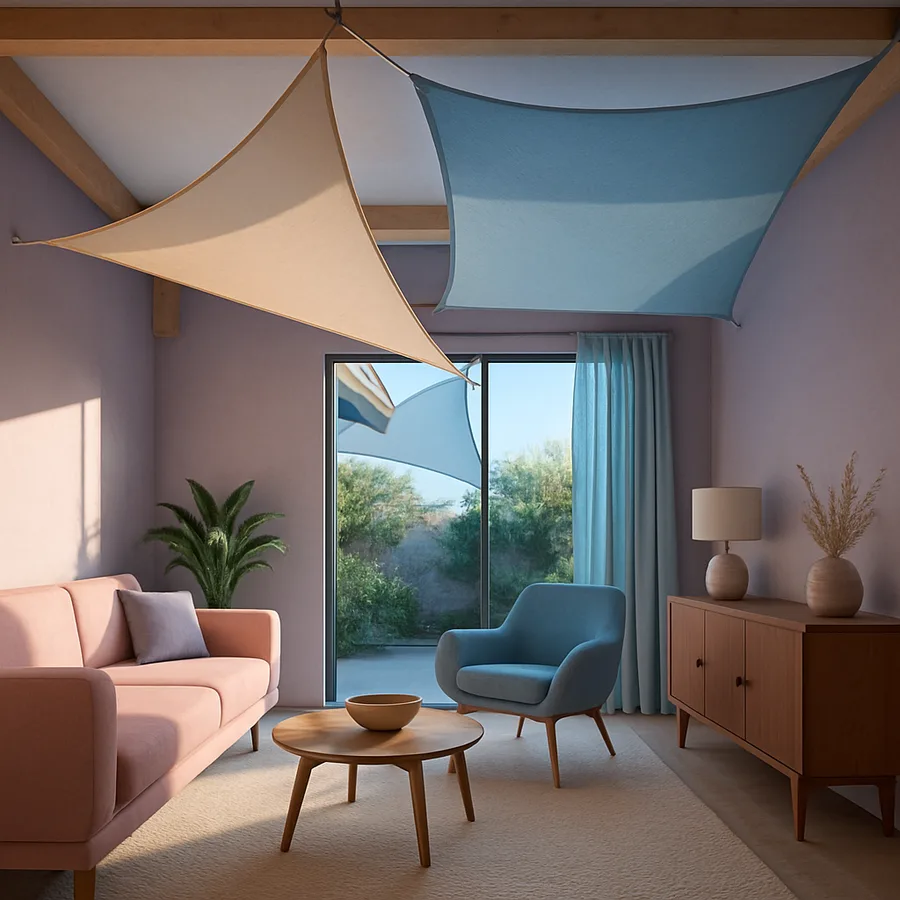
Sail shades have transformed how homeowners think about pergolas. Where the traditional approach was to either accept a slatted pergola's intermittent shade or install heavy fixed louvers, modern tensioned-fabric sails offer something between the two: substantial shade, dramatic visual rhythm, and the flexibility to remove or reconfigure the system as seasons change. The first decision in any sail-shade project is geometry - triangles or squares (including rectangles) - and that choice cascades through every subsequent decision about hardware, anchoring, fabric, and visual effect.
This guide walks through the geometric, structural, and design tradeoffs between triangular and rectilinear sail shades over pergola frames. By the end you will be able to sketch a credible plan for your own pergola - knowing why you chose what you chose, and what to ask the manufacturer or installer before committing.
Coverage Geometry And How Shade Falls
The first practical difference between triangles and squares is the shape of the shadow they cast. A square sail produces a square or rectangular shadow that moves with the sun but keeps its overall geometry. The shadow has predictable edges and creates a clear shaded zone where furniture can sit confidently knowing it will be in shade through most of the usable afternoon hours.
A triangular sail produces a triangular shadow that rotates and shifts shape as the sun moves. A single triangle leaves gaps at the edges that admit direct sun for portions of the day, which can be aesthetically lovely but functionally limiting if you are trying to keep a dining table fully shaded from noon through dinner.
The standard solution is to use multiple triangular sails in an overlapping arrangement. Three or four triangles, oriented at different angles and mounted at different heights, can collectively shade a larger area than a single square of equivalent total fabric, while creating a dramatic layered visual effect. This is the look that has come to define contemporary pergola shading in design magazines: a deliberately asymmetrical sky-canvas of overlapping triangles, each contributing partial shade that compounds into nearly complete coverage with a constantly shifting light pattern below.
Squares deliver coverage; triangles deliver coverage plus visual drama, at the cost of more pieces, more hardware, and more design coordination.
Tension Behavior And Sag Prevention
Sail shades depend on tension to remain functional. A loose sail flaps in wind, accumulates rainwater, and looks visually amateurish. Both shapes can be tensioned correctly, but they behave differently under load.
Triangles are inherently more stable under tension. The three-point geometry means every point of the fabric can be pulled into firm tension between two adjacent anchor points without any unsupported span in the middle. This is the same structural principle that makes triangular trusses the dominant form in bridge and roof design. A well-tensioned triangular shade looks taut and architectural even in moderate wind.
Squares and rectangles have a structural challenge: the center of the fabric has no direct anchor and tends to sag downward, especially in larger sizes. Manufacturers address this in three ways. Some specify a slight crown in the cut, so the fabric is shaped to sit higher in the center when tensioned. Some recommend that one or two of the four corners be mounted higher than the others, creating a hyperbolic-paraboloid shape that resists sagging. Some include a center hardware point that supports the underside of the fabric from below.
For pergola installations, the natural anchor points are the pergola posts and beams themselves. Triangles map elegantly onto three of the four posts of a typical four-post pergola, leaving the fourth post available for a second overlapping triangle. Squares require all four corners to be available and at appropriate relative heights, which limits how multiple sails can be layered without hardware conflicts.
Anchor Count And Hardware Cost
Each sail corner requires a robust anchor point: a stainless or galvanized pad-eye, eye bolt, or post-mount bracket capable of resisting the considerable forces a properly tensioned sail generates. Most sails also require turnbuckles or tensioning hardware at one or more corners to allow the installer to draw the fabric tight after mounting.
A single triangular sail needs three anchor points and typically three turnbuckles. A single square sail needs four. So far the square requires only one extra anchor - not a major difference.
The math changes when you compare full coverage solutions. Covering a typical 12-by-14-foot pergola with a single square sail requires four anchors. Covering the same pergola with three overlapping triangles for a layered design requires up to nine anchors, since each triangle has its own three corners, although many designs share corners between sails to reduce hardware count.
The American Home Furnishings Alliance and similar industry bodies note that proper anchor specification is the most common installation failure for residential shade sails. An undersized anchor that pulls out of a fascia board or chips out of a stone wall causes the sail to fail dramatically. Quality installations use anchors rated for at least 200 pounds of pull per corner on small sails and substantially more on larger systems. The National Association of Home Builders publishes attachment guidance for outdoor structures that is directly applicable.
If you are installing into a wooden pergola, look for the post centers and run lag bolts directly into them. If you are installing into masonry, use mechanical sleeve anchors rated for the substrate. Never trust surface-mount adhesive anchors for a load-bearing shade application.
Wind Performance And Storm Strategy
Wind is the most consequential variable in sail-shade design. The fabric acts as a large surface area for wind to push against, and the forces transmitted to the anchors during a storm can be ten or twenty times the static tension of a calm day.
Triangles are aerodynamically more forgiving in three ways. First, their smaller individual area means less total surface for any single gust. Second, the multi-sail layered design means that wind passing through gaps between sails relieves pressure rather than building it. Third, triangle anchors can be specified individually for each sail, so a designer can match anchor strength to each sail's expected loads.
Squares, especially large ones, concentrate wind load at four anchor points. A 14-foot square sail in a sustained 30 mph wind can exert several hundred pounds of force at each corner. This is why most large rectangular sails include explicit wind-load specifications and why many manufacturers recommend removing them during severe storm seasons.
Whichever geometry you choose, plan a removal protocol. Quality sails are designed for periodic removal - the corner hardware includes quick-release snap shackles or carabiners that allow take-down in minutes. Storing the sail in a dry location during winter months in cold climates, and during hurricane or severe storm seasons in vulnerable climates, doubles or triples its functional lifespan.
Coastal homeowners should pay particular attention to hardware metallurgy. Stainless steel - specifically 316-grade marine stainless - resists salt corrosion that destroys galvanized hardware within a few seasons.
Fabric Specification And UV Performance
Sail-shade fabric is purpose-engineered for tension performance and UV stability. Two fabric families dominate the residential market:
Knitted high-density polyethylene (HDPE) is the workhorse of the category. It is breathable, allowing wind to pass through the weave and reducing wind load. It blocks 90 to 95 percent of UV radiation. It is colorfast and resists mildew. It is also intentionally not waterproof - rain passes through, so the sail does not need to be removed for typical rainfall and does not accumulate water weight that could damage anchors.
Waterproof PVC-coated polyester is the alternative for installations where shedding rain is a feature. These sails create an effective small roof, ideal over an outdoor dining area where occasional showers should not interrupt a meal. The tradeoff is dramatically higher wind load (no air passes through the fabric) and a requirement for the sail to be installed with a deliberate downward slope so water sheds rather than pools.
For most pergola installations, breathable HDPE is the correct choice. The pergola itself provides architectural definition and a sense of enclosure; the sails provide UV protection and visual texture without adding the storm-vulnerability of a true roof. Reserve waterproof sails for situations where the alternative is having dinner rained on, and accept the more substantial anchor requirements that come with them.
Color choice in sail fabric is more consequential than it appears in the showroom swatch book. Lighter sails - cream, sand, dove gray - reflect more solar heat and create a brighter, more open feeling underneath. Darker sails - charcoal, deep terracotta, midnight blue - absorb more heat and cast more saturated shadow, lending a moodier and more intimate atmosphere to the space below. Avoid pure white, which shows every pollen grain and rain streak; avoid pure black in hot climates, where the underside radiates heat downward on summer afternoons. The most enduring choices are warm neutrals that age gracefully and harmonize with the natural wood or stone tones of typical pergola architecture.
Look for fabrics with explicit UV ratings, fade warranties of five years or more, and reinforcement at the corners - typically a webbed border around the entire perimeter and triple-stitched D-rings at each attachment point. As Better Homes & Gardens has highlighted in coverage of contemporary outdoor design, quality sails read as architectural elements rather than as add-on accessories, and this perception starts with the fabric's hand and finish.
Visual Composition And Pergola Integration
The aesthetic question is where most homeowners get the most enjoyment from their sail shade project. A pergola is a frame, and the sails are the artwork hung within it. The geometry choice dramatically influences the visual register of the resulting outdoor room.
A single square sail tensioned across a pergola reads as quiet, architectural, and modern - appropriate for minimalist gardens, contemporary architecture, and spaces where the pergola is meant to recede visually and let the surrounding planting or view dominate. The sail almost disappears into the pergola structure, becoming a soft horizontal plane rather than a discrete visual element.
Overlapping triangular sails read as kinetic, sculptural, and resort-influenced - appropriate for outdoor entertaining zones, pool surrounds, and any space where the goal is to create visual drama and a sense of designed shelter. The layered geometry casts complex shifting shadows that change throughout the day, providing what designers sometimes call "living ornament": ornamentation that is alive and changing rather than fixed.
Have you walked under a properly composed cluster of triangular sails on a sunny afternoon and watched the shadows move across a stone patio? It is one of the more memorable sensory experiences in residential outdoor design, and it is almost impossible to replicate with rectilinear geometry.
Choose based on the emotional register you want the outdoor space to deliver. A pergola covered with a single quiet square produces calm. The same pergola overlaid with three triangles produces energy. Both are valid; neither is universally correct.
Conclusion
The triangle-versus-square decision for pergola sail shades is genuinely a choice between two different design philosophies. Squares deliver predictable coverage with fewer anchors and a calmer visual register. Triangles deliver layered coverage with more hardware, more design coordination, and more dramatic visual energy. Neither is objectively superior - they solve different problems and create different feelings underneath them.
The practical decision points come down to your pergola's geometry, your tolerance for hardware complexity, your wind environment, and the emotional tone you want the outdoor room to project. A four-post pergola in a moderate climate that you want to feel calm and architectural is a square's natural home. A four-post pergola in a similar climate that you want to feel sculptural and resort-influenced is a triangle's natural home. Coastal and high-wind installations push slightly toward triangles for wind performance; minimalist architectural contexts push slightly toward squares for visual restraint.
Spend a weekend with a notebook and your pergola. Sketch the post positions, photograph the space from the angles you most often see it, and try drawing both options on paper. The right answer is usually the one that feels honest to the rest of your outdoor space - and once you commit to that geometry, every subsequent decision about hardware, fabric, and tension becomes a logical extension of the original design idea. Build it well, and the sails will become the quiet signature of your outdoor seasons for many years to come.
More Articles You May Like



Comments
Post a Comment