Tunable White LED Bulbs For Color Temperature Control
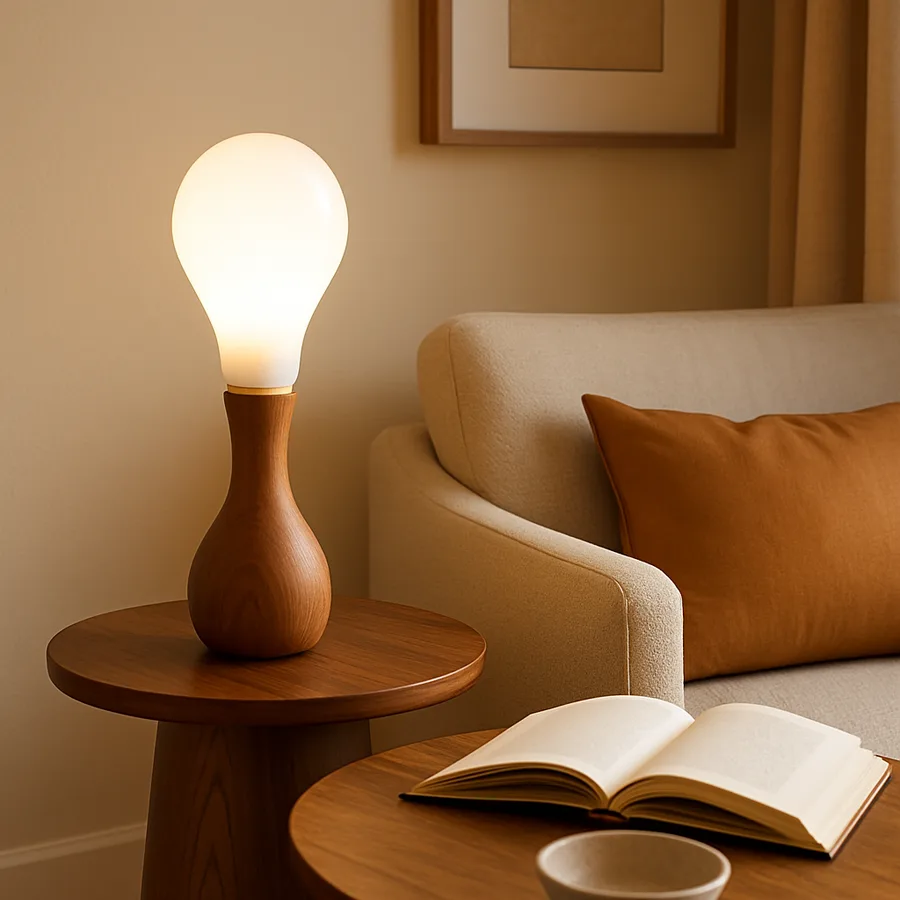
Light is not just a tool for seeing; it is also a powerful biological signal. The same overhead fixture that helps you read a magazine in the evening can disrupt your sleep if its color temperature is too cool, or leave you groggy in the morning if it is too warm. Tunable white LED bulbs solve this dilemma by letting you shift the color temperature of a single bulb anywhere from warm candlelight at 2200K to crisp daylight at 6500K, all without changing the fixture. This article explores how the technology works, what it does for your circadian health, and how to deploy it effectively at home.
The Science Behind Color Temperature And Human Circadian Rhythm
Modern sleep research has converged on a remarkably consistent set of findings about the relationship between light exposure and sleep onset. Studies from chronobiology labs at Harvard, Northwestern, and the Lighting Research Center at Rensselaer Polytechnic Institute have demonstrated that the spectral content of evening light, not just its brightness, plays a decisive role in melatonin secretion timing. Reducing blue-spectrum light in the two hours before bed produces measurable improvements in sleep latency, sleep depth, and morning alertness even when total light exposure stays constant.
Color temperature, measured in Kelvin, describes the visible color of a light source on a warm-to-cool axis. A candle flame measures around 1800K. An incandescent bulb at full brightness sits near 2700K. A modern office fluorescent panel emits around 4000K. Outdoor daylight at noon registers between 5500K and 6500K depending on cloud cover. The human visual system evolved over hundreds of thousands of years to interpret these values as cues about the time of day and the season of the year.
That evolutionary heritage manifests in our circadian rhythm, the internal 24-hour cycle that regulates sleep, alertness, hormone production, and even digestion. Cool blue-shifted light at 5000K and above suppresses melatonin production and signals "morning" to the brain. Warm amber-shifted light below 3000K does the opposite, allowing melatonin to rise and the body to prepare for sleep. The U.S. Department of Energy has highlighted human-centric lighting as one of the most promising emerging applications for solid-state LED technology.
Tunable white LED bulbs let you orchestrate these signals deliberately. A bedroom bulb might wake you with a gentle 4000K sunrise simulation at 6:30 in the morning, transition to 2700K for evening reading, and dim to 1800K before lights-out. A home office bulb might hold steady at 5000K during deep-focus work hours and shift to 3500K for video calls. The single bulb does the work of three or four fixed-temperature bulbs.
The flexibility comes at a price, of course. A tunable white bulb costs roughly two to three times what a comparable fixed-temperature LED costs, and the control system adds another layer of expense and complexity. For homeowners on a strict budget, the right strategy is often to deploy fixed warm-white bulbs (2700K to 3000K) throughout the home and reserve tunable white for the two or three rooms where the dynamic control delivers the most daily value. A targeted deployment beats a whole-home rollout on cost-per-benefit basis.
How Tunable White LED Technology Actually Works
Inside a tunable white LED bulb, two or more LED chips emit light at different fixed color temperatures, typically one warm chip around 2700K and one cool chip around 6500K. The bulb's internal driver electronics independently control the brightness of each chip. When both chips run at equal brightness, the perceived color temperature lands roughly in the middle, around 4000K. By varying the ratio, the bulb produces any intermediate color temperature on the warm-to-cool axis.
Higher-end tunable white bulbs use three or even five chips to improve color rendering across the tuning range. Two-chip designs sometimes exhibit a slight green tint near the middle of the range because the warm and cool chips do not perfectly trace the blackbody curve that the human eye expects. Three-chip designs with an additional amber LED at 2200K stay closer to the blackbody curve and render skin tones more naturally regardless of the selected color temperature.
The National Electrical Manufacturers Association publishes the ANSI C78.377 standard that defines acceptable color tolerances for white LED products, including tunable white. Quality tunable white bulbs maintain a tight Duv (delta from blackbody curve) value across their entire tuning range, which is why two bulbs from the same reputable brand will look identical at any chosen color temperature. Mixing brands within a single room is a common rookie mistake that produces visible color mismatches at intermediate color temperatures even when both bulbs are nominally rated for the same range. Cheap tunable white bulbs often drift visibly off the blackbody curve, producing the greenish or pinkish midrange that gives the whole category a bad reputation among first-time users.
Smart Home Integration And Control Options
The control layer for tunable white is where most installations succeed or fail. A perfectly good set of bulbs paired with a clunky or unreliable control system produces a daily friction that erodes the user experience until people stop bothering with the dynamic features. Conversely, a well-designed control layer with even mid-grade bulbs delivers genuine value every single day. Spend at least as much attention on the control system as on the bulbs themselves; the math usually favors the control system.
Tunable white bulbs require some kind of control system beyond a simple on-off wall switch. The simplest option is a bulb-and-remote pair sold as a kit, often using a proprietary 2.4 GHz radio link. These are inexpensive and easy to set up but isolated from the rest of the home and limited in scheduling capability. The next step up is Bluetooth control via a smartphone app, which adds scheduling but requires the phone to be in range to make changes.
The most flexible option is a bulb that speaks Zigbee, Z-Wave, Matter, or Wi-Fi and integrates with a whole-home hub like Hubitat, Home Assistant, SmartThings, or Apple HomeKit. With this approach, you can build automations that shift color temperature based on time of day, sunrise and sunset, occupancy sensors, or even calendar events. Philips Hue White Ambiance, LIFX Color, and several lines from Sengled and Innr lead this category.
One consideration that catches first-time buyers off guard is the requirement for constant power at the bulb. If you switch a smart tunable white bulb off at the wall, you also disconnect it from the network, defeating most of the automation logic. The fix is to leave the wall switch always on and control the bulb exclusively through the smart system, or to use a smart wall switch that maintains power to the bulb while providing a tactile control surface for guests.
Best Rooms And Use Cases For Tunable White
Not every room benefits equally from tunable white technology. The largest gains come in spaces where you spend many hours and where the optimal color temperature shifts with the time of day. Home offices, kitchens, bedrooms, and primary bathrooms top this list. Hallways, closets, and utility spaces see much smaller benefits because they are used in short bursts where a fixed warm or cool color temperature works fine.
The Illuminating Engineering Society has published recommended practice documents (RP-29 for hospital lighting and others) that specify color temperature ranges for various activities. The same principles translate to residential use: 5000K to 6500K for detail work like reading fine print or applying makeup, 3500K to 4500K for general task work, 2700K to 3000K for ambient and social lighting, and 1800K to 2200K for late-evening winding down. A tunable white bulb covers this entire range from a single fixture.
Have you noticed that you sleep poorly after working late under bright overhead lights? Are your mornings sluggish despite getting eight hours in bed? These are exactly the symptoms that a thoughtful tunable white lighting plan can address. A 2017 study cited by ENERGY STAR found that office workers exposed to dynamically tuned lighting reported 24 percent better subjective sleep quality compared to controls under fixed-temperature lighting.
Cost, Efficiency, And ENERGY STAR Performance
Tunable white LED bulbs cost more than fixed-temperature LEDs but the gap has narrowed substantially. A quality smart tunable white bulb sells for $15 to $25 today compared to $4 to $8 for a fixed-temperature equivalent. The premium reflects the added LED chips, the more sophisticated driver electronics, and the wireless radio. Pricing has dropped roughly 60 percent over the past five years and continues to fall as the technology matures.
Energy efficiency is essentially equivalent between tunable white and fixed-temperature LEDs. Both deliver 80 to 100 lumens per watt at typical operating points, far above the 12 to 17 lumens per watt of the incandescent bulbs they replace. ENERGY STAR certified tunable white bulbs must meet the same lumen-per-watt thresholds as their fixed-temperature counterparts, with additional requirements for color consistency across the tuning range.
Lifespan is also comparable, typically 15,000 to 25,000 hours of rated life. The driver electronics in tunable white bulbs are slightly more complex than in fixed-temperature bulbs, which historically introduced a small reliability penalty, but the gap has effectively closed in current-generation products from reputable manufacturers. Look for a five-year warranty as a marker of confidence from the manufacturer in its own products.
Specifying Tunable White For A Renovation Or New Build
If you are renovating or building new, you have the opportunity to design the entire lighting plan around tunable white from the start. The first decision is whether to use tunable white at the bulb level or at the fixture level. Bulb-level tunable white works in any standard E26 or E12 socket and is upgradeable as technology improves. Fixture-level tunable white is integrated into the luminaire, which produces a cleaner aesthetic but locks you into the original technology choice for the life of the fixture.
For most homeowners, bulb-level tunable white in conventional fixtures offers the best balance of flexibility and cost. Reserve fixture-level integration for high-end installations where the fixture itself is a design statement and you want to eliminate any visible bulb. Recessed downlights, linear cove lighting, and architectural wall washers all benefit from integrated tunable white at the fixture level.
Plan the control system before you buy the bulbs. A 20-bulb home with three different incompatible control systems is far worse than the same 20 bulbs all on one well-chosen platform. Pick your ecosystem first, then specify bulbs that integrate with it. The few extra dollars you spend matching the ecosystem are recovered many times over in setup simplicity and ongoing reliability.
Conclusion
Tunable white LED bulbs represent one of the most consequential advances in residential lighting in the past decade. The ability to shift color temperature dynamically throughout the day aligns artificial lighting with our biological needs, improves visual comfort, and unlocks new dimensions of design flexibility. The technology has matured to the point where reliability, color quality, and cost are no longer significant barriers for the average homeowner.
Start small. Pick one room where you spend many hours, ideally a home office or a bedroom, and equip its primary fixture with two or three tunable white bulbs and a simple scheduling automation. Live with the result for a month before expanding the deployment. The hands-on experience will teach you more about your own color temperature preferences and circadian patterns than any article ever could.
Pay attention to the quality differentiators that separate premium tunable white bulbs from budget products. CRI of 90 or higher, tight Duv control across the tuning range, ENERGY STAR certification, and a manufacturer warranty of three to five years are reasonable minimums for any room where you spend serious time. Save the cheap products for hallways and utility spaces where the differences are imperceptible. A reasonable rule of thumb: spend 50 to 80 percent more per bulb in your bedroom and home office than you do in your hallway closet. The visible payoff justifies the upgrade where you actually live and work, and the savings on utility-space bulbs free up the budget to do it.
This weekend, pick one fixture in your home and replace its existing bulb with a quality tunable white LED. Set up a basic schedule that runs 4000K from morning through afternoon, shifts to 2700K at sunset, and drops to 2000K an hour before your typical bedtime. Notice how you feel after one week of living with the change. The subjective improvement, particularly in sleep onset and morning alertness, is often more dramatic than people expect.
More Articles You May Like



Comments
Post a Comment