Seamless Gutters Versus Sectional For Long Term Performance
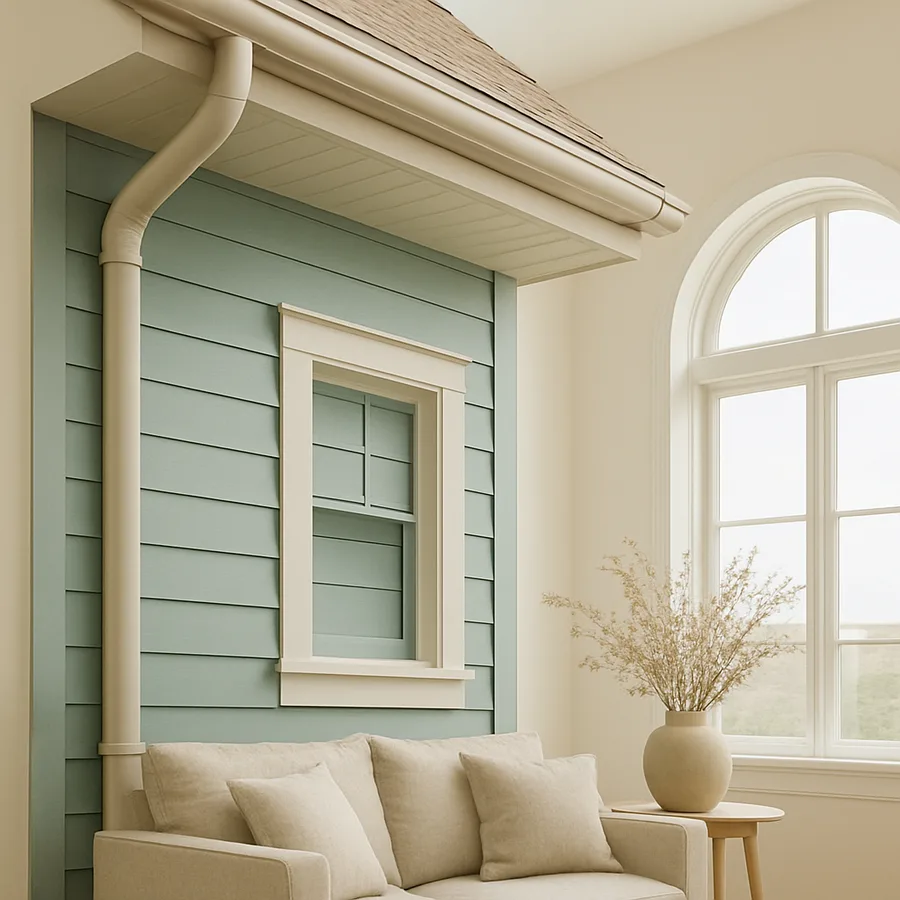
Choosing a rain conveyance system is one of those quiet decisions that defines the next two decades of a home's relationship with water. The choice between seamless gutters and sectional gutters looks superficial at the showroom, where both materials appear identical from twenty feet away, yet the implications spread through fascia health, basement humidity, foundation settling, and ultimately resale value. Homeowners often ask whether the upfront premium for a continuous run actually pays off, and the answer depends on climate, roof geometry, and the standard of installation labor available locally. This guide compares both systems across the variables that matter, drawing on data from the National Association of Home Builders (NAHB), the Insurance Institute for Business and Home Safety (IBHS), and field guidance from the National Association of the Remodeling Industry (NARI).
How The Two Systems Are Manufactured And Installed
Seamless gutters are formed on site using a portable roll-forming machine that extrudes a continuous length of aluminum, copper, or steel from a coil. The installer measures each roof edge, then produces a single piece of trough that matches that exact dimension, eliminating the field joints that historically allow water to migrate behind the gutter face. The only seams in a seamless system occur at corners, end caps, and downspout outlets, which are typically sealed with butyl rubber, polyurethane sealant, or specialized rivets depending on the metal.
Sectional gutters, by contrast, are sold in pre-cut lengths of ten or twenty feet at home improvement retailers and assembled with snap-fit or sealed couplings. They remain popular for do-it-yourself projects because no specialized equipment is required, and damaged sections can be replaced piecewise without ordering a custom run. The trade-off is that every joint is a potential leak path, and on a typical single-story home with one hundred and forty linear feet of eaves, a sectional installation may contain twelve to eighteen joints, while a seamless installation might contain only four.
According to NAHB cost survey aggregations, professional seamless installation typically falls between nine and fourteen dollars per linear foot for aluminum, while sectional systems installed by a homeowner range from three to six dollars per linear foot in materials alone. The labor delta closes considerably when a contractor installs sectional product, because the assembly time per joint adds up quickly.
Leak Resistance And The Joint Problem
Field studies of older homes consistently find that gutter failures begin at joints rather than along straight runs. Sealants used in sectional couplings have a service life of roughly five to seven years under typical ultraviolet exposure, after which they harden, crack, and weep at every rain event. The IBHS notes that a single dripping joint above a wood fascia can drive moisture content above twenty percent within a few weeks of sustained autumn rain, which is the threshold at which decay fungi become metabolically active.
Seamless systems shift the leak surface area from a dozen joints to perhaps four corner miters. Those corners still rely on sealant or soldered seams, so they are not maintenance free, but the absolute number of failure points is reduced by roughly seventy percent in a typical layout. Homeowners in regions with intense convective storms, such as the Gulf Coast and the lower Midwest, gain the most from this reduction because each joint sees higher peak flow rates during cloudbursts.
One question worth asking before committing to either system is straightforward. Will the gutter you select be inspected from a ladder at least twice per year, or will it be ignored until something visibly fails? If the honest answer is the latter, the leak-resistance advantage of seamless construction becomes far more valuable, because the system needs to tolerate years of neglect without compromising fascia or siding.
Capacity And Hydraulic Performance Under Heavy Rain
Gutter capacity is governed by cross-sectional area, slope, and outlet spacing rather than by whether the system is seamless or sectional. A five-inch K-style gutter carries roughly the same peak flow whether it was rolled on site or snapped together from box-store sections. However, sectional systems often suffer hydraulically because each coupling introduces a small interior ridge that disturbs flow and accumulates debris at exactly the choke points. Over years, these micro-dams shift the effective capacity downward by ten to twenty percent.
For homes with steep, large roof planes, professional installers often recommend stepping up to six-inch gutters with three-by-four-inch downspouts. The International Code Council's plumbing references suggest that a five-inch gutter draining a typical thousand-square-foot roof plane handles a rainfall intensity of about four inches per hour at a quarter-inch-per-ten-feet slope. Anything beyond that, common in subtropical storm cells, overwhelms the trough and produces the spill-over staining that homeowners blame on clogged downspouts when the real culprit is undersized geometry.
The hydraulic argument therefore is not strictly seamless versus sectional, but rather whether the chosen product is correctly sized. Seamless installers, because they custom form the trough, more readily upsell six-inch profiles when the geometry warrants it. Sectional shoppers tend to default to whatever depth is stacked on the retail shelf, which is almost always five inches.
Material Choices And Their Interaction With System Type
Both systems are available in aluminum, steel, copper, and zinc, but the practical material menu differs. Aluminum dominates seamless installations because the coil stock feeds cleanly through roll formers and the formed metal resists corrosion for thirty years or more in most climates. Copper seamless gutters are a premium choice for historic restoration and high-end custom homes, with documented service lives exceeding seventy years according to Copper Development Association field data.
Sectional retail product is overwhelmingly aluminum or vinyl. Vinyl gutters deserve a brief warning. They are inexpensive, easy to cut with hand tools, and have a strong following among first-time homeowners, but the polymer becomes brittle after roughly seven to ten years of ultraviolet exposure and shatters during ladder contact or ice loading. NARI member contractors generally discourage vinyl for any home north of the thirty-fifth parallel because freeze-thaw cycling accelerates the failure timeline considerably.
Steel gutters, particularly galvanized and galvalume-coated, are available in both formats but require diligent maintenance to prevent rust at any abrasion or scratch. They are the right answer in regions where wind-driven debris is a concern, because steel resists denting from impact better than aluminum. The interplay between material and seam count matters because dissimilar metal connections, such as a galvanized coupling on an aluminum section, can initiate galvanic corrosion that opens a leak within a single wet season.
Maintenance, Cleaning, And Service Life Expectations
Regardless of system type, the leading cause of premature gutter failure is debris accumulation that traps standing water. The Environmental Protection Agency (EPA) stormwater management guidance recommends seasonal cleaning, particularly in autumn for deciduous canopy, and after major spring leaf-out for trees that drop pollen catkins and seed pods.
Seamless systems are marginally easier to clean because the interior surface is uninterrupted, and a gutter scoop slides the full length without catching on coupler lips. They also accept gutter guards more cleanly, because the screen or micromesh product sits flat on a continuous lip rather than spanning across joint humps. Sectional systems can be retrofitted with guards, but installers report a noticeable rate of misalignment at every coupling, which is exactly where leaves wedge themselves and start the next clog.
Service life expectations differ meaningfully. Well-installed seamless aluminum routinely reaches twenty-five to thirty years before requiring replacement, with sealant touch-ups at the four corners every seven to ten years. Sectional aluminum, even when professionally installed, tends to require partial rebuilding at the twelve-to-fifteen-year mark as joint sealants fail and couplers loosen from thermal cycling. Is your household planning to remain in the home long enough to amortize the seamless premium? If the planning horizon is under seven years, the sectional option may make economic sense even with its shorter service life.
Cost Of Ownership Across A Twenty Year Horizon
The sticker shock of seamless installation obscures the longer math. A representative two-thousand-square-foot suburban home with one hundred and forty linear feet of eaves might cost roughly eighteen hundred dollars for sectional materials and amateur installation, versus thirty-two hundred dollars for professional seamless installation in aluminum. That gap appears large, but it narrows when you fold in expected repair calls.
Industry survey data suggests that sectional systems generate one to two service calls per decade for joint resealing or coupler replacement, each averaging two hundred to four hundred dollars depending on labor rates. Across a twenty-year horizon, this can add eight hundred to sixteen hundred dollars in maintenance to the sectional ledger. When you also factor in the higher probability of fascia replacement under leaking joints, which can run two thousand dollars or more for a single elevation, the seamless option frequently breaks even or comes out ahead.
Insurance considerations matter as well. IBHS-aligned underwriters increasingly look at exterior water management as a proxy for overall home condition, and some carriers offer modest premium reductions for homes with documented gutter and drainage upgrades. Those discounts are small, often in the one to three percent range on the dwelling portion of a homeowner's policy, but they accumulate over the life of the system. For a fuller picture of how water management integrates with structural protection, the IBHS resource library is worth a careful read, alongside professional guidance from NAHB.
Conclusion
The seamless versus sectional decision is rarely about which product is theoretically better, because seamless systems win that contest on most technical axes. The real question is whether the household's planning horizon, climate, and willingness to perform regular maintenance justify the upfront cost difference. For owners who intend to stay in a home for more than a decade, who live in regions with intense rainfall or freeze-thaw cycling, and who value reduced maintenance interruptions, seamless aluminum or copper is almost always the right specification. The reduced joint count, cleaner interior flow, and longer expected service life add up to a meaningful quality-of-life improvement that becomes invisible in the best way, because the system stops being a thing the homeowner ever has to think about.
For shorter ownership horizons, milder climates, or budget-constrained projects, well-installed sectional aluminum from a reputable manufacturer can deliver acceptable performance, particularly if the homeowner commits to annual inspection and joint resealing on a predictable schedule. The pitfall to avoid is treating any gutter system as install-and-forget, because both formats fail predictably when neglected, just at different speeds and with different repair price tags. Vinyl deserves a special note of caution, and most NARI-member contractors will steer customers away from it for any permanent installation.
Before signing a contract, walk the roofline with the installer and ask three concrete questions. First, what gutter and downspout sizing have they specified, and does it match the roof geometry and local rainfall intensity? Second, how many seams or joints will exist in the finished system, and what sealant or rivet specification is used at each one? Third, what is the warranty on the labor specifically, separate from any manufacturer warranty on the metal itself? Honest, specific answers to those three questions reveal more about long-term performance than any brochure ever will. Pay particular attention to how the installer talks about hanger spacing, because hidden hardware spaced at thirty-six inches or wider will produce a sagging trough within a decade regardless of how perfect the trough itself is, while quality installations specify hangers at every twenty-four inches with stainless or coated screws driven directly into the rafter tails. Ask how the system is pitched toward the downspout outlets, because a flat run holds standing water that accelerates corrosion and breeds mosquitoes in warm climates, and the correct minimum pitch is approximately a quarter inch over every ten feet of run. Verify that the gutters and downspouts terminate with proper extensions or buried lines that move water at least four feet from the foundation, because the best gutter on the market is functionally useless if its discharge collects against the basement wall. If you are weighing options for an upcoming project, request three written quotes that itemize both materials and joint counts, then compare them side by side rather than just on bottom-line price. That single discipline tends to surface the differences that matter and prevents the regret that follows a decision made on sticker price alone.
More Articles You May Like



Comments
Post a Comment