Egress Window Well Cover Selection For Safety
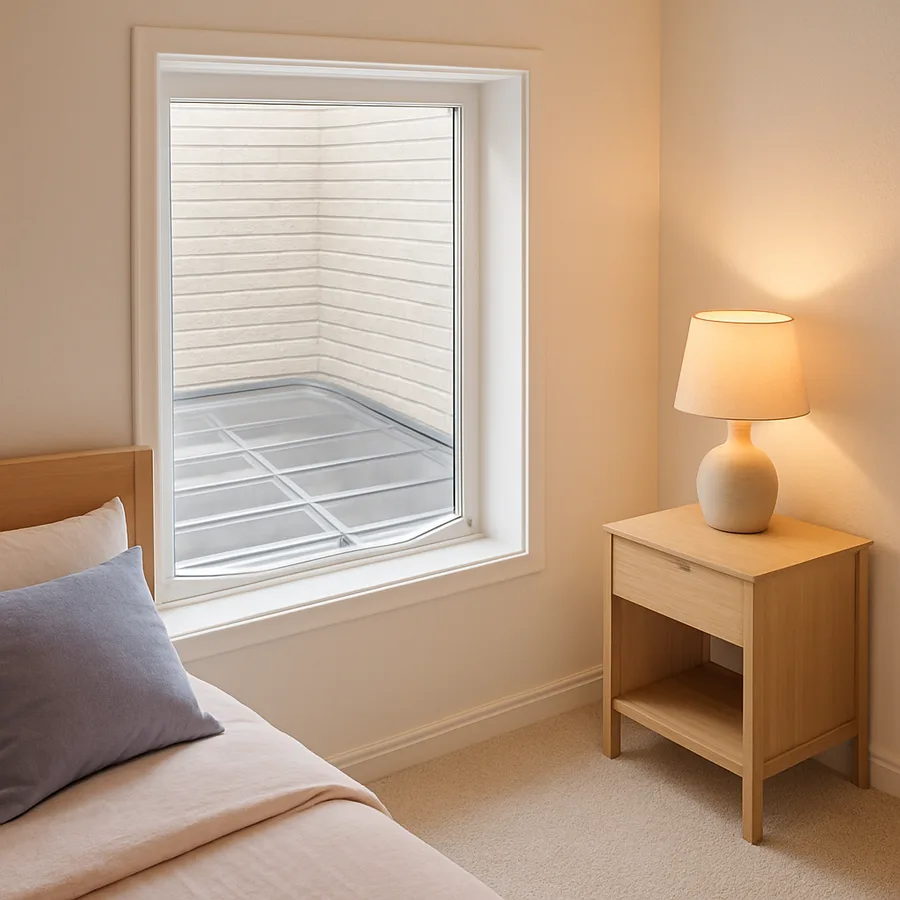
An egress window well is one of the quiet hero details of a finished basement, and the cover sitting over it has to do two contradictory jobs at the same time. It needs to keep small children, pets, leaves, and curious raccoons out of the well, while still allowing an adult or firefighter to push it open in seconds during an emergency. Choosing the wrong cover can turn a code-compliant escape route into a sealed trap, so this is not a category where shoppers should default to the cheapest plastic dome on the shelf.
This guide walks through how to evaluate covers by load rating, material, code compliance, and how they interact with the rest of your basement waterproofing system. Whether you are finishing a basement bedroom for the first time or replacing a cracked cover that has been sagging for years, the goal is the same: a cover that disappears into the landscape until the moment you need it to save someone's life.
Why Egress Codes Treat The Cover As Part Of The Escape Path
The International Residential Code, published by the International Code Council, requires every below-grade sleeping room to have an emergency escape and rescue opening. That opening is almost always a window plus a window well, and the cover sitting above it is legally considered part of the escape path itself. If a cover requires tools, special knowledge, or more than nominal force to open from inside the well, an inspector can fail the installation even if the window itself meets every dimensional rule.
According to ICC guidance interpreting Section R310, the cover must be openable from the inside without keys, tools, or special knowledge. That single requirement instantly disqualifies a surprising amount of what is sold at big-box stores, including padlocked grates, screwed-down metal grilles, and any cover that depends on adult upper-body strength to lift more than a few pounds against gravity.
Have you ever tried to push a heavy wet plywood sheet up over your head from a crouched position? That is roughly the test an eleven-year-old would face in a smoke-filled basement at 2 a.m. The cover should feel almost weightless from below even when it is rated to hold three feet of snow from above. That gap between top-load capacity and bottom-release effort is the engineering problem every good cover solves.
The mechanism that resolves the contradiction is usually a gas-spring or torsion-hinge assembly that counterbalances the weight of the cover so that downward loads are transferred to the frame while upward force from below is amplified by the spring. Cheaper covers skip the spring entirely and rely on the user's strength to overcome both the weight of the cover and any debris or snow piled on top of it. Field inspectors have documented cases where a foot of wet snow on a flat polycarbonate cover added enough mass that even an adult could not lift it from below, which is exactly the failure mode the spring assemblies are designed to prevent.
Material Options And Their Real-World Trade-Offs
The four dominant materials are polycarbonate, acrylic, steel grate, and aluminum frame with mesh. Each has a personality, and matching that personality to your climate and aesthetic is most of the decision.
Polycarbonate is the workhorse. It is the same family of plastic used in bullet-resistant glazing, and the better products carry top-load ratings between 400 and 600 pounds per square foot. It transmits roughly 88 percent of visible light, which means the basement bedroom below still feels like a room with a window rather than a cave. Polycarbonate yellows slightly with UV exposure over a decade, but quality covers include a UV-stabilized coating that pushes meaningful clouding out past the fifteen-year mark.
Acrylic is cheaper and clearer on day one but brittle by comparison. It cracks under impact loads where polycarbonate flexes, so a falling tree branch that polycarbonate shrugs off can shatter acrylic. Steel grates are practically indestructible and look great in industrial-modern landscaping, but they let every drop of rain straight into the well and require careful drainage design underneath. Aluminum-and-mesh covers split the difference and are popular in regions with heavy leaf fall because debris stays visible and easy to sweep off.
Load Ratings, Snow Country, And The 40 PSF Question
Load rating is where most homeowners get fooled by marketing copy. A cover marked "heavy duty" without a numerical specification is meaningless. The number you want is pounds per square foot, and it should be printed on the product spec sheet, ideally with a reference to a recognized test method.
The relevant baseline is the ground snow load for your county, which the ENERGY STAR climate-zone maps approximate at a high level and which local building departments publish precisely. Northern New England, the Wasatch Front, and the Great Lakes snowbelt all routinely see design ground snow loads above 50 pounds per square foot, and three-day storm events can pile drifted snow well past that. A cover rated at 40 PSF in a region with a 50 PSF design load is a liability, even if it survives most winters by luck.
A second statistic worth remembering: the National Association of Home Builders has reported in member surveys that water and ice intrusion through compromised basement openings is among the top three callback categories for finished basements. A cracked or collapsed well cover is the upstream cause of a startling share of those callbacks, which is why over-specifying the load rating by 20 to 30 percent is cheap insurance compared to remediating water damage later.
Ice loading deserves special attention in cold climates. A polycarbonate cover that handles a hundred pounds of dry snow without flexing can fail under the same volume of snow that has been compacted into ice by repeated freeze-thaw cycles, because the load is concentrated and the cover loses some impact resistance at low temperatures. Manufacturers that publish low-temperature impact ratings are the ones worth taking seriously in northern climates, and the spec to look for is impact toughness at zero degrees Fahrenheit or lower.
Custom Versus Stock Sizing And Why Off-The-Shelf Often Fails
Window wells come in a wider range of shapes than the cover industry pretends. Semi-circular wells from one manufacturer have different radii than another, and rectangular wells built into poured concrete foundations rarely match the standard sizes of pre-formed galvanized wells. A stock cover that overhangs by three inches on one side and leaves a two-inch gap on the other is not just ugly; it is an invitation for raccoons and a trip hazard for anyone mowing close to the foundation.
Custom covers are typically twenty to forty percent more expensive than stock, but they fit flush, drain predictably, and crucially preserve the inside-release mechanism. When you trim or shim a stock cover to make it fit a well it was not designed for, the release latches end up in the wrong position relative to the window frame, and that is exactly the failure mode that turns covers into traps.
A good custom-cover supplier will ask for four measurements: the well's projection from the foundation, its width along the foundation, the depth from grade to the bottom of the well, and the window's rough opening height. With those four numbers they can build a cover that sheds water away from the foundation, sits flush with the surrounding grade, and releases from below with two fingers of pressure.
Integration With Drainage And Waterproofing
A cover does not stand alone. It sits at the top of a system that includes the well itself, the gravel or drain rock at the bottom, the perimeter drain tile, and the foundation waterproofing membrane. Selecting a cover without thinking about the system below it is how you end up with a well that fills with three feet of standing water after a summer thunderstorm, even though the cover technically "worked."
Solid polycarbonate covers shed nearly all water away from the well, which sounds ideal until you remember that the surrounding soil still drains toward the foundation in heavy rain. A vented or louvered cover, or a solid cover with intentional gaps at the back edge, lets a controlled amount of moisture reach the well's drain so that the gravel and drain tile actually do their job. The U.S. Environmental Protection Agency notes through its IndoorAirPlus guidance that basement humidity above 60 percent dramatically increases mold risk, and a sealed well that traps humid air against a single-pane egress window is a textbook contributor.
Installation, Maintenance, And Common Pitfalls
A well-installed cover sits flush, opens cleanly from below, and is invisible to a mower from above. Installation usually means anchoring the rear edge to the foundation wall with stainless or galvanized hardware and resting the front edge on the lip of the well. Avoid screwing the cover through its load-bearing face; every penetration is a future leak point and a future crack initiation site. The hardware itself matters more than most homeowners realize, because galvanized fasteners in contact with treated lumber or certain foundation coatings corrode unpredictably fast, and a perfectly good cover can fail because its mounting bolts rusted through in five years rather than the twenty the cover itself was rated for.
Twice a year, clear the cover, test the inside release with the child or teen who actually sleeps in that room, and inspect the latches and hinges for corrosion. Are the latches still moving smoothly? Does the cover lift with two fingers of upward pressure from the well floor? If the answer to either question is no, the cover is no longer doing its safety job regardless of how solid it looks. The annual test should be on the household calendar alongside smoke detector batteries and dryer-vent cleaning, because it is exactly the same category of life-safety task: invisible until the morning it matters.
A handful of installation patterns show up repeatedly on inspection reports and most of them are invisible until you specifically look. The first is the cover that has been "secured" with a padlock or chain by a previous owner trying to keep neighborhood kids out. That solves a nuisance problem and creates a legal and life-safety nightmare, because the cover is no longer openable from below without a key. Any cover that requires a tool or key to release from inside the well fails the basic code requirement and should be remediated before the next building permit goes through. The second pitfall is decorative landscaping piled on top: stones, planters, or a thick layer of mulch can quietly add fifty pounds of dead load to a cover sized for snow only, and they obscure the cover from anyone trying to escape from below. The third is the homeowner-fabricated cover made from scrap plywood or a leftover sheet of corrugated polycarbonate; these improvisations rarely meet the load and release requirements and they show up most often on rental properties and houses that have been in the same family for decades.
Plan to replace polycarbonate covers around the fifteen-year mark, acrylic at ten, and metal-frame covers when corrosion compromises the hinge or latch hardware. If you are budgeting a basement bedroom remodel, the cover line item should be the last place you cut. A premium cover with a documented load rating and a verified release mechanism is typically a three-hundred to six-hundred dollar component on a thirty-thousand dollar project, and skimping to save two hundred dollars is the kind of decision that looks indefensible in retrospect if anything ever goes wrong.
Conclusion
An egress window well cover is one of those small components where the difference between a good choice and a careless one is measured in seconds during an emergency. The right cover is rated for your local snow load, made of a material that suits your climate, sized to fit your specific well rather than approximated from a stock SKU, and integrated with the drainage system below it. None of those decisions are exotic, but they all require slowing down enough to read spec sheets instead of price tags.
The bigger frame to keep in mind is that the cover, the well, the window, and the basement waterproofing all function as a single system. A premium cover over a poorly drained well is a slow leak waiting to happen, and a perfect drainage system under a flimsy cover is a child-safety hazard waiting to happen. Spend an afternoon mapping how water, air, and people move through that opening before you spend a dollar on hardware, and the rest of the decisions become straightforward.
If you are not sure whether your current cover meets code, take ten minutes this weekend to walk outside, lift it from above, then climb into the well and try to push it open from below the way an exhausted teenager would in a fire. If anything about that test feels wrong, schedule a replacement before the next storm season. Reach out to a local egress specialist, request load and release-effort specifications in writing, and treat the cover as the safety device it actually is rather than a piece of yard hardware.
More Articles You May Like



Comments
Post a Comment