Toy Storage Living Room Bins That Look Like Furniture
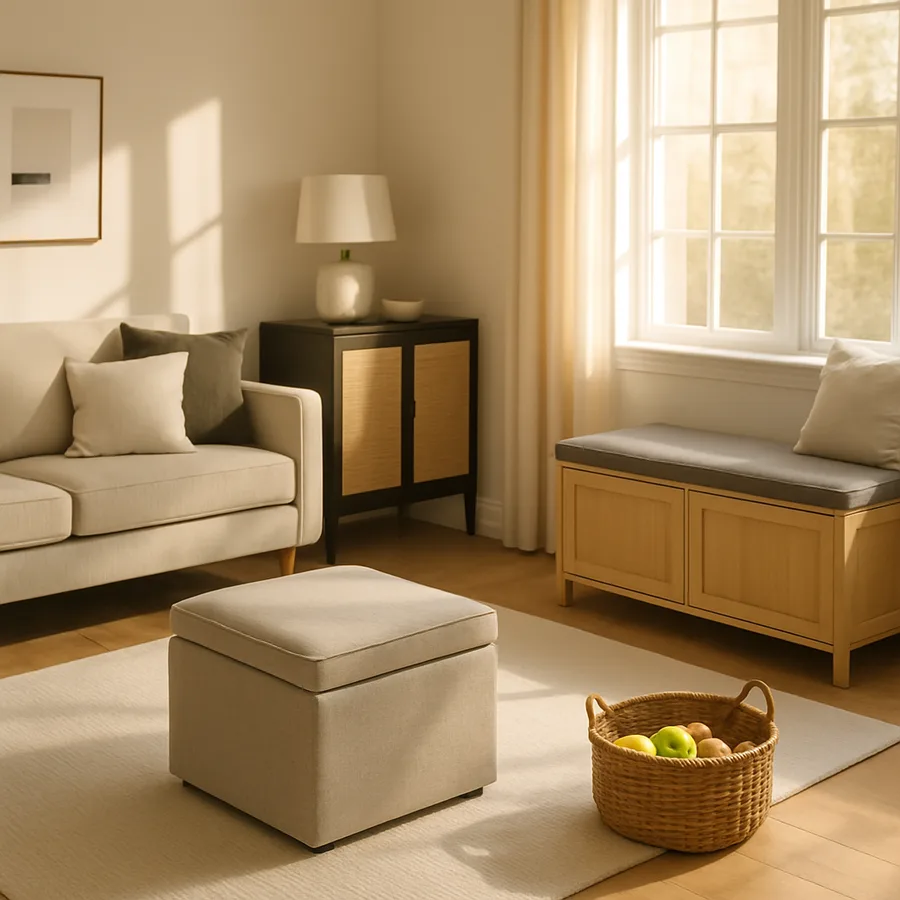
The modern open-plan home has placed unusual demands on family living rooms. The same space now serves as adult lounge, family gathering area, casual dining adjacency, and primary play zone for children, often within a single afternoon. Traditional toy storage solutions designed for dedicated playrooms simply do not fit the visual language that adults expect in a shared living space, and the result is too often a room that feels overrun rather than welcoming. Industry data referenced by the American Home Furnishings Alliance (AHFA) indicates that demand for toy storage furniture that reads as adult furniture has grown faster than nearly any other category in residential storage over the past five years.
The good news is that the marketplace has responded with a sophisticated range of furniture-grade toy storage solutions that hide play essentials inside ottomans, end tables, benches, baskets, and cabinets that look entirely at home alongside any sectional or accent chair. These pieces let parents maintain a beautifully composed living room while still keeping toys accessible enough that children can independently reach, use, and put away their belongings. This guide reviews the major categories with practical detail on capacity, durability, style fit, and the design choices that separate genuinely useful pieces from ones that merely photograph well.
Storage Ottomans and Coffee Table Hybrids
The storage ottoman is the workhorse of furniture-grade toy storage and has become a standard feature in family-oriented living room design. The format combines a flat upholstered top that functions as casual seating or a coffee table surface with a substantial interior cavity sized to hold blocks, dolls, plush toys, and the larger play items that resist tidy shelving. Capacity is the strongest argument for ottomans; a typical adult-sized storage ottoman can hold the equivalent of three or four traditional toy bins inside a footprint that doubles as functional living room furniture.
Quality varies enormously across the category. Budget ottomans use thin particleboard frames that sag within a year of moderate use, while quality pieces from established furniture manufacturers use solid wood or quality plywood with reinforced corners that handle years of opening, closing, and weight on the lid. Hinge quality is critical because the lid will be opened thousands of times by both adults and children; soft-close gas struts dramatically improve the daily experience and prevent the slammed-finger incidents that plague cheaper pieces.
Upholstery choice determines how the ottoman ages in a household with young children. Performance fabrics with stain-resistant treatments like the kind championed by industry sources referenced by the AHFA have transformed the category by allowing adult-quality finishes to survive juice spills, marker accidents, and the general indignities of family life. Leather alternatives in particular have become the dominant choice for dual-purpose ottomans because they wipe clean, develop attractive patina, and tolerate the weight stress of being used as a coffee table substitute.
Woven Baskets and Soft-Sided Storage Pieces
Woven baskets occupy a different aesthetic territory and have become a signature element of biophilic, coastal, and Japandi-influenced living rooms over the past several seasons. The natural texture of seagrass, water hyacinth, rattan, or jute brings warmth into a room while concealing toy chaos behind organic patterns that adults read as decorative rather than utilitarian. The format works particularly well for parents who want toy storage to feel intentionally part of the room's material palette rather than a concession to family life.
The trade-off is that baskets generally provide less capacity per square foot than rigid furniture pieces and offer less protection for toys with small parts that can fall through the weave. Lined baskets with cotton or canvas interiors solve the small-parts problem and improve the visual finish but add cost. The Container Store and major home retailers stock lined and unlined options across a wide range of price points and natural fibers.
Have you considered how often children actually engage with the storage system itself? Baskets perform especially well for younger children because the soft sides and lack of hinged lids reduce pinch hazards and make independent cleanup easier. The National Association of Productivity and Organizing Professionals (NAPO) consistently recommends grouping baskets by play category, with one basket each for blocks, vehicles, dolls, and art supplies, which dramatically reduces the cleanup time at the end of a play session.
Console Cabinets and Media Console Conversions
Console cabinets offer the most furniture-forward approach to living room toy storage and have become the dominant solution in homes where the living room must function as a sophisticated adult space when children are not present. The format uses a long horizontal cabinet, often serving double duty as a media console or sofa table, with concealed interior storage organized by drawers, doors, or pull-out bins. Capacity rivals dedicated playroom storage, and the visual result reads entirely as adult furniture.
The format excels at supporting the seasonal toy rotation that organization professionals consistently recommend. Excess toys can be stored at the back of deep cabinet sections while the current rotation lives at the front, and the rotation can be refreshed every few months to keep the active selection feeling new without buying additional toys. This approach has become a signature recommendation in features published by Better Homes & Gardens and other major shelter publications focused on family-friendly design.
Material choice and door style determine how the console will read in the room. Solid wood with shaker-panel doors suits transitional and traditional interiors, while flat-panel doors in oak, walnut, or matte lacquer fit modern, Scandinavian, and Japandi aesthetics. The integration of the console with the rest of the living room composition is the difference between a piece that disappears into the room as expected furniture and one that announces itself as a storage compromise.
Storage Benches and Window-Seat Solutions
Storage benches function similarly to ottomans but bring a different visual character that suits entry-adjacent living rooms, casual seating arrangements, and any space where a long horizontal element belongs against a wall or beneath a window. The format provides exceptional capacity within a footprint that doubles as overflow seating, mudroom-style transition space, or a defined edge to an open-plan room.
Window-seat installations represent the architectural extension of the storage bench concept. A built-in window seat with hinged or drawer-style storage creates dedicated capacity that disappears into the architecture itself, reading as a feature rather than as furniture. The investment is meaningful because window seats typically require carpentry rather than purchase, but the integration with the room is unparalleled and the resale value of well-executed built-ins is consistently strong.
Cushion choice and upholstery durability matter as much as the bench frame itself. Children will sit, stand, jump, and eat on living room benches regardless of household rules, so the cushion needs to handle that reality without showing wear. High-density foam with performance-fabric covers outperforms decorative cushions across every metric that matters in a family living room. Resources from organizations including the ASID regularly highlight integrated bench storage as one of the highest-value design moves in renovations of family-occupied open-plan homes.
End Tables, Side Tables, and Surprising Hidden Storage
The most overlooked category of furniture-grade toy storage is the end table or side table with concealed interior cavity. These pieces look entirely like ordinary side tables, often featuring a single drawer or a hinged lid, but the interior provides surprisingly substantial capacity for the smaller items that benefit from being closer to the seating areas where children actually play. The format works especially well for art supplies, books, small vehicles, and the everyday items that get used most often during typical play sessions.
The capacity per piece is modest compared to ottomans or consoles, but the strategic value is high because these pieces sit at exactly the locations where children naturally congregate during play. A storage end table next to the sofa serves the play zone that always materializes there regardless of household design intent. Multiple side tables distributed around a room create a network of small caches that collectively handle a meaningful portion of total toy volume.
Have you noticed where your children actually choose to play in the living room versus where you originally intended toy storage to live? The answer is almost always different, and side tables let you adapt to the actual usage pattern rather than fighting it. The Container Store and many furniture manufacturers now offer side tables specifically designed with toy storage in mind, with interior dimensions sized for common toy categories and finishes that suit adult living room aesthetics.
Style Fit, Material Quality, and the Finish Decisions That Matter
The decision that ultimately determines whether toy storage furniture feels like furniture is the alignment between the piece and the rest of the room's vocabulary. A leather ottoman in a room of leather and natural wood reads as entirely intentional, while the same ottoman in a room of pale linen and limewash plaster looks like a compromise. Coordinate material, color, and form with the room's existing palette rather than treating storage as a separate category to be solved in isolation.
Material quality determines how the piece will age in a real family environment. Solid wood frames, quality joinery, performance upholstery, and reinforced hardware separate furniture that lasts decades from pieces that need replacement within a few years. The AHFA publishes guidance on furniture quality indicators, and a few minutes spent learning what to look for in joinery, hardware, and materials pays off across every furniture purchase you will make for the rest of your life.
Finish coordination across multiple toy storage pieces holds the visual story together. If you specify a leather ottoman, woven baskets, and an oak console, choose pieces whose colors and tones harmonize rather than competing for attention. Three coordinated tones at most, ideally drawn from the wood, fabric, and metal already present in the room, will produce a composed result that reads as designed rather than accumulated. This restraint is one of the most reliable hallmarks of professional interior design intent.
Conclusion: A Living Room That Welcomes Both Generations
The living room that successfully serves both adults and children is the result of design decisions that respect both audiences rather than privileging one at the expense of the other. Furniture-grade toy storage is the unsung hero of this balance because it allows the room to read as adult on first impression while quietly providing the practical capacity that family life actually requires. The transformation in daily mood and household friction is substantial when these pieces are specified with care, and the cost is rarely higher than the equivalent purely-decorative furniture you would have bought instead.
The right combination of pieces depends on the size of your living room, the age of your children, the volume of toys in active rotation, and the visual register you want the room to occupy. A storage ottoman, two coordinated baskets, and a console cabinet form a reliable starting kit for most family living rooms, with capacity to handle daily play essentials and visual quality to satisfy adult aesthetic standards. From this baseline you can layer additional pieces as the family and the room evolve.
Resources from professional organizations including NAPO, the AHFA, and the ASID consistently emphasize that family living rooms perform best when toy storage is designed into the room rather than added on as an afterthought. The investment in quality furniture-grade pieces produces a room that welcomes both generations every day for years, which is among the highest returns any home furnishing decision can offer. Audit your current living room, photograph the toy chaos honestly, and use it as the brief for furniture that will quietly solve the problem.
If you are shopping for these pieces, bring photographs of your living room and a list of the largest toy categories that need storage. Furniture sales staff at quality retailers can match capacity to specific dimensions, and the right pieces will reveal themselves quickly when the conversation starts from the actual problem rather than from generic browsing. Your living room can absolutely look like a curated adult space while still functioning as a family hub, and the furniture market has finally caught up with what families actually need.
More Articles You May Like



Comments
Post a Comment