Kindling Box Decorative Storage Beside Fireplace
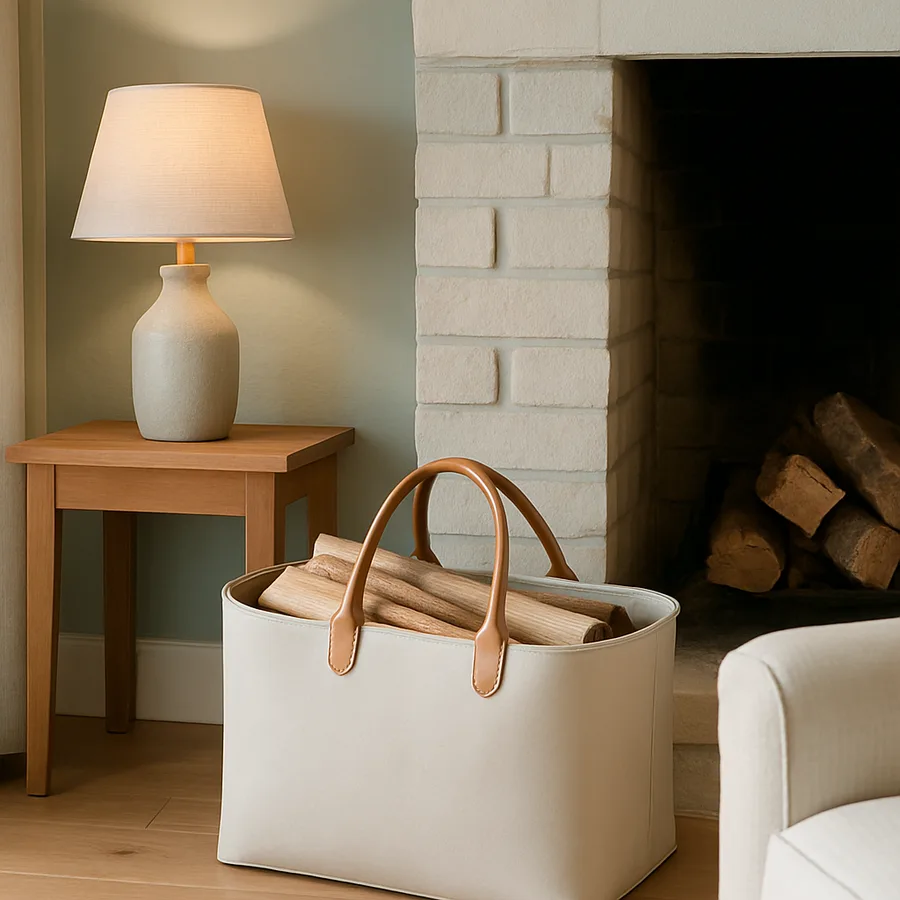
Kindling is the small, dry wood that bridges the gap between a struck match and a fully burning log. It is also, almost universally, the most poorly stored fireplace accessory in the average home. Homeowners who invest hundreds of dollars in matching tools sets, andirons, and screens often dump their kindling into a cardboard box, a paper grocery bag, or a tangled pile beside the hearth. The result is unattractive, inefficient, and surprisingly easy to fix.
A decorative kindling box solves the problem with a single object. It contains the mess, presents the tinder as a deliberate part of the hearth composition, and makes the actual act of lighting a fire faster and more pleasurable. This guide explores the design options available, the practical sizing decisions to consider, and the small details that separate a great kindling box from a merely adequate one.
Why a Dedicated Kindling Container Matters
The case for a dedicated kindling box rests on three practical observations. First, kindling generates an enormous amount of small debris, fragments, splinters, sawdust, and bark dust that fall off the wood every time it is handled. Without a container, that debris ends up on the hearth, the rug, and the floor. Second, kindling needs to stay completely dry to ignite reliably, which means it cannot sit in a damp basement or in an exposed location. Third, kindling is the most-handled hearth supply, since you reach for it every single time you light a fire.
A good container addresses all three issues at once. It contains the debris, keeps the kindling dry and accessible, and looks intentional in the room. The American Society of Interior Designers has noted that the small, frequently-used hearth accessories often carry more daily aesthetic impact than the large statement pieces, simply because they are encountered more often during routine use.
Have you ever found yourself avoiding lighting a fire because the kindling situation was too messy or too disorganized to deal with? That friction is real, and it quietly reduces the number of fires you actually enjoy each season. Solving it with a single decorative object is one of the highest-leverage hearth upgrades available.
There is also a quiet ergonomic argument. A dedicated container at the correct height, typically between knee and hip level, lets you select kindling without bending all the way to the floor or fumbling through a deep bin. For older homeowners or anyone with back issues, this small detail can be the difference between lighting fires regularly and gradually abandoning the fireplace because the physical setup is uncomfortable. Manufacturers of hearth accessories increasingly publish optimal handle and rim heights, and matching the container size to your own reach is a worthwhile fifteen-second consideration before purchase.
Traditional Options: Coal Scuttles, Copper Buckets, and Iron Bins
Traditional kindling storage descends directly from coal-heating equipment. The classic coal scuttle, with its angled front and pivoting handle, was originally designed to deliver coal to a stove or fireplace without spilling. Today, the same form works beautifully for kindling, and antique brass and copper scuttles remain widely available at flea markets, estate sales, and reproduction-furniture retailers.
The aesthetic logic of traditional kindling containers is warmth and patina. Polished brass develops a soft mellow tone over decades, hammered copper acquires deep red and brown tones, and cast iron gains a black satin patina that pairs beautifully with stone and wood fireplaces. These materials all reward age, which means a vintage piece often looks better than a new one of the same form.
Sizing matters. A typical coal scuttle holds roughly one cubic foot of kindling, enough for several days of fires for a casual user or a single fire for someone who lights large blazes. The Hearth, Patio & Barbecue Association recommends keeping kindling supply visible and accessible to encourage proper fire-building technique, which a well-sized scuttle does naturally.
If you are buying vintage, inspect the interior surface carefully. Antique brass and copper scuttles were sometimes lined with thin tin or zinc that can deteriorate over decades, leaving sharp edges or flaking residue that contaminates the kindling. A clean, smooth interior is essential. If the lining is damaged but the exterior is beautiful, a sheet metal worker can fabricate a replacement liner for a modest fee, which protects the original value of the antique while restoring full functionality. This is a common restoration path for estate-sale finds with strong patina but rough interiors.
Modern Options: Leather Totes, Steel Bins, and Sculptural Vessels
Contemporary kindling boxes have expanded the material palette dramatically. Heavy leather totes, often crafted by saddlemakers, have become a popular choice in modern and Scandinavian interiors. They look softer than metal containers, develop their own patina over years, and read as deliberately crafted objects rather than utility items.
Powder-coated steel bins offer a cleaner, more architectural alternative. These are typically rectangular, sometimes hinged, and finished in matte black, deep brown, or natural metal tones. They pair well with concrete, plaster, and steel fireplace surrounds, and they integrate naturally with modern fireplace tools sets in the same finish family.
Sculptural vessels, sometimes ceramic, sometimes carved wood, sometimes cast concrete, treat kindling storage as an opportunity for artistic statement. These pieces often hold less kindling than utility-focused containers but contribute significant visual weight to the hearth. The trade-off is real: more art, less storage capacity. For homeowners who light fires rarely, the trade-off often makes sense; for daily wood burners, capacity usually wins.
One growing category worth knowing about is the woven natural-fiber basket, often made of rattan, seagrass, or sisal. These read as warm and tactile in modern interiors without the formality of leather or the coolness of metal. The caveat is that natural-fiber baskets are themselves combustible and can pick up bark fragments that are difficult to remove. A removable metal or canvas liner is essential, and the basket should sit safely within the non-combustible hearth zone rather than on adjacent carpet. Used carefully, these baskets bridge the gap between rustic warmth and modern restraint in a way few other materials manage.
Sizing, Capacity, and the Daily Reality
How much kindling do you actually need on hand at any moment? The practical answer depends on how often you light fires and how much kindling each fire requires. A typical fire needs roughly fifteen to twenty pieces of split kindling, plus a few pieces of larger fatwood or fire-starter sticks. A weekly fire-builder therefore needs perhaps eighty pieces of kindling per month, which fits comfortably in most coal scuttles or leather totes.
Daily wood-burners need substantially more. Three to five fires per week, multiplied across a four-month heating season, means hundreds of kindling pieces. For these users, a single decorative container at the hearth is not enough. The standard solution is a small decorative box for the immediate hearth supply, paired with bulk storage elsewhere, often in a mudroom, basement, or attached garage.
The EPA Burn Wise program specifically recommends keeping kindling completely dry and bringing it indoors well before use to allow any surface moisture to evaporate. A small decorative box that gets refilled weekly from bulk storage solves both the aesthetic problem and the practical problem in one move.
Another sizing factor is kindling type. Traditional split-wood kindling stacks compactly and a typical scuttle holds a substantial supply. Bundled fatwood, on the other hand, takes up more volume per fire because the individual sticks are longer and irregularly shaped. If you rely heavily on fatwood or commercial fire-starter sticks, size up your container accordingly, or plan to keep a second small basket nearby for the longer items. Mixing types in one container can be visually appealing but sometimes causes the longer pieces to wedge awkwardly against the rim.
Matching the Box to the Hearth and the Room
The visual integration of a kindling box with the rest of the hearth follows the same rules as the larger tools set discussion. Match at least two of the three primary metal finishes in the hearth zone, meaning the tools, the screen, the log holder, and the kindling box should share at least two common finishes among them. A mismatched kindling box draws the eye in exactly the wrong way and makes the whole hearth composition feel incoherent.
Material harmony also matters. A leather kindling tote works beautifully in a room with leather furniture or leather-bound book collections, but feels out of place in a strictly cool-toned modern interior. A polished brass coal scuttle complements warm wood tones but can clash with a rigorously monochromatic palette. The National Association of Home Builders has tracked rising consumer interest in hearth zone styling as a deliberate design category, and the kindling box has emerged as a small but visible element in that conversation.
Scale is also worth considering. An oversized kindling container in a small room overwhelms the hearth and visually shrinks the space. A tiny container in a large great room reads as an afterthought. Sketch your hearth zone before purchasing, mark out the available space for a kindling container, and shop accordingly.
A final consideration is seasonal flexibility. A kindling box that lives beside the hearth all year, even in summer when no fires are lit, becomes part of the room's permanent visual vocabulary. Some homeowners prefer a container that can be repurposed or relocated during warm months, perhaps to hold magazines, throws, or houseplants. Others embrace the year-round presence and select a piece sculptural enough to justify constant display. Neither approach is wrong, but deciding deliberately at purchase time prevents the common mid-summer realization that the empty kindling box looks awkward in a room set up for warm-weather living.
Practical Details: Lids, Liners, and Fire Safety
A few practical details separate excellent kindling boxes from merely decorative ones. Lids keep dust out of the kindling and contain debris when the box is not actively in use. Removable liners, usually metal or heavy canvas, make cleaning the box dramatically easier and extend its lifespan. Carrying handles let you bring the entire box to the hearth, fill the firebox, and return it to its display position without scattering bark across the floor.
Fire safety is the often-overlooked consideration. A kindling box should sit within the non-combustible hearth zone, not on adjacent carpet or wood flooring. Embers can fall from kindling pieces being placed in the firebox, and a box positioned on combustible flooring creates an unnecessary risk. The NFPA specifically recommends keeping all combustible storage at least three feet from any active firebox, and a decorative kindling box that sits inside the required hearth apron satisfies that rule naturally.
Conclusion
A decorative kindling box is one of the smallest hearth investments available and one of the most consistently rewarding. For the price of a single mid-tier fireplace tool, you can solve the mess problem, the dryness problem, and the visual coherence problem all at once. The decision is less about whether to add one and more about which style, material, and size suit your specific hearth and room.
Traditional coal scuttles, copper buckets, and iron bins deliver warmth, patina, and a sense of inherited craftsmanship. Modern leather totes, steel bins, and sculptural vessels deliver restraint, geometry, and architectural integration. Both can be beautiful, both can be functional, and both contribute to the small ritual moments that make fire-building enjoyable rather than chore-like.
If you have been making do with a cardboard box or a paper bag for years, take the time to walk through a hearth showroom, handle a few options, and choose something deliberate. The small upgrade pays back every single time you light a fire for the rest of the box's life, which can easily be decades.
Before you buy, measure your available hearth space, photograph your existing tools set and screen, and bring those measurements and photos with you when shopping. Compare finishes in person whenever possible, since photos rarely capture the true tone of brass or the depth of a blackened steel patina. That thirty-minute preparation step will save you from buying something that looks perfect online but wrong in your living room.
For additional reading on hearth safety and styling, see the National Fire Protection Association for clearance and storage standards, the Hearth, Patio & Barbecue Association for product guidance, and the American Society of Interior Designers for current hearth-styling trends.
More Articles You May Like



Comments
Post a Comment