Attic Fan Solar Versus Electric For Hot Climate Use
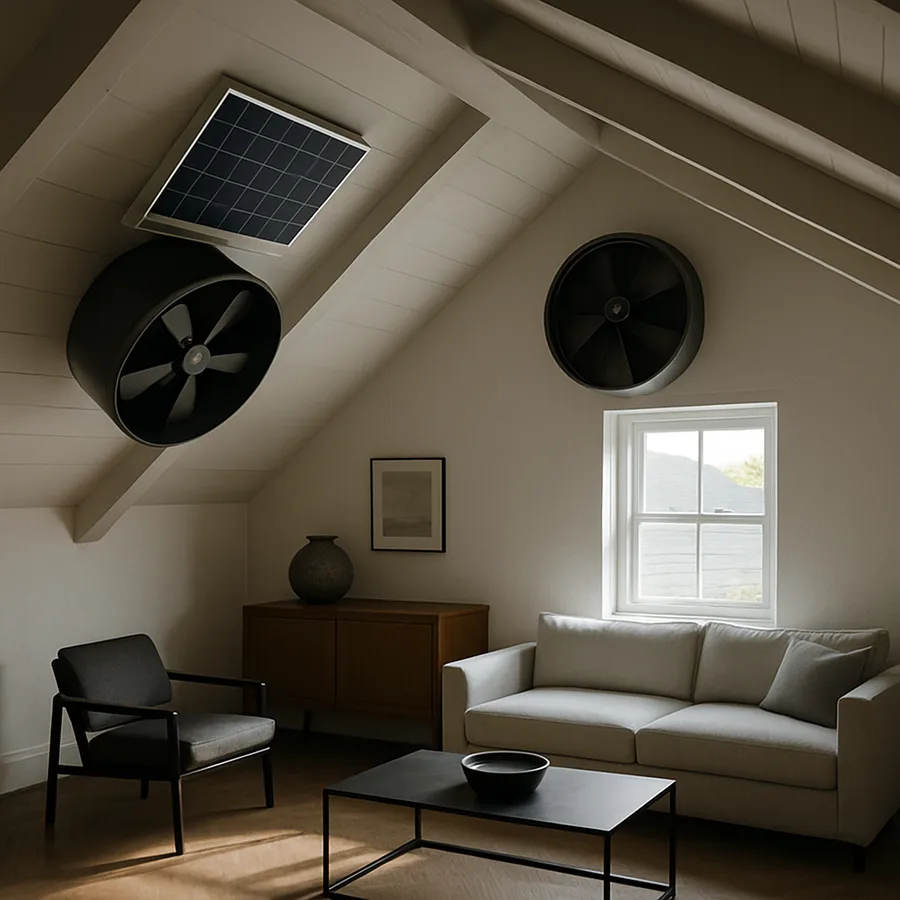
When the August sun bakes a southern roof, attic temperatures often climb past 140 degrees Fahrenheit, turning what should be a buffer zone between your home and the sky into a slow-roasting oven that pumps heat down through ceiling joists and into living spaces. Homeowners in Phoenix, Houston, Tampa, and other punishing climates increasingly look to powered attic ventilation as a way to relieve that thermal pressure, and the modern choice quickly narrows to two contenders: solar-powered fans that pull electricity straight from a roof-mounted panel, and traditional electric attic fans wired into the home's circuit. Both push hot air out and pull cooler outside air in through soffit vents, but they differ sharply in cost, performance, code treatment, and long-term durability. This guide walks through the tradeoffs in detail so you can match the right unit to your roof, your budget, and your climate zone.
How Powered Attic Ventilation Actually Works
Powered attic ventilators sit on the upper portion of the roof or on a gable wall and pull air out of the attic at a measured rate, usually expressed in cubic feet per minute, or CFM. As that fan evacuates hot air, replacement air rushes in through passive intake vents, typically soffit vents running along the eaves. Done correctly, the cycle drops peak attic temperature by 20 to 40 degrees Fahrenheit on a hot summer afternoon, which reduces conductive heat gain into the ceiling and meaningfully lowers the load on the air conditioner serving the rooms below. The U.S. Department of Energy notes that a well-vented attic also helps moisture management in mixed climates, since trapped humid air can condense on rafters and sheathing once temperatures drop.
The catch is that any powered fan can backfire if the home is poorly sealed. If the attic floor leaks heavily into conditioned space, a strong fan will pull air-conditioned air up through gaps around can lights, plumbing chases, and the attic hatch, then exhaust it outdoors. That phenomenon, sometimes called induced infiltration, can actually raise cooling costs and was the source of the National Renewable Energy Laboratory research that made many building scientists skeptical of attic fans in general. The fix is straightforward: air-seal the attic floor first, confirm intake venting is generous, and only then install a fan. With that prerequisite handled, the solar-versus-electric question becomes meaningful.
Solar Attic Fans In Detail
A solar attic fan combines a brushless DC motor with a small photovoltaic panel, either integrated into the fan housing or mounted separately on a south-facing slope nearby. When sunlight hits the panel, the motor spins, and the fan operates with no utility electricity at all. Most residential units in 2026 sit between 800 and 1,800 CFM, with the larger Bradford White, Natural Light, and Solar Royal models pushing 2,200 CFM under full sun. Because they only run when the sun is out, solar fans align almost perfectly with the daily heat curve in hot climates: they hit peak output at the same hour the attic is approaching its hottest point.
Have you ever wondered why solar fans cost more upfront than basic electric models? The answer lies in the integrated panel, the higher-quality DC motor, and the corrosion-resistant housing most manufacturers use. Typical installed pricing runs from $550 to $1,100 per unit, but the federal Residential Clean Energy Credit currently allows a 30 percent tax credit on qualifying solar attic fans, which closes much of the gap with electric units. Payback in heavy cooling climates often lands between four and seven years when you account for the credit, avoided wiring, and the slight reduction in air conditioner runtime.
Electric Attic Fans In Detail
Traditional electric attic fans run on standard household current and are controlled by a thermostat (and often a humidistat) mounted nearby. They have been on the market for more than half a century, which means they are widely available, inexpensive, and well understood by every roofer and electrician you might call. Common models from Broan, Air Vent, and Master Flow run between $200 and $450 for the unit itself, with installed pricing usually landing between $500 and $900 depending on whether existing wiring can be tapped or a new circuit must be pulled.
The strength of electric fans is raw, consistent power. A 1,500 CFM electric unit will hit that flow rate on a cloudy afternoon, at dusk, or at 2 a.m. when a thunderstorm has soaked the shingles and the attic is still releasing stored heat. Solar fans, by contrast, slow dramatically under cloud cover and stop entirely at night. For homeowners in the humid Southeast, where late-afternoon storms are routine and night-time radiative cooling is limited, that always-on capability can matter. The downside is the operating cost: a continuously cycling 300-watt electric fan can add $80 to $140 per year to the utility bill, partially offsetting the cooling savings it produces.
Performance In Hot Climate Conditions
Hot climates fall into two broad categories that behave very differently for attic ventilation purposes. Hot-dry zones like Phoenix, Las Vegas, and Albuquerque experience intense solar gain but cool off significantly at night, with diurnal swings of 30 degrees or more. Solar fans excel here because the heaviest cooling demand aligns with the brightest sun. Hot-humid zones like Houston, New Orleans, and Orlando stay warm into the late evening, with attic temperatures sometimes staying above 100 degrees long after sunset. In those climates, an electric fan or a hybrid system that can run after dark may move more total heat out of the assembly.
Independent testing referenced by the Florida Solar Energy Center has shown that solar attic fans typically reduce peak attic temperature by 18 to 25 degrees in well-vented assemblies, while comparably sized electric units reduce it by 25 to 35 degrees because of their longer daily runtime. However, the same research warns that the second half of those electric-fan gains often come at the cost of induced infiltration, meaning the apparent benefit is partially offset by air-conditioned air being pulled into the attic. In a tightly sealed home with proper intake venting, solar fans deliver roughly 80 percent of the performance of electric units while consuming zero grid electricity.
Sizing the fan to the attic matters more than the choice of power source. The industry rule of thumb is roughly 0.7 CFM per square foot of attic, adjusted upward by 15 percent for dark roofs and 25 percent for south-facing exposures. A 1,500-square-foot attic with a dark shingle roof in Houston typically needs around 1,300 CFM of total powered ventilation, which often means one large fan or two medium fans on opposite roof planes for balanced coverage. Undersizing produces almost no measurable temperature drop, while oversizing depressurizes the attic and pulls conditioned air upward through every can light and plumbing chase in the ceiling.
Installation, Code, And Roofing Considerations
The National Roofing Contractors Association publishes detailed guidance on cutting and flashing roof penetrations for attic ventilators, and both fan types follow similar physical mounting procedures. The fan housing must be flashed into the shingle or tile course in a way that sheds water uphill, and the cutout in the sheathing must be sized so the fan blade clears the framing. Where the two systems diverge is the electrical work. Electric fans require a dedicated circuit or a tap from a nearby junction box, GFCI protection in many jurisdictions, and a properly rated thermostat. Solar fans typically arrive as a sealed plug-and-play unit with the panel wired directly to the motor, eliminating any need for a permit related to electrical work in most municipalities, though a roofing permit may still apply.
Building codes are another consideration. The International Code Council, through the IRC, requires a minimum ratio of net free ventilation area to attic floor area, usually 1:300 with a balanced ridge-and-soffit system or 1:150 without one. A powered fan does not exempt the home from those minimums; in fact, it increases the importance of having enough intake area so the fan does not depressurize the attic and pull air from inside the house. Have you confirmed your soffit venting is unobstructed by insulation? Baffles and proper insulation depth at the eaves are non-negotiable for either fan type to work safely.
Cost, Lifespan, And Maintenance
Over a twenty-year horizon, the total cost of ownership story usually favors solar, though the margin depends on local electricity rates. A representative comparison for a 2,000-square-foot home in Dallas might look like this: a solar fan costs $850 installed, qualifies for a $255 federal tax credit, and uses zero grid electricity over its lifespan, putting twenty-year cost at roughly $600 after the credit. An equivalent electric fan costs $700 installed but adds about $110 per year in electricity, putting twenty-year cost above $2,800. Even accounting for one motor replacement on the solar unit, the lifecycle math tilts strongly toward solar in any climate with significant sun exposure.
Maintenance is broadly similar. Both fan types benefit from an annual inspection of the flashing, a quick check of the motor for noise or vibration, and periodic cleaning of debris around the intake. Solar fan panels should be wiped down once a year to remove dust and pollen that can cut output by 10 to 20 percent. Electric fan thermostats sometimes fail after seven to ten years and need to be replaced, while the brushless DC motors common in solar units typically last 15 to 20 years before bearings show wear. The Insurance Institute for Business and Home Safety recommends inspecting any roof-mounted ventilator after major wind events, since both types can lose flashing or seals during hail and high gusts.
Conclusion
For most homeowners in hot, sunny climates, a properly sized solar attic fan paired with adequate soffet intake is the better long-term choice. It eliminates ongoing operating costs, aligns peak output with peak attic heat load, qualifies for a meaningful federal tax credit, and avoids the permitting and wiring complications that come with adding a dedicated electric circuit on the roof. The slightly lower nighttime performance is rarely a practical issue in hot-dry climates and can be mitigated in hot-humid climates by oversizing the unit slightly or running two fans on opposite roof planes.
Electric attic fans still have a place, particularly on homes with heavy tree shading, north-facing roof planes, or unusually long heat-soak conditions where consistent overnight ventilation genuinely helps. They are also cheaper to install when an existing circuit is already nearby, which can make them attractive for tract-home retrofits where wiring access is straightforward. The key is to start from a position of building-science honesty: seal the attic floor, confirm balanced intake venting, and only then add a fan of either type.
If you are evaluating powered attic ventilation for the first time, get at least two on-site quotes from roofing contractors who carry both solar and electric options, and ask each to walk the attic with you to confirm intake area and air sealing before they pitch a fan. Avoid contractors who recommend a fan without first looking at the attic floor, because that is the single biggest indicator of whether the installation will deliver real savings or quietly raise your cooling bill. Reach out today for a free attic-ventilation assessment so you can make this decision with hard numbers rather than guesswork.
The right answer here is rarely one-size-fits-all, but for the typical hot-climate homeowner with a sun-exposed roof and a reasonably tight ceiling plane, solar wins on cost, simplicity, and lifecycle value. Pair it with good intake venting, an honest air-sealing pass, and an annual flashing check, and you should see meaningful cooling savings, a more comfortable second floor, and an attic that no longer feels like a kiln when you climb up to grab the holiday boxes in July. Resources from the U.S. Department of Energy, the National Roofing Contractors Association, and the ENERGY STAR program can help you verify product specifications and rebate eligibility before you commit.
More Articles You May Like



Comments
Post a Comment